
Introduction
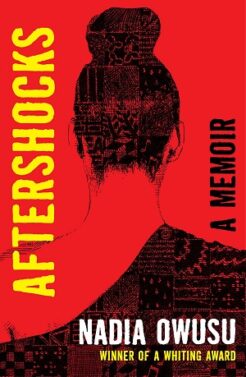
Nadia Owusu’s memoir Aftershocks is a profound exploration of identity, belonging, trauma, and the search for home. Published in 2021, this Whiting Award-winning work transcends the traditional boundaries of memoir, weaving together personal narrative, historical analysis, psychological inquiry, and lyrical prose to create a text that is as much about the construction of self as it is about the disintegration of worlds. Owusu’s story is one of perpetual displacement a life lived across continents, cultures, and languages, always on the periphery of belonging, never quite at the center of any single identity.
The title itself serves as a central metaphor throughout the work. Aftershocks are the tremors that follow an earthquake the delayed reactions to stress, the continuing reverberations of a catastrophic event. For Owusu, the “earthquakes” of her life include her mother’s abandonment, her father’s death, and the numerous displacements that characterized her childhood. The aftershocks are the psychological, emotional, and spiritual tremors that continue to shake her long after these initial traumas have occurred. Through her memoir, Owusu attempts to understand these aftershocks, to map the fault lines of her experience, and ultimately to find a way to live with the seismic instability that has defined her existence.
This analysis will provide a comprehensive summary of the book’s narrative, an in-depth examination of its characters, and a critical analysis of its themes, structure, and literary techniques. Through this exploration, we will come to understand how Owusu uses the extended metaphor of earthquakes with its associated terminology of foreshocks, mainshocks, fault lines, and aftershocks to structure both her narrative and her understanding of trauma, identity, and belonging.
Summary
The Structure of the Memoir
Before delving into the narrative itself, it is essential to understand the structural framework Owusu employs. The memoir is divided into sections that mirror the phases of an earthquake: “Foreshocks,” “The Blue Chair,” “Topography,” “Faults,” “Mainshocks,” “Aftershocks,” and “Terraforming.” This structure is not merely decorative but serves as an organizing principle that reflects the author’s psychological landscape. The narrative does not follow a strict chronological order; instead, it moves back and forth in time, mirroring the way memory works associative, recursive, and non-linear. Owusu explicitly addresses this in her Author’s Note, stating: “Time, for me, is not linear. I have written for meaning rather than order.”
The “Blue Chair” sections serve as interludes that interrupt the main narrative flow. These sections depict Owusu’s period of psychological crisis at age twenty-eight, when she retreated into a literal blue chair in her New York apartment, unable to function, unable to leave, struggling to understand what was happening to her. These sections function as the present-tense anchor of the memoir, the moment of crisis from which all other memories radiate outward.
Foreshocks: The Early Years
The memoir opens with a powerful scene set in Rome when Owusu is seven years old. Her mother, Almas, has arrived unexpectedly for a brief visit the first time the children have seen her in three years. The visit is fleeting, lasting only a few hours, and ends with the mother driving away into the night, leaving young Nadia watching from the doorway. This scene establishes one of the central wounds of Owusu’s life: her mother’s abandonment.
Interspersed with this memory is the news of a catastrophic earthquake in Armenia a nation connected to Owusu through her mother’s Armenian heritage. This coincidence her mother’s arrival and the earthquake occurring on the same day becomes a foundational metaphor for Owusu. “In me,” she writes, “private and seismic tremors cannot be separated.” The earthquake in Armenia, which killed tens of thousands, becomes fused in her mind with the emotional earthquake of her mother’s visit and departure.
The memoir then introduces us to the adult Nadia, age twenty-eight, through a “Resettlement Registration Form” that serves as a kind of identity inventory. This document lists her name, date of birth, citizenship (American and Ghanaian), ethnicity (biracial Armenian and Ashanti), languages spoken, and countries of residence. The form reveals the complexity of her identity: born in Tanzania, raised in England, Italy, Ethiopia, and Uganda, now living in New York. She describes herself as “Black” while acknowledging that she is “more literally Caucasian than most people who call themselves Caucasian” a paradox that encapsulates the complexity of her racial and ethnic identity.
The form also introduces the concept of “asylum” not in the legal sense, but in the psychological sense. Owusu writes: “I am seeking the kind of place described by the second and third definitions. I am seeking a place to wait out the aftershocks.”
Unwelcome Reunion: The Revelation
The first major chapter of the memoir recounts a dinner with her stepmother Anabel in New York’s Chinatown. This dinner, which begins as an ordinary family reunion, becomes a pivotal moment when Anabel reveals that Owusu’s father did not die of cancer, as Nadia had always believed, but of AIDS. This revelation shatters the foundational narrative of Owusu’s life the story of her father as a heroic figure, a man of integrity and moral purpose.
The argument that leads to this revelation is seemingly trivial a disagreement about whether Nadia will accompany Anabel to a live music performance. But beneath this surface conflict lies years of accumulated resentment, rivalry, and unspoken grievances. Owusu describes their relationship as “jagged,” marked by periods of closeness and distance, love and hatred, connection and estrangement.
Anabel’s revelation is delivered with deliberate cruelty: “You think your precious father was so perfect? He didn’t die of cancer like you think. He was no angel. He died of AIDS. How do you think he got AIDS?” The implication is clear that her father had affairs, that he was not the man Nadia believed him to be, that her entire understanding of him was built on a lie.
This revelation triggers a crisis in Owusu. She runs from the restaurant, shouting “Liar! Liar! Liar!” She checks her father’s death certificate, which lists the cause of death as “Cancro” (cancer). But the doubt has been planted, and it grows like a crack in a foundation, threatening to bring down the entire structure of her identity.
The Blue Chair: Descent into Madness
The “Blue Chair” sections of the memoir depict Owusu’s psychological breakdown in the aftermath of multiple traumas: Anabel’s revelation about her father, her mother’s voicemail (the first contact in over a decade), and the departure of her boyfriend George. Unable to cope with the accumulation of these shocks, Owusu retreats into a blue chair she found abandoned on the street a rocking chair that reminds her of the rocking chairs in the homes of her childhood, chairs in which her father used to hold her.
In the blue chair, Owusu stops functioning. She stops eating properly, stops going to work, stops attending classes. She sits and rocks, reads about madness, listens to jazz, and waits for something to change. The blue chair becomes her asylum in all three senses of the word: a place of protection, a place of madness, and a place of retreat.
These sections are interspersed with memories and reflections, creating a portrait of a mind in crisis. Owusu describes her “seismometer” a sensation in her brain that she describes as “an instrument” that vibrates when danger threatens. She reads memoirs of madness, studies the symptoms of depression and anxiety, and tries to understand what is happening to her.
The blue chair sections also introduce the concept of “day zero” the moment when she realizes she cannot get out of the chair. For seven days, she remains in the chair, leaving only to sleep on the floor, use the bathroom, and eat meager meals. During this time, she listens to jazz particularly John Coltrane and finds in the music a model for how to lose control, how to let go, how to allow oneself to be carried by forces beyond one’s control.
Topography: The Geography of Identity
The “Topography” section explores the landscapes of Owusu’s childhood the physical places that shaped her and the metaphorical terrain of her identity. The section opens with a memory of her father explaining why she has a belly button: “So you know where your center is… Your center is where all the different parts of who you are come together.”
This section includes the only photograph of her original family father, mother, sister, and herself taken at Yasmeen’s Ashanti naming ceremony. Owusu examines this photograph closely, seeing in it the promise of what might have been, the possibility of a family intact. But she also knows the photograph is a lie that the family it depicts would soon be torn apart by divorce, abandonment, and death.
The “Topography” section also introduces the theme of colonial mentality the internalized sense of inferiority that colonized peoples often carry. Owusu explores this through her father’s use of the word “bush” to describe bad behavior, a word that carries connotations of wildness and uncivilization. She recognizes the contradiction: her father, a proud Ghanaian who celebrated his Ashanti heritage, still carried within him the colonial mentality that equated Africanness with inferiority.
Colonial Mentality: The Ashanti Heritage
The chapter “Colonial Mentality” is one of the longest and most historically rich sections of the memoir. It recounts a trip to Ghana when Owusu was seven, during which her father takes her and Yasmeen to the stool house of the Oyoko clan the clan to which their family belongs. The stools, black with soot and egg yolk, are believed to hold the spirits of the clan’s ancestral leaders. This visit becomes an occasion for Owusu’s father to educate his daughters about their heritage the history of the Ashanti kingdom, the significance of the Golden Stool, the legacy of colonialism, and the complicated role of slavery in Ashanti history.
Owusu learns about Osei Tutu, the first Asantehene (king) who united the Ashanti people in 1701. She learns about the Golden Stool, said to have descended from the sky, which became the symbol of Ashanti unity and independence. She learns about Yaa Asantewaa, the Queen Mother who led the Ashanti in the War of the Golden Stool against the British. And she learns about her own ancestry her great-grandfather, Nana Oheneba Peter Owusu Koko, who served as chief and advisor to the Asantehene.
But this education also includes uncomfortable truths. Owusu’s father tells her about the role of slavery in Ashanti history how the empire was financed not only by gold but also by the enslavement of prisoners of war, and how Ashanti leaders participated in the international slave trade. When young Nadia objects that slavery is wrong, her father agrees but offers no easy absolution: “History is a story… What is told depends on who writes it. They put this in, leave that out; decide where the emphasis goes.”
This chapter also explores the concept of “double consciousness” W.E.B. Du Bois’s term for the experience of always seeing oneself through the eyes of others, of measuring one’s soul by a world that looks on with contempt and pity. Owusu sees this double consciousness in her father, who was named Charles at birth but changed his name to Osei, who wore Ghanaian print shirts to work but also wore Western suits, who was both Ghanaian and British-educated, both Ashanti and modern.
Blood Trauma: The Armenian Genocide
The chapter “Blood Trauma” explores the other side of Owusu’s heritage her mother’s Armenian ancestry. Owusu recounts the story of her mother’s family during the Armenian Genocide of 1915-1917, when the Ottoman Empire deported and massacred an estimated 1.5 million Armenians. Her great-grandparents survived the genocide, fleeing to America where they settled in Watertown, Massachusetts.
The chapter includes the harrowing story of her great-aunt Areka, who was abandoned three times in the Syrian desert by her mother during the forced march. Each time, her brothers went back for her once finding her under a rock, once under a tree, once in a village where she had been sold for a goatskin of water. These stories of abandonment and rescue echo through the generations, creating what Owusu calls “trauma in the blood.”
Owusu connects this ancestral trauma to her own experience of abandonment. Her mother left when Nadia was two; she left again when Nadia was thirteen. The pattern of abandonment repeats across generations, a trauma that is passed down not through stories alone but through what modern science calls “epigenetic inheritance” the idea that traumatic experiences can alter gene expression in ways that are inherited by subsequent generations.
The chapter also explores the complicated racial dynamics of Armenian identity in America. When her ancestors arrived at Ellis Island, they were classified as having “dark complexions.” But a 1909 court case had established Armenians as “white” because of their Christianity, allowing them to become naturalized citizens. Owusu’s maternal grandfather, himself Armenian, sought a wife who “didn’t look Armenian” someone with fair hair and light eyes so that his children could hide in whiteness, could be safe from the dangers of difference.
Mainshocks: The Death of the Father
The “Mainshocks” section depicts the period of Owusu’s father’s illness and death the central trauma of her life. When Owusu is thirteen, her father is diagnosed with brain cancer. The illness is brutal and swift; within a year, he is dead.
Owusu recounts the details of his illness with unflinching honesty: the chemotherapy that left him bald and weak, the tumors that robbed him of his memory and his dignity, the moments when he did not recognize his own daughter. She describes the hospital visits, the night she and Yasmeen stayed up for a week, “standing sentinel” over their father’s life, willing the phone not to ring.
The death itself comes when Nadia is in school. She feels it happen: “I missed a breath, shuddered, stood still for a moment in astonishment, whispered goodbye.” Two hours later, she is called to the principal’s office. Her father is dead.
The funeral is a cultural collision. The African wives of the UN community come to the house each day, wailing in the traditional manner, bringing food and condolences. The wailing a customary expression of grief horrifies Nadia, who cannot grieve because “other people’s flamboyant, feigned grief was all around me every second of the day.” At the funeral, Mrs. Karamagi, one of the loudest wailers, bursts into an off-key Swahili hymn. Nadia and Yasmeen begin to laugh, stifling their giggles in their hands. “My father would have loved it,” Nadia writes. “I heard his laughter one last time.”
But the funeral is also marked by the absence of her mother. Nadia calls her mother after her father’s death, asking her to come. Her mother refuses, citing “responsibilities to another husband, and other children.” This second abandonment, arriving at the moment of her greatest need, becomes a wound that will take decades to heal.
Faults: The Geography of Displacement
The “Faults” section explores the various places Owusu lived and the ways in which each place shaped her identity. The section includes chapters on Dar es Salaam, Addis Ababa, and Surrey each place offering a different perspective on race, class, and belonging.
In Dar es Salaam, Owusu was born. She describes the heat of the city, the ocean she loved, the diversity of its population. But she also recognizes her privilege: her family were expatriates with “temporary visas and diplomatic plates on their cars.” They did not belong to Tanzania, even though it was where Owusu was born.
In Addis Ababa, Owusu lived in a UN compound, separated from the surrounding poverty by walls and barbed wire. She describes the surreal experience of watching, from the safety of her compound, the civil war that raged outside. She recalls the day that rebel soldiers came to the compound looking for child soldiers and how her friend Sesai was saved because the soldiers mistook him for one of the expatriate children.
In Surrey, Owusu attended a Catholic boarding school where she was one of only two black students. She describes the casual racism she encountered the girl who said she smelled bad, the boys who made monkey noises and the way she responded by aligning herself with the white students, by distancing herself from the other black girl, by “choosing not to see” the racism around her. This chapter is an unflinching examination of internalized racism and the ways in which children learn to survive by betraying others.
The Blue Chair: Days Three and Four
The “Blue Chair” sections continue to depict Owusu’s psychological crisis. In “Day Three,” she writes about the numbness and terror of depression, the inability to feel anything but fear. In “Day Four,” she writes about the physical sensations of madness the burning in her body, the trembling, the feeling that she is being “burned alive.”
These sections also include memories that illuminate the origins of her condition: the childhood friend whose mother was “chained to a tree” because of mental illness; the naked woman at a cocktail party who was described as “crazy”; the women dying of AIDS in a Ugandan hospital; the screams she heard in the psychiatric ward. Owusu is haunted by these memories of madness, by the fear that she too will be “chained to a tree,” will be locked away, will become one of the “mad black women” she sees around her.
Aftershocks: The Aftermath of Trauma
The “Aftershocks” section deals with the aftermath of the central traumas the ways in which they continue to reverberate through Owusu’s adult life. The chapter “Orphan” describes the moment when, at age twenty-two, Owusu checked the “orphan” box on her financial aid form. This act a bureaucratic necessity becomes a symbolic acknowledgment of her status: both parents gone, one dead, one absent.
The chapter “Panic” describes Owusu’s first panic attack, which occurred when she was eighteen and living in New York. She was on a crowded bus, surrounded by strangers, unable to breathe. The attack left her on the sidewalk with her head in a stranger’s lap, watching a businessman stride past without offering help. She wonders if her blackness her and the couple’s blackness is why no one stopped to help.
The chapter “Baby Fever” explores Owusu’s ambivalence about motherhood. She takes a pregnancy test and discovers she is not pregnant. But the experience forces her to confront her fears about becoming a mother fears rooted in her own experience of being mothered, in the trauma that runs in her blood, in the pattern of abandonment that she fears she will repeat.
Mainshocks: The Terror of Being Black in America
The “Mainshocks” section also includes chapters on the experience of being black in America. “An American Terror” describes the night Owusu’s brother Kwame is arrested a night she spends imagining the worst, imagining that he has been killed by police. The chapter is a powerful indictment of the ways in which black Americans live with the constant threat of state violence.
“A Heavy Burden” explores the “twice as hard, half as far” philosophy that is instilled in black children. Owusu describes her own experience of working multiple jobs, attending graduate school, and striving for perfection all while dealing with the trauma of her father’s death, her mother’s abandonment, and her own mental health struggles. She describes the job interviews where her race seemed to be a barrier, the rejections that cited “culture fit” as the reason, the microaggressions that she endured.
The Blue Chair: Days Five, Six, and Seven
The final “Blue Chair” sections depict Owusu’s gradual emergence from her crisis. In “Day Five,” she listens to John Coltrane’s jazz and finds in the music a model for how to let go, how to lose control, how to allow oneself to be carried by forces beyond one’s control. In “Day Six,” she writes about masturbation and the body’s capacity for pleasure, about the way the body can be a source of healing as well as pain. In “Day Seven,” she dreams of an earthquake that floods New York, and she finds herself floating in the water, becoming ocean, becoming something new.
Terraforming: The Reconstruction of Self
The final section of the memoir, “Terraforming,” is about reconstruction about the process of building something new from the ruins of the old. The term “terraforming” refers to the hypothetical process of modifying a planet to make it habitable. For Owusu, it is a metaphor for the work of rebuilding her life, her identity, her sense of self.
The chapter “God Is Dead, Long Live God” explores Owusu’s loss of faith not in a religious sense, but in the story she had constructed about her father. She realizes that she had made her father into a god, a figure of perfection who could do no wrong. Anabel’s revelation about the AIDS forced her to confront her father’s humanity his flaws, his secrets, his capacity to hurt others. This is a painful but necessary loss, one that allows Owusu to love her father as a human being rather than worship him as a deity.
The chapter “Maternal Guidance” describes Owusu’s attempts to understand her mothers both Anabel and Almas. She imagines conversations with them, tries to see them as complex human beings rather than simply as sources of pain. She recognizes that both women were young when they took on the responsibility of mothering her, that both were shaped by their own traumas, that both did the best they could with what they had.
The chapter “The Liminal” describes the period after the blue chair, when Owusu began to re-engage with the world. She describes the small pleasures that returned to her: the taste of coffee, the sight of wildflowers, the pleasure of kissing. She describes her first steps toward reconciliation with her mother, a meeting in Arizona that is awkward and tentative but also hopeful.
The chapter “Libation” is a ritual of gratitude. Owusu pours libation a traditional Ashanti practice of offering liquid to the ancestors to all the people who have shaped her life: her father, her mothers, her aunties, her siblings, her teachers, her friends. This ritual is a way of acknowledging connection, of recognizing that she is not alone, that she is part of a web of relationships that extends across time and space.
The final chapter, “Home,” is a lyrical meditation on the meaning of home. Owusu describes many homes: the womb, Dar es Salaam, her father’s embrace, a country cottage in England, Rome, the airplane, Addis Ababa, Kampala, her grandmother’s porch, New York. She concludes: “Let me show you my home. It is a live fault. The fault is in my body. Let me show you my home. It is a blue chair. I sought asylum here. I marked my application temporary. For myself, I am writing reconstruction, not elegy.”
Character Analysis
Nadia Owusu: The Narrator and Protagonist
Nadia Owusu is the central figure of the memoir the narrator, the protagonist, the consciousness through which all events are filtered. She is a woman of extraordinary complexity: biracial, multinational, multilingual, and profoundly shaped by trauma. Her identity is not singular but multiple; she is Ghanaian and Armenian, American and African, Black and “literally Caucasian.” She is a woman who has never fully belonged anywhere, who has always been “a them rather than an us.”
Owusu’s character is defined by her intelligence and her introspection. She is a voracious reader, a lover of literature and philosophy, a woman who processes the world through words. Her memoir is filled with references to Toni Morrison, James Baldwin, W.E.B. Du Bois, Frantz Fanon, Audre Lorde, and many others. These writers are not mere decorations; they are the “council of mothers” she turns to for guidance and solace. Literature, for Owusu, is not an escape from reality but a way of understanding it more deeply.
Owusu’s character is also defined by her grief. The death of her father when she was thirteen is the central wound of her life a wound that she has never fully healed. Her memoir is, in many ways, an attempt to process this grief, to construct a story that can contain the loss. But the grief is complicated by the revelations about her father’s possible affairs and possible death from AIDS. Owusu must grapple not only with the loss of her father but with the loss of her story about her father the loss of the narrative she had constructed to make sense of her life.
Owusu’s relationship with her mothers both biological and step is another defining feature of her character. Her mother, Almas, abandoned her twice: once when Nadia was two, and again when Nadia was thirteen and her father died. This abandonment has left Owusu with a deep fear of rejection, a tendency to push people away before they can leave her, a difficulty trusting that she is worthy of love. Her stepmother, Anabel, raised her but was often cold and critical, and their relationship has been marked by conflict and resentment. Yet Anabel also claimed Nadia when her own mother would not, and there are moments of genuine connection between them.
Owusu’s character is also defined by her experience of mental illness. The “Blue Chair” sections depict her descent into depression and anxiety with unflinching honesty. She describes the physical symptoms the trembling, the burning, the inability to eat or sleep as well as the psychological symptoms the obsessive thoughts, the catastrophizing, the feeling that she is going mad. Her decision to seek “asylum” in the blue chair is both a symptom of her illness and a strategy for survival a way of retreating from the world so that she can heal.
Throughout the memoir, Owusu displays a remarkable capacity for self-reflection and self-criticism. She does not present herself as a victim but as a complex human being with flaws and failures. She acknowledges her own moments of cruelty (the way she treated Agatha at boarding school), her own moments of cowardice (the way she avoided her brother when he needed her), her own moments of self-destruction (the drinking, the one-night stands, the pushing away of people who loved her). This honesty makes her a deeply sympathetic character not because she is perfect, but because she is human.
Osei Owusu: The Father
Osei Owusu is the most important figure in Nadia’s life the sun around which her world revolves, the god she worships, the man whose death shatters her world. He is a complex figure: a Ghanaian intellectual, a UN official, a devoted father, a man of integrity and principle. But he is also a man with secrets, a man who may have had affairs, a man who may have died of AIDS. The memoir is, in many ways, an attempt to understand this man to love him as a human being rather than worship him as a god.
Osei was born in the Gold Coast (now Ghana) in the last year of colonial rule. He was educated in Ghana and later in the United States, where he earned a PhD. He worked for a UN agency, a career that took him and his family to Tanzania, Italy, Ethiopia, and Uganda. He was a man of great intelligence and culture he read three newspapers a day, he listened to jazz, he quoted Thoreau and Shakespeare. He was also a man of great warmth and humor he told stories, he laughed easily, he loved his children deeply.
But Osei was also a man shaped by colonialism and its legacy. He was named Charles at birth but changed his name to Osei, reclaiming his Ghanaian identity. He was proud of his Ashanti heritage but also carried the “colonial mentality” that equated Africanness with inferiority. He was a feminist who believed in his daughter’s potential but also expected his wives to have dinner on the table at seven. He was a man of contradictions, like the country he came from, like the world he lived in.
The revelation that Osei may have had affairs and may have died of AIDS is devastating for Nadia because it shatters her image of him. But it also humanizes him. It forces Nadia to confront the reality that her father was a man a man with desires, with weaknesses, with secrets. This is painful, but it is also necessary. As Nadia eventually realizes, “My father only human was more than enough for me then. I didn’t need him to be a god. He is still enough.”
Almas Janikian: The Mother
Almas Janikian is the absent mother the woman who gave Nadia life and then left. She is Armenian-American, born in Watertown, Massachusetts, the granddaughter of genocide survivors. She married Osei when she was young, had two daughters with him, and then left when Nadia was two.
Almas is a shadowy figure in the memoir, appearing only in brief flashes: the visit to Rome when Nadia was seven, the letters she sent from America, the phone call after Osei’s death, the meeting in Arizona when Nadia is nearly thirty. She is a woman of contradictions: she is capable of great tenderness (the story of carrying baby Nadia in a kanga, the memory of making breakfast for her) and great cruelty (the refusal to come to Osei’s funeral, the abandonment of her daughters). She is a woman shaped by trauma the trauma of her family’s genocide, the trauma of her own mother’s distance, the trauma of a failed marriage.
Nadia’s feelings toward her mother are complex: longing, anger, resentment, and, eventually, a tentative forgiveness. She recognizes that her mother was young, that she was struggling, that she did the best she could. But she also recognizes that “the best she could” was not enough that she failed her daughters in fundamental ways. The memoir does not excuse Almas, but it does try to understand her. As Nadia’s aunt Harriet says, “I want you to be able to let it go. I want you to be free of the bitterness.”
Anabel: The Stepmother
Anabel is the woman who raised Nadia after her mother left the stepmother who became, in many ways, her primary maternal figure. She is Tanzanian, from a small village on the slopes of Mount Kilimanjaro. She met Osei when Nadia was five, married him, and became the mother of his children.
Anabel is a complex figure: she is beautiful, intelligent, and capable, but she is also cold, critical, and sometimes cruel. She resents Nadia’s closeness to her father, she competes with her stepdaughter for Osei’s attention, she says hurtful things (“No wonder your mother didn’t want you”). But she also claims Nadia when her own mother will not, she weeps with her when they learn of Osei’s death, she crawls into bed with her when she is frightened by ghosts.
The relationship between Nadia and Anabel is one of the most nuanced in the memoir. It is a relationship marked by conflict and resentment but also by a kind of grudging love. They are, in a sense, rivals both competing for the love of the same man. But they are also allies both trying to survive the same loss, both trying to hold together a family that is falling apart. The memoir does not resolve this relationship, but it does suggest that there is hope for healing. As Nadia writes in the “Libation” section: “We used to hide from each other to drink in secret. I pour you a drink now, under an open sky.”
Yasmeen: The Sister
Yasmeen is Nadia’s younger sister her closest companion, her mirror image, her fellow survivor. The two sisters are only fourteen months apart, and they share a story of abandonment and loss. They are “bent mirror images,” sharing clothes, sharing secrets, sharing grief.
Yasmeen is a more fragile figure than Nadia. After their father’s death, while Nadia channeled her grief into rage and rebellion, Yasmeen channeled hers into self-destruction smoking, taking laxatives, starving herself. She drops out of college, moves in with Nadia, struggles to find her way. But she also has a resilience that Nadia admires. She is an artist, a painter, a woman who finds beauty in the world even when the world is ugly.
The relationship between the sisters is one of the most tender in the memoir. They fight, they make up, they take care of each other. When Yasmeen is homeless, Nadia takes her in even though she resents the responsibility. When Nadia is in crisis, Yasmeen is there for her even though she has her own struggles. Their bond is one of the few constants in Nadia’s life a “reflection, connection, the limits of loneliness.”
Kwame: The Brother
Kwame is Nadia’s younger half-brother the son of Osei and Anabel. He is much younger than his sisters (he is only six when their father dies), and Nadia feels responsible for him. After Osei’s death, she promises to take care of him, to be a mother figure to him.
Kwame is a source of both joy and worry for Nadia. He is a smart, funny, loving boy who adores his big sister. But he is also a black man in America a fact that fills Nadia with terror. The chapter “An American Terror” describes the night Kwame is arrested a night Nadia spends imagining that he has been killed by police, that she will never see him again. This chapter is a powerful indictment of the ways in which black Americans live with the constant threat of state violence.
George: The Boyfriend
George is Nadia’s boyfriend of four years the man she believes is the love of her life, until he leaves her. He is white, American, from a wealthy Long Island family. He is intelligent, ambitious, and idealistic he wants to be “Paul Farmer,” a doctor who saves the world. But he is also emotionally unavailable, critical, and dismissive of Nadia’s feelings.
The relationship between Nadia and George is one of the “fault lines” of the memoir a source of both pleasure and pain. George represents the possibility of home, of belonging, of being loved. But he also represents the impossibility of that home his refusal to commit, his eventual departure, his inability to truly see Nadia. When he leaves, he drops off a shoebox of her belongings without even ringing the doorbell. This final act of cowardice is, for Nadia, a confirmation of her deepest fear: that she is unlovable, that she will always be abandoned.
Auntie Harriet: The Aunt
Auntie Harriet is Osei’s eldest sister the woman who takes care of Nadia and Yasmeen when their mother leaves, the woman who becomes a second mother to them. She is a nurse, a healer, a woman of great warmth and wisdom. She is also the one who tells Nadia the truth about her mother that she was young, that she made mistakes, that she should be forgiven.
Auntie Harriet represents a different kind of mothering a mothering that is chosen, not biological. When Nadia’s mother abandons her, Auntie Harriet steps in. When Nadia needs a place to stay, Auntie Harriet opens her home. When Nadia needs advice, Auntie Harriet offers it. She is, in many ways, the mother that Nadia wishes she had. As Nadia writes in the “Libation” section: “My aunt Harriet is also my mother… Auntie Harriet, I pour libation to you.”
Thematic Analysis
The Metaphor of Earthquakes
The central metaphor of the memoir is the earthquake a natural disaster that strikes without warning, that destroys everything in its path, that leaves aftershocks that continue for years. Owusu uses this metaphor to structure her narrative and to understand her experience. The “earthquakes” of her life include her mother’s abandonment, her father’s death, and the various displacements of her childhood. The “aftershocks” are the psychological and emotional tremors that continue to shake her long after these events have occurred.
The earthquake metaphor is developed through a series of related terms: foreshocks (the smaller events that precede the main shock), mainshocks (the largest event in a sequence), fault lines (the weaknesses in the earth’s crust where earthquakes occur), and aftershocks (the smaller tremors that follow the main shock). Owusu uses these terms not only as section headings but as ways of understanding her experience. Her life, she suggests, is a series of seismic events some small, some large, but all connected, all part of the same geological system.
The metaphor is also used to explore the relationship between the personal and the political, the individual and the historical. The earthquake in Armenia, which killed tens of thousands, occurred on the same day that Owusu’s mother came to visit her in Rome. This coincidence becomes a way of linking the personal trauma of abandonment with the historical trauma of genocide. “In me,” Owusu writes, “private and seismic tremors cannot be separated.”
Identity and Belonging
The search for identity and belonging is perhaps the most pervasive theme of the memoir. Owusu is a woman who has never fully belonged anywhere not to Ghana, not to Armenia, not to America, not to any of the countries where she lived as a child. She is biracial, multinational, multilingual a woman who is “more literally Caucasian than most people who call themselves Caucasian” but who identifies as Black.
This search for belonging is explored through the concept of “home.” Owusu has many homes: the womb, Dar es Salaam, her father’s embrace, a country cottage in England, Rome, the airplane, Addis Ababa, Kampala, her grandmother’s porch, New York. But none of these homes is fully hers. She is always a visitor, always an outsider, always “a them rather than an us.”
The memoir suggests that home is not a place but a relationship a connection to people, to history, to memory. Owusu finds home in her father’s love, in her sister’s companionship, in her aunt’s care, in the words of the writers she loves. She finds home in the ritual of libation, in the pouring of whiskey to the ancestors. She finds home in the act of writing itself in the construction of a story that can contain all the pieces of her fragmented self.
Trauma and Memory
The memoir is, in many ways, a study of trauma how it is experienced, how it is remembered, how it is passed down through generations. Owusu’s trauma begins with her mother’s abandonment, continues with her father’s death, and is compounded by the various displacements of her childhood. But the trauma is not only personal; it is also historical. The Armenian Genocide, the Ashanti slave trade, colonialism, racism these are the “mainshocks” of history that have shaped the “fault lines” of Owusu’s identity.
Owusu is particularly interested in the concept of “epigenetic inheritance” the idea that trauma can be passed down through generations, that the experiences of our ancestors can alter our genes in ways that affect our health and well-being. She cites studies of Holocaust survivors that found that genetic changes stemming from trauma could be passed on to children. This research provides a scientific basis for what she has always sensed: that the trauma of her mother’s family, the trauma of genocide, is “in her blood.”
But the memoir also suggests that trauma can be transcended. Owusu’s healing comes through the construction of a new story a story that acknowledges the past but is not imprisoned by it. She finds healing in literature, in music, in therapy, in the slow work of rebuilding relationships. She finds healing in the act of writing itself in the transformation of pain into art.
Race and Racism
Race is a central theme of the memoir, explored from multiple perspectives. Owusu is a black woman who has lived in Africa, Europe, and America each place offering a different experience of blackness. In Ethiopia, she was often mistaken for Ethiopian until she spoke; in Italy, her blackness was “unusual enough that diversity of blackness was not a thing people considered”; in Ghana, her light skin was a source of envy; in America, she is simply black.
The memoir explores the ways in which racism operates in different contexts. In England, racism is rarely openly discussed it is relegated to the past or to “less tolerant” places. In America, racism is more explicit the police shoot unarmed black men, the news media describes black hurricane victims as “looters,” the job interviewers look surprised when a black woman walks into the room. In Africa, racism is complicated by colonialism the “colonial mentality” that equates Africanness with inferiority, that makes some Africans ashamed of their own culture.
Owusu is particularly interested in the psychological effects of racism the way it gets “inside” black people, the way it makes them doubt themselves, the way it makes them work “twice as hard to get half as far.” She describes her own experience of internalized racism the relief she felt when she met Agatha at boarding school and realized that she, Nadia, was lighter-skinned, that she would not be at the bottom of the racial pecking order. This is a painful admission, but it is also an honest one. It shows how racism damages not only its victims but also its bystanders how it corrupts human relationships, how it makes people betray each other, how it makes children cruel.
Madness and Mental Illness
The memoir is also a study of madness of what it means to lose one’s mind, to be unable to function, to be “crazy.” Owusu’s “Blue Chair” sections depict her descent into depression and anxiety with unflinching honesty. She describes the physical symptoms the trembling, the burning, the inability to eat or sleep as well as the psychological symptoms the obsessive thoughts, the catastrophizing, the feeling that she is going mad.
But the memoir is also a critique of the way madness is understood and treated, particularly for black women. Owusu notes that black women with mental illness are often seen as “angry” or “difficult” rather than “sick.” They are more likely to be imprisoned or killed by police than to receive treatment. The story of Eleanor Bumpurs a black woman shot and killed by police when they came to evict her from her apartment haunts the memoir. Owusu fears that she too could end up like Bumpurs “sitting on the floor in a puddle of your own piss,” “chained to a tree,” “covered in paint, waiting for Jesus to save you.”
Yet the memoir also suggests that madness can be a source of insight, a way of seeing the world differently, a form of resistance. Owusu’s “seismometer” the instrument in her brain that warns of danger is both a curse and a gift. It makes her anxious, but it also makes her sensitive. It makes her fear the future, but it also makes her attentive to the present. It is, she suggests, a part of who she is not something to be cured but something to be understood.
Mothers and Mothering
The memoir is, at its heart, a book about mothers about the mothers who abandon us, the mothers who raise us, the mothers we choose, the mothers we become. Owusu has two mothers: Almas, who gave her life, and Anabel, who raised her. Neither is fully satisfactory. Almas is absent, distant, self-absorbed. Anabel is present but cold, critical, sometimes cruel. Owusu spends much of her life searching for the mother she never had in literature, in therapy, in her relationships with older women.
But the memoir also suggests that mothering is not limited to biological mothers. Owusu is mothered by her Auntie Harriet, by her nannies, by her teachers, by the writers she loves. She is also, in a sense, a mother herself to her sister Yasmeen, to her brother Kwame, to the children she works with at the nonprofit. She is not sure she wants to be a biological mother she fears that she would repeat the pattern of abandonment but she recognizes that she has already been a mother in many ways.
The memoir also explores the ways in which mothering is gendered. Owusu’s father, Osei, is both father and mother to her she calls him “Baba-Mama” in a card she makes for him. He nurtures her, teaches her, reads to her, holds her. He shows her that mothering is not something only women can do that it is a practice, a choice, a form of love.
Forgiveness and Reconciliation
The memoir ends on a note of tentative hope a hope for forgiveness, for reconciliation, for healing. Owusu does not fully forgive her mother, but she begins to understand her. She does not fully reconcile with Anabel, but she re-establishes contact. She does not fully heal from her father’s death, but she learns to live with the loss.
The “Libation” section is a ritual of gratitude and forgiveness. Owusu pours libation to all the people who have shaped her life her father, her mothers, her aunties, her siblings, her teachers, her friends. She acknowledges their gifts and their flaws. She thanks them for what they gave her. She releases them from her anger. She releases herself from her own self-blame.
The final chapter, “Home,” is a meditation on what it means to be at home in the world. Owusu concludes that home is not a place but a practice a way of being, a way of relating, a way of seeing. She is made of all the places she has lived, all the people she has loved, all the stories she has told. She is “pieces” and she is “whole.” She is “home.”
Literary Analysis
Genre and Form
Aftershocks is a memoir, but it pushes against the boundaries of the genre. It is not a straightforward chronological narrative but a collage of memories, reflections, historical analysis, and lyrical prose. It incorporates elements of the essay, the diary, the poem, and the academic paper. It uses documents (the “Resettlement Registration Form,” the death certificate) and images (photographs, maps). It moves back and forth in time, between continents, between languages.
This formal experimentation is not merely decorative; it reflects the author’s understanding of memory and identity. Owusu writes in her Author’s Note: “My memory is prone to bouts of imagination. Others remember events differently. I can only tell my version. This does not mean I do not also believe theirs.” She acknowledges that her memoir is not a “true” account in any simple sense it is a version, a construction, a story. But it is a story that aims at truth, a truth that is emotional and psychological rather than factual.
The title Aftershocks signals the memoir’s central concern: the continuing reverberations of trauma. The book is not about the earthquake itself the initial trauma but about what comes after. It is about the ways in which the past continues to shape the present, the ways in which we carry our wounds with us, the ways in which we try to heal.
Narrative Voice
Owusu’s narrative voice is one of the memoir’s greatest strengths. It is intelligent, introspective, and lyrical. It is capable of great tenderness and great anger. It is capable of self-criticism and self-compassion. It moves easily between the personal and the political, the historical and the contemporary.
The voice is also distinctive in its use of metaphor. Owusu is a poet as well as a prose writer (she has published a chapbook of lyric essays), and her prose is filled with vivid images: the red balloons floating to the ceiling, the blue chair rocking on the floor, the jazz music filling the room, the ocean of water flooding New York in her dream. These images are not merely decorative; they are ways of understanding experience, ways of making meaning.
The voice is also characterized by its honesty. Owusu does not spare herself in her self-criticism. She admits to moments of cruelty, cowardice, selfishness. She admits to internalized racism, to class prejudice, to the ways in which she has betrayed others to protect herself. This honesty makes her a trustworthy narrator we believe her because she does not present herself as a hero.
Structure and Organization
The structure of the memoir is non-linear, but it is not random. The sections are organized around the earthquake metaphor, moving from “Foreshocks” to “Terraforming.” The “Blue Chair” sections serve as interludes, interrupting the chronological narrative with the present-tense crisis. These sections create a kind of counterpoint, a tension between past and present, between the events that shaped the author and the crisis that she is currently experiencing.
The chapters within each section are relatively short, often focused on a single memory or idea. They are connected by theme rather than by chronology. For example, the “Topography” section includes chapters on the body (the navel), the family (the photograph), the nation (colonial mentality), and the blood (trauma). Each chapter builds on the others, creating a cumulative portrait of the author’s experience.
The memoir also uses repetition as a structural device. Certain images, phrases, and stories recur throughout the text the red balloons, the blue chair, the seismometer, the wailing women. This repetition creates a sense of obsession, of the way in which traumatic memories return again and again, demanding to be understood.
Language and Style
Owusu’s prose is characterized by its clarity, its precision, and its beauty. She is a master of the well-crafted sentence, the vivid image, the telling detail. But she is also capable of great simplicity, of moments of plain statement that hit like a blow.
Her style is particularly effective in her descriptions of place. She has a gift for evoking the sensory experience of a location the heat of Dar es Salaam, the dust of Addis Ababa, the gray of an English winter. She is also skilled at describing the interior landscape the turmoil of depression, the numbness of grief, the terror of anxiety.
Owusu uses language not only to describe experience but to analyze it. She is a thinker as well as a feeler, and her memoir is filled with ideas about race, about trauma, about identity, about home. She draws on a wide range of sources literature, psychology, history, philosophy to make sense of her experience. This intellectual engagement gives the memoir a depth and richness that sets it apart from many other memoirs.
Themes and Motifs
Several motifs recur throughout the memoir, creating a web of meaning that enriches the text.
The Seismometer: Owusu describes a “seismometer” in her brain an instrument that vibrates when danger threatens, that warns of impending disaster. This motif represents her heightened sensitivity to danger, her hypervigilance, her tendency to anticipate the worst. It is both a curse (it makes her anxious) and a gift (it makes her attentive).
The Blue Chair: The blue chair is the literal chair in which Owusu sits during her crisis, and it is also a symbol of her retreat from the world. It represents her need for asylum, her need for a place to wait out the aftershocks. But it also represents her creativity it is in the chair that she begins to heal, that she begins to write, that she begins to re-engage with the world.
The Red Balloons: When Owusu’s mother visits her in Rome, she brings two red balloons. The balloons float to the ceiling and stay there, a bright spot of color in an otherwise gray scene. They represent the hope that the visit will be different, that the mother will stay, that the family will be whole. But they also represent the disappointment that follows the visit is short, the mother leaves, the balloons eventually deflate.
Jazz: Jazz, particularly the music of John Coltrane, is a recurrent motif in the memoir. Jazz represents freedom, improvisation, the willingness to lose control. For Owusu, Coltrane’s music becomes a model for how to live how to let go, how to be carried by forces beyond one’s control, how to find beauty in chaos.
Wailing: The wailing women who come to mourn Owusu’s father represent the traditional African expression of grief. Owusu finds this wailing horrifying it is “theatrical,” “feigned,” “flamboyant.” But she also comes to understand its purpose to give voice to grief, to acknowledge loss, to create community around death.
Critical Evaluation
Strengths of the Memoir
Aftershocks is a remarkable achievement, particularly for a first book. Its strengths are many:
Intellectual Depth: Owusu brings a formidable intelligence to her memoir. She draws on history, psychology, philosophy, and literature to make sense of her experience. The book is not just a personal story; it is an exploration of ideas about race, about trauma, about identity, about home. This intellectual engagement sets it apart from many memoirs, which can be more limited in their scope.
Emotional Honesty: Owusu does not spare herself or others in her account. She admits to moments of cruelty, cowardice, and selfishness. She admits to internalized racism, class prejudice, and the ways in which she has betrayed others to protect herself. This honesty is bracing, sometimes painful, but it also makes the memoir trustworthy. We believe Owusu because she does not present herself as a hero.
Lyrical Prose: Owusu is a beautiful writer. Her prose is clear, precise, and evocative. She has a gift for the vivid image the red balloons floating to the ceiling, the blue chair rocking on the floor, the jazz music filling the room. She also has a gift for the simple, declarative sentence “He was dead” that hits like a blow.
Structural Innovation: The non-linear structure of the memoir, organized around the earthquake metaphor, is both innovative and effective. The “Blue Chair” sections serve as a counterpoint to the chronological narrative, creating a sense of tension between past and present. The short chapters, each focused on a single memory or idea, create a mosaic effect a portrait built from many small pieces.
Thematic Richness: The memoir explores a wide range of themes race, class, gender, sexuality, mental illness, colonialism, genocide, slavery, immigration, belonging. These themes are not treated superficially but are explored with depth and nuance. Owusu is particularly good at showing how these themes intersect how race and class and gender and history all shape a single life.
Weaknesses of the Memoir
No book is perfect, and Aftershocks has its weaknesses:
Occasional Over-Intellectualization: At times, Owusu’s intellectual engagement can feel like a defense mechanism a way of avoiding the raw emotion of her experience. She can be so busy analyzing, contextualizing, and theorizing that she loses touch with the immediate, visceral reality of what happened to her. Some readers may find the book too cerebral, too much about ideas and not enough about feeling.
The Mother’s Absence: For a memoir that is so centrally about mothers, Almas remains a somewhat shadowy figure. We learn relatively little about her her motivations, her feelings, her experience. She is more of an absence than a presence. This may be inevitable, given the nature of their relationship, but it leaves a gap at the heart of the book.
The Father’s Complexity: Similarly, Osei remains somewhat elusive. We see him through his daughter’s eyes as a hero, as a god, as a man with secrets. But we never fully understand him. The revelation about the AIDS, the possibility of affairs these are left unresolved. This may be the point (that we can never fully know another person, even those we love most), but it can also feel frustrating.
The Resolution: The ending of the memoir the “Terraforming” section feels somewhat rushed. The healing happens quickly, almost too quickly. Owusu goes from being in the blue chair to being “home” in a relatively short space. Some readers may find the resolution too neat, too optimistic. Real healing is usually messier and slower.
Conclusion
Nadia Owusu’s Aftershocks is a memoir of extraordinary power and beauty. It is a book about trauma and healing, about identity and belonging, about the ways in which the past continues to shape the present. It is a book about a woman who has never fully belonged anywhere, who has been shaped by abandonment and loss, who has struggled with madness and found a way through it.
The memoir is structured around the metaphor of earthquakes foreshocks, mainshocks, aftershocks, fault lines. Owusu uses this metaphor to understand her experience: the “earthquakes” of her life (her mother’s abandonment, her father’s death) and the “aftershocks” (the psychological and emotional tremors that continue to shake her long after these events have occurred). The “Blue Chair” sections, which depict her crisis at age twenty-eight, serve as the present-tense anchor of the book, the moment of crisis from which all other memories radiate outward.
The characters in the memoir are complex and vividly drawn: Osei, the father who is both hero and man with secrets; Almas, the absent mother who is both victim and perpetrator; Anabel, the stepmother who is both cold and caring; Yasmeen, the sister who is both fragile and resilient; Kwame, the brother whose vulnerability in America terrifies his sister. These characters are not simply described; they are inhabited, understood, forgiven.
The themes of the memoir are rich and interwoven: identity and belonging, race and racism, trauma and memory, madness and mental illness, mothers and mothering, forgiveness and reconciliation. Owusu explores these themes with intelligence and honesty, drawing on history, psychology, philosophy, and literature to make sense of her experience.
The literary qualities of the memoir are impressive: the lyrical prose, the vivid images, the non-linear structure, the distinctive voice. Owusu is a writer of great talent, and Aftershocks is a book that rewards careful reading and re-reading.
Ultimately, Aftershocks is a book about home about the search for home, the loss of home, the reconstruction of home. Owusu concludes that home is not a place but a practice a way of being, a way of relating, a way of seeing. She is made of all the places she has lived, all the people she has loved, all the stories she has told. She is “pieces” and she is “whole.” She is “home.”
The memoir ends with a ritual of libation a pouring of whiskey to the ancestors, a thank-you to all the people who have shaped her life. This ritual is a way of acknowledging connection, of recognizing that she is not alone, that she is part of a web of relationships that extends across time and space. It is a way of saying: I am here. I have survived. I am grateful.
Aftershocks is a memoir that will stay with readers long after they have finished it. It is a book that illuminates the human condition our capacity for suffering and our capacity for healing, our need for connection and our fear of intimacy, our desire for home and our inability to find it. It is a book that reminds us that we are all, in some sense, living with aftershocks the continuing reverberations of the traumas that have shaped us. And it is a book that offers hope the hope that we can find a way to live with those aftershocks, to integrate them into our lives, to make of them something new.