After the Flare by Deji Bryce Olukotun

Overview After the Flare is a science fiction novel by Deji Bryce Olukotun, published in 2017 by The Unnamed Press. It is the sequel to his debut novel, Nigerians in Space. The story is set in a near-future Nigeria that has become the unlikely savior of global space exploration after a catastrophic solar event known as “the Flare” devastates most of the world’s technological infrastructure. The novel blends Afrofuturism, political thriller, archaeological mystery, and space opera into a narrative that explores themes of identity, diaspora, cultural heritage, technological ambition, and survival. The protagonist, Kwesi Bracket, is an African American engineer who has relocated to Nigeria to work on a rescue mission for a stranded astronaut. As he navigates the complexities of Nigerian culture, institutional politics, and a mysterious ancient power buried beneath the spaceport, he must also confront his own personal demons and the fractured state of the post-Flare world. Prologue: The Catastrophe The novel opens with a vivid depiction of the Flare from the perspective of Masha Kornokova, a Russian cosmonaut aboard the International Space Station. She has just completed a six-hour spacewalk when an intense light a coronal mass ejection of unprecedented magnitude engulfs the Earth. The light …
Read more

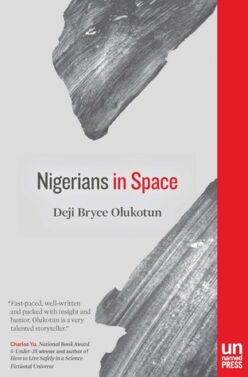
Nigerians in Space by Deji Bryce Olukotun

Overview Nigerians in Space is the debut novel by Deji Bryce Olukotun, published by The Unnamed Press. It is a genre-blending work that combines elements of crime thriller, noir fiction, science fiction, and literary fiction. The novel explores themes of diaspora, identity, homecoming, betrayal, and the tension between personal ambition and familial duty. The story moves across three continents North America, Europe, and Africa and spans two time periods: 1993 and the present day (roughly the early 2010s). It follows two primary narratives that eventually converge: the story of Dr. Wale Olufunmi, a Nigerian-American lunar geologist who steals a priceless moon rock and flees to South Africa, and the story of Thursday Malaysius, a coloured South African abalone poacher who becomes entangled in a criminal underworld. The novel is structured in three books: “The Moon Rock Thief,” “The Abalone of Obz,” and “Melle,” with a prologue and an epilogue. It is a complex, multi-layered narrative that examines what it means to go home, the nature of sacrifice, and the consequences of betrayal. Book I: The Moon Rock Thief Chapter 1: Houston, Texas (1993) The novel opens in 1993 in Houston, Texas, with Dr. Wale Olufunmi, a Nigerian-American lunar geologist, playing …

Read more

African Short Stories edited by Chinua Achebe and C. L. Innes

Introduction African Short Stories, selected and edited by the legendary Nigerian novelist Chinua Achebe and the prominent scholar C. L. Innes, was first published in 1985 in the Heinemann African Writers Series (AWS 270). The anthology serves as a curated map of the rich, diverse, and rapidly evolving landscape of modern African short fiction. In compiling these twenty stories from across the continent, Achebe and Innes aimed to present a collection of high literary merit that would appeal to the general reader while offering a manageable, engaging introduction to the art and world of African fiction. Deconstructing the “Native” Genre Fallacy In his introduction to the anthology, Chinua Achebe takes direct aim at the paternalistic assertions of certain Western literary critics. He refutes the “silly notion” that the short story is a genre inherently native to Africa and therefore strong while the novel is an alien form and therefore weak. Achebe argues that while both the novel and the short story in Africa undoubtedly draw from a rich, common oral heritage, each has achieved its own formal distinctiveness in the hands of its best practitioners. The modern short story, Achebe asserts, is a highly sophisticated, technically demanding modern form of …

Read more

African Gender Studies: A Reader by Oyèrónké Oyěwùmí

Overview & Epistemological Paradigm Edited by decolonial feminist scholar Oyèrónké Oyěwùmí and published in 2005 by Palgrave Macmillan, African Gender Studies: A Reader is a landmark anthology in decolonial feminist epistemology. The collection is dedicated to Nobel Peace Laureate Wangari Maathai, who taught that “in order to make change, we must take charge”. Oyěwùmí’s foundational thesis asserts that the conceptual categories of gender and sexuality used in global academia are fundamentally Western cultural exports. In her preface, she demonstrates that Western gender categories are an outgrowth of “biological foundationalism”, an ideology where physical bodies provide the inevitable rationale for organizing the social world, a cultural logic she terms “bio-logic”. The book’s core objective is to challenge this uncritical imposition of Western, biologically deterministic concepts on African realities. It argues that Africa must be studied on its own terms and that endogenous African knowledge must be a foundational factor in global social theory. The text comprises twenty-two chapters divided into seven sections, with each section preceded by an analytical introduction. Section I: Transcending the Body of Knowledge Chapter 1: Visualizing the Body: Western Theories and African Subjects (Oyèrónké Oyěwùmí) Oyěwùmí traces the genealogy of somatocentrism (the visual prioritization of physical bodies) …

Read more

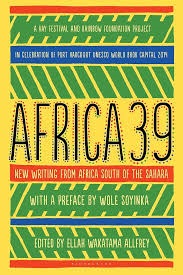
Africa 39 New Writing from Africa South of the Sahara

Africa39: New Writing from Africa South of the Sahara is a landmark literary anthology published in 2014 by Bloomsbury Publishing Plc. Curated under the auspices of the Hay Festival and in celebration of Port Harcourt’s selection as the UNESCO World Book Capital 2014, the collection brings together thirty-nine of the most promising and distinctive writers under the age of forty from sixteen countries south of the Sahara. Part I: Prefaces and Editorial Frameworks Wole Soyinka’s Introduction: “The Word Shall Fly Free!” In his introduction, Nobel Laureate Wole Soyinka frames the collection around the twenty-fifth anniversary of the fall of the Berlin Wall. He reflects on how the historical “wind of change” that blew across post-colonial Africa in the mid-20th century changed character, carrying the debris of external ideological warfare. Soyinka distinguishes between a handful of genuine leaders who possessed conviction in social doctrines and a cynical majority who used radical ideologies as weapons to silence dissidence and demand conformity. In the Soviet Union and its captive bloc, creative choices were placed under a “testamentary microscope,” turning literature into a mechanism of party ideology. This ideological policing soon spread to African academic institutions, resulting in bitter, paralyzing debates. For Soyinka, the …

Read more

Africa Must Unite by Kwame Nkrumah

Kwame Nkrumah’s seminal book, Africa Must Unite, published in the United States in 1963 by Frederick A. Praeger, stands as a foundational text of Pan-African political and economic philosophy. Dedicated to George Padmore and to the African Nation that must eventually be realized, the book serves as a historical analysis of the colonial legacy, a blueprint for post-independence state-building and socialist development in Ghana, and a passionate, detailed case for the total political and economic unification of the African continent. Introduction Nkrumah begins by capturing the revolutionary fervor sweeping the continent, invoking nationalist slogans such as Freedom!, Hedsole!, Sawaba!, and Uhuru!. He characterizes this “wind of change” not as an ordinary wind, but as a raging hurricane driving down the bastions of European empire. Millions of Africans and Asians have grown impatient with their historic relegation to “hewers of wood and drawers of water”. Nkrumah highlights the hypocrisy of Western powers who broadcast the slogans of democracy, the Atlantic Charter, and the United Nations Charter during two world wars to enlist the aid of colonized peoples, only to declare that these principles had no application to the enslaved worlds of imperialism and racial arrogance. This Western propaganda boomeranged as colonized …

Read more

Africa Kills Her Sun by Ken Saro-Wiwa

I. Introduction and the Epistolary Frame “Africa Kills Her Sun” is written entirely in the form of a first-person epistolary narrative. The story comprises a final letter written by a condemned man named Bana to his childhood sweetheart, Zole. Bana writes this letter from a dark, maximum-security prison cell on the very night before he and his two comrades, Sazan and Jimba, are scheduled to be executed by a firing squad. Bana begins the letter by acknowledging that Zole will undoubtedly be surprised to receive it, given that they have not seen each other in ten years and their childhood love was never physically consummated. He notes that his condemned colleagues, Sazan and Jimba, view his letter-writing as “somewhat pathetic,” believing their finest and most complete moments had already been achieved during their trial two or three weeks prior. For Bana, however, the letter is a vital “celebration” and a “final act of love” a sentiment he admits he has not possessed in abundance throughout his turbulent life but nonetheless deeply cherishes. The memory of their innocent childhood youth, spent “when the world was new and the fishes flew in golden ponds,” serves as Bana’s psychological sanctuary. He explains that …
Read more

The Mechanics of Yenagoa by Michael Afenfia

Michael Afenfia’s The Mechanics of Yenagoa (published in 2020) is a gripping, humorous, and deeply satirical portrayal of contemporary Nigerian urban life, specifically set in the capital of Bayelsa State, Yenagoa. At its heart, the novel is a brilliant study of human frailty, the intersections of survival and moral compromise, and the intricate, often absurd networks of relationships that define life in the Niger Delta. The story is narrated in the first-person by Ebinimi, a self-aware, highly educated mechanic who struggles to balance his professional hustle, his convoluted love life, and the chaotic developments within his own family compound. The narrative masterfully weaves together several major thematic threads: the proliferation of predatory religious ministries, the dangerous underbelly of political clientelism and thuggery, the complexities of familial duty, and the pervasive culture of interpersonal double-crossing. In Afenfia’s Yenagoa, trust is a rare and expensive commodity. Every character is engaged in their own personal “hustle,” often operating under a thin veneer of religious devotion or familial loyalty. Through sharp dialogue, local Pidgin English, and recursive plot twists, the novel exposes how easily lives can become entangled with dangerous actors and how quickly small compromises can escalate into life-threatening crises. Chapter 1: The …
Read more

Advanced Bang Rule by Charles Nneji

“Advanced Bang Rule: Powerful Step By Step Secrets To Meeting A Girl, Eliminating Her Hard To Get Attitude And Getting Her Extremely Crazy About You” is a self-help and relationship guide written by Charles Nneji. Published in 2015, the book serves as the advanced sequel to Nneji’s first ebook, The Bang Rule. It is designed to provide practical, real-life behavioral hacks to help men trigger massive attraction, establish relationship control, and dismantle what the author calls female “Chic-Resistance”. PART I: THE AUTHOR’S PREMISE AND PHILOSOPHY 1. The Target Audience and Style Warning At the outset, Nneji establishes that his book is not designed for readers seeking traditional dating advice, literary elegance, or academic prose. He explicitly warns that if a reader believes it is impossible to walk up to a total stranger, get her phone number, and make her fall in love within 30 days or less without her playing “hard to get,” then this book is not for them. Nneji openly acknowledges his lack of academic credentials, stating, “I’m not an author or a professor so this book will have some flaws”. He advises those who read purely for sentence construction, writing style, or literary quality to put the …

Read more

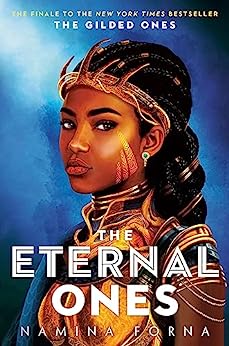
The Eternal Ones by Namina Forna

In the concluding chapter of Namina Forna’s trilogy, The Eternal Ones, the narrative follows Deka of Irfut, now known as the Angoro (the slayer of the gods), as she embarks on a desperate quest to save the empire of Otera and the entire world of Kamabai from the corruption of warring deities. The story begins three months after Deka’s confrontation with the Gilded Ones, during which she discovered that she is not their daughter but a divine intermediary sent by the Singular to end their madness. Deka is currently hiding on the hauntingly beautiful island of Gar Nasim, a place where silver trees puff noxious odors and iridescence lizards dart through purple grasses. Her body is in a state of horrific deterioration; gold-crusted sores erupt across her skin like lightning bolts every time she moves or uses her abilities. As her former mentor White Hands has warned, Deka is rapidly losing her connection to her kelai the substance of divinity and if she does not retrieve it soon, her mortal form will scatter into a thousand pieces. Part I: The Shadow Vales and the Call of the Divine While Deka searches for her mother, Umu, whom she believes is hiding …

Read more

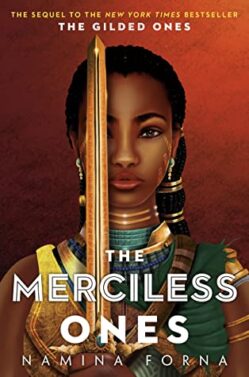
The Merciless Ones by Namina Forna

In Namina Forna’s The Merciless Ones, the second installment of the Gilded Ones trilogy, the story begins six months after Deka freed the ancient goddesses of Otera and discovered her true nature as the Nuru, the only full-blooded daughter of the divine. While a new era of freedom was promised, the kingdom of Otera remains a battlefield. The goddesses have raised the city of Abeya from the salt flats of the N’Oyo Mountains, turning the desolate landscape into a lush paradise known as “The Bloom”. However, the human forces of the former empire the jatu and the priests of Oyomo have not surrendered. Led by the mysterious and powerful Elder Kadiri, they have gathered an army to reclaim the kingdom and extinguish the alaki once and for all. The Rescue of Melanis and the Discovery of the Forsworn The narrative opens with Deka and her closest companions Britta, Belcalis, Asha, Adwapa, and the deathshriek Katya on a raid in the Southern provinces. They are confronted with the brutality of the ongoing war: young girls mounted on stakes as warnings to any woman who dares speak the name of the Gilded Ones. During this mission, an elderly Northern woman blames Deka …

Read more

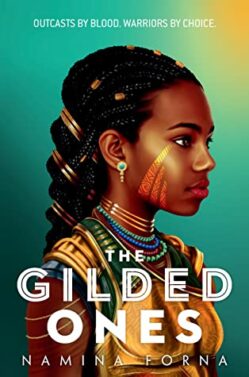
The Gilded Ones by Namina Forna

Namina Forna’s The Gilded Ones is an epic fantasy set in the kingdom of Otera, centered on Deka, a sixteen-year-old girl whose life is defined by a rigid, patriarchal society governed by the Infinite Wisdoms. Deka lives in the remote northern village of Irfut, where she prepares for the Ritual of Purity, a ceremony that determines whether a girl is “pure” and fits into society by bleeding red, or is an “impure” demon who bleeds gold. Deka has spent her life as an outsider due to her appearance; while her father is a Northerner with grey eyes, she inherited her mother’s dark Southern skin, making her a target of suspicion and malice from villagers like the spiteful Agda. Her anxiety is compounded by the memory of her mother, who died of the red pox three months prior and whom Deka resembles in ways she feels must remain secret. On the day of the Ritual, the village is festive but tense, as rumors of deathshrieks gaunt, silver-pelted monsters with lethal screams attacking the borders have reached even the remote north. During the ceremony at the Temple of Oyomo, deathshrieks launch a sudden and horrific massacre in the village square. As Deka …

Read more

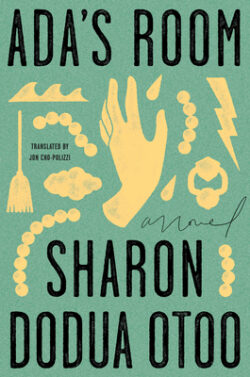
Ada’s Room by Sharon Dodua Otoo

Sharon Dodua Otoo’s Ada’s Room is a genre-defying, multi-layered novel that explores the interconnected lives of four women named Ada across different centuries and continents. The narrative is bound together by a unique narrator a sentient spirit or consciousness that reincarnates into various household objects and a sacred golden bracelet with thirty-three beads. The book is guided by the Asante principle of Sankofa: “Return and retrieve! It is not taboo to return for what has been forgotten. Learn from your past”. The Narrator and the Concept of the Orbits The novel is structured around “Orbits,” representing the recurring lives of Ada. The story is narrated by a being that exists outside of human time, engaging in ongoing philosophical debates with God. This narrator experiences the world through the objects it inhabits: a brushwood broom in 1459, a brass door knocker in 1848, a concentration camp room in 1945, and a British passport in 2019. In the “Between the Orbits” sections, the narrator and God discuss the nature of human existence using the analogy of sausage making. They suggest that all beings originate from a common “sausage meat” mass of souls, pressed through a meat grinder into individual “casings” (human lives). …

Read more

Adanna by Adesuwa O’Man Nwokedi

Book cover: silhouetted woman in profile against an orange gradient with scattered stars; large white 'Adanna' title and subtitle 'A story of love, lust... and revenge'

Adesuwa O’man Nwokedi’s Adanna is a sweeping multi-generational narrative that explores themes of beauty as a burden, systemic abuse, the weight of family obligation, and the ultimate pursuit of redemption. The story follows the life of Adanna Okafor, a young girl from Onitsha whose life is defined by a series of tragic sacrifices that lead her from a modest home to a gilded cage in a sprawling ranch in Ojiji. Part I: The Innocence and the Tragedy Adanna grows up in Onitsha in the 1990s, fully aware of her striking beauty. Blessed with golden skin, long hair, and large, “saucer-like” eyes, she is accustomed to being the center of attention. However, her parents, Aloysius and Ugochi, instill in her the value of brains over beauty. Adanna is a brilliant student, dreaming of becoming an aerospace engineer at NASA. Her family life is simple and happy, shared with her younger brother Jidenna and sister Ahunna. The trajectory of her life changes when she meets Anayo Nsofor, the eighteen-year-old son of a wealthy baker. The two share a brief, intense teenage romance characterized by a passionate kiss and a promise of letters. However, this blossoming love is cut short when Anayo is …

Read more

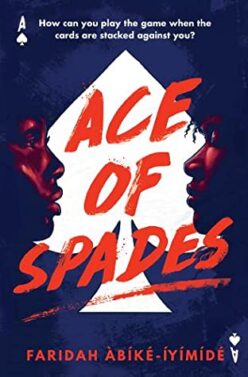
Ace of Spades by Faridah Àbíké-Íyímídé

Cover art for the card game Ace of Spades: two faces in profile framing a white spade, bold red title on a dark blue background; author Faridah Abíké‑Iyímíde.

In Faridah Àbíké-Íyímídé’s Ace of Spades, the prestigious and elite Niveus Private Academy becomes the backdrop for a high-stakes thriller centered on two students: Devon Richards and Chiamaka Adebayo. The narrative, structured through alternating perspectives, explores the intersection of race, class, and systemic oppression as the characters are targeted by an anonymous bully known only as “Aces.” Part I: The Ivory Tower – The Rise of Aces The story begins on the first day of senior year. Devon Richards, a talented musician and scholarship student from a rougher part of town, prefers to remain invisible, focusing solely on his Juilliard audition piece. In contrast, Chiamaka Adebayo is the school’s “Queen Bee,” a high-achiever who has spent three years meticulously crafting a persona of perfection and power to secure her future at Yale. Their lives collide during the first-day assembly when Headmaster Ward, a tall, ominous man who recently replaced Headmaster Collins, announces the senior leadership positions. To his shock, Devon is named a Senior Prefect, while Chiamaka is appointed Senior Head Prefect for the third year in a row. During the assembly, a technical glitch momentarily displays an Ace of Spades playing card on the giant screen, an event that …

Read more

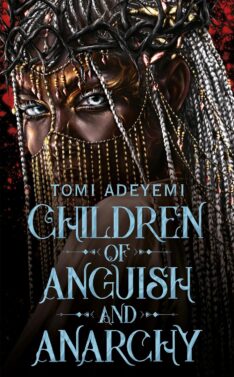
Children of Anguish and Anarchy by Tomi Adeyemi

Book cover showing a person with a beaded headpiece and intense eyes; title 'Children of Anguish and Anarchy' by Tomi Adeyemi.

In Tomi Adeyemi’s Children of Anguish and Anarchy, the final installment of the Legacy of Orïsha trilogy, the story begins in the immediate, harrowing aftermath of the civil war in Lagos. The kingdom of Orïsha has been decimated not by its own internal strife, but by a foreign invader known as the Skulls, a ruthless group belonging to the Tribes of Baldeírik. These abductors, led by the enigmatic and brutal King Baldyr, have systematically raided the Orïshan coast, kidnapping maji and tîtáns alike to serve a dark, ancient purpose. Part I: The Captivity and the Shipwreck The narrative opens with Zélie Adebola imprisoned in a hanging iron cage aboard a Skull slave ship. She is in a state of profound physical and spiritual agony; her signature white hair has been shorn, and her body is covered in grime and bruises. To suppress her magic, the Skulls regularly inject her with liquid majacite, a magic-dampening poison that leaves her numb and disconnected from her goddess, Oya. Zélie’s isolation is total until a new prisoner is thrown into an adjacent cage: Prince Inan. Inan, who was believed to have been left for dead in the palace cellars, is gaunt and scarred but …

Read more

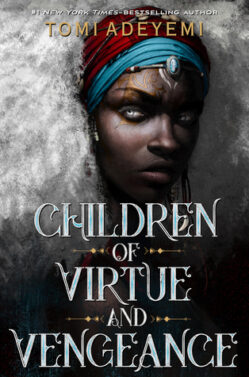
Children of Virtue and Vengeance by Tomi Adeyemi

Book cover: Children of Virtue and Vengeance by Tomi Adeyemi, showing a close-up of a dark-skinned woman with a red and teal head wrap.

In Tomi Adeyemi’s Children of Virtue and Vengeance, the kingdom of Orïsha is thrust into a bloody civil war following the restoration of magic. The narrative picks up shortly after the centennial solstice ritual, exploring the devastating consequences of the returned power and the deep-seated trauma of its protagonists. The story is told through the alternating perspectives of Zélie Adebola, Princess Amari, and King Inan, each struggling to navigate a world where magic is no longer a memory but a volatile weapon. Part I: The Price of Magic and the Burden of Grief The story begins with a profound sense of loss. Zélie Adebola, a Reaper of the Ikú Clan, is consumed by the memory of her father, Baba, who sacrificed his life during the ritual to bring magic back to Orïsha. She recalls the lullaby of the tides and the warmth of his presence, contrasting it with the cold, gray reality of Jimeta’s rocky bluffs, where she prepares to lay him to rest. Zélie feels the purple light of her ashê the divine power that fuels magic bubbling under her skin, but it only reminds her of the pain of her father’s spirit tearing through her veins. Accompanied by …

Read more

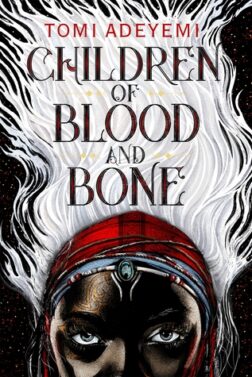
Children of Blood and Bone by Tomi Adeyemi

Cover of Children of Blood and Bone by Tomi Adeyemi, showing a woman with a red headscarf and white hair.

In Tomi Adeyemi’s Children of Blood and Bone, the land of Orïsha is a kingdom fractured by a history of magic and a legacy of systematic oppression. Eleven years before the story begins, magic “died” in an event known as the Raid, during which King Saran ordered the slaughter of all adult maji while magic was mysteriously absent from the world. Since then, their children known as divîners have lived as a marginalized underclass, recognizable by their snow-white hair and forced into heavy taxation or the stocks (state-sanctioned labor camps). The Catalyst: A Fish and a Scroll The narrative begins with Zélie Adebola, a seventeen-year-old divîner living in the ocean village of Ilorin. Zélie trains in the art of the staff under Mama Agba, a lethal elder who teaches divîner girls self-defense. The precariousness of their lives is highlighted when royal guards arrive to demand an increased “maggot tax,” leading to a violent confrontation where Zélie is assaulted by a guard. To pay the debt and save Zélie from the stocks, her father, Baba, and brother, Tzain, decide she must go to the capital city of Lagos to sell a rare, valuable red-tailed sailfish. Simultaneously, in the royal palace, Princess …

Read more

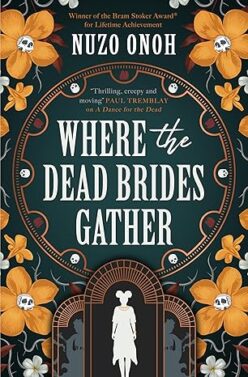
Where the Dead Brides Gather by Nuzo Onoh

Summary of Where the Dead Brides Gather by Nuzo Onoh I. The Arrival of the Black Horse and the Overture of Terror The narrative commences in a rural Nigerian village in 1977, during the festive atmosphere of FESTAC ’77. The peace of the protagonist’s household is shattered when a rich in-law named Bongo brings a massive, powerful black horse to Uncle Gabriel’s house as a pre-wedding gift for her cousin, Keziah. The horse is an awe-inspiring yet terrifying creature, but from the moment it is tethered to a mango tree, it begins to scream with “human anguish and terror”. These chilling shrieks, which sound like “unearthly sounds of raw terror,” affect the village children and cause the protagonist, ten-year-old Akuabata (Bata), to break out in involuntary rashes. Bata’s family dynamic is defined by the contrast between her mother, Mama-Ada, a compassionate and devout Catholic, and her stepmother, Ọla (Mama-Ejima). Ọla is a “Pancake-Face” a woman who coats her face in thick powder and bright eye shadow to maintain a facade of glamorous, city-bred beauty. Ọla is obsessed with Lagos City and the “Charlie” perfume she claims white women use. Bata’s elder sister, Ada, is fiery and outspoken, frequently clashing with …

Read more

Unhallowed Graves by Nuzo Onoh

Unhallowed Graves by Nuzo Onoh is a seminal work of African Gothic horror, composed of three haunting novellas that explore the intersections of West African mythology, generational trauma, and the supernatural. The book delves into the “unhallowed” spaces where the living and the dead collide, often through themes of betrayal, ritual, and the heavy price of survival. I. The Unclean: The Tragedy of Desdemona and the Tree of Truth The Trial in Ukari Forest The first story, “The Unclean,” opens in the Ukari Forest at 9:00 PM. The protagonist, Desdemona (Desee), is kneeling beside the putrid, bloated corpse of her husband, Agu. She is undergoing a “trial by corpse,” a traditional ritual where a widow must spend three nights alone with her husband’s body to prove she did not kill him. Desee is trapped within a salt-lined boundary set by witchdoctors, under the watchful branches of the Iroko tree, known as the Tree of Truth the final arbiter of justice in Ukari. Desee reflects on her “accursed” status as a widow without a son, describing herself as “exposed to the flings and thumps of the merciless force of nature”. She recalls the events that led to this nightmare, beginning with …

Read more

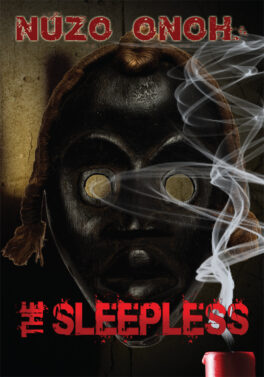
The Sleepless by Nuzo Onoh

Summary of The Sleepless by Nuzo Onoh I. The Overture of Blood: The Melina Forest The narrative of The Sleepless commences in the claustrophobic gloom of a vast, ancient forest. The opening scene establishes a visceral atmosphere of horror as a child, Kene, stares at the bloated carcass of a black cat nailed to a Melina tree. The cat’s eyes, though belonging to a dead animal, are described as possessing an “animated fury,” and the worms feasting upon its flesh are poisoned by the animal’s residual malice, shrinking into “dried rice seeds” and dropping in lifeless clusters. This imagery serves as a chilling harbinger of the ritualistic violence to follow. Kene is a vulnerable child, suffering from a big head, a thin neck, and a “polio-wizened” left leg that makes his gait unsteady. He is accompanied by his father, Papa (Ogbuagu), and a squat, malicious woman named Abundance. Despite the terrifying environment, Kene’s developmental challenges (he is cruelly referred to by the adults as an “onukwu” or “retard”) leave him innocently trustful. He believes he is being led into the woods to receive a “secret present” perhaps a bowl of “Akara and Akamu” (beanballs and corn porridge). Papa, who has …

Read more

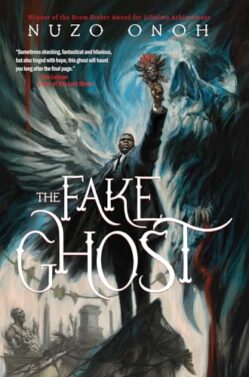
The Fake Ghost by Nuzo Onoh

The man who believed he was a “perfect specimen of prime manhood” was a very rich and powerful individual who lived in an opulent house and socialized with the most important people in the world. One day, he put on his Rolex, his Yeezy sneakers, and a bright red cap to go play golf, but something bad happened to him and he believed he had died. His soul experienced a terrifying free-fall through dark, chilling tunnels and icy realms that seemed never-ending. He felt himself to be nothing more than a bodiless soul on a shitty flight from death, sensing a hooded nemesis with a killing scythe giving him relentless chase. Hearing the frail wail of a newborn baby from a separate tunnel, he veered toward the sound and dove until he hit something soft and small, which knocked him unconscious. When he regained consciousness, he found himself in a stinking, rancid room with red-mud walls and a thatched roof. He initially tried to call for his security detail, screaming for a man named “Pete,” but realized he could not move his neck and his pistol was gone. He recalled that his name was POTUS, though he could not remember …

Read more

A Dance For the Dead by Nuzo Onoh

The Setting of Ukari and the Princes of Oma The narrative of A Dance for the Dead is set in the Okoro territories, specifically within the Ukari village ruled by the Oma clan. The village is governed by King Ezeala, a traditional and often ruthless ruler who values legacy and martial prowess above all else. He has two primary sons from his first wife, who died during the birth of the younger son. The eldest is Diké, also known by his warrior name Agu-eji-ejemba, which means “The Tiger that marches before his people in battle”. Diké is the heir to the royal stool and the fearsome leader of the Ogwumii, an exclusive warrior cult whose exploits strike terror into the hearts of their enemies. In contrast, the younger brother, Ife, known as Feather-Feet, is a dreamer and a lithe, beautiful dancer. Ife is widely believed to be the reincarnate of Mgbada, the greatest dancer in the history of the ten villages. While Diké is the pride of the warriors, Ife is the darling of the common people, especially the women who swoon at his performances of the Igede dance and the famous River Dance, which mimics the undulating flow of …

Read more

Wilderness of Mirrors by Olufemi Terry

The narrative of Wilderness of Mirrors by Olufemi Terry is a dense, intellectually rigorous exploration of identity, cultural displacement, and the amoral intersections of philosophy and power. Set in a reimagined South Africa where cities have been renamed to reflect their economic and psychological states, the story follows Emil Silva, a detached and intellectually gifted medical student, as he descends from the prosperous, abstracted north into the atavistic and politically volatile south. Through a journey that begins as a familial errand, Emil becomes entangled in a “wilderness” of conflicting ideologies, drug-induced hallucinations, and the cold calculations of a German provocateur. The Departure: From eGoli to eGeld The story commences on a night “the color of old ink” as Emil Silva slips out of his home in the northern suburbs. Emil is a fourth-year medical student specializing in neurosurgery, a path he chose based on an intellectual affinity for the brain’s complexity rather than empathy for patients. He is taking a gap year to “just live,” a decision his father, Errol Silva, a shrewd lawyer and loyal member of the ruling Movement Party, views with suspicion. Errol transforms Emil’s hiatus into a “fool’s errand”: Emil is sent to Stadmutter (formerly Cape …

Read more

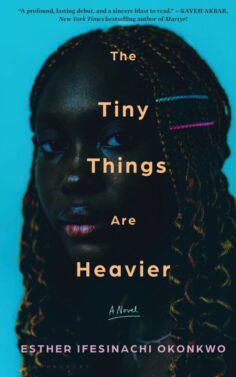
The Tiny Things Are Heavier by Esther Ifesinachi Okonkwo

Somkelechukwu (Sommy) Nwachukwu arrives in the blinding heat of Iowa to begin a graduate program at James Crowley University, met by her new roommate, Bayo, a man she initially finds shorter than expected based on his boisterous phone persona. While standing at the airport exit, Sommy witnesses a woman holding a cardboard sign that reads “WELCOME HOME MY LYING SNIVELING CHEATING HUSBAND,” a spectacle of private pain that Bayo views with a mix of mischief and judgmental validation. As they drive toward their small, modern apartment, Bayo engages in a constant stream of talk, describing his generous American classmates, his church experiences, and his views on gender dynamics, including a “lazy posturing” regarding feminism. Sommy, however, is physically and emotionally exhausted from her twenty-four-hour journey and is preoccupied with her brother, Mezie, who has recently attempted suicide and has stilled himself toward her since the event. Upon reaching their new home, Sommy discovers that Bayo has already claimed the larger bedroom and the only storage room, an early sign of his need to establish ownership in their shared living space. Bayo attempts to cheer her up by explaining Seasonal Affective Disorder (SAD) and how Iowa’s gloomy winters can lead to …

Read more

The Talk of the Party by Foluso Agbaje

Summary of The Talk of the Party Foluso Agbaje’s The Talk of the Party is a multi-generational drama set against the vibrant, high-stakes backdrop of Lagos high society. The novel explores themes of generational trauma, the weight of reputation, institutionalized deception, and the corrosive nature of family secrets. The story oscillates between the early 1980s, the pivotal year of 1992, and the present day (2020-2022), centered on the sixtieth birthday celebration of the family matriarch, Bukola Obanile. Through a tapestry of perspectives, Agbaje reveals that beneath the polished veneer of the “perfect” Obanile family lies a “sandcastle” of lies waiting to be toppled by the truth. The Prologue: The Red Bathwater (1992) The narrative begins with a haunting childhood memory from July 1992. A young girl (later revealed to be Anjola) recalls watching her mother, Soma, in a bathtub filled with lavender-scented steam. The memory is sensory and visceral: the smell of black soap, the peachy tiles, and the sound of a thunderstorm outside. The most jarring detail is the water turning red, “like the sweet zobo they drank at dinner but darker”. Soma is “so, so tired,” drifting into a place beyond reach. The next morning, the girl watches …

Read more

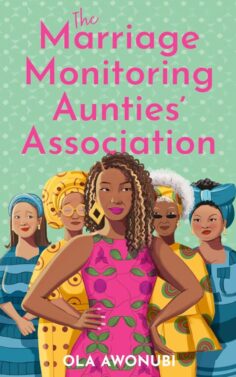
The Marriage Monitoring Aunties’ Association by Ola Awonubi

The narrative of The Marriage Monitoring Aunties’ Association by Ola Awonubi is a deeply textured exploration of the intersection between modern career-driven life, traditional Nigerian expectations, and the persistent quest for love and faith. The book follows Folasade (Sade) Sodipo, a fifty-year-old project manager living in London, as she navigates a significant health crisis, the “single-shaming” tactics of her extended family, and a burgeoning romance with a man who challenges her spiritual foundations. The Burden of Singleness and the Silent Struggle The story commences during the Christmas season, a time Sade describes as a “singleton” nightmare where her isolation is magnified by the cozy family units surrounding her. At fifty, Sade is an accomplished professional at Ryder & Hamilton in Canary Wharf, having used the PRINCE2 certification to escape a career in low-paid admin. Despite her success, she is perpetually scrutinized by her mother, Ebun Sodipo, and a collective she dubs the Marriage Monitoring Aunties’ Association (MMAA). This group of elder Nigerian women frequents community events to “spring out from corners” and ridicule unmarried women for their single status. Sade’s emotional fatigue is compounded by a physical crisis: she is suffering from debilitating fibroids that have caused her abdomen to …

Read more

The Hand of Iman by Ryad Assani-Razaki

Summary of Ryad Assani-Razaki’s The Hand of Iman The novel is a visceral exploration of human trafficking, generational trauma, the weight of poverty, and the desperate, often violent search for identity and escape in West Africa. Toumani: The Commodity and the Manhole The novel opens with Toumani’s first imperishable memory: the “hand-to-hand” exchange in which his father sells him for 15,000 FCFA. At age six, Toumani’s fate is sealed as a “mere economic transaction”. He is taken by Auntie Caro, a professional trafficker who buys children from the north and resells them in the capital city. Caro treats children as “investments,” renaming them and presenting them in “finer packaging” to increase their resale value. Toumani is eventually sold to Mr. Bia, a man he characterizes as the “devil”. Mr. Bia immediately strips Toumani of his name, insisting on calling him Apollinaire. When Toumani initially resists, Mr. Bia beats him brutally with a shoe until Toumani surrenders his identity to escape the pain. Toumani’s life becomes a cycle of domestic servitude and physical degradation, serving interchangeable mistresses who come to the house “to die a little”. He eventually discovers a note from Terre des Hommes promising help, but when Mr. Bia …

Read more

The Comfort of Distant Stars by I.O. Echeruo

Summary of The Comfort of Distant Stars by I.O. Echeruo I. The Consecration of Ezeani Kobidi The narrative begins with a fundamental meditation on the nature of existence: one cannot understand life without understanding time. The protagonist, Ezeani Kobidi, recalls his earliest memory at barely three years old, when he was plucked from his bed and taken to a clearing in a dense forest to be made a high chief the highest Ozo title, Ezeani. The ceremony is shrouded in the sensory details of a thunderstorm; the air smells of burnt iron, and the red clay soil of Umudim clings to his toes as he is led by a man named Anyanwu. During this walk, the young Ezeani experiences a terrifying epiphany: he believes the voices arguing behind him are debating his monetary value, contemplating selling him into slavery. This fear, he later notes, is rooted in the historical context of West Africa, where for centuries commerce consisted of kidnapping and selling neighbors. In the forest clearing, they find the trunk of a massive Orji tree, sawed off and sanded flat into a table, yet still alive with mushrooms growing from its roots. Ezeani’s mother is at the center of …

Read more

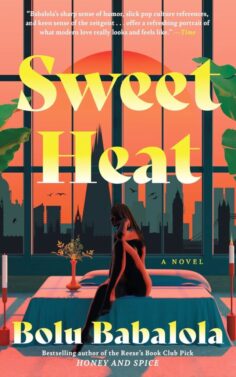
Sweet Heat by Bolu Babalola

The narrative of Sweet Heat is a lush, emotionally resonant odyssey that explores the complexities of “second-chance” romance, the weight of generational legacy, and the process of reclaiming one’s creative voice. Spanning from the rain-slicked streets of London to the sun-drenched vistas of Cape Town, the story follows Kiki Banjo and Malakai Korede as they navigate the debris of their past to build a future that is “right on time”. The Illusion of Stability and the Onyx Offer The story begins in February, with Kiki Banjo experiencing a sense of impending “pre-catastrophe” during a date night with her boyfriend, Bakari. Kiki, an overachieving eldest Nigerian daughter and former host of the successful podcast The Heartbeat, is in the midst of a quarter-life crisis after quitting her job at a major streaming service, SoundSugar. Bakari, a tech founder who appears on the Forbes 30 Under 30 list, is a man of “facts and bitrates” who provides a measured, “adequate” warmth that Kiki has convinced herself is enough. During dinner, Kiki suspects Bakari is about to propose. Instead, he offers her a job at his company, Onyx, leading a new research division to track Black music audiences. Bakari frames the offer as …

Read more

Sugar Daddy Chronicles Lewa by Tomilola Coco Adeyemo

The narrative of Sugar Daddy Chronicles: Lewa by Tomilola Coco Adeyemo is a complex, multi-layered erotica that traverses the dangerous intersections of the Nigerian elite’s “sugar baby” culture, traditional occultism, and the desperate search for love amidst institutionalized betrayal. The story follows Omolewa (Lewa), a twenty-four-year-old graduate from Oyo town, as she is lured into a high-stakes world of prostitution and power by her aunt, Sisi (Funke Alao), only to find herself ensnared in a spiritual and physical battle for her soul. The Initiation: The Oath at Ajah The story commences on a tempestuous night in an Ajah mansion, a place defined by its intimidating fences and opulent interior featuring gold chandeliers and a life-sized painting of the orisa Orunmila. Lewa is one of four girls brought there by Sisi to swear an eternal oath of loyalty. This is not a standard business agreement; it is a spiritual contract overseen by Sho (Dimeji Shogbesan), a handsome and terrifyingly cold babalawo who possesses a foreign accent and hazel-brown eyes. The ritual is grim. Dressed in pristine white, Sho compels Lewa to strip and sit on a mat where he divines her fate using the ọ̀pẹ̀lẹ̀ ifá. He reveals that Lewa is …

Read more

One Leg on Earth by ’Pemi Aguda

Summary of One Leg on Earth by ’Pemi Aguda I. The Overture: The Fruit and the Bridge The narrative of One Leg on Earth begins with a section titled “Fruit,” which serves as a chilling prologue to the atmospheric mystery of Lagos. It centers on Miriam Aiki, a woman who has endured thirteen years of desperate prayer, physical hardship, and spiritual appeals to conceive. At thirty-eight, she is finally six months pregnant, experiencing what the narrator describes as an “ugly joy” a bliss so heavy and potent it causes physical nausea. While stuck in a typical, grueling standstill on Third Mainland Bridge with her husband, Victor, Miriam is overcome by a sudden, misplaced euphoria. To the shock of the surrounding commuters and her husband, Miriam exits the vehicle, skips between the stalled cars, and dances with a “frothing joy”. Ignoring Victor’s frantic calls, she skips to the edge of the bridge and launches herself belly-first into the Lagos Lagoon. This act is not portrayed as a moment of despair, but as a “flight” into the arms of something welcoming, setting the stage for a city-wide phenomenon that will haunt the rest of the novel: the systematic, seemingly ecstatic suicides of …

Read more

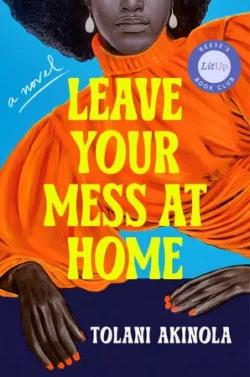
Leave Your Mess at Home by Tolani Akinola

Leave Your Mess at Home by Tolani Akinola is a multi-generational domestic drama that explores the intricate, often fractured relationships within the Longe family, a Nigerian-American household in Chicago. The narrative is told through the alternating perspectives of four siblings: Ola, Sola, Anjola, and Karen. Spanning from late October to late December 2018, the novel centers on themes of generational trauma, the weight of parental expectations, cultural identity, and the process of “Sankofa” returning to the past to reclaim one’s future.  The Longe Siblings: Introduction and Initial States The story begins on Saturday, October 20, introducing the central tensions of each sibling’s life. Anjola Longe, the third child, is a Yale-educated doctor currently undergoing a grueling residency at Cook County’s Stroger Hospital. She has recently moved back to Chicago, a decision her mother, Latifat, views with disapproval, believing Anjola “wasted” her elite education on a public hospital that “works her like a mule”. Anjola is defined by a deep-seated perfectionism and a secret, long-standing love for her best friend, Neil Haynes-Stuart, who has just announced his engagement to a woman named Giselle. Gbemisola (Sola) Longe, the second child and former “family reject,” has secretly returned to Chicago after a decade-long …

Read more

Kiss Marry Kill by Yemi Dipeolu

The Prologue: A Wedding Marred by Murder The narrative of Kiss Marry Kill begins with an atmosphere of profound irony during the wedding of Ade Dolapo and Ifelayo (Ife) Ojo. As Ife walks down the aisle towards Ade, he observes her beauty and the fact that she is pregnant, yet he feels a disturbing lack of joy or emotional connection. He acknowledges his own selfishness in marrying her, wondering why a woman would commit to a man who is so clearly “broken”. For Ade, Ife has become “oxygen” a necessary presence to keep him from “drowning,” even if he does not truly love her back. Despite his desire to walk away, he remains at the altar to avoid disappointing his mother, who is overjoyed that he has finally moved on from his previous partner, Cynthia Bennet, whom she dismissively refers to as the “Jamo girl”. After the ceremony and during the reception, while the guests are eating jollof rice and drinking Guinness, the situation takes a surreal turn. Ade spots Cynthia who has been missing for three months hiding in plain sight among the crowd, dressed in black and staring at him with eyes full of “malice”. In a panic, …

Read more

Hafsatu Bebi A story about identity and loss by Fatima Bala

The narrative of Hafsatu Bebi is a dual-perspective epic that traverses decades, exploring the themes of identity, loss, and the profound weight of family secrets. It shifts between the burgeoning romance and subsequent trauma of the young Ibrahim Gaya and Zuwaira in the late 1990s and the contemporary life of their daughter, Hafsatu “Bebi” Gaya, a successful designer in Abuja whose life is upended by a DNA test and the discovery of a biological bond she never expected. Part One: The Origins in Kaduna (1998) The story begins in Kaduna in 1998, during an Academic Staff Union of Universities (ASUU) strike that has sent Ibrahim Gaya, a fourth-year medical student at Ahmadu Bello University (ABU) Zaria, to live with his older brother, Ya Isa. Ibrahim first notices Zuwaira in the shared compound where Isa lives. She is a “tiny frame” drying clothes by a well, performing chores with a quiet, emotionless diligence. Ibrahim is immediately captivated by her, observing her through the “haphazardly tied yellow scarf” that reveals her jet-black hair and deep brown eyes. Zuwaira’s life is defined by servitude and tragedy. An orphan who lost her parents and younger sister in a horrific commercial bus accident two years …

Read more

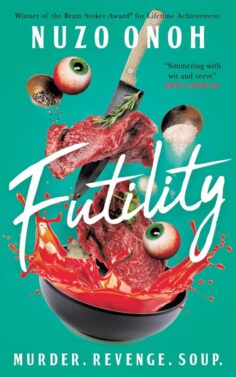
Futility by Nuzo Onoh

Introduction: The Philosophy of Despair The narrative of Futility is a visceral exploration of vengeance, occult power, and the cyclical nature of trauma, framed through the lives of two women: Chia Agu, a Nigerian restaurant owner in Abuja, and Claire Bellows, a British diplomat and former police officer. At the heart of the story lies the titular concept of “Futility” (Efu), embodied by a terrifying African deity of despair who feeds on the souls of the dead-while-walking. The book meticulously weaves together Nigerian folklore, urban grit, and body horror to show how the pursuit of revenge often leads to a hollow end. Part I: Chia Agu and the Red Room The Bambino Chick Persona Chia Agu is the proprietor of “Chia’s Palace,” a shabby yet popular restaurant in Abuja. Despite her squat, pockmarked appearance, Chia moves with the confidence of a goddess. This confidence is fueled by a supernatural secret: she possesses a “Juju Glamour-Cream,” a greasy black balm she applies to her face to cast a hex over men. Through their eyes, she does not appear as her true self but as their “ultimate fantasy lay,” often manifesting as celebrities like Rihanna or Beyoncé. Men are hopelessly drawn to …

Read more

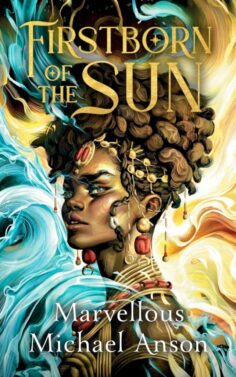
Firstborn of the Sun by Marvellous Michael Anson

The Sacred Origins and the Day of the First Sun The narrative of the Kingdom of Oru is intrinsically tied to the Day of the First Sun, an era-defining event where the gods allegedly placed a drop of the sun into the cores of the people. Before this day, the continent was home to seven disparate tribes, small settlements constantly engaged in inter-tribal warfare. A legendary king sought a weapon from his High Priest to unite these tribes, leading to the discovery of a way to summon magic from the sun itself. This power, known as agbára oru (the magic of the sun), became a hereditary gift passing from mother to child, ensuring a spiritual connection to the gods that was intended to burn undyingly. However, this gift came with a vicious cost: the stripping ceremonies and the trials of the Àlùfáà (priests). To keep the sun power strong in the bloodlines of the kingdom, brave men were called to the Red Stone to return their heat energy to the gods, a sacrifice that ensured their descendants would possess the most potent magic in the land. This system created a rigid social hierarchy where the Sovereign was the firstborn of …

Read more

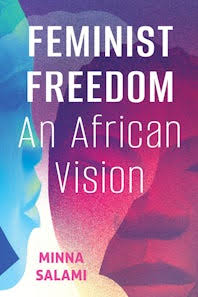
Feminist Freedom by Minna Salami

Minna Salami’s Feminist Freedom: An African Vision is an epistemic intervention that seeks to transform the way we understand freedom, identity, and power through the lens of African feminist political philosophy. The book rejects linear, materialist modes of meaning-making in favor of a “dance” with language inventing new terms for realities long misnamed or not yet imagined. At its core, the work addresses the urgent question of how we become “unavailable for servitude“. The Intellectual Framework: Paradoxes and the “Glitch” The narrative begins with Salami’s childhood encounter with the film Flashdance, which she interprets as a story of feminist resistance: a woman learning the rules of a patriarchal “dance” only to break them and move to her own rhythm. Salami defines feminist freedom not as something “given” by an oppressor, but as a birthright and a shifting quality always present in our ecosystem. Salami introduces the concept of the “Glitch” to describe the unstable nature of African identity. She argues that “Africa” is a European invention, a fiction built on the shaky premise that there is a singular, fixed “truth” about the continent. Imperialism not only exploited African soil but also troubled the African psyche, forcing Africans to develop “mythologies …

Read more

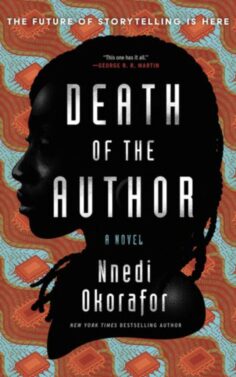
Death of the Author by Nnedi Okorafor

I. The Frame and the Author’s Dilemma The novel Death of the Author is a dual-narrative odyssey that weaves together the life of Zelu Onyenezi-Onyedele, a Nigerian-American paraplegic author, with a post-human science fiction epic she is writing (or that is being written by her own digital echo) set in a future populated by self-aware robots. The story is framed through a series of interviews with Zelu’s family, friends, and colleagues, conducted by a journalist named Seth Daniels after Zelu has “disappeared” or moved beyond the reach of the public eye. Zelu’s story begins with her struggling as an adjunct professor of creative writing in Chicago. Her life is defined by a “pattern” of impulsive decisions and a deep-seated resentment of her disability, which occurred at age twelve when she fell from an infested English ivy-choked tree during a game of “Hunger Games” tag. The fall, which she blames on her own “arrogance,” left her paralyzed and ended her childhood dream of becoming a NASA astronaut. The inciting incident of her professional life occurs during a workshopping session for a PhD student who submitted twenty-five pages of “self-indulgent drivel”. When the student smugly asks what the story means, citing the …

Read more

Chronicles of Ori An African Epic by Harmonia Rosales

Introduction The Foundations of the Narrative The Chronicles of ORI is a linear epic that weaves together West African mythology, folklore, and historical events through the perspective of the Orishas. The author, Harmonia Rosales, foundations the work on the Afro-Cuban proverb, “Cada cabeza es un mundo” or “Every mind is a world,” reflecting the idea that each individual carries a distinct universe shaped by their unique experiences. The narrative aims to connect ancient folklore with the history of forced African migration to the West, offering an alternative history that prioritizes the resilience found in the building of spiritual and physical empires. The story is primarily narrated by Orisha Oya, who invites the reader to walk through the rise, fall, and persistence of her kind. Book I: Creation The Birth of the Universe and Earth In the beginning, there was an endless void of darkness until a self-birthed primordial force emerged, initiating cosmic cycles of light and birth. This being reincarnated as Olodumare, a divine force in constant motion that collected the remnants of deceased planets in his belly the “seeds of life”. Journeying to the edge of creation, he encountered Odua, a being of pure hydrogen and transcendent luminosity. Their …

Read more

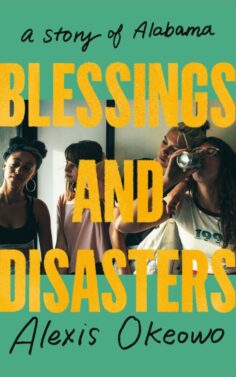
Blessings and Disasters by Alexis Okeowo

Summary of Blessings and Disasters: A Story of Alabama Introduction and the Author’s Perspective Blessings and Disasters by Alexis Okeowo is a multi-generational exploration of Alabama that seeks to uncover an “alternate history” of the state, moving the footnotes and exceptions of the official narrative into the main text. Okeowo, a foreign correspondent who spent a decade writing about Africa, noticed a jarring similarity between how that continent is stereotyped and how the American Deep South is portrayed. Outsiders often view Alabama as a “lost cause” that is too racist, religious, and backward to understand without intervention. However, the author argues that Alabama is home to a complex reality where the best and worst of the American democratic experiment are on full display. Growing up in Montgomery, the author’s childhood was defined by the geographic and social boundaries of the city, from racing her family’s red Plymouth Voyager minivan to the mall to learning the importance of grace and social standing in everyday interactions. Okeowo’s own origin story as the daughter of Nigerian immigrants places her both inside and outside the traditional Black/white racial binary of the state. Her parents met as college students at Alabama State University, a Historically …

Read more

Billionaire Heiress of Lasgidi by Tomilola Coco Adeyemo

Summary of Billionaire Heiress of Lasgidi Part One: The Ordinary Girl from Ibadan The story opens in the bustling, somewhat gritty urban neighborhood of Bodija Isopako in Ibadan. The protagonist, Oluwanimilo (Nimi) Sodipo, is an 18-year-old girl who describes herself as an “unrepentant church stabber” with a complicated relationship with faith and her family. Nimi lives a modest life with her grandmother, who has raised her since she was a baby. Her mother, Lola Sodipo, moved to America a decade ago, and Nimi harbors deep-seated resentment toward her for being “disinterested” in her existence. Nimi’s father is a total mystery; she has long assumed he was as disinterested as her mother. The inciting incident occurs when Nimi’s grandmother suddenly slumps in their sitting room. Nimi rushes her to the University College Hospital (UCH) in a Taxify. As her grandmother undergoes surgery, Nimi sits in the reception, watching CNN. A profile on “wealthy Nigerians under 45” flashes across the screen, featuring Tokunbo Carew, the CEO of Carew Oil, a man with an estimated net worth of $500 million. Nimi watches him with detached curiosity, unaware that her world is about to collide with his. After five hours, Aunty Nurse, a family …

Read more

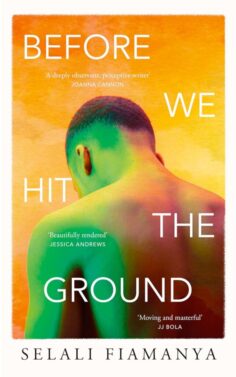
Before We Hit the Ground by Selali Fiamanya

The 2019 Frame: Mourning and Departure The narrative of begins in March 2019 in Glasgow, with Abena and Kodzo packing up their family home, a process laden with the heavy silence of grief following the death of their son, Elom. As they clean, every item revealed a burn on a counter, a grubby photograph of a six-year-old Elom in a Batman outfit triggers a surge of memory and sadness. Elom had moved back into the family home less than a year prior, just as his parents retired to a cottage in the countryside, and he had painted the living room a vibrant “ochre” to bring some sun inside. His funeral has passed, but the minister’s words about him being “laid to rest” provide no comfort to the family; Elom lies under the soil, trapped with the “demons” that troubled him, while Abena, Kodzo, and their daughter Dzifa are left with unanswered questions. Dzifa, working in a hectic London hospital, remains physically distant but emotionally connected through video calls, reminding her parents not to throw out her old belongings. Amidst their mourning, the family discusses a planned trip to Ghana, which had been Elom’s final wish for them. Kodzo is initially …

Read more

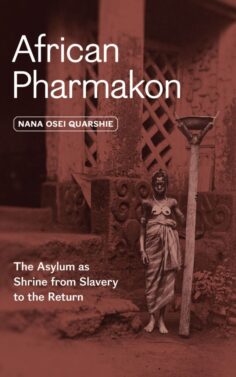
African Pharmakon by Nana Osei Quarshie

Summary of African Pharmakon: The Asylum as Shrine from Slavery to the Return Nana Osei Quarshie’s African Pharmakon provides a comprehensive historical and ethnographic analysis of the management of mental distress in Ghana from the 15th century to the present day. The book’s central thesis is that psychiatry in West Africa was not a colonial imposition that replaced indigenous systems; rather, it was “Africanized” and grafted onto a pre-existing “West African pharmakon” a repertoire of therapeutic techniques used to heal or harm the mind for political and ritual purposes. The term “pharmakon” refers to substances or practices that can be both palliative and poisonous, as well as the ritual of sacrificing a scapegoat to purify a territory. Quarshie identifies five historically recurring techniques characterizing this regional pharmakon: logging (restraint), spiritual pawning (ritual servitude), manhunting (capture), mass expulsion (territorial removal), and pharmacotherapy (herbal and pharmaceutical substances). Part One: The Atlantic Era and the Roots of Spiritual Pawning The origins of psychiatry in West Africa are rooted in the transatlantic slave trade, where European merchants and African elites negotiated the value of “mad slaves”. Madness was an economic limit to the commodification of human life; a “mad slave” lacked exchange value as …

Read more

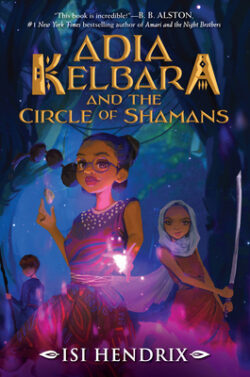
Adia Kelbara and the Circle of Shamans by Isi Hendrix

Summary of Adia Kelbara and the Circle of Shamans Part One: The Curse of the Swamplands The Swamplands and the “Year of Practicality” The story begins in the Swamplands, a remote and neglected region of the Zarian Empire that most maps dismiss as “not worth discussing”. Twelve-year-old Adia Kelbara is an orphan living with her aunt Ife and uncle Eric, along with her “ugly, dull, and brute” cousin Ericson. Adia’s life is defined by isolation; the village believes she is an ogbanje a child demon born to heap misery on their family and die young out of spite. This suspicion is fueled by her extraordinary, “unnatural” memory she never forgets anything she reads or hears and her historical bouts of sickness. Adia’s favorite relative was her cousin, Eric Jr. (EJ), who was kind and smart but vanished a year prior while they were at a lake. The village missionaries claimed EJ was also an ogbanje who had returned to the realm of the dead, a claim that fueled Adia’s internal rage and guilt, as she felt she had failed to protect him. The inciting incident occurs when Adia receives her placement letter for her “year of practicality,” a mandatory Zarian …

Read more

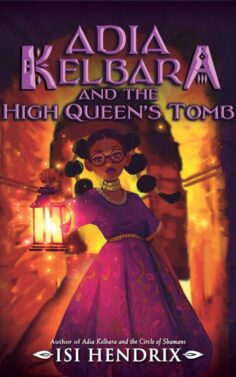
Adia Kelbara and the High Queen’s Tomb by Isi Hendrix

Summary of Adia Kelbara and the High Queen’s Tomb Adia Kelbara and the High Queen’s Tomb is the second book in the series by Isi Hendrix. It follows Adia Kelbara, a young shaman, as she faces the return of the demon Olark and a rising army of the dead. Set primarily at the Academy of Shamans and across the dangerous terrains of Zaria, the story explores themes of destiny, betrayal, and the cost of power. Part One: The Shadow of the Demon The Capital and the Ban on Drops The story begins in the capital of Zaria, where Captain Perpetua Edochie, a stern warrior, confronts her thirteen-year-old son, Emperor Darian (the “Warlord Child”). Darian has survived possession by the demon Olark and is now attempting to rule while cleaning up the demon’s mess. The primary point of conflict is Darian’s decision to ban “Drops,” a tonic made from agrias vines. While Perpetua sees Drops as a tool to keep the peasantry submissive and the nobility rich, Darian knows they are a subtle poison that drains a person’s life force and makes them susceptible to outside influence. As they argue, a thunderous boom shakes the palace. A massive crack splits the …

Read more

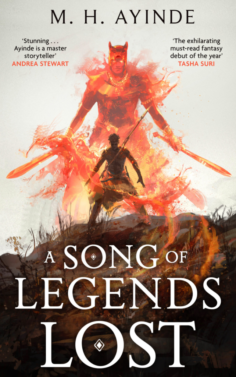
A Song of Legends Lost by M. H. Ayinde,

Summary of A Song of Legends Lost The World of the Nine Lands The story is set on a continent known as the Nine Lands, where society is strictly divided between the highblood clans Mizito, Adatali, Itahua, Navret, Tarsin, Qaneen, and the supposedly extinct Kzani and Menit and the lowblood commoners who serve them. The highbloods maintain power through the Bond, a spiritual connection that allows them to invoke the spirits of their founding ancestors to fight the greybloods, monstrous techwork-infused beings that have plagued humanity for two millennia. The realm is ruled by the Ahiki Royal Clan from a secluded, golden-shrouded palace known as the Garden, located in the capital city of Nine Lords. Underpinning this society is techwork, the cursed and “Forbidden” relics of the lost Scathed people, which only the Holy Orders of monks and nuns are permitted to handle or “Cleanse”. Part One: The Fall of Aranduq and the Voice in the Slums Temi Baker and the Chained Man In the eastern slum district of Lordsgrave, Temi Baker, a twenty-two-year-old lowblood from a family of bakers and techwork smugglers, arrives at an abandoned wharf to find her uncle Leke and several cousins murdered. Their boat is …

Read more

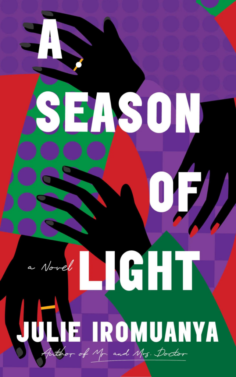
A Season of Light by Julie Iromuanya

Summary of A Season of Light by Julie Iromuanya Setting the Scene: Econlockhatchee and the Menace of Dreams The narrative is set in Econlockhatchee, Florida, in 2014, a place described as an “almost-town” and a “Calumet Graveyard” populated by Orlando’s castoffs, HUD houses, and termite-eaten trailers. The story centers on the Ewerike family, Nigerian immigrants who have recently fallen from middle-class stability in Winter Park to the decay of Econlockhatchee following the mental decline of the patriarch, Fidelis Ewerike. Fidelis, a former barrister, begins a “swift decline” after 276 schoolgirls are kidnapped from Chibok, Nigeria, by terrorists. Although he is far from his homeland, the news triggers latent trauma from his youth as a soldier in the Biafran War. He begins to see the faces of the kidnapped girls in his dreams and eventually confuses his daughter, Amarachi (Amara), with the schoolgirls and his lost younger sister, Ugochi. This leads to a radical and “fascist” decision: Fidelis locks sixteen-year-old Amara in her bedroom, declaring she will remain there “for all eternity” under his protection, which he has confused with possession. Part One: The Prisoners of the Abode Fidelis’s Madness and the Biafran Revival Fidelis spends his days listening to the …

Read more

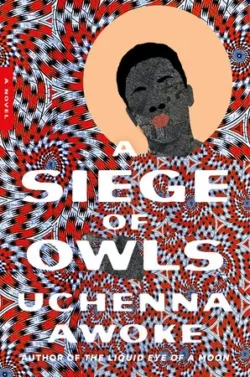
A Siege of Owls by Uchenna Awoke

Book One: The Great Horned Owl The Forbidden Act and the Departure from Enu-Ozara The narrative of A Siege of Owls begins in the village of Enu-Ozara, where eight-year-old Ekwe lives within the Adada River basin. The village is a place of agricultural tradition, centered around the local market, Eke Enu-Ozara, and the rock formation known as Ogele, where water once spurted but now merely dribbles due to a prolonged drought. Ekwe’s father, Papa Ekwe, is a hardworking but impoverished farmer with a large, polygamous family that struggles to survive on scant harvests. On a morning trek to the farm, Ekwe encounters a great horned owl with spooky eyes. His father has long warned him of the mystical leaf known as ekwukwonju, claiming that touching it causes a person to be consumed by wanderlust and lose their sense of direction. Driven by curiosity and a desire for adventure, Ekwe defies the taboo, touching and plucking the menthol-scented leaf when his sister Oyibo is out of sight. Later that day, Ekwe watches the sunset from a hill and reflects on his family’s life, including the many suitors who have recently approached his father for Oyibo’s hand in marriage proposals he is …

Read more

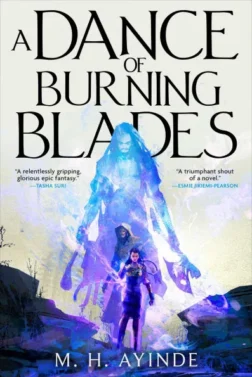
A Dance of Burning Blades by M. H. Ayinde

Summary of A Dance of Burning Blades The narrative of A Dance of Burning Blades begins in a continent reeling from the events of the Lordsgrave Massacre and the discovery of ancient techwork linked to the extinct Scathed people. The highblood clans Mizito, Itahua, Navret, Tarsin, Qaneen, and Adatali maintain power through the “Bond,” a spiritual connection to their founding ancestors, mediated by the Holy Orders of monks and nuns. However, the Ahiki Royal Clan, which rules the Nine Lands from the secluded “Garden,” hides a history of conquest and suppression. Beneath the surface, the “underplane” (or Throxx) consists of multiple strata where spirits, “Intelligences,” and exiled entities dwell. As the King initiates a war to reclaim the Feverlands territory inhabited by the greybloods factions within the clans and the Holy Orders begin to move toward rebellion. Part One: The Spark of Rebellion The Adatali Secession and Father Boleo’s Gambit The prologue introduces Father Emata, a “Keeper of Truths” and royal spy, who plans to assassinate Warlord Daloya Adatali during his birthday celebrations in Ewo City. She intends to use poison (“Wraith’s Blood”) and frame a crime syndicate to justify the King erasing the entire Adatali bloodline. However, Daloya and …

Read more

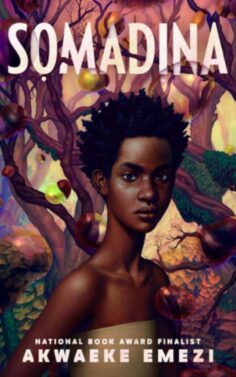
Somadina by Akwaeke Emezi

The book Somadina by Akwaeke Emezi is a complex fantasy rooted in Igbo culture, exploring the life of the titular protagonist, Sọmadịna, and her twin brother, Jayaike. Set in the generation following a cataclysmic event known as the Split, the story follows the twins as they discover they are “children of the crocodile,” dedicated to the deity Ala, and their subsequent journey to rescue Jayaike from a ritualist who was once their own grandfather. I. The World of the Split and the Starvation War The narrative begins with the historical context of the Starvation War, a conflict where neighboring lands attempted to seize the twins’ territory, poisoning rivers and destroying crops. To save their people, the dịbịas (spiritual masters) decided to “break the earth” to separate their islands from the world, an event called the Split. This act caused a massive ripple of power; everyone who survived the influx of magic was granted a “gift” a spiritual ability forced upon them by the deity Ala. Sọmadịna and Jayaike are born into the generation after this event. They are the children of Ngọzị (Mama) and Olejeme (Papa). Their family is already unique: their older sister, Nkadi, is a “spirit child” who …

Read more

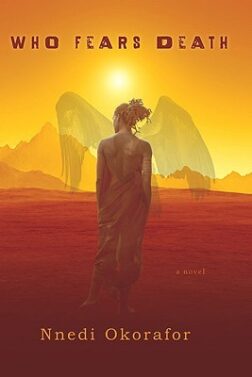
Who Fears Death by Nnedi Okorafor

The book Who Fears Death by Nnedi Okorafor is a complex, post-apocalyptic fantasy set in a future Sudan, framed as the life story of a young woman named Onyesonwu, who sits in a jail cell awaiting execution for a crime she believes was her destiny. She tells her story to a Nuru man with a laptop, seeking to correct the lies told about her and to leave a legacy for the child growing in her womb, whom she names Enuigwe. The Origin: Najeeba’s Trauma and the Desert Onyesonwu’s existence begins in violence. Her mother, Najeeba, was an Okeke woman living in a peaceful village during a time of genocide. The world is divided between the Okeke (the “created ones,” dark-skinned) and the Nuru (skin the color of the sun, who believe they came from the stars). According to the Great Book, the Okeke are meant to be slaves to the Nuru due to an ancient transgression. During a spiritual retreat where Okeke women “held conversation” with the goddess Ani in the desert, they were ambushed by Nuru militants on scooters. The men systematically raped the women, intending to plant “poison” in the form of Ewu children children of violence who …

Read more

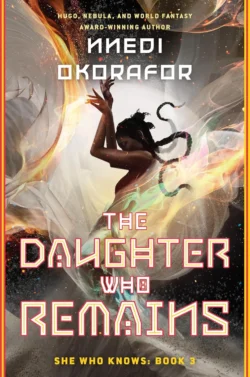
The Daughter Who Remains (She Who Knows 3) by Nnedi Okorafor

The Daughter Who Remains, the final book in Nnedi Okorafor’s She Who Knows trilogy, concludes the story of Najeeba, a powerful sorceress navigating a world transformed by the actions of her daughter, Onyesonwu. The narrative begins with a stark proclamation of Najeeba’s impending death, framing her journey as a final act of destiny and sacrifice. The Journey West and the Burden of “The Now” Najeeba’s story is set in a future Africa divided into “The Before” and “The Now”. Following the events of Who Fears Death, where her daughter Onyesonwu rewrote the Great Book and ended the genocide of the Okeke people, the world exists in an uneasy peace. While most people have forgotten the horrors of the past, Najeeba and a few sorcerers like Aro carry the memory of “The Before” as a heavy burden. After leaving the town of Jwahir with her lover, the glassmaker Dedan, Najeeba travels across the desert toward her childhood home, Adoro 5. They are accompanied by two camels: MorningStar, an old camel Najeeba resurrected during her training, and Tende, a rare and magnificent red-furred camel that Dedan insisted on saving from filth and disease. During the eight-month journey, Najeeba reveals she is pregnant …

Read more

One Way Witch (She Who Knows 2) by Nnedi Okorafor

The book One Way Witch by Nnedi Okorafor is the second installment in the She Who Knows trilogy, serving as a direct sequel to the first book and a companion to the novel Who Fears Death. It follows Najeeba, known as “She Who Knows,” in the aftermath of her daughter Onyesonwu’s world-changing actions. The narrative explores Najeeba’s journey as she transitions from a mother mourning her family to a powerful sorceress coming into her own. The World of “The Now” The story is set in a transformed reality. In the “Before,” the world was defined by the Okeke people’s oppression by the Nuru, a genocide fueled by the teachings of the Great Book. However, Onyesonwu used powerful juju to rewrite the Great Book, ending the hatred and ushering in “The Now” a world where Okeke and Nuru live in an uneasy, often confused peace. While most people have forgotten the old hatreds, Najeeba and a few others, like the sorcerer Aro, remember everything. This “remembering” is a painful burden, as it forces Najeeba to carry the weight of a horror that, for the rest of the world, never happened. Awakening and the Kponyungo The book begins with Najeeba watching her …

Read more

She Who Knows by Nnedi Okorafor

Introduction: The World of Jwahir and the Osu-nu Najeeba’s story, titled She Who Knows, serves as a foundational prequel to Nnedi Okorafor’s Who Fears Death. It is set on a distant future Earth, specifically at coordinates 12.8628° N, 30.2176° E, in a land called Jwahir. The world is divided between the Okeke (people of African descent) and the Nuru (people of Arab descent). Within the Okeke, there exists a subset known as the Osu-nu, who live in segregated villages all named Adoro. The Osu-nu are considered “untouchables” by other Okeke slaves who chose to be “slaves to the goddess Adoro” in exchange for their freedom. Despite their social status as outcasts, they possess a monopoly on the most vital resource in the desert: salt. Chapter 1: The Calling The narrative begins when Najeeba is thirteen years old. On the hottest day of the year, amidst a strange desert rain, Najeeba experiences a profound internal shift a “Knowing”. She returns home to find her mother, Mama, making egg stew with smoked aku and chili peppers. Najeeba blurs out to her parents that she wants to go on the “Salt Roads” this year. This is a radical request, as the Salt Roads …

Read more

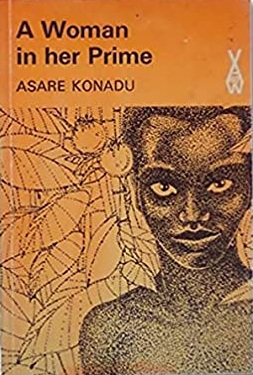
A Woman in Her Prime by Asare Konadu

The Burden of Barrenness and the Friday of Sacrifice The narrative begins in the village of Brenhoma, Ghana, centering on Pokuwaa, a successful and middle-aged farmer whose life is defined by a singular, aching void: her inability to bear a child. The story opens on a festive Friday (Fofie), a day of purification and sacrifice dedicated to the great god Tano. For Pokuwaa, this day represents a desperate spiritual gamble. She has prepared a sacrifice of a jet-black hen and eggs, as prescribed by the oracles, to beseech the spirits to bring her madwowa (fertility) back. The tension of the opening chapters is focused on a seemingly minor yet symbolically massive obstacle: the black hen goes missing. Pokuwaa’s frantic search for the bird reflects her internal state she is “seized with the fear that if she failed to make the sacrifice… her fate as a barren woman would be made certain”. In her society, barrenness is the “worst that could happen to a woman,” leading to a doomed, lonely old age with no issue of one’s blood to mourn at death. During her search, she encounters a “fetish child,” a boy believed to be under the protection of a deity, …

Read more

A Shuttle in the Crypt by Wole Soyinka

Wole Soyinka’s A Shuttle in the Crypt is a profoundly visceral collection of poetry written during his two years of solitary confinement (1967–1969) during the Nigerian Civil War. Soyinka was imprisoned by the federal government for writings perceived as sympathetic to secessionist Biafra, and this volume serves as a “map of the course trodden by the mind” during that period of extreme sensory and social deprivation. The book is defined by its core metaphor of the “shuttle” a restless, energy-charged tool of a loom that Soyinka identifies as a “natural weapon” against “inhuman isolation”. The Central Metaphor: The Shuttle and the Crypt The title and the preface establish the psychological framework of the collection. Soyinka describes the shuttle as a “unique species of the caged animal,” a “trapped weaver-bird” that remains “charged in repose with unspoken forms and designs”. In the silence of the “crypt” (his prison cell), the shuttle becomes a symbol of innate repletion and creative mystery. Soyinka explains that identifying with the shuttle allowed him to absorb every incidental thought, dream, and event into a “loom-shuttle unity” of existence. This was a survival tactic against the “landscape of the loss of human contact,” where reality begins to …

Read more

A Way of Being Free by Ben Okri

Ben Okri’s A Way of Being Free is a profound collection of semi-poetic essays and meditations that explore the intersections of art, politics, storytelling, and the essential nature of human freedom. Originally written as “notes to myself” or “private meditations,” the volume functions as a “suite” of thoughts that consistently turn on the question of how to preserve freedom in a world that often seeks to narrow it. The following is a detailed, section-by-section summary of the book’s core concepts and arguments. The Role of the Poet: “While the World Sleeps” The book begins with an inquiry into the adversarial but necessary relationship between the poet and the world. Okri argues that the poet must be a “widener of consciousness” who exists in the “odd corners” and “dark places” where others do not care to look. Resistance to the Unyielding World: The world is naturally resistant to the poetic, and it is only through “searching and moulding” that reality is transformed into song and metaphor. Poets move against the “tidal crowds of everyday events” to show humanity the “falseness of our limitations”. The Conflict with Legislators: Okri critiques the “acknowledged legislators” politicians, religious leaders, and the powerful who prefer facts, …

Read more

A Toast To Life by Juliet Ibrahim

Juliet Ibrahim’s A Toast to Life is a deeply personal and harrowing memoir that chronicles her journey from a child refugee surviving three civil wars to becoming one of Africa’s most celebrated actresses and philanthropists. The book is a testament to resilience, detailing her experiences with displacement, childhood trauma, domestic abuse, and the cutthroat nature of fame, all framed by a central message of survival and the importance of self-love. The Refugee Experience: Three Countries and Three Wars Juliet’s life was shaped early by instability. Born to a Lebanese father and a Ghanaian mother, her family lived in Maryland County, Liberia, where her father ran a supermarket. Her earliest memories include playing in her mother’s lush garden, which was later used as a hiding spot when rebels arrived in 1990 following the execution of President Samuel Doe. To escape the escalating violence, the family moved to Lebanon, where they lived on the ninth floor of a high-rise building. However, war followed them; after witnessing a neighboring building crumble during a bombing, the family fled back to Liberia, only to find the peace there temporary. The second escape from Liberia in 1992 was particularly traumatic. While attempting to cross the border …

Read more

A Spell of Good Things by Ayọ̀bámi Adébáyọ̀

Ayọ̀bámi Adébáyọ̀’s A Spell of Good Things is a sweeping and devastating examination of the widening chasm between the wealthy and the impoverished in modern Nigeria. The novel centers on two protagonists whose lives are shaped by the precarious nature of stability and the ruthless machinations of political power: Ẹniọlá, a sixteen-year-old boy whose family has plummeted into extreme poverty, and Wúràọlá, a twenty-eight-year-old doctor from a highly privileged background. Their parallel narratives eventually converge in a tragedy that exposes the cost of political ambition and the fragility of the “American Dream” in a landscape defined by corruption and inequity. The Collapse of the Middle Class: Ẹniọlá’s Family The story of Ẹniọlá’s family is a masterclass in the anatomy of decline. His father, Bùsúyì Òní, was once a respected Vice Principal, a man who took pride in his professional English and his extensive library of history books. The family’s stability is shattered when the state governor retrenches four thousand teachers in a single day, dismissing subjects like history, fine arts, and Yorùbá as useless for “technology, science and technology”. This loss of status sends Bùsúyì into a paralyzing depression, a “darkness” that keeps him bedridden for years, staring at the …

Read more

A Small Silence by Jumoke Verissimo

Jumoke Verissimo’s A Small Silence is a lyrical and psychologically dense novel that explores the themes of trauma, memory, and the search for identity in post-dictatorship Nigeria. The narrative centers on Prof (Eniolorunda Durotimi Akanni), a former university professor and human rights activist who is released from prison in 2005 after a ten-year incarceration during the military regimes of the 1990s. Upon his return to his father’s flat in Jakande Estate, Abesan, Prof makes the radical decision to live in total darkness, turning off all lights and retreating into a sanctuary of shadows to escape the “horror” of light that defined his torture in prison. The novel’s summary is broken down into thematic sections and chronological arcs that trace the convergence of Prof’s life with that of Desire Babangida Jones, a young student whose own history is inextricably linked to Prof’s activist past. The Return to Shadows: Prof’s Re-entry (2005) The story begins with Prof’s release from prison during the second term of President Obasanjo. He is collected from his cell by his mother, Maami, and his childhood friend, Olukayode (Kayo). The prison transition is jarring; the bright sunlight makes him wince, and he immediately veils his face with a …

Read more

A Month and a Day A Detention Diary by Ken Saro-Wiwa

Ken Saro-Wiwa’s A Month and a Day: A Detention Diary is a powerful, posthumously published memoir that serves as both a record of his 1993 imprisonment and a definitive manifesto for the Ogoni people’s struggle against ecological devastation and political marginalization. The book is framed by an introduction from the British novelist William Boyd, who identifies Saro-Wiwa as a prolific writer, publisher, and producer of Africa’s most popular soap opera, Basi & Co., who was ultimately a victim of a “judicial process” that was internationally condemned as a sham. Saro-Wiwa was an innocent man who used his talents to enable a small ethnic minority to confront their tormentors, leading to his execution by the military regime of General Sani Abacha on November 10, 1995. The UTC Junction and the Commencement of the Ordeal The narrative begins on June 21, 1993, at the busy UTC junction in Port Harcourt. Saro-Wiwa describes how his car was suddenly flagged down by an armed security man, marking his fourth arrest in just three months. Despite his adamant refusal to descend from his car, superior officers ordered his chauffeur to perform a U-turn and follow them in a convoy to the offices of the State …

Read more

A Play of Giants by Wole Soyinka

Wole Soyinka’s A Play of Giants is a blistering satire that dissects the grotesque nature of power, the complicity of international interests, and the intellectual rationalizations of tyranny. Set within the Bugaran Embassy to the United Nations in New York, the play features a quartet of African dictators modeled on real-life figures as they navigate diplomatic tensions, internal dissent, and their own megalomania while posing for a monumental sculpture intended for the UN building. The Protagonists: The “Supermen” of Africa The play’s central figures are four African heads of state, each representing a specific brand of 20th-century despotism. Soyinka explicitly identifies their real-life counterparts in his introductory notes: Field-Marshal Kamini: Modeled on Idi Amin of Uganda. He is the central “Hero of Heroes,” a physically imposing, semi-literate, and psychopathic leader who maintains power through raw brutality and a “common man” persona. Emperor Kasco: Based on Jean-Baptiste Bokassa of the Central African Republic. He is depicted as a “dwarfish creature” who parodies Kamini’s military aesthetic but adds a cloak of imperial purple, reflecting his obsession with Napoleonic grandeur. Benefacio Gunema: Modeled on Macias Nguema of Equatorial Guinea. A tall, thin man in immaculate tails, he is the philosopher of “voodoo power,” …

Read more

A Particular Kind of Black Man by Tope Folarin

Tope Folarin’s A Particular Kind of Black Man is a deeply interior and haunting novel that chronicles the life of Tunde Akinola, a first-generation Nigerian American, as he navigates a childhood of displacement, a family fractured by mental illness, and a lifelong struggle to define his own identity against the rigid templates of “blackness” offered by American society. The narrative is defined by its exploration of “double memories” vivid recollections of events that never happened which mirror Tunde’s fear that he has inherited the schizophrenia that claimed his mother,. Part I: 1987–1988 – The Utah Origins and the Disappearing Mother The story begins in Ogden, Utah, where Tunde’s father, Segun, settled in 1979 to study mechanical engineering at Weber State University,. Segun chose Utah specifically because he “didn’t want to be where anyone else was,” craving isolation from the Nigerian diaspora clusters in cities like Houston or London,. Tunde (born 1981) and his brother Tayo (born 1983) were raised in an environment where they were often the only black children for miles,. A defining early encounter involves Mrs. Hansen, an elderly white woman who accompanies five-year-old Tunde to school and tells him he can “serve her in heaven” if he …

Read more

A Moonless Starless Sky Ordinary Women and Men Fighting Extremism in Africa by Alexis Okeowo

Alexis Okeowo’s A Moonless, Starless Sky: Ordinary Women and Men Fighting Extremism in Africa is a work of narrative journalism that examines the personal and political dimensions of religious and cultural fundamentalism across four African nations: Uganda, Mauritania, Nigeria, and Somalia. Through deeply reported portraits, Okeowo explores how “everyday, complicated Africans” resist extremism not just through activism or arms, but through the “subtler forms of resistance” found in preserving one’s way of life and reclaiming personal liberty. The book is structured into two parts for each geography, tracking the characters’ initial encounters with extreme circumstances and the long, often painful process of survival and aftermath. I. Uganda: The Lord’s Resistance Army (LRA) and the Legacy of the Bush The Ugandan narrative centers on Eunice and Bosco, whose lives were inextricably linked by the violence of the Lord’s Resistance Army (LRA). Founded by Joseph Kony in 1987, the LRA conducted a decades-long “reign of terror,” abducting an estimated 30,000 children and displacing 2 million people while claiming to fight for Acholi dominance and the Ten Commandments. Abduction and Life in Captivity Eunice was a fifteen-year-old schoolgirl in 1996, visiting her sister at St. Mary’s College in Aboke, when rebels surrounded the …

Read more

A Man of the People of Chinua Achebe

Chinua Achebe’s A Man of the People is a biting satirical novel that explores the corruption, cynicism, and political instability of a newly independent African nation, clearly modeled after Nigeria in the 1960s,. The story is narrated by Odili Samalu, a young, idealistic teacher who finds himself drawn into a personal and political war against his former teacher, Chief the Honourable M.A. Nanga, M.P., a man whose easy charm and populist rhetoric mask a ruthless pursuit of wealth and power,,. The Approachable Politician and the Disillusioned Teacher The novel begins with Chief Nanga’s visit to the Anata Grammar School, where Odili is a teacher. Nanga is celebrated by the villagers as a “man of the people,” despite his role in a government that has overseen rampant inflation and a collapsing economy,. Odili, who was once Nanga’s favorite pupil in standard three, now views him with “intense bitterness,” seeing him as an opportunistic politician who used a national financial crisis to purge intellectual cabinet members and seize power,,. During the visit, Nanga’s “sweet face” charm and populist touch win over the crowd, including the school’s principal, Mr. Nwege, who is desperate for a government appointment,,. To Odili’s surprise, Nanga remembers him …

Read more

A Love of Convenience by Adesuwa O’man Nwokedi

Adesuwa O’man Nwokedi’s A Love of Convenience is an intricate romantic drama that explores the themes of long-term unrequited love, the sacrifices made for the “American Dream,” the devastating impact of medical trauma, and the redemptive power of honesty. The narrative follows Ezioma (Ezi) Bello, a high-achieving Nigerian-American investment banker, and Okwudili (Dili) Dike, the son of a once-wealthy family friend, as they navigate a sham marriage that evolves into a profound, life-altering connection. The Foundations of Invisibility and Success The story is rooted in Ezioma’s childhood in Nigeria, where she grew up as the eldest of four siblings in a modest Yaba household. From the age of five, Ezi was head-over-heels in love with Dili, the son of her father’s wealthy childhood friend. However, while Dili lived in an Ikoyi mansion and was treated like a “king,” Ezi felt entirely invisible to him. She struggled with severe self-esteem issues, noting that while her siblings inherited their father’s caramel skin and dainty features, she took after her mother’s darker complexion and “severe” facial structure. This sense of being the “ugly duckling” was compounded by the fact that Dili often flirted with her more conventionally beautiful sisters, particularly Ebere. To compensate …

Read more

A Long Way Gone by Ishmael Beah

Ishmael Beah’s memoir, A Long Way Gone: Memoirs of a Boy Soldier, is a clear-eyed and haunting firsthand account of a child’s abduction into the horrors of the Sierra Leonean Civil War. The narrative begins in 1993, when twelve-year-old Ishmael, his older brother Junior, and their friend Talloi leave their home in Mogbwemo for a talent show in Mattru Jong. They carry only backpacks filled with rap cassettes and extra clothes, unaware that they will never return to their childhood as they knew it. While they are away, the Revolutionary United Front (RUF) attacks their village, causing total chaos and separating families. Ishmael visualizes his father running from work and his mother weeping for his little brother, Ibrahim, as the war transforms his peaceful world into a landscape of blood and fire. The boys initially believe the “madness” will last only a few months, but the reality of the war quickly settles in as they witness refugees passing through with horrific stories of relatives killed and houses burned. At the wharf in Mattru Jong, they wait for news of their families, but the stream of refugees eventually dries up. They decide to return toward Mogbwemo but find the path blocked …

Read more

A Life Elsewhere by Segun Afolabi

Segun Afolabi’s A Life Elsewhere is a collection of seventeen short stories that investigate the themes of exile, migration, identity, and the search for belonging. The author, born in Nigeria and raised in various countries including Canada and Indonesia, draws on a global perspective to depict characters living in transit or navigating lives in foreign lands. The collection includes the story “Monday Morning,” which was awarded the 2005 Caine Prize for African Writing. Monday Morning The collection opens with “Monday Morning,” which follows a refugee family navigating their new life in London. The story begins with a young boy expressing a need to “piss” while walking with his parents through Regent’s Park on a Sunday. The father, seeking relief for his son, takes him to the edge of a lake, unaware that the locals are watching them with sour, narrowed eyes. The boy marvels at the steam rising from his own urine, finding it a new wonder in a place full of unfamiliar things. The family is currently residing at the Hotel Excelsior, which is actually a threadbare hostel filled with the noise and sorrow of many displaced people. The mother, who lost her hand in the violent conflict they …

Read more

A Kind of Madness by Uche Okonkwo

Uche Okonkwo’s A Kind of Madness is a collection of ten evocative short stories set in contemporary Nigeria that explore the delicate and often dangerous boundaries between love, expectation, domestic life, and mental instability. The book chronicles the “idiosyncrasies and minutiae of everyday Nigerian life” with a focus on the tensions inherent in relationships between parents and children, husbands and wives, and lifelong friends. Through these narratives, Okonkwo invites readers to consider why the people and places held closest are so often the catalysts for personal “madness”. Nwunye Belgium (Belgium Wife) The collection opens with the story of Udoka, a student at Awka Polytechnic, and her mother, Agatha, who is determined to secure a high-status marriage for her daughter. Agatha discovers that her friend Marigold in Orlu has a son, Uzor, who is a doctor living in Belgium. To ensure Udoka is the primary candidate, Agatha maliciously tells Marigold that the other prospective girl, Gloria, is “public property” and a “prostitute”. Agatha pressures Udoka to abandon her current fiancé, Enyinna, a local trader whom Agatha dismisses as “wretched” despite his shop doing well. Agatha sells Udoka on a dream of Belgium, where she will attend a “proper school,” have “fresh” …

Read more

A Dancer of Fortune by John Munonye

John Munonye’s A Dancer of Fortune is a vibrant and satirical exploration of the patent medicine trade in Nigeria, centered on the charismatic and “engaging rascal,” Ayasko (Aya Ijeroko). Ayasko is a professional dancer whose unique talent for attracting crowds makes him an indispensable marketing asset to various medicine dealers in the town of Dekko. The novel traces Ayasko’s career as he navigates the cutthroat rivalries of the “Big Four” dealers Sabanco, Marabu, Avarido, and Eddy Chindi while managing the domestic pressures of his ambitious wife, Bessie, and eventually transforming himself from a mere “advertising tool” into an independent entrepreneur who outwits the entire industry. Part I: The Philosophy of the “Pocket” and the Ebara Spectacle The novel introduces Ayasko as a man whose mouth is “always as busy as his feet”. Working for Avarido Medicals, Ayasko presents a cynical but pragmatic philosophy of the trade: medicine is not just for the diseases of the body, but for the “diseases of the pocket”. He argues that a dealer should continue to sell medicine even when it has lost its potency to cure a physical ailment, because its sale will still “cure” the financial ailment of the dealer’s pocket. This pragmatism …

Read more

A Journey in Service by Ibrahim Badamasi Babangida

Ibrahim Badamasi Babangida’s autobiography, A Journey in Service, is a comprehensive and reflective narrative detailing the life of one of Nigeria’s most consequential and controversial leaders. Published in 2025, the work provides an insider’s perspective on his path from a modest childhood in Niger State to his eight-year tenure as the Military President of Nigeria (1985–1993). The book is structured into five parts, covering his early years, military training, roles in various coups, the conduct of the Civil War, his radical economic and social reforms, and the contentious events surrounding the June 12, 1993, presidential election. Part One: Early Years and Formative Influences Ibrahim Babangida was born in Minna on August 17, 1941, to Malam Muhammadu Badamasi and Inna Aishatu. His father worked as a messenger and interpreter for the colonial district officer, a role that exposed the young Ibrahim to the benefits of Western education and the inner workings of administration. Following his parents’ divorce, he spent time in the rural village of Wushishi, where he recalls the fear of harmattan fire outbreaks and his initial enrollment in a Koranic school. However, his father’s insistence on a Western education eventually led him back to Minna, a town with a …

Read more

A Jigsaw of Fire and Stars by Yaba Badoe

Yaba Badoe’s A Jigsaw of Fire and Stars is a complex magical realist narrative that follows Sante Williams, a fourteen-year-old girl who was the sole survivor of a tragic shipwreck as an infant. The novel details her life within a traveling circus, her discovery of her true Ashanti heritage, and her supernatural struggle against the human traffickers responsible for her family’s death. Part I: The Nightmare and the Sea-Chest The story is framed by Sante’s recurring nightmare of a sinking ship, an “iron monster” that rams a dilapidated trawler filled with refugees. In this dream, she witnesses the terror of men and women with “brown and black faces” as a fuel tank explodes, turning the sea into a roiling soup of blood and oil. She recalls the “stench like an over-ripe mango” and a tall man bundling a baby into a sea-chest laden with “yellow dust” (gold) and “glittering stones” (diamonds) before flinging it into the sea. Sante realizes that the baby in the water is herself, smiling at a “jigsaw of fire and stars” reflected in her eyes as the ship burns. Sante was found the next morning by Priss, a bright golden eagle, and Mama Rose, a formidable …

Read more

A Good Name by Yejide Kilanko

Yejide Kilanko’s A Good Name is a harrowing and meticulously detailed exploration of the immigrant experience, the crushing weight of cultural expectations, and the devastating consequences of toxic masculinity and domestic control. The novel follows the lives of Eziafakaego (Eziafa) Francis Okereke and Zinachidi (Zina) Nwoye, two Nigerians whose lives intersect through an arranged marriage that begins with the promise of “The American Dream” but ends in a visceral, blood-soaked tragedy. Part One: The Seeker of Legacy and the Village Bride The story begins in the sweltering heat of Houston, Texas, where Eziafa, a man who has lived through twelve long and harsh Minnesota winters, is struggling to redefine himself. After years of “grey and black” existence in the American Midwest, Eziafa has moved to the South, hoping the humid weather will bring back memories of his home village, Oji, and allow him to “dream in colour” again. Despite having a first-class degree in computer science from a Nigerian university, Eziafa’s twelve years in America have been defined by a “succession of slammed doors” and menial labor, including a traumatic stint at a meat processing factory where he lost his index finger to a spinning saw. Eziafa is haunted by …

Read more

A Dance of the Forests by Wole Soyinka

Wole Soyinka’s A Dance of the Forests is a complex, multi-layered play that was first performed in 1960 as part of the Nigerian Independence Celebrations. The play serves as a profound critique of the tendency of new nations to romanticize their past while ignoring the repetitive patterns of human cruelty and failure. The central dynamic of the work is a conflict between the desire of the dead for judgment and the desire of the living to avoid it, all while being manipulated by the mysterious Forest Father. The Frame Story: The Gathering of the Tribes The play begins during a major festivities referred to as the “Gathering of the Tribes,” which serves as an analogue for Nigerian Independence. The human community, led by figures like the Old Man, decides that they must invite their “illustrious ancestors” to participate in this historical moment of rejoicing. They ask the spirits of the forest to send them great forebears warriors, sages, and builders of empires hoping to “drink from their resurrected glory”. However, the spirits, specifically Aroni the Lame One, choose to send two “restless dead” who are not the idealized figures the townspeople expected. These ancestors, known simply as the Dead Man …

Read more

A Complicated Kind of Love by Adesuwa O’man Nwokedi

Adesuwa O’man Nwokedi’s A Complicated Kind of Love is a sprawling romantic narrative that traverses the emotional landscapes of two deeply wounded individuals, Bioye Laguda and Abolore Desalu, as they navigate a year of intense connection, devastating misunderstanding, and eventual redemption. Set primarily between April 2019 and May 2020, the novel explores the nuances of “rebound” love, the weight of historical trauma, and the transformative power of finding a “thriving environment”. Part I: The Reunion and the Toju Era (April – June 2019) The story begins in April 2019 with Bioye Laguda, a thirty-seven-year-old former BBC content coordinator, returning to Nigeria after a period of professional disenchantment in London. Her primary motivation for organizing the Malomo High Class of 1999 20-year reunion is the hope of reconnecting with her first love, Toju Ereuwa. Bioye has spent decades using Toju as the “standard” by which she measured every other man, none of whom ever measured up. The reunion takes place at a luxury hotel in Epe, bankrolled by their billionaire classmate Nonso Aguta, whose own motivation is a lingering obsession with Ogonna Maduka. At the Friday night mixer, the nostalgia is palpable as Bioye reunites with her “one and only”. Their …

Read more

A Broken People’s Playlist by Chimeka Garricks

Chimeka Garricks’ A Broken People’s Playlist is a profound and emotionally resonant collection of twelve interconnected short stories set primarily in the city of Port Harcourt, Nigeria. The book is unique in its structure, as each story is written “under the influence” of a specific song, creating a literary “playlist” that explores themes of love, loss, betrayal, redemption, and the “God-sized hole” in the human soul. Lost Stars (Adam Levine) The collection begins with the story of Sira, a high-powered Lagos lawyer, and Kaodini, an “accidental farmer” in Port Harcourt. Their love story is told in “fragments” over the course of nearly two decades. They first met in 1997 when Kaodini worked in his father’s bakery, and their bond was cemented on a night when Sira sought refuge in his room after being beaten by her boyfriend, Victor, and rejected by her own father. On that night, they shared a meal of bread dipped in Milo, which became a lifelong symbol of comfort. Though they drifted apart as Sira moved to Lagos for her career, they remained each other’s “One Who Got Away”. During a visit to Port Harcourt for her sister’s wedding, Kaodini proposes to her while cutting her …

Read more

A Bit of Difference by Sefi Atta

Sefi Atta’s A Bit of Difference is a layered and insightful exploration of the life of Deola Bello, a thirty-nine-year-old Nigerian auditor living in London, as she navigates the complexities of professional identity, cultural displacement, family expectations, and the search for personal fulfillment. The novel is set against the backdrop of the early 2000s, moving between London, Atlanta, and Nigeria (Lagos and Abuja). At its core, the book examines the “bit of difference” that exists between being a “resident alien” in the West and being truly “at home” in Nigeria, while critiquing the global “business of humanitarianism.” Part I: Professional Landscapes and the “Tarzan Complex” The narrative begins with Deola on a business trip to Atlanta, Georgia, representing her employer, LINK, an international charity foundation. Deola serves as the director of internal audit for the London office. Her trip to the United States is framed as a “reorientation” to learn how the Atlanta office managed the launch of Africa Beat, an HIV awareness campaign. During her time in Atlanta, Deola is hosted by Anne Hirsch, the director of international affairs. Their interactions highlight a recurring theme: the disconnect between Western charity workers and the African reality they seek to “save.” …

Read more

A Betrayed Kind of Love by Adesuwa O’man Nwokedi

Adesuwa O’man Nwokedi’s A Betrayed Kind of Love tells the story of Bonju Adalemo and Alero Gboye, whose lives are marked by a cyclical pattern of love, devastating betrayal, and eventual redemption. The book opens in April 2019, with Bonju living a life of leisure in London as a successful but emotionally stagnant investor. Despite his wealth and a “revolving door” of beautiful women, he remains haunted by a failure to give his heart away for twenty years. He receives an invitation to his Malomo High class of 1999 20-year reunion and decides to attend, primarily driven by the hope of seeing the one woman who has possessed his mind for two decades. Meanwhile, in Lagos, Alero Gboye works as a freelance interior decorator and struggles to keep her head above water financially. She helps her brother, Destiny, run an online radio station that plays ‘80s and ‘90s rock and pop, a genre deeply tied to her late father’s memory. Alero is hesitant to attend the reunion because she views her former classmates as strangers, but she is persuaded by Destiny to use the event as a networking opportunity to find investors for their station. The narrative shifts to the …

Read more

Cursed Daughters by Oyinkan Braithwaite

Oyinkan Braithwaite’s Cursed Daughters is an intricate, multi-generational saga set in Lagos, Nigeria, exploring the lives of the Falodun women who are believed to be under a historical curse. The narrative is structured non-linearly, weaving together the lives of Monife (the “cursed” daughter of the 1990s), her cousin Ebun (who bears the weight of Monife’s legacy), and Ebun’s daughter Eniiyi (the modern descendant who must decide if she is a reincarnation or her own person). The story is framed by the legend of Feranmi Falodun, the matriarch whose conflict with her husband’s first wife supposedly triggered a curse that all Falodun women would “love in vain” and “suffer for man’s sake”. The Prologue: The End as a Beginning The novel opens with a visceral scene of Monife’s suicide at Elegushi beach. Described as a “mermaid” and “queen of song,” Monife wades into the cold, dark waters not out of a desire for death itself, but as an “inevitable consequence” of a tragedy that has already occurred. Her last thoughts are a defiant act of surrender directed at “Golden Boy,” hoping his heart would “shatter into a million glittering, self-pitying pieces”. This act of self-destruction sets the stage for the rest …

Read more

Dream Count by Chimamanda Ngozi Adichie

Chimamanda Ngozi Adichie’s Dream Count is a sweeping, polyphonic narrative that explores the interior lives of four Nigerian women Chiamaka, Zikora, Omelogor, and Nafissatou whose paths cross through friendship, family, and shared history. The novel is framed by the COVID-19 pandemic, a “collective sequestering” that forces the characters to sift through their pasts, name their long-unspoken yearnings, and reckon with the “dream count” of their lives. At the heart of the book is the longing to be truly known by another human being, a desire that drives the characters through various romantic entanglements, professional struggles, and personal tragedies. Chiamaka: The Seeker of “The Known” Chiamaka, a travel writer living in suburban Maryland, serves as the primary consciousness of the novel. During the lockdown, she experiences a “spiraling inside a bottomless well” of anxiety, obsessed with the shifting warnings of the pandemic. The silence of her neighborhood, stilled road, and the sudden boldness of local deer mirror her internal disorientation. She spends her days in “formless” time, unable to write, and finds that Zoom calls only hollow out the distance between her and her loved ones. Her narrative is defined by a retrospective “dream count,” a literal and metaphorical tally of …

Read more

29, Single & Nigerian by Naijasinglegirl

The book 29, Single & Nigerian by Naijasinglegirl follows the turbulent journey of Edikan, a young woman who is described as naïve, materialistic, thirsty, and bordering on delusional. Despite growing up in abject poverty, Edikan is completely unprepared for the realities of adulthood, and the novel serves as a hilarious yet poignant look at the trials of unemployment, societal pressure to marry, and the patriarchal systems in Nigeria that define a woman’s worth by her relationship status. The Prologue: A Bitter 27th Birthday The story opens at Casabella, a high-end restaurant in Calabar, where Edikan’s friends Bibi, Nkechi, and Amanda have organized a dinner for her 27th birthday. Edikan is in a sour mood, reflecting that birthdays are merely markers of moving closer to death rather than events to celebrate. Her friends are preoccupied with their upcoming National Youth Service Corps (NYSC) postings; Bibi has been posted to Lagos, Amanda to Benue, and Edikan eventually discovers she is destined for Anambra State. During the dinner, Edikan’s best friend Bibi nicknamed “Kim K” for her hourglass figure is the center of attention, while Edikan feels like a “friend by association” to the others. Bibi notes that the only thing missing from …

Read more