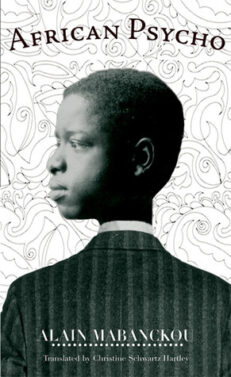
African Psycho by Alain Mabanckou

Introduction Alain Mabanckou’s novel African Psycho, published in its English translation in 2007, represents a landmark achievement in postcolonial African literature. Moving away from the conventional thematic preoccupations of anti-colonial resistance or cultural nationalism, Mabanckou delivers a dark, satirical, and deeply ironic subversion of the Western true-crime and serial-killer genres. Critics have noted that the text owes as much to Albert Camus’s existential masterpiece The Outsider as it does to Bret Easton Ellis’s American Psycho. Yet, rather than replicating the hyper-competent, slick, consumerist criminality of Patrick Bateman, Mabanckou introduces the reader to Grégoire Nakobomayo an extraordinarily insecure, structurally impotent, and comically incompetent aspiring serial killer who operates in the decaying margins of a postcolonial African slum. Set on the Left Bank of a divided capital city, specifically within the sprawling, sewage-flooded, and vibrant neighborhood of “He-Who-Drinks-Water-Is-An-Idiot” (known natively in Bembé as Ba nwa mamb’ biwulu), the novel uses a first-person confessional narrative to explore the themes of urban alienation, historical erasure, institutional corruption, and the tragic parody of myth-making. The narrative is structured as a series of reflections, memories, and desperate rehearsals leading up to the scheduled murder of Grégoire’s live-in partner, Germaine, on December 29. Through Grégoire’s deeply unreliable …
Read more

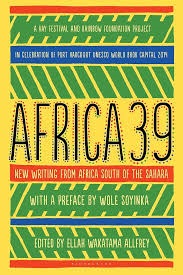
Africa 39 New Writing from Africa South of the Sahara

Africa39: New Writing from Africa South of the Sahara is a landmark literary anthology published in 2014 by Bloomsbury Publishing Plc. Curated under the auspices of the Hay Festival and in celebration of Port Harcourt’s selection as the UNESCO World Book Capital 2014, the collection brings together thirty-nine of the most promising and distinctive writers under the age of forty from sixteen countries south of the Sahara. Part I: Prefaces and Editorial Frameworks Wole Soyinka’s Introduction: “The Word Shall Fly Free!” In his introduction, Nobel Laureate Wole Soyinka frames the collection around the twenty-fifth anniversary of the fall of the Berlin Wall. He reflects on how the historical “wind of change” that blew across post-colonial Africa in the mid-20th century changed character, carrying the debris of external ideological warfare. Soyinka distinguishes between a handful of genuine leaders who possessed conviction in social doctrines and a cynical majority who used radical ideologies as weapons to silence dissidence and demand conformity. In the Soviet Union and its captive bloc, creative choices were placed under a “testamentary microscope,” turning literature into a mechanism of party ideology. This ideological policing soon spread to African academic institutions, resulting in bitter, paralyzing debates. For Soyinka, the …

Read more

Dealing with the Dead by Alain Mabanckou

Dealing with the Dead by Alain Mabanckou Liwa Ekimakingaï, the protagonist of the narrative, experiences the startling sensation of a “new life” beginning exactly one hour after a violent shock rips through the earth, leaving him lying upon a fresh mound of soil topped with a brand-new wooden cross. He initially believes he is breathing and alive, but as daylight emerges over the horizon of the Frère-Lachaise cemetery in Pointe-Noire, he is haunted by the memories of his own funeral procession, where he was trapped inside a coffin and paraded through the streets. He recalls being carried by six muscular men in white suits, a common homage in his town, and he contemplates the grim reality that once laid in the earth, he will eventually be forgotten by all but his grandmother, Mâ Lembé. Despite these depressing thoughts, he attempts to convince himself of his existence by cracking his knuckles and successfully throwing a small pebble, which bounces against a nearby tombstone. He stands upright for the first time since his burial, shaking the reddish earth from his orange crepe jacket and fluorescent-green shirt, noting that his clothes including his purple flares and red Salamander shoes smell of Mananas, an …

Read more

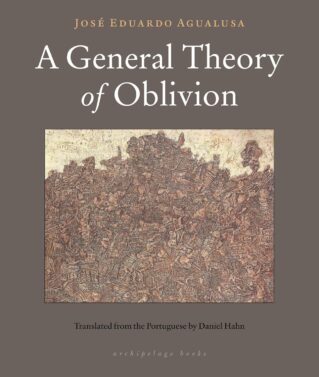
A General Theory of Oblivion by José Eduardo Agualusa

José Eduardo Agualusa’s A General Theory of Oblivion is a complex, polyphonic narrative that spans thirty years of Angolan history, centered on the extraordinary life of Ludovica Fernandes Mano (Ludo), a Portuguese woman who bricks herself into her Luanda apartment on the eve of independence in 1975 and remains there for twenty-eight years. The novel is presented as a reconstruction of her life based on ten notebooks of diaries, poems, and charcoal drawings left on the walls of her apartment, which were recovered after her death in 2010. The story weaves together themes of agoraphobia, colonial trauma, accidental intersections, and the redemptive power of shared humanity. I. The Genesis of Isolation: Aveiro and the “Accident” The roots of Ludo’s self-sequestering lie in a deep-seated psychological trauma she refers to as “The Accident”. Even as a small girl in Aveiro, Portugal, Ludo was terrified of open spaces, refusing to leave the house without a vast black umbrella for protection. This primordial dread was calcified by a violent event in the summer of 1955: Ludo was brutally raped by a fisherman in a beach hut on the Costa Nova. The trauma was compounded by her father’s reaction; rather than offering comfort, he …

Read more