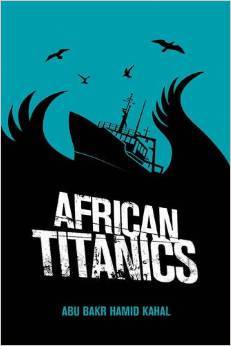
African Titanics by Abu Bakr Khaal

African Titanics by Abu Bakr Khaal is a lyrical, harrowing, and deeply moving novel that chronicles the perilous journeys of African migrants attempting to reach Europe across the Sahara Desert and the Mediterranean Sea. Written by Eritrean author Abu Bakr Khaal who experienced these precarious transit routes firsthand the novel is structured around the memories of its narrator, Abdar, alongside the poems, stories, and manuscripts of his companions. The “Migration Bug” and the Call of the Sorcerer (Eritrea and Sudan) The novel opens with the metaphor of a “migration bug” or a turbulent swell sweeping across the African continent. Abdar describes how the youth of Africa are suddenly gripped by a frantic desire to leave, feeling as though their home is being hollowed out. He attributes this collective obsession to a dark sorcerer striking a magnificent bell (“dong, dong, dong”) that lulls the youth into a daze, drawing them toward a promised European “paradise”. Abdar willfully ignores this call for five years while working as an auto mechanic in Eritrea. He remains immune partly because of his youthful creation a play titled The Phantom and the Mask, which warned of deceptive, hypnotic ideas. He notices the false illusions of migration: …

Read more

African Short Stories edited by Chinua Achebe and C. L. Innes

Introduction African Short Stories, selected and edited by the legendary Nigerian novelist Chinua Achebe and the prominent scholar C. L. Innes, was first published in 1985 in the Heinemann African Writers Series (AWS 270). The anthology serves as a curated map of the rich, diverse, and rapidly evolving landscape of modern African short fiction. In compiling these twenty stories from across the continent, Achebe and Innes aimed to present a collection of high literary merit that would appeal to the general reader while offering a manageable, engaging introduction to the art and world of African fiction. Deconstructing the “Native” Genre Fallacy In his introduction to the anthology, Chinua Achebe takes direct aim at the paternalistic assertions of certain Western literary critics. He refutes the “silly notion” that the short story is a genre inherently native to Africa and therefore strong while the novel is an alien form and therefore weak. Achebe argues that while both the novel and the short story in Africa undoubtedly draw from a rich, common oral heritage, each has achieved its own formal distinctiveness in the hands of its best practitioners. The modern short story, Achebe asserts, is a highly sophisticated, technically demanding modern form of …

Read more

Africa 39 New Writing from Africa South of the Sahara

Africa39: New Writing from Africa South of the Sahara is a landmark literary anthology published in 2014 by Bloomsbury Publishing Plc. Curated under the auspices of the Hay Festival and in celebration of Port Harcourt’s selection as the UNESCO World Book Capital 2014, the collection brings together thirty-nine of the most promising and distinctive writers under the age of forty from sixteen countries south of the Sahara. Part I: Prefaces and Editorial Frameworks Wole Soyinka’s Introduction: “The Word Shall Fly Free!” In his introduction, Nobel Laureate Wole Soyinka frames the collection around the twenty-fifth anniversary of the fall of the Berlin Wall. He reflects on how the historical “wind of change” that blew across post-colonial Africa in the mid-20th century changed character, carrying the debris of external ideological warfare. Soyinka distinguishes between a handful of genuine leaders who possessed conviction in social doctrines and a cynical majority who used radical ideologies as weapons to silence dissidence and demand conformity. In the Soviet Union and its captive bloc, creative choices were placed under a “testamentary microscope,” turning literature into a mechanism of party ideology. This ideological policing soon spread to African academic institutions, resulting in bitter, paralyzing debates. For Soyinka, the …

Read more

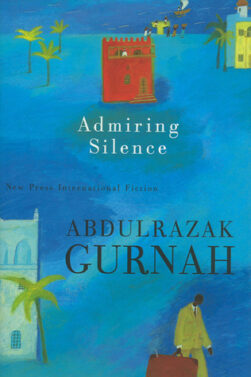
Admiring Silence by Abdulrazak Gurnah

Abdulrazak Gurnah’s Admiring Silence is a profound and intricate narrative exploring themes of identity, displacement, the weight of history, and the transformative (and often deceptive) power of storytelling. The novel follows an unnamed narrator, a forty-two-year-old teacher from Zanzibar who has lived in England for twenty years, as he navigates a life built on a foundation of carefully constructed silences and fabrications. The story is structured around his physical and psychological journey back to his homeland and the subsequent collapse of his domestic life in England. The Condition in England: A Life of Disquiet The narrative begins with a physical manifestation of the narrator’s internal state: a persistent, “cockroachy” pain in his chest that reeks of “loneliness and terror”. Living in London with his partner, Emma, and their seventeen-year-old daughter, Amelia, the narrator occupies a space of “agitated content”. His health crisis prompts a visit to a young, “impossibly empirical” doctor who, despite the narrator’s Indian Ocean origins, delivers a racialized diagnosis: “Afro-Caribbean people have dickey hearts”. This diagnosis, which the narrator accepts with a “stoical gulp and an inward sneer,” serves as a metaphor for the way he is consistently misperceived and pigeonholed by the culture that surrounds him. …

Read more

Across the Bridge by Mwangi Gicheru

Book cover for 'Across the Bridge' by M. Gicheru, featuring a close-up portrait of a woman with a scarf.

In Across the Bridge by M. Gicheru, the narrative serves as a gritty and cynical exploration of the vast chasm between the social classes in post-independence Kenya. The story is told through the eyes of Symon Chuma, a man who views himself as a “factory reject” of creation, possessing the “brain of a chicken and the body of a human”. His journey is one of repeated attempts to “cross the bridge” from the impoverished slums to the world of the elite a journey that leads him through the halls of justice, the darkness of prison, and the violent world of professional gangsterism. The Houseboy and the Forbidden Encounter The story begins with Chuma reflecting on his time in jail, which he calls “the house for all,” the only place where equality is exercised regardless of social class. This perspective is rooted in his past as a houseboy for Kahuthu, a top civil servant and “progressive native” who lived among the “cream of creation” in an exclusive, well-guarded residence. Chuma initially considers this life a “heaven,” enjoying delicacies like “royal jelly” and sleeping in a comfortable bed, far removed from the “god-forsaken suburbs” where he grew up. However, Chuma remains an …

Read more

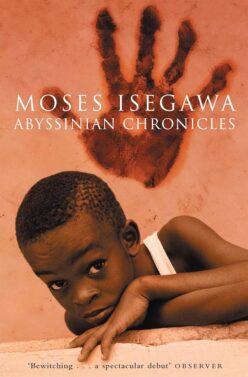
Abyssinian Chronicles by Moses Isegawa

Book cover for Moses Isegawa's Abyssinian Chronicles: a young boy rests on a ledge with a large handprint on an orange wall behind him.

Moses Isegawa’s Abyssinian Chronicles is a sprawling, multi-generational epic that charts the turbulent history of modern Uganda through the eyes of its narrator, Mugezi. The novel is structured into seven “books,” spanning from the early 1970s to the late 20th century, juxtaposing the intimate domestic dramas of Mugezi’s family with the violent political upheavals of the Idi Amin and Milton Obote regimes. Book One: Village Days (1971) The narrative begins with a reflection on Mugezi’s father, Serenity (also known as Sere or Mpanama), and the childhood traumas that shaped his “wooden expression” and emotional detachment. Abandoned by his mother at age three, Serenity spent his youth accosting tall women in the hope that his mother had returned. He was eventually “cured” of this obsession by a woman who rudely pushed him away, causing him to coil into an “inner cocoon” of indifference. Serenity’s nickname, Mpanama, was a village slur referring to hydrocele, which he mistakenly thought the village Fiddler carried in his trousers as “breasts between his legs”. Mugezi describes his Grandpa, a Catholic sub-county chief who lost his power to a Protestant rival in a religiously sectarian conflict. As Grandpa’s influence shrivelled, his large homestead once filled with wives, …

Read more

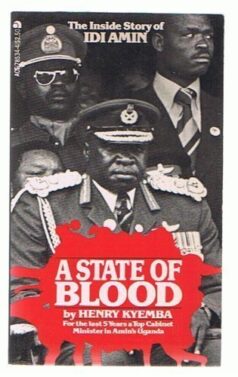
A State of Blood The Inside Story of Idi Amin by Henry Kyemba

Book cover: 'A State of Blood' by Henry Kyemba; shows a group of officials in uniform, suggesting a historical/political account.

Henry Kyemba’s A State of Blood: The Inside Story of Idi Amin provides a chilling, first-hand account of the terror that gripped Uganda from 1971 to 1977. As a high-ranking official who served as Idi Amin’s Principal Private Secretary, Cabinet Secretary, and Minister of Health, Kyemba writes with the unique authority of a man who worked intimately with a leader he describes as Africa’s most ruthless killer. The book serves not only as a memoir of survival but as a document of horror intended to reveal the truth to a world that often dismissed Amin as a mere clown. The Roots of the Tyrant and the Rise to Power The narrative begins by establishing the context of Uganda’s immediate past, which Kyemba believe offered Amin the opportunity to assert his remarkable but dangerous personality. Amin, a member of the Kakwa tribe from the far northwestern part of Uganda, rose through the ranks of the King’s African Rifles as a private to become a sergeant, renowned for his physical size and boxing prowess rather than his education, which was nearly non-existent. Under Uganda’s first Prime Minister, Milton Obote, Amin was promoted to Army Commander, becoming indispensable as Obote relied increasingly on …

Read more

A Small Town Girl by Diana Anyango

Book cover for "Small-Town Girl" by Diana Anyango, featuring a smiling couple walking outdoors under a sunny sky, with the title prominently displayed and a Love Africa Press banner at the top.

In Diana Anyango’s novel A Small-Town Girl, the story unfolds in the rural town of Oyugis, Kenya, where the protagonist, Lucy Akinyi, has returned to her childhood home to recover from a series of personal tragedies. The narrative explores themes of traditional societal expectations, the pursuit of justice for the vulnerable, the lingering trauma of military service, and the redemptive power of love. Part I: The Weight of Tradition and the Pain of the Past The story begins with Akinyi feeling the immense weight of her community’s expectations. Her grandmother’s favorite saying, “The pride of a woman is to get married,” haunts her daily routines. After a exhausting morning of chores, her mother, Nyakisumo, confronts her, urging her to return to Nairobi because there are no opportunities in their “hell hole” of a town. However, Akinyi is hiding from the wreckage of her former life: her six-year relationship with David Ouko ended abruptly on the day she expected a proposal; she lost her job; and she was haunted by a tragedy involving a young girl named Kadogo. Nyakisumo and Akinyi’s aunts are relentless in their pressure for her to marry and have children, believing that a woman’s success is meaningless …

Read more

Theft by Abdulrazak Gurnah

The Genesis of an Arranged Disaster: Raya and Bakari Abbas The narrative arc of Abdulrazak Gurnah’s Theft begins in an atmosphere of paternal panic and revolutionary upheaval. The protagonist Raya’s marriage is not born of love, but of her father’s desperate need to preserve “respectability and honor”. This panic is triggered by Rafik, a childhood neighbor who returns from Cuba as a “heroic, slender warrior” in the Umma Party. To Raya’s father, Rafik represents the “hooligan soldier” who threatens to “dishonor” his daughter through public conversation and long, knowing looks. This fear is grounded in the broader social instability of the time, where revolutionary “heroes” used their power to “humiliate or to intimidate” citizens who lacked birth certificates or political standing. In response to this perceived threat, Raya’s father and his elder brother, Hafidh, arrange a marriage with Bakari Abbas, an “amiable man in his forties” from Pemba. Raya, only seventeen and “beautiful,” finds herself with no real choice; she must either accept the arrangement or risk shaming her entire family. The wedding is a hurried affair, preceded by “sudden, intense preparations” and advice from elderly women on the “lore of obedience to male lust”. The reality of the marriage …

Read more

Salutation Road by Salma Ibrahim

Summary of Salutation Road by Salma Ibrahim Introduction: The Earlobe of London and the Weight of Nostalgia The narrative of Salutation Road begins with a meditation on geography and the stillness of time. The protagonist, Sirad Ali, a twenty-three-year-old Somali-British woman, views the Greenwich Peninsula as being “shaped like an earlobe”. Growing up on Salutation Road, she discovered that this specific patch of land was a place where “time stopped moving,” a static corner of London where one could walk out of one life and into another. For Sirad, nostalgia is a recurring, sometimes stabbing sensation that colors her memories of early life in London in a “lavender hue”. These memories are inextricably linked to her father, who was present before 2005, spinning a silver globe to quiz her and her brother on capital cities while frankincense burned on the mantelpiece. In the present day (around 2016), Sirad’s life is defined by a repetitive cycle of work and survival. She lives in a tower block with her mother (Hooyo) and her sixteen-year-old brother (Ahmed). The family is in a state of quiet crisis. Hooyo has recently been “let go” from her hospital job due to persistent fatigue and “numbness of …

Read more

Only Because It’s You by Rebecca Fisseha

Summary of Only Because It’s You by Rebecca Fisseha I. The Accidental Discovery and the Engagement Panic The narrative of Only Because It’s You begins in August in Toronto, on a sweltering afternoon that sets the stage for a chaotic chain of events. The protagonist, Mizan (Miz) Begashaw, a thirty-four-year-old physiotherapist, is in her bedroom preparing for a run with her best friend, Aimé. While rummaging through her “one-night stand” Daniel’s gym bag looking for her borrowed AirPods she discovers a small black velvet box. Inside is a one-carat square-cut diamond engagement ring. Miz, who defines herself by her “anti-marriage” stance and her “need-to-never-know basis” relationship with her parents regarding her love life, is thrown into an immediate state of panic. She and Daniel have been in an “on again, off again” hookup arrangement for two years, and marriage has never been a topic of conversation. Miz’s aversion to marriage is deeply rooted in her childhood; at fourteen, she was “deported” to Ethiopia by her mother, Genet, as punishment for dating a boy in Canada. During that trip, she met her father, Gashaw, for the first time and discovered that her parents were technically still married despite living on separate …

Read more

Lonely Crowds by Stephanie Wambugu

I. The 2019 Frame: The Nature of Obsession The novel’s narrative begins in the present day (around August 2019), centered on the birthday of the protagonist and narrator, Ruth. As she blows out her candles in a small town in upstate New York, she is struck by a sudden, jarring epiphany: “without an obsession life was impossible to live”. This realization is inextricably linked to her lifelong friend and fixation, Maria, who is conspicuously absent from the party. This absence serves as the catalyst for Ruth to recount the long, winding history of their relationship, spanning two decades and several states. At the party, Ruth seeks comfort in her old professor, Moser, a painter who has transitioned to making small collages due to a permanent tremor. Their conversation turns to family estrangement. Moser reveals his deep-seated bitterness toward his 92-year-old mother, whom he characterizes as a “remorseless abuser”. Ruth finds this level of long-term resentment “frivolous and cruel,” reflecting on her own inability to emancipate herself from her parents’ influence. Her mother had called earlier that morning to express pride in Ruth “anyway,” despite Ruth not having a “real job” and still “just painting”. This frame establishes the book’s central …

Read more

Everything Is Fine Here by Iryn Tushabe

The narrative of Everything Is Fine Here follows the coming-of-age journey of Aine Kamara, a Senior Six student in Uganda, as she navigates family tragedy, the complexities of queer identity within a conservative society, and the burgeoning realization of her own voice as a writer. The story is told through Aine’s perspective, moving between her strict boarding school, her village home in Bigodi, and the vibrant, often hidden queer spaces of Kampala. Anticipation and Arrivals at Pike Girls’ Boarding School The book opens with Aine waiting at the front steps of Pike Girls’ Boarding School in Fort Portal. She is anticipating the arrival of her older sister, Mbabazi, a distinguished alumna who has been invited to give the Careers Day commencement speech. Mbabazi has recently returned to Uganda after several years in Canada, where she completed a medical specialization in gynaecologic reproductive endocrinology and infertility. Aine, who has not seen her sister in over two years, feels a deep, obsessive love for her. When Mbabazi finally arrives, she is accompanied by a woman named Achen, whom she introduces as her “roommate”. Aine immediately perceives a “strange electricity” between the two women and recognizes that they are lovers, despite their attempt …

Read more

Decolonizing Language and Other Revolutionary Ideas by Ngũgĩ wa Thiong’o’s

Ngũgĩ wa Thiong’o’s Decolonizing Language and Other Revolutionary Ideas is a profound collection of essays and tributes that explores the enduring impact of linguistic and cultural imperialism on the colonized world, particularly in Africa. The book is divided into two major sections: “Part One: Decolonizing Language,” which establishes the theoretical and historical foundations for his call for a “negation of the negation” in education and intellectual production, and “Part Two: Voices of Prophecy,” which offers personal and professional tributes to the writers, scholars, and activists who have served as the “conscience of Africa” through their resistance and commitment to indigenous knowledge. Part One: Decolonizing Language Linguistic Colonialism and the “Colonies of the Mind” The book opens with an investigation into the historical mechanisms used to suppress native languages and elevate the language of the conqueror. Ngũgĩ uses Ireland as a primary example, noting that it served as England’s first “settler colony” and a laboratory for later imperial practices in Asia and Africa. He cites the 1366 Statutes of Kilkenny, which criminalized the use of Irish by English settlers, and Edmund Spenser’s 1596 treatise, A View of the Present State of Ireland, which argued that forced linguistic assimilation was the most …

Read more

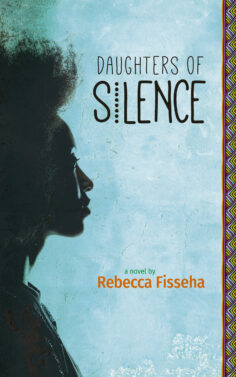
Daughters of Silence by Rebecca Fisseha

The narrative of Daughters of Silence centers on Dessie, a flight attendant for CanAir who finds herself unexpectedly grounded in her birthplace of Addis Ababa, Ethiopia. The story unfolds through a dual timeline: the present-day layover in Addis (2010) and a series of vivid, often painful flashbacks spanning Dessie’s childhood in Addis Ababa, her adolescence in Vienna, and her recent life in Toronto. The central conflict revolves around the recent death of her mother, Zimita (referred to as Ema), and the long-buried trauma of sexual abuse inflicted by her adopted brother, Le’ul. The Diversion and the Return to Ethiopia The book opens mid-flight, where Dessie is performing her routine duties as a flight attendant on a journey from Johannesburg to Vienna. A volcanic eruption in Iceland has blocked the jet stream with ash, forcing the captain to divert to Addis Ababa Bole International Airport. Dessie, who has not set foot in Ethiopia as an adult and on her own, feels an immediate sense of panic. Her mother, a prominent diplomat and former consul general in Toronto, died only a month prior of melanoma. Dessie is haunted by the fact that Ema was buried in Toronto at the Scarborough Bluffs Cemetery, …

Read more

A Fledgling Abiba by Dilman Dila

The book A Fledgling Abiba by Dilman Dila is a work of fantasy that follows the journey of a young girl named Kuri, who possesses rare spiritual gifts in a world where magic and ancestral worship are often suppressed by modern religions like m’Ondetta. The story explores themes of identity, destiny, and the blurred lines between good and evil as Kuri seeks to understand her heritage and find her father. The Awakening of the Abiba Kuri is a scrawny orphan living in the city of Muwaawa under the care of her abusive and fanatical m’Ondetta aunt. Her mother, whom she calls Maa, was an abiba (a spiritual healer and practitioner) who was killed under mysterious circumstances, leaving Kuri homeless and without a mentor. Kuri possesses the gift of lakwopo, which she interprets as being “someone who steals remembrances” by looking into people’s eyes, and she has the ability to “fart flames” when her internal “lava” or spiritual energy erupts. The narrative begins during a massive storm in Muwaawa, which Kuri senses was sent by something angry. She is relegated to the kitchen of her aunt’s boma, doing all the cooking and cleaning for twenty-one people, while hiding her “demons” to …

Read more

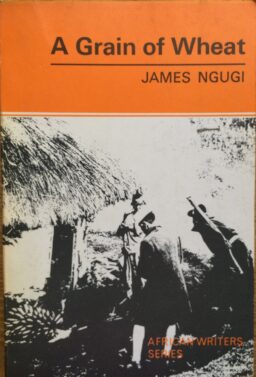
A Grain of Wheat by Ngũgĩ wa Thiong’o

Ngũgĩ wa Thiong’o’s A Grain of Wheat is a seminal work of African literature that explores the complex psychological and social landscape of Kenya on the precipice of its independence from British colonial rule. Set in the four days leading up to December 12, 1963, the novel moves fluidly between the present-time preparations for Uhuru and the harrowing memories of the Mau Mau Emergency in the 1950s. The narrative is framed by a third-person voice that often adopts the collective “we” of an oral storyteller, reflecting the shared history of the Gĩkũyũ community of Thabai. At its core, the book is a moral and political inquiry into the nature of betrayal, sacrifice, and the possibility of regeneration in a land scarred by colonial violence. The Village of Thabai and the Silent Hero The novel opens with Mugo, a man living in profound isolation in the village of Thabai. Mugo is an orphan who was raised by a drunken, abusive aunt, Waitherero, whom he once fantasized about killing. During the Emergency, Mugo gained a legendary reputation for his resilience. He was arrested after intervening to stop a policeman from beating a pregnant woman in a labor trench, and he later survived …

Read more

A Girl is a Body of Water by Jennifer Nansubuga Makumbi

Jennifer Nansubuga Makumbi’s A Girl is a Body of Water is a sweeping, multi-generational epic set in Uganda, primarily spanning from the mid-1970s to the early 1980s. The novel follows the life of Kirabo Nnamiiro, a young girl raised by her paternal grandparents in the village of Nattetta, as she searches for her absent mother and tries to understand the mysterious “second self” that seems to fly out of her body. Through Kirabo’s journey, the book explores profound themes of feminism (mwenkanonkano), the “original state” of women, the weight of patriarchal traditions, and the complex, often competitive bonds between women. Part I: The Witch and the Village of Nattetta (1975) The story opens in May 1975 in Nattetta, Bugerere. Twelve-year-old Kirabo lives a life defined by the “thick traditional love” of her grandparents, Miiro and Alikisa. Her grandfather is a prominent local figure, a “good man at keeping children in school” and a board governor for local institutions, while her grandmother is renowned for her strict but protective care of the girls in the household. Despite being the kabejja (favorite) of the house, Kirabo is haunted by the absence of her mother. When she asks about her, the family routinely …

Read more