African Short Stories edited by Chinua Achebe and C. L. Innes

Introduction African Short Stories, selected and edited by the legendary Nigerian novelist Chinua Achebe and the prominent scholar C. L. Innes, was first published in 1985 in the Heinemann African Writers Series (AWS 270). The anthology serves as a curated map of the rich, diverse, and rapidly evolving landscape of modern African short fiction. In compiling these twenty stories from across the continent, Achebe and Innes aimed to present a collection of high literary merit that would appeal to the general reader while offering a manageable, engaging introduction to the art and world of African fiction. Deconstructing the “Native” Genre Fallacy In his introduction to the anthology, Chinua Achebe takes direct aim at the paternalistic assertions of certain Western literary critics. He refutes the “silly notion” that the short story is a genre inherently native to Africa and therefore strong while the novel is an alien form and therefore weak. Achebe argues that while both the novel and the short story in Africa undoubtedly draw from a rich, common oral heritage, each has achieved its own formal distinctiveness in the hands of its best practitioners. The modern short story, Achebe asserts, is a highly sophisticated, technically demanding modern form of …

Read more

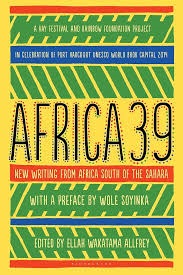
Africa 39 New Writing from Africa South of the Sahara

Africa39: New Writing from Africa South of the Sahara is a landmark literary anthology published in 2014 by Bloomsbury Publishing Plc. Curated under the auspices of the Hay Festival and in celebration of Port Harcourt’s selection as the UNESCO World Book Capital 2014, the collection brings together thirty-nine of the most promising and distinctive writers under the age of forty from sixteen countries south of the Sahara. Part I: Prefaces and Editorial Frameworks Wole Soyinka’s Introduction: “The Word Shall Fly Free!” In his introduction, Nobel Laureate Wole Soyinka frames the collection around the twenty-fifth anniversary of the fall of the Berlin Wall. He reflects on how the historical “wind of change” that blew across post-colonial Africa in the mid-20th century changed character, carrying the debris of external ideological warfare. Soyinka distinguishes between a handful of genuine leaders who possessed conviction in social doctrines and a cynical majority who used radical ideologies as weapons to silence dissidence and demand conformity. In the Soviet Union and its captive bloc, creative choices were placed under a “testamentary microscope,” turning literature into a mechanism of party ideology. This ideological policing soon spread to African academic institutions, resulting in bitter, paralyzing debates. For Soyinka, the …

Read more

The Polygamist by Sue Nyathi

Sue Nyathi’s The Polygamist is a complex, multi-perspective narrative that deconstructs the life and eventual death of Jonasi Gomora, a wealthy Zimbabwean businessman whose appetite for power and women leads to a tangled web of four wives and multiple mistresses. The novel is structured through the alternating voices of the women who shared his life Joyce, Matipa, Essie, and Lindani culminating in an epilogue voiced by the deceased Jonasi himself. The Prologue: The End of an Era The story begins at the end, at the funeral of Jonasi Gomora. His body lies contorted and ravaged by illness, his once-dark chocolate complexion turned a dull, ashy shade. The hundreds of mourners gathered at the Catholic church see only a fraction of the man he once was; to some, he was a pillar of the community, while to others, he was a “greedy one with an insatiable appetite for sex”. As his wives stand by the casket, their internal monologues reveal a mixture of relief, hatred, and lingering attachment. One wife reflects that she had lost the man she loved a long time ago, and she is glad he is dead so he can no longer cause her pain. Another looks at …

Read more

Positively Me by Nozibele Mayaba and Sue Nyathi

In the poignant memoir Positively Me: Daring to Live and Love Beyond HIV, Nozibele Mayaba, writing alongside acclaimed author Sue Nyathi, provides a visceral and deeply personal account of her life journey, from a childhood marked by financial struggle to her public emergence as a prominent HIV activist. The narrative is framed by the central conflict of her life: a startling HIV-positive diagnosis at the age of twenty-two, which initially felt like the end of her world. Through its chapters, the book deconstructs the myth that certain “types” of women are immune to the virus, while exploring themes of generational trauma, religious rigidity, and the redemptive power of self-forgiveness. The Burden of Ancestry and the Foremothers The story begins not with Nozibele, but with the women who shaped her, starting with her mother, Sindiswa Fezzie Mbukanto. Sindiswa’s life was defined by early abandonment; her own father left for Johannesburg (the “City of Gold”) to find work and never returned, leaving her mother, Makhulu Nondiyazana, to raise five children alone. Makhulu died prematurely from the stress of single parenthood, leaving the children orphaned. These circumstances forced Sindiswa to grow up instantly, caring for her younger siblings in a mud hut where …

Read more

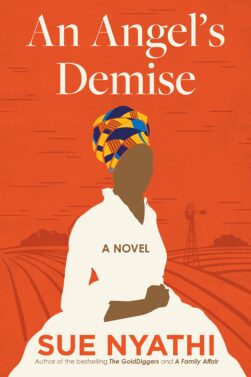
An Angel’s Demise by Sue Nyathi

Sue Nyathi’s An Angel’s Demise is a multi-generational epic that uses the life of one woman, Angel Velile Williams, as a lens through which to view the tumultuous history of Zimbabwe from the late colonial era through the liberation struggle, the horrors of Gukurahundi, and the chaotic land reform program of the early 2000s. The narrative is structured as a “Genesis” and an “Afterlife,” moving between the protagonist’s present-day imprisonment in 2008 and the historical events that shaped her existence. The Prologue: Purgatory in the High Court The novel begins in May 2008 at the High Court in Harare. The protagonist, Mrs. Angel Ngozi (the “General’s wife”), has been held in solitary confinement for thirty days, a “purgatory” where she has begun talking to cockroaches and spiders to maintain her sanity. She is a “Class-D” prisoner, considered a high flight risk, and her physical appearance shorn hair, jaded green prison frock, and black plastic flip-flops is a stark contrast to her former life of Brazilian hair, Gucci sunglasses, and Chanel suits. Angel has been subjected to regular beatings in the middle of the night by police sent by her husband, leaving scars on her back and the soles of her …

Read more

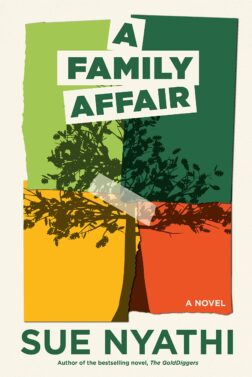
A Family Affair by Sue Nyathi

Sue Nyathi’s A Family Affair is a sprawling contemporary African saga set predominantly in Bulawayo, Zimbabwe, during the early 2000s. The novel meticulously deconstructs the internal lives of the Mafu family, a household that projects a veneer of Christian perfection while harboring deep-seated secrets, trauma, and the suffocating pressures of a patriarchal society. The narrative is structured into five movements Birth, Growth, Maturity, Decline, and Epilogue tracking the lives of the three Mafu sisters, Xoliswa, Yandisa, and Zandile (the XYZ sisters), and the next generation. Part I: Birth – The Facade of the Perfect Wedding The story opens with the wedding of the youngest sister, Zandile, to Ndabenhle Khumalo. The event is a grand spectacle at Nesbitt Castle, a Gothic venue that Zandile fought to secure against her father’s wishes to host it at his church, the Kingdom of God. Zandile represents the societal “blueprint” for a successful woman: she is educated as an architect and enters marriage as a virginal bride, a status her father, Pastor Abraham Mafu, emphasized during lobola (bride price) negotiations. However, the wedding highlights the underlying tensions of the family. Xoliswa, the eldest, serves as matron of honor but is embittered by her own stalled …

Read more

Shamiso by Brian Chikwava

The narrative of Shamiso is a deeply textured exploration of identity, the lingering trauma of war, and the complexities of “third-culture” existence, shifting between the dusty villages and suburbs of Zimbabwe and the rain-slicked streets of Brighton and London. Narrated by Shamiso, a woman who begins her story “obese with grief,” the book serves as a meticulous accounting of her past and her evolution from a stuttering child in a fractured home to a self-possessed artist in the diaspora. The Legend of Jimson: The Root of the Family Tree The story’s foundations are built upon the mythic and tragic figure of Jimson, Shamiso’s Babamukuru (paternal uncle). The narrative begins at a village borehole, where Jimson overhears a man named Shadreck spreading rumors that Jimson’s mother has become a witch. The allegation that she walks naked at night, sitting on men’s chests to pour potions into their mouths demands blood in the traditional code of the village. Jimson and Shadreck meet on a granite hill at dawn to settle the score with knobkerries. Jimson arrives with only a puppy named Mapenzi (a name chosen to spite neighbors), while Shadreck brings a small army of kinsmen. The fight is brutal and swift; …

Read more

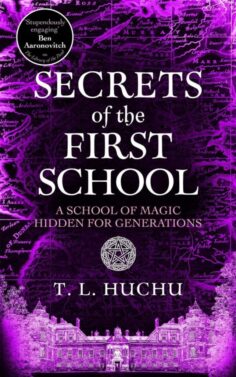
Secrets of the First School by Tendai .L. Huchu

The narrative of Secrets of the First School begins with the startling realization that the protagonist, Ropa Moyo, is dead and has been cast into the Other Place, a bleak realm in the astral plane reserved for wayward spirits. This dimension is characterized by jagged rocks, formless deserts of slag, charcoal-hued clouds, and a constant ultraviolet light that permeates the atmosphere. Ropa experiences a numbing cold and a gnawing hunger, discovering her hands look like dehydrated husks. It is in this wilderness that she is found by Sir George “Bloody” MacKenzie, the seventeenth-century Lord Advocate she previously exorcised, who saves her from being devoured by ether demons massive, tentacled Cthulhu-like creatures that feed on lost souls. MacKenzie takes her to a cave where she is reunited with the spectral form of her father, Makomborero Moyo. The Secret History of Ropa Moyo In the cave, Makomborero reveals the horrific truth of Ropa’s origins, which shatters her understanding of her life. He explains that Ropa actually died during childbirth at the Our Lady of Mysterious Ailments clinic twenty-one years prior. Driven by a bright, burning rage and a refusal to accept mortality, Makomborero used dark magic to bind her soul to the …

Read more

Cape Fever by Nadia Davids

Summary of Cape Fever by Nadia Davids Introduction and the Setting of Heron Place The narrative of Cape Fever opens on March 12, 1920, in the Cape Southern Cross Colony (modern-day Cape Town). The protagonist, Soraya, is a nineteen-year-old woman from the Quarter a predominantly Muslim neighborhood who seeks employment at 23 Heron Place. Her employer, Mrs. Alice Hattingh, lives in a grand, gabled house that looks out over the harbor, an address typically reserved for “doctors and ambassadors”. However, Soraya immediately notices that the house is “mostly vacant” and that Mrs. Hattingh is not as wealthy as the address suggests; paintings have clearly been sold off, leaving “precise and permanent shadows” on the maroon wallpaper. Soraya is hired as a combined cleaner and cook. During the interview, she pretends to be illiterate, allowing Mrs. Hattingh to believe she has “industrialized and modest” qualities. Mrs. Hattingh reveals that the position is for a live-in maid, a condition she springs on Soraya late in the interview. Soraya reluctantly accepts, agreeing to stay at the house every night and return home only once every two weeks. This arrangement sets the stage for a domestic drama defined by surveillance, loneliness, and the manipulation …

Read more

A Story Like the Wind by Laurens van der Post

Laurens van der Post’s A Story Like the Wind is an epic exploration of the vanishing magical world of primitive Africa, seen through the eyes of François Joubert, a thirteen-year-old boy living on a remote frontier ranch called Hunter’s Drift. The narrative is grounded in the author’s belief that the “living spirit needs the story for its survival and renewal,” and it serves as a testament to the “magic” that existed in Africa before European interference. François, known to the local Matabele people as “Little Feather,” is raised in an environment where the boundaries between the physical world and the world of myth are porous. His life is defined by his relationships with his parents, Lammie and Ouwa (Pierre-Paul Joubert); his mentor, the legendary hunter Mopani Theron; the Matabele headman ‘Bamuthi; and most significantly, his dog Hintza and a Bushman named Xhabbo. The World of Hunter’s Drift and the Education of François Hunter’s Drift is a self-supporting ranch carved out of the virgin bush near the Amanzim-tetse River (the “River of Sweet Waters”). François’s father, Pierre-Paul, was a former Director of African Education who resigned in protest against the government’s discriminatory policies. He established the ranch as a non-racial model …

Read more

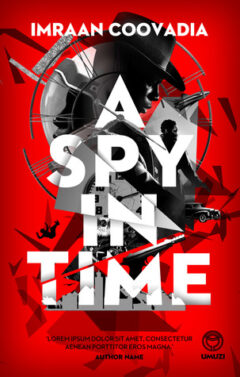
A Spy in Time by Imraan Coovadia

The narrative of Imraan Coovadia’s A Spy in Time follows Enver Eleven, a twenty-five-year-old junior case officer who begins his journey seeking adventure within the Historical Agency, an organization based in a future, post-apocalyptic Johannesburg. The Agency is dedicated to preserving the purity of history and preventing the emergence of a “multiverse” a chaotic splitting of time into contradictory strands following the doctrines established by its founder, S. Natanson. The story is structured around Enver’s deployment across various “foreign” locations in time as he pursues a mysterious adversary who threatens the Agency’s control over the past. The Marrakesh Assignment and the Small Death Enver’s first assignment takes him to Marrakesh on June 16, 1955, alongside his senior handler, Shanumi Six. Before departure, Enver undergoes rigorous preparation, including the injection of a universal serum to prevent the transfer of pathogens across time and the recording of his silhouette to monitor for “reflection sickness,” a psychological and physical disorder where travelers lose their physical outlines. He visits the Agency’s vast library, which contains thirty floors of records detailing the “potentials” of time, though it cannot resolve the specifics of an individual life. Upon arriving in Marrakesh via a shimmering archway, Enver and …

Read more

A Sinless Season by Damon Galgut

Damon Galgut’s A Sinless Season is a haunting, intensely atmospheric novel that explores the dark periphery of adolescence, the fragility of civilization, and the primitive forces of violence and obsession. Published in 1982 when Galgut was only nineteen, the narrative follows three juvenile delinquents Scott Berry, Raoul Dean, and Joseph Hamilton who are sentenced to the Bleda Reformatory, a remote institution on the South African coast designed to turn “errant youth” into “young gentlemen”. The book is a psychological thriller that subverts the traditional coming-of-age story, revealing that the “decency” of the institution is merely a thin veneer over a core of madness and suffering. Arrival at Bleda: The Illusion of Order The novel begins with the arrival of the trio at Bleda, a “comfortless fortress” built in 1927, characterized by grey stonework and bars on the windows. Scott Berry, the most sensitive and introspective of the three, feels like an “Aeneas in a metaphorical underworld,” sacrificing two years of his life for his past crimes. His companions represent different facets of troubled youth: Joseph Hamilton is plump, dark, and visibly nervous, while Raoul Dean, nearly sixteen, possesses the slight stature and deceptive innocence of a ten-year-old. Eugene Hall, the …

Read more

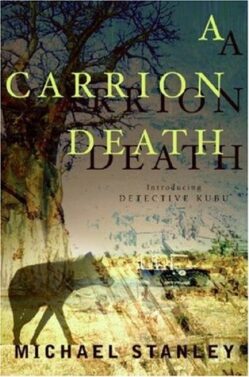
A Carrion Death by Michael Stanley

Michael Stanley’s A Carrion Death is the debut novel in a gritty mystery series featuring Assistant Superintendent David ‘Kubu’ Bengu of the Botswana Criminal Investigation Department,. The title of the book is taken from Shakespeare’s The Merchant of Venice, specifically the line: “A carrion Death, within whose empty eye there is a written scroll!”. The story is a complex tapestry of corporate greed, diamond smuggling, and cold-blooded murder that spans from the desolate beauty of the Kalahari Desert to the high-powered boardrooms of Gaborone. At the center of the investigation is a detective whose nickname, ‘Kubu’, means ‘hippopotamus’ in Setswana a creature that appears docile but possesses a deadly, unwavering resolve. The Discovery at Kamissa The narrative begins with a gruesome discovery in the Central Kalahari Game Reserve. Andries Botha, a game ranger at Dale’s Camp, and Bongani Sibisi, an ecology professor from the University of Botswana, find a human corpse being devoured by a hyena near the Kamissa waterhole,. The remains are in a horrific state: the head is separated from the spine, the back of the skull is smashed, and the eye sockets are empty. A cloying smell of carrion hangs over the scene, and green flies swarm …

Read more

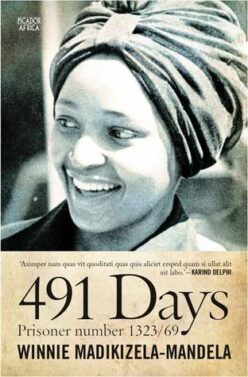
491 Days by Winnie Madikizela-Mandela

Winnie Madikizela-Mandela’s 491 Days: Prisoner Number 1323/69 is a harrowing and defiant account of her sixteen-month detention by the South African apartheid regime from May 12, 1969, to September 14, 1970. The book is primarily composed of a secretly kept prison journal, which was lost for forty-one years before being returned to her in 2011, and a collection of letters exchanged between Winnie and her husband, Nelson Mandela, who was then serving a life sentence on Robben Island. The narrative provides a visceral look at the brutality of solitary confinement, the psychological warfare of the security police, and the resilient bond of a family torn apart by political struggle. The Context of Arrest and the Terrorism Act The detention began in the early hours of May 12, 1969, when security police raided Winnie’s home in Soweto. She was arrested in the presence of her two young daughters, Zenani (10) and Zindzi (9), who were left alone in the middle of the night without any arrangement for their care. This arrest was part of a larger crackdown in which at least 40 activists were rounded up under Section 6 of the Terrorism Act of 1967. This specific law allowed the security …

Read more

101 Detectives by Ivan Vladislavić

Ivan Vladislavić’s 101 Detectives is a sophisticated collection of short stories that delves into the intricacies of professional observation, the weight of personal and collective history, and the absurdities of modern corporate and industrial life. The narrative often centers on characters who are “detectives” in a literal or metaphorical sense watchers, auditors, storytellers, and archivists who navigate a world defined by surveillance, displacement, and the “pointless paper” of human existence. The Fugu-Eaters: Surveillance and the Bitter Smoke of the Past The collection opens with a story featuring two detectives, Klopper and Bate, who are engaged in a long-term surveillance operation from a tinted-window hotel room. The narrative is characterized by a stark contrast between the mundane physical discomforts of the present and the haunting memories of a more sinister past. Bate is recovering from a traumatic dental experience. His mouth is a “wounded” landscape of empty sockets where his wisdom teeth were recently “splintered” out by a dentist he views as a “sadist”. To pass the time, he reads a Reader’s Digest article about the fugu fish, a Japanese delicacy whose gonads contain tetrodotoxin a poison twenty-seven times more deadly than a green mamba. The article details the “arduously trained” …

Read more