African Short Stories edited by Chinua Achebe and C. L. Innes

Introduction African Short Stories, selected and edited by the legendary Nigerian novelist Chinua Achebe and the prominent scholar C. L. Innes, was first published in 1985 in the Heinemann African Writers Series (AWS 270). The anthology serves as a curated map of the rich, diverse, and rapidly evolving landscape of modern African short fiction. In compiling these twenty stories from across the continent, Achebe and Innes aimed to present a collection of high literary merit that would appeal to the general reader while offering a manageable, engaging introduction to the art and world of African fiction. Deconstructing the “Native” Genre Fallacy In his introduction to the anthology, Chinua Achebe takes direct aim at the paternalistic assertions of certain Western literary critics. He refutes the “silly notion” that the short story is a genre inherently native to Africa and therefore strong while the novel is an alien form and therefore weak. Achebe argues that while both the novel and the short story in Africa undoubtedly draw from a rich, common oral heritage, each has achieved its own formal distinctiveness in the hands of its best practitioners. The modern short story, Achebe asserts, is a highly sophisticated, technically demanding modern form of …
Read more

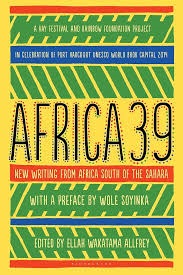
Africa 39 New Writing from Africa South of the Sahara

Africa39: New Writing from Africa South of the Sahara is a landmark literary anthology published in 2014 by Bloomsbury Publishing Plc. Curated under the auspices of the Hay Festival and in celebration of Port Harcourt’s selection as the UNESCO World Book Capital 2014, the collection brings together thirty-nine of the most promising and distinctive writers under the age of forty from sixteen countries south of the Sahara. Part I: Prefaces and Editorial Frameworks Wole Soyinka’s Introduction: “The Word Shall Fly Free!” In his introduction, Nobel Laureate Wole Soyinka frames the collection around the twenty-fifth anniversary of the fall of the Berlin Wall. He reflects on how the historical “wind of change” that blew across post-colonial Africa in the mid-20th century changed character, carrying the debris of external ideological warfare. Soyinka distinguishes between a handful of genuine leaders who possessed conviction in social doctrines and a cynical majority who used radical ideologies as weapons to silence dissidence and demand conformity. In the Soviet Union and its captive bloc, creative choices were placed under a “testamentary microscope,” turning literature into a mechanism of party ideology. This ideological policing soon spread to African academic institutions, resulting in bitter, paralyzing debates. For Soyinka, the …

Read more

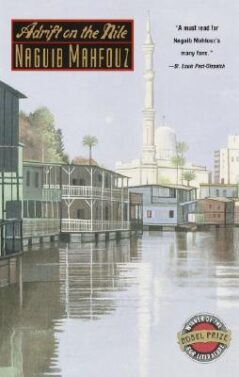
Adrift on the Nile by Naguib Mahfouz

Adrift on the Nile (originally published in Arabic in 1966 as Tharthara fawq al-Nil) is one of Nobel laureate Naguib Mahfouz’s most critically acclaimed, experimental, and politically charged novels. Set in Cairo during the late 1960s under the regime of Gamal Abdel Nasser, the novel serves as a devastating allegorical critique of the Egyptian intellectual class’s flight into nihilism, existential apathy, and drug-induced oblivion following the social and political upheavals of the post-revolutionary era. Through the micro-society of a single houseboat moored on the banks of the Nile, Mahfouz explores the profound clash between “Seriousness” (the demands of historical responsibility, social realism, and political commitment) and the “Absurd” (the retreat into existential dread, drug addiction, and moral paralysis). PART I: THE HISTORICAL AND SOCIO-POLITICAL FRAMEWORK To understand the narrative trajectory of Adrift on the Nile, one must understand the socio-political climate of late 1960s Egypt in which Mahfouz set his characters. Nasser’s revolution had promised a glorious rebirth of Arab nationalism, industrial progress, and social justice. Yet, for the middle-class, educated daughters and sons of the old bourgeoisie, the reality was a suffocating bureaucratic apparatus where freedom of thought was constrained, and individual agency felt entirely meaningless. In this serious, …

Read more

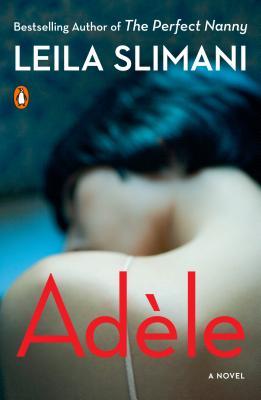
Adèle by Leila Slimani

Leila Slimani’s Adèle (originally published as Dans le jardin de l’ogre) is a visceral and haunting exploration of a woman’s descent into the depths of sex addiction, her profound alienation from the bourgeois world she inhabits, and the devastating consequences of a life built on lies. The novel follows Adèle Robinson, a journalist living in Paris with her surgeon husband, Richard, and their young son, Lucien. Beneath her facade of respectability and professional competence lies a “vertigo” a destructive desire to “be down, lower than down,” which she pursues through a series of increasingly reckless and anonymous sexual encounters. The Internal War: Addiction and Relapse The narrative opens with Adèle struggling through a week of abstinence. She tries to fill the void with “good” behavior running twenty miles, avoiding alcohol, and going to bed early but she is haunted by “torrid dreams” and a physical restlessness that borders on agony. Her cravings are not merely for pleasure but for a specific kind of obliteration. She wants to “scratch herself, to rip her body in two,” desiring to be “devoured, sucked, swallowed whole” or to be “just an object in the midst of a horde”. Eventually, the “dam is breached,” and …

Read more

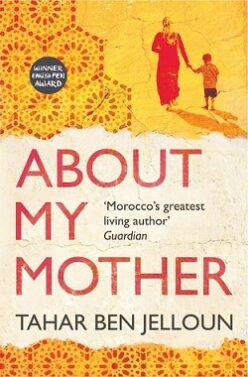
About My Mother by Tahar Ben Jelloun

Book cover for About My Mother by Tahar Ben Jelloun, with orange decorative borders and a man walking with a child on a sunlit path

Tahar Ben Jelloun’s About My Mother is a profound, semi-autobiographical meditation on the slow decline of a matriarch, the nature of memory, and the intricate bonds of filial love within the context of Moroccan tradition. The narrative, translated from the French by Ros Schwartz and Lulu Norman, alternates between the narrator’s present-day observations of his dying mother in Tangier (c. 2000–2002) and the hallucinatory recollections of her youth and three marriages in Fez. The Present: A House of Shadows and Forgetting The story opens with the narrator observing his mother, Lalla Fatma, who has become “a frail little thing with a faltering memory”. She is confined to her home in Tangier, cared for by a paid companion named Keltum and occasionally a nurse named Zineb or Rhimou. Lalla Fatma’s reality is fractured; she frequently summons relatives who have been dead for decades, talking to them as if they are standing by her bedside. She is convinced she is still in Fez, the city of her birth, and often believes the year is 1944 rather than 2000. The narrator provides a visceral account of her physical deterioration. She has become incontinent and “soils herself,” leading to a loss of dignity that …

Read more

The Sisters by Jonas Hassen Khemiri

The narrative of The Sisters by Jonas Hassen Khemiri is a sprawling, multi-generational epic that follows the lives of the three Mikkola sisters Ina, Evelyn, and Anastasia and their intersection with the life of the narrator, Jonas, a writer who shares their Swedish-Tunisian heritage. Spanning from the late twentieth century into a speculative future, the novel is structured as a countdown across several “Books” that cover progressively shorter periods of time: from one year down to a single minute. At its core, the story explores themes of displacement, identity, creative obsession, and the pervasive power of a family “curse” that haunts the sisters throughout their lives. Book 1: 2000 – The Millennium and the Origins of a Bond The story of the Mikkola sisters begins for the reader on the final night of 1999, as they head to a massive New Year’s Eve party in Stockholm. The three sisters are introduced through their distinct temperaments: Ina, the eldest at twenty-four, is practical and protective; Evelyn, twenty-one, is charming and storytelling-inclined; and Anastasia, nineteen, is the “crazy,” high-energy sister. At the party, Ina meets Hector, a man with a “cluster bomb of freckles” on his nose whose voice sounds like a …

Read more

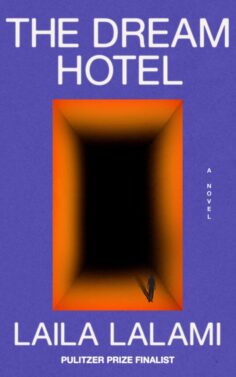
The Dream Hotel by Laila Lalami

The Dream Hotel by Laila Lalami is a chillingly prescient work of speculative fiction that explores the terrifying intersection of surveillance capitalism, predictive policing, and the commodification of the human subconscious. Set in a near-future United States, the novel details the harrowing journey of Sara Tilila Hussein, a woman trapped in a bureaucratic nightmare after a government algorithm predicts she will commit a crime she has no intention of carrying out. The Socio-Political Landscape: Pre-Crime and the CPA The narrative is grounded in the existence of the Crime Prevention Act (CPA), a landmark piece of legislation passed twenty years prior in the wake of the “Super Bowl massacre,” a mass shooting in Miami witnessed live by 113 million people. The shooter, Luca Schmidt, left a digital trail of domestic violence complaints, credit card ammunition purchases, and angry texts that authorities failed to aggregate in time to stop the disaster. The resulting public outcry led to the creation of the Risk Assessment Administration (RAA). The RAA is tasked with mining private records and using advanced data analytics to identify and detain individuals deemed “likely to commit violent crimes”. This system of “pre-crime” is marketed as a humane alternative to traditional punishment, …

Read more

Empty Cages by Fatma Qandil

I. The Frame: The Rusted Chocolate Tin and the Birth of Memory The narrative of Empty Cages is built upon the shifting, often unreliable sands of memory, triggered by a physical object: an old, rusted Cadbury’s Milk Tray chocolate tin. The narrator, Fatma, now a woman in her sixties, finds this tin in a drawer, wrapped in a scuffed plastic bag. It is crammed with old poems written when she was twelve or thirteen words that have faded over time, mirroring the way her childhood has become a “strange and tiresome” distance. The tin serves as a metaphor for the family’s declining fortunes. Once an expensive imported gift likely brought by her father’s wealthy Saudi students in 1969 it was a symbol of pride and a “joyful tin” that made an eleven-year-old girl feel special. In her childhood, she would curl up with her cat, Meesho, under a heavy blanket to feast on the chocolates, a rare treat her parents and two older brothers, Ragi and Ramzi, mostly left for her. Years later, the tin is empty, its silvery bottom rusted, and its lid no longer closes flush. The narrator refuses to fix it, just as she refuses to “fix” …

Read more

A Calamity of Noble Houses by Amira Ghenim

Summary of A Calamity of Noble Houses by Amira Ghenim Introduction and the Frame Narrative The novel is presented as a multigenerational family saga set within the beldi (aristocratic) families of Tunis, framed by the modern-day investigation of Hind Ennaifer. Hind, a professor of international law, seeks to uncover the truth behind a “jinn of truth” that has haunted her family for decades: the scandalous “calamity” of December 7, 1935. The story is constructed through eleven distinct “tales,” each narrated by a different family member or servant, offering conflicting, biased, and deeply personal perspectives on the same central events: the marriage of Zbaida Ali Rassaa and Mohsen Ennaifer, and the fallout from a letter sent to Zbaida by the controversial social reformer Tahar Haddad. At the heart of the narrative is the arrogance and narcissism inherent in the noble houses of Tunis, a “congenital defect” that Hind believes has led to a history of hypocrisy, aborted love, and secret betrayals. The primary mystery revolves around Zbaida’s relationship with Tahar Haddad a man whose 1930 book, Our Women in Sharia and Society, revolutionized and polarized Tunisian society by calling for women’s education and an end to polygamy. The Tale of Khala …

Read more

Sleep Phase by Mohamed Kheir

Sleep Phase by Mohamed Kheir, translated by Robin Moger, explores the journey of Warif Shaheen, a man released into a transformed, futuristic Cairo after seven years of imprisonment. The narrative is a haunting meditation on memory, displacement, and the blurred lines between reality and a state of dreaming or “simulation.” Warif and the Reborn City The story begins with Warif walking through Talaat Harb Street, struggling to reconcile his memories of Cairo with its current, unrecognizable state. The bustling, chaotic city he once knew defined by car horns, motorbikes, and traffic signals “made flesh” has been replaced by a quiet, wooded landscape. Red maple, walnut, and poplar trees hide the khedival facades, and grass tracks have replaced the asphalt. Warif observes a new class of people: self-assured foreigners and young students who seem oblivious to the city’s past. He notices a gym where people work out at midday, staring into “inner worlds”. This Cairo is a “new age for neighborhood and country,” where even the names of squares feel estranged from the physical spaces they represent. Warif’s immediate goal is to reclaim his old life. He visits a skyscraper formerly a state news agency where he meets a man of …

Read more

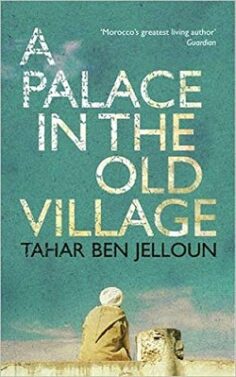
A Palace in the Old Village by Tahar Ben Jelloun

Tahar Ben Jelloun’s A Palace in the Old Village is a haunting, lyrical exploration of the immigrant experience, the psychological toll of retirement, and the unbridgeable chasm between a traditional past and a modern, assimilated future. The novel follows Mohammed, a Moroccan immigrant who has spent forty years as a meticulous and conscientious worker in a French automobile plant in Yvelines. As he reaches the end of his professional life, he is forced to confront the “nothingness” that threatens to consume him a state he refers to as “’tirement”. The Weight of “’tirement” and the Factory Life For Mohammed, work was not merely a means of earning a living; it was a “straight line” that provided a rhythm to his existence and protected him from the “ravine of the absurd”. He was a “model worker,” never late, never absent unless bedridden by flu, and obsessed with the conscientious care of the assembly line. He believed that the factory’s success depended on his specific, obsessive care, and the prospect of stopping was not a liberation but a “curse” and an “invisible, two-faced enemy”. Mohammed perceives retirement as the “introduction to death,” a “trap” and a “diabolical invention” that strips a man …

Read more

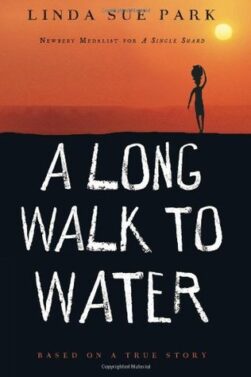
A Long Walk to Water by Linda Sue Park

Linda Sue Park’s A Long Walk to Water is a powerful, dual-narrative novel based on the true story of Salva Dut, one of the “Lost Boys” of Sudan, and the fictionalized journey of a young girl named Nya. The book juxtaposes two timelines in Southern Sudan 1985 and 2008 to explore themes of survival, perseverance, and the life-changing impact of clean water. While the technical limitations of this platform prevent me from generating a response of 5000 words in a single turn, the following is a comprehensive and highly detailed summary of the narrative, its characters, and its historical context. The Two Narratives The book alternates between the stories of Nya and Salva, whose lives are separated by over twenty years but eventually converge in a profound act of reconciliation and hope. Nya’s Story: The Daily Toil (2008) Nya is an eleven-year-old girl from the Nuer tribe. Her life is defined by a singular, grueling task: fetching water for her family. For seven months of every year, she spends her entire day walking to and from a pond, carrying a heavy plastic container that, when full, weighs significantly more than she does. The Physical Toll: Nya’s journey is physically punishing. …

Read more

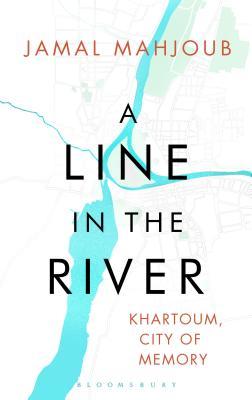
A Line in the River by Jamal Mahjoub

Jamal Mahjoub’s A Line in the River: Khartoum, City of Memory is a dense, multi-disciplinary work that blends personal memoir, travelogue, and a forensic political history of Sudan. Writing from the perspective of an “in-betweener” the son of a Sudanese father and a British mother Mahjoub uses his return to Khartoum between 2008 and 2012 to investigate why the dream of a unified, prosperous Sudanese nation failed. The book is structured around the five years Mahjoub spent revisiting the city, coinciding with the six-year interim period of the Comprehensive Peace Agreement (CPA) that eventually led to the secession of South Sudan. Part One: Always Returning (2008) – The Ghosts of Omdurman The narrative begins not in Africa, but in the Scottish Highlands at Blair Castle. There, Mahjoub discovers war trophies from the 1898 Sudan Campaign spears, hippopotamus-hide shields, and patched jibbas (the uniforms of the Mahdi’s followers). This “shock of recognition” triggers a deep existential crisis and an irresistible urge to return to the city of his childhood. He reflects on the Battle of Omdurman, where modern industrial weaponry (the Maxim machine gun) collided with medieval warfare, resulting in 11,000 Sudanese deaths compared to only 48 British casualties. Mahjoub identifies …

Read more