
Introduction
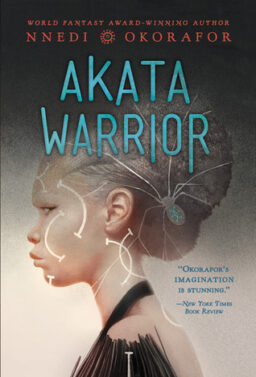
Akata Warrior is the second novel in Nnedi Okorafor’s acclaimed Young Adult fantasy series, following Akata Witch (2011). Published in 2017, the novel continues the story of Sunny Nwazue, a Nigerian-American girl with albinism who discovers she is a Leopard Person a individual with inherent magical abilities. Set in a richly imagined Nigeria where the mundane world (the Lamb world) coexists with a magical realm (the Leopard world), the novel explores themes of identity, belonging, cultural hybridity, and the weight of destiny. Okorafor, a Nigerian-American author celebrated for her unique blend of African cosmology and speculative fiction, creates a world that is at once fantastical and deeply rooted in Igbo and Nigerian cultural traditions.
The novel opens with a warning from the Obi Library Collective of Leopard Knocks’ Department of Responsibility, establishing the narrative voice that will guide readers through this magical world. This framing device presenting the book as a dangerous text filled with juju immediately immerses readers in the Leopard world’s internal logic and sets the tone for a story where magic is not merely a plot device but a fundamental, unpredictable force that demands respect and caution.
Part One: The Awakening and the Threat
Sunny’s Life and Identity
At the novel’s outset, Sunny Nwazue is approximately thirteen and a half years old, living in southeastern Nigeria near the city of Aba. Born in New York City to Nigerian parents, Sunny moved to Nigeria when she was nine. This dual heritage creates a complex identity: she speaks Igbo with an American accent, says “soccer” instead of “football,” and is often called “akata” by classmates a derogatory term Nigerians use for black Americans or foreign-born blacks, sometimes meaning “bush animal” or “cotton picker.”
Sunny’s albinism adds another layer of complexity to her identity. Her pale skin, blonde hair, and sensitivity to sunlight mark her as visibly different in Nigerian society, where superstitions about albinos abound. Some believe albinos possess magical powers or bring bad luck, while others view them as cursed. This stigmatization is a constant source of pain and alienation for Sunny, yet Okorafor transforms this “flaw” into the source of Sunny’s power a common trope in Leopard society where one’s greatest vulnerability becomes their greatest strength.
Sunny is a free agent, a Leopard Person whose spirit was “skipped” a generation. Her grandmother on her mother’s side was the Leopard Person in her family, but she was murdered by her student, Black Hat Otokoto, before she could properly initiate Sunny into the Leopard world. Thus, Sunny had to discover her abilities largely on her own, making her simultaneously powerful and vulnerable a recurring theme throughout the novel.
The Spirit Face and Anyanwu
Central to Sunny’s identity as a Leopard Person is her spirit face, Anyanwu. In Leopard society, every person has a spirit face their truest face, which they will always have. Exposing one’s spirit face is likened to being naked in public, and it carries immense power and vulnerability. Anyanwu is described as “someone great in the wilderness,” an ancient spirit with memories that stretch back across lifetimes.
The relationship between Sunny and Anyanwu is one of the novel’s most fascinating elements. They are two beings in one body, yet distinct entities with different personalities, voices, and knowledge. Anyanwu is old, powerful, and confident everything Sunny often feels she is not. When Sunny brings forth her spirit face, Anyanwu “fills her up with confidence, poise, and courage,” suggesting that Leopard identity involves integrating one’s present self with ancient wisdom.
This duality is tested throughout the novel. When Ekwensu throws a bead that strikes Sunny between the eyes, Anyanwu is “cut from her” a process called “doubling.” This separation nearly kills Sunny and leaves her without access to her spirit face for much of the narrative. The doubling forces Sunny to confront who she is without Anyanwu, ultimately teaching her that her identity as a Leopard Person is not dependent on her spirit face alone. As Anyanwu later explains, “Our bond is broken; some compensation is required. It’s like loving and cherishing someone without needing the bonds of marriage to enforce it. By sinister means, you and I are free.”
The Oha Coven
Sunny’s closest friends form her Oha coven, a group of young Leopard People who work magic together. Each member brings unique abilities to the group:
Orlu is almost fifteen and lives next door to Sunny. Calm and even-tempered, he possesses the natural ability to instinctively undo any juju he encounters. His dyslexia led him to this gift he sees the world differently, allowing him to perceive and dismantle magical constructs that others cannot. Orlu is the emotional anchor of the group, always thinking before acting, and his gentle nature contrasts with the more impulsive members of the coven. His relationship with Sunny is tender and evolving; they hold hands, share a brief kiss on New Year’s Eve, and care deeply for each other without defining their relationship in conventional terms.
Chichi is a girl of indeterminate age (she could be older or younger than Sunny) who lives with her mother in a small hut despite being royalty from her mother’s side. Her absent father is a famous highlife and afrobeat singer. Chichi possesses a photographic memory and intense restlessness that are “the keys to her personal talent.” Short in stature but immense in personality, her mouth and strong will “rival the most successful market woman.” She is mischievous, secretive, and willing to break rules qualities that prove invaluable when the group needs to bend Leopard society’s strict regulations. Chichi is also involved in a love triangle with Sasha and Sunny’s brother Chukwu, creating tension within the group.
Sasha is fifteen and from the South Side of Chicago. His parents sent him to Nigeria because of his issues with authority, especially police. Like Chichi, he is fast, hyper-intelligent, and possesses a computer-like memory. He is “trouble in the Lamb world, but beautifully gifted in the Leopard world.” Sasha is rebellious, outspoken, and fiercely loyal to his friends. His journey in the novel involves confronting his feelings for Chichi while dealing with her attraction to Chukwu, and his discovery of Udide’s Book of Shadows, which becomes crucial to the group’s mission.
The Lake Beast Attack
The novel opens with Sunny’s encounter with a lake beast a giant octopus-like creature that appears in a lake where no lake should be. This attack, which nearly kills Sunny, is orchestrated by Ekwensu, the most powerful and evil masquerade, as a distraction. Sunny is saved by Ogbuide (Mami Wata), the water spirit, who gives her a comb made of oyster shell as a gift. This attack sets the tone for the novel: Sunny is a target, and forces far more powerful than her are arrayed against her.
Dreams of the City of Smoke
Throughout the novel, Sunny experiences vivid dreams of a “city of smoke” that appears to be burning. She interprets these dreams as premonitions of the world’s end, visions of apocalypse similar to what she saw in a candle flame two years earlier. These dreams terrify her, causing physical illness and emotional distress. She keeps them secret from her friends and mentors, adding to her burden of isolation.
The truth, revealed later by the possessed Bola Yusuf, is that these dreams are not of destruction but of destination. The “city of smoke” is Osisi, a “full place” where the physical world and the wilderness coexist. The dreams are guiding Sunny toward where she needs to go, not warning her of what is coming. This misunderstanding reflects a central theme of the novel: fear and assumption can blind us to the truth, and what appears to be a curse may actually be a calling.
The Idiok and Nsibidi
Interspersed throughout the narrative are excerpts from Sugar Cream’s Nsibidi book, Trickster: My Life and My Lessons. These sections reveal Sugar Cream’s origins: she was raised by the Idiok, a clan of baboon Leopard People, in a forest that was both physical and spiritual. The baboons taught her Nsibidi, the magical writing script of the wilderness, and she learned to shape-shift and to speak with spirits.
Nsibidi is not merely a writing system; it is a living, shape-shifting language that requires the reader to be a shape-shifter themselves. Reading Nsibidi demands energy and can be dangerous “Reading Nisbidi is risky,” Sugar Cream warns. “People have died from reading too much, Sunny. Beware of books written in excellent Nsibidi; you have to be truly strong to read them. Otherwise, you could get sucked into the story or the lessons or the information. When you return to yourself, it is only to wish this current life goodbye.”
Sunny’s ability to read Nsibidi is a significant part of her development. It represents her growing mastery of Leopard knowledge and her connection to her grandmother, who left her a page of Nsibidi writing. This inheritance becomes crucial when Sunny uses a symbol from her grandmother’s note to open the door to Ekwensu’s house in Osisi.
Part Two: Crisis and Consequence
Chukwu’s Trouble
Sunny’s oldest brother, Chukwu, has always been the golden child: handsome, athletic, academically successful, and doted upon by their father. When he leaves for university, he joins a confraternity called the Red Sharks, a secret society that operates much like a cult. The initiation involves a brutal beating by ten men, the extraction of a tooth (replaced with a shark tooth), and a blood oath. Chukwu survives but is deeply traumatized, and he runs away from school rather than complete the initiation’s final stages.
When Chukwu returns home battered and terrified, Sunny is confronted with a choice: follow Leopard society’s strict rules about non-interference with Lamb affairs, or protect her brother at any cost. She chooses the latter, enlisting Chichi’s help to set Murks (tiny batlike spirits) on the Red Sharks and to terrify their leader, Capo.
The Time-Holding and Its Consequences
During the attack on the Red Sharks, Sunny does something unprecedented: she holds time. Drawing on her natural ability to glide and her training with Sugar Cream, she stops time long enough to confront Capo directly and threaten him with death if he or any of his members harm her brother again. This act violates Leopard doctrine severely one does not interfere with Lamb affairs, especially not using such powerful magic.
For this transgression, Sunny is sentenced to three days in the Obi Library basement, a place of punishment that also houses a djinn an ancient, malevolent spirit that feeds on the life force of those imprisoned there. The basement scenes are among the novel’s most harrowing, as Sunny must confront the djinn with only her wits and limited magical knowledge.
The Djinn and the Spiders
In the basement, Sunny meets Ogwu, a descendant of Udide the Great Spider, and her children. Ogwu and her kin have been cursed to remain in the basement since 1945, when they attempted to prevent the atomic bomb from being dropped on Hiroshima. Ogwu was on the Enola Gay, trying to weave a storytelling juju that would disable the bomb, but she misspoke one of the binding words, and the bomb was dropped. Since then, she and her descendants have hidden in the basement, cursed and ashamed.
Sunny recognizes Ogwu and her children through Anyanwu’s ancient memories. She convinces them to help her defeat the djinn by promising that she will do what they failed to do: save the world. The spiders attack the djinn, tearing it apart and freeing themselves from their curse. This encounter is significant for several reasons: it demonstrates Sunny’s ability to inspire and unite others; it reveals more of Anyanwu’s past life as a warrior who tried to prevent the atomic bomb; and it introduces the theme of redemption Ogwu and her children reclaim their purpose by helping Sunny.
The basement episode also introduces the reader to the concept of the wilderness the spirit world that exists alongside the physical world. When the djinn pulls Sunny fully into the wilderness, she nearly dies, but her spirit face Anyanwu saves her. Anatov later explains that traveling fully into the wilderness is akin to death and that Sunny brought back residue that must be cleansed. This cleansing scene where Anatov performs bush medicine on Sunny, pulling a green mist replica of her from her body illustrates the novel’s recurring theme of purification and renewal.
Ekwensu’s Escalation
While Sunny is in the basement, Ekwensu makes her first major move: she throws a bead of her power that strikes Sunny between the eyes, severing Anyanwu from her. This “doubling” leaves Sunny without access to her spirit face and nearly kills her. The doubling is a trauma that haunts Sunny throughout the rest of the novel, forcing her to rely on her own strength and resources rather than Anyanwu’s ancient knowledge.
Ekwensu’s appearance in the physical world is marked by environmental disasters, particularly oil spills in the Niger Delta. The novel connects Ekwensu’s presence to real-world ecological devastation, suggesting that the masquerade feeds on pollution and environmental destruction. This connection between magical evil and real-world environmental issues is a hallmark of Okorafor’s work, which often blends fantasy with social commentary.
The Journey to Lagos
Determined to find a way to Osisi and stop Ekwensu, Sunny and her friends travel to Lagos in Chukwu’s Jeep, accompanied by Chukwu himself. The journey is fraught with danger: terrible roads, corrupt police at checkpoints, “one chance” robbers, and the ever-present threat of Grashcoatah (the flying grasscutter they will later acquire) causing chaos by revealing himself to Lambs.
The road trip serves multiple narrative purposes. It provides comic relief through Sasha and Chukwu’s rivalry over Chichi, the disastrous attempt to use weather magic to clear a traffic jam (which causes Sasha to need to urinate uncontrollably), and Grashcoatah’s mischievous behavior. But it also deepens character relationships, particularly between Sunny and her brother Chukwu. Their conversation about Chukwu’s near-death experience in the Red Sharks and Sunny’s determination to protect him reveals the depth of their bond and the changes both have undergone.
The journey also introduces the reader to the reality of Nigeria its beauty and its challenges through the eyes of a girl who has spent years straddling two worlds. Sunny’s observations about the poverty, corruption, and environmental degradation she witnesses are poignant, yet she never loses her wonder at the country’s vitality.
Meeting Udide
In Lagos, the group descends beneath the city to meet Udide, the Great Spider, one of the most powerful beings in existence. Udide is the size of a house, covered in stiff hairs, and smells of burning houses a smell Sunny recognizes from her childhood memory of a house fire. Despite her terrifying appearance, Udide is also a storyteller, a weaver, and a being of immense intelligence and power. She is one of the few who answers only to Chukwu, the Supreme Being.
The encounter with Udide is a test of nerve and wit. When Udide threatens to kill them for trespassing, Orlu saves the group by telling Udide their stories honoring her nature as a storyteller and appealing to her vanity and curiosity. Sunny then tells Udide her most painful childhood memory: the day she was bullied by older African American girls in a school bathroom in New York, an incident that culminated in Sunny using the word “akata” as a weapon.
This story is significant for multiple reasons. It reveals the complexity of Sunny’s identity as a Nigerian-American, showing that she has experienced racism and discrimination from both sides of her heritage. It also demonstrates her growth: she is willing to be vulnerable and honest with a being who could destroy her in an instant, and this honesty earns Udide’s respect. Udide rewards Sunny with a flying grasscutter named Grashcoatah, a creature woven from spider silk and wilderness magic.
Grashcoatah is a gift and a responsibility. He is intelligent, mischievous, and loves hip-hop music, but he also has a dangerous habit of revealing himself to Lambs, which could result in his execution by the Library Council. The group must protect Grashcoatah just as he protects them, and his presence adds both humor and tension to the narrative.
Part Three: Osisi and the Final Confrontation
The City of Smoke
Osisi is revealed to be a “full place,” where the physical world and the wilderness coexist. It is a sprawling metropolis that is simultaneously ancient and modern, filled with spirits, masquerades, and other supernatural beings. The city is surrounded by a ring of green water covered with algae and is protected by walls of fire and smoke that part only for those who belong there.
Sunny’s dreams of Osisi were not premonitions of the world’s end but guidances toward her destination. This revelation is important: it shows that Sunny’s interpretation of her visions was clouded by fear and assumption, and it underscores the novel’s theme that things are rarely as they appear.
Ekwensu’s Ancestral Home
The group traces Sunny’s grandmother’s Nsibidi message to a large yellow stone house in Osisi. This house, they discover, is Ekwensu’s ancestral home the place where the masquerade draws her greatest power. The house is enormous, far larger than it appeared in the Nsibidi message, and it is filled with juju traps that disarm themselves in Sunny’s presence because of her grandmother’s protection.
The house contains a library of forbidden books (which Sasha and Chichi eagerly explore), walls covered in mosaics made from beetle wings, and five massive masks that seem to watch Sunny’s every move. The masks are made of various materials gold, water, wood, bronze, stone, and garbage and each represents different aspects of Ekwensu’s power.
Outside the house, Grashcoatah eats the overgrown grass (living up to his name), while inside, the group discovers that Ekwensu’s home is not just abandoned but waiting for them, for Sunny, for the final confrontation.
The Battle
The final battle is both physical and metaphysical. Ekwensu manifests as a giant creature made of packed palm fronds, with wooden masks for faces and beads of power scattered throughout her body. She is accompanied by the Mmuo Aku masquerade (which Chichi had accidentally summoned a year earlier and which has come to settle a score) and various spirits and creatures.
The battle is chaotic and terrifying. Chichi is wrapped in spider silk and nearly killed by Udide before Orlu intervenes. Sasha uses all his wits and magic to fight the Mmuo Aku and rescue Chichi, nearly dying in the process. Orlu and Grashcoatah fight Ekwensu’s minions, with Grashcoatah revealing hidden abilities (he can shoot spiderwebs from his fur).
But the decisive moment comes when Sunny, without Anyanwu and without most of her juju, does the unthinkable: she climbs Ekwensu. Like a baboon in a forbidden forest, like a soccer player going for the goal, she scales the giant masquerade and rips off one of her masks. This act unmasking a masquerade is an abomination in Nigerian culture, a taboo so deeply ingrained that Sunny’s father warned her about it when she was a child. But Sunny does it anyway, using not magic but physical strength, courage, and cultural knowledge.
Meeting Chukwu
When Sunny pulls off Ekwensu’s mask, she is transported to a field of wriggling grass, where she meets Chukwu, the Supreme Being, and Anyanwu. Chukwu is enormous, appearing as a haystack of colorful cloth with a four-sided ebony mask and an arm of raffia and beads. Around Chukwu, plants grow and die in seconds yam vines swell and rot, flowers bloom and wither symbolizing the cycle of life and death that Chukwu embodies.
Chukwu breaks kola with Sunny and Anyanwu, a ritual of hospitality and communion that is deeply significant in Igbo culture. This scene is profoundly humbling and transformative for Sunny. She has faced Ekwensu, Death, and now God itself, and she has survived. Chukwu gives her a coconut (from a coconut masquerade who caught it before it could hit her head), and when she breaks it open later, it heals Chichi’s wound.
Most importantly, Chukwu gives Sunny something: a point on her forehead that, when she touches it, makes the world “brighten and deepen.” What exactly this gift is remains ambiguous, but it seems to enhance Sunny’s perception and connection to the spiritual world. It is a mark of Chukwu’s favor, a blessing that she carries with her.
The Aftermath
After the battle, Ekwensu’s house crumbles to dust, leaving only the palm tree. The spirits and people of Osisi gather to collect the sparkling dust, which seems to have value. Grashcoatah is covered in spiderwebs, and Chichi is severely wounded (Sasha used soldier ants to stitch her wound, a grotesque but effective solution). But they are alive, and Ekwensu has been defeated at least for now.
The group flies back to Lagos, where they face the Library Council. Sunny tells the council everything (except her meeting with Chukwu, which remains her private experience). The council is stunned by her account but releases the group and Grashcoatah without punishment. They recognize that Sunny’s actions, though unconventional and rule-breaking, have saved the world.
Character Analysis
Sunny Nwazue
Sunny is a protagonist who embodies the novel’s themes of identity, belonging, and transformation. She is, in many ways, an outsider in every world she inhabits: too American for Nigeria, too Nigerian for America, too Leopard for Lambs, too Lamb for Leopards, too visibly different because of her albinism. Yet this outsider status is precisely what makes her powerful she sees things others miss, questions assumptions others take for granted, and bridges worlds that others cannot.
Sunny’s growth over the course of the novel is remarkable. She begins as a girl still reeling from her initiation into Leopard society, uncertain of her abilities and her place in the world. By the end, she has:
- Defeated a djinn in the Obi Library basement
- Held time to protect her brother
- Endured the trauma of being doubled
- Told her most painful story to a terrifying spider deity
- Climbed and unmasked Ekwensu
- Met Chukwu, the Supreme Being
These achievements do not come easily, and Sunny bears the scars of her journey physical (the spider bites, the djinn’s bite, the marks from Ekwensu’s stings) and emotional (the loss of Anyanwu, the fear of death, the guilt over using Ujo on her brother). But she emerges stronger, more confident, and more certain of who she is.
Sunny’s relationship with Anyanwu is central to her character arc. The doubling forces her to confront the question: “Who am I without my spirit face?” The answer, she discovers, is that she is still Sunny Nwazue, still a Leopard Person, still powerful. Her identity is not dependent on Anyanwu; rather, they are two parts of a whole, and even when separated, they remain connected by love and shared experience.
Anyanwu
Anyanwu is more than a spirit face; she is a character in her own right, with her own voice, personality, and memories. She is ancient, wise, and powerful, but she is also capable of humor, playfulness, and love. Her decision to attend a “meeting” (which she refuses to explain to Sunny) and her appearance in Osisi as a yellow-glowing figure sitting beside Chukwu suggest that she has her own agenda and her own relationship with the divine.
Anyanwu’s role in the novel is to be both a source of strength and a lesson in humility for Sunny. She cannot always be there; sometimes Sunny must fight alone. But she is never truly gone. As Anyanwu tells Sunny, “I’m your spirit memory, I’m you outside of time, I’m your spirit face, I am you. You are me. Our Leopardism is within all that makes us.”
Orlu
Orlu is the heart of the group. His ability to undo juju makes him invaluable in conflicts, but his true strength lies in his compassion, patience, and moral clarity. He is the one who saves the group from Udide by telling stories that honor her nature. He is the one who understands Grashcoatah and earns the creature’s trust. He is the one who calmly faces danger and thinks before acting.
Orlu’s relationship with Sunny is one of the novel’s most tender elements. They are not officially boyfriend and girlfriend, but their connection is deep and growing. Orlu is the one who holds Sunny when she cries, who stays close to protect her, who kisses her on New Year’s Eve. He sees her all of her, including Anyanwu and loves her for who she is.
Chichi
Chichi is chaos incarnate, but a chaos that is often necessary. She is the rule-breaker, the secret-keeper, the one who knows “ways” that others don’t. Her photographic memory and quick thinking save the group repeatedly, and her willingness to bend rules allows them to do what must be done.
Chichi’s love triangle with Sasha and Chukwu is a source of tension and humor throughout the novel. She refuses to choose between them, enjoying the attention and power she holds over both. But beneath her flirtatious exterior, Chichi is deeply loyal to her friends. She goes with Sunny to confront the Red Sharks, knowing the risk. She helps Sunny escape the council’s notice. And she fights alongside her friends in Osisi, nearly dying in the process.
Sasha
Sasha is the outsider within the outsider group an African American in Nigeria, a Leopard Person raised in the Lamb world, a rebel who chafes against all forms of authority. His discovery of Udide’s Book of Shadows is what enables the group to find Udide, and his quick thinking saves Chichi’s life in Osisi.
Sasha’s journey involves learning to trust and to belong. He begins the novel angry and combative, resentful of his parents for sending him to Nigeria, resentful of the rules and restrictions of Leopard society. By the end, he has found a home among his friends, a purpose in his magic, and a love (however complicated) with Chichi.
Grashcoatah
Grashcoatah is one of the novel’s most delightful creations. A flying grasscutter woven by Udide from spider silk and wilderness magic, he is intelligent, mischievous, and obsessed with hip-hop music. He has a sick sense of humor, delighting in terrifying Lambs by revealing himself for just a moment. But he is also loyal, brave, and protective of his new friends.
Grashcoatah’s presence in the novel serves multiple purposes. He provides comic relief (his chaos in Lagos is hilarious), but he also represents the novel’s theme of found family. Grashcoatah is not human, not even fully a Leopard Person in the traditional sense, but he becomes a member of the group, risking his life to save them and earning their love and protection in return.
Sugar Cream
Sugar Cream, the Head Librarian of Leopard Knocks and Sunny’s mentor, is a complex figure. She is hard, demanding, and often cold, but she is also deeply invested in Sunny’s growth. Her lessons whether about gliding, reading Nsibidi, or facing fear are crucial to Sunny’s development.
Sugar Cream’s own story, revealed through excerpts from her Nsibidi book, adds depth to her character. Raised by baboons in a forbidden forest, she learned magic from creatures who were both Leopard People and animals. Her connection to the wilderness is profound, and her decision to mentor Sunny is an act of faith in a girl who reminds her of herself.
Ekwensu
Ekwensu is the novel’s primary antagonist, a masquerade of immense power and evil. She is described as “the most powerful, ugliest, evilest masquerade,” a being who can “kill, steal your soul, take your mind, take your past, rewrite your future, bring the end of the world.” She is associated with pollution, oil spills, and environmental destruction, suggesting that she feeds on the damage humans do to the earth.
Ekwensu’s motivation is simple: she wants to enter the physical world and wreak havoc. She is not a complex villain with understandable grievances; she is evil incarnate, a force that must be opposed. Yet she is also cunning and patient, waiting for the right moment to strike, using others (the lake beast, the djinn) to do her bidding. Her defeat at Sunny’s hands is a victory not just for the protagonists but for the world itself.
Themes
Identity and Belonging
The novel’s central theme is identity who we are, where we belong, and how we navigate the spaces between different worlds. Sunny embodies this theme in multiple ways: she is Nigerian and American, Leopard and Lamb, human and spirit. She does not fully belong to any single category, yet she belongs to all of them.
The novel suggests that identity is not about fitting into a single box but about embracing the complexity of who we are. Sunny’s albinism, which marks her as different and often subjects her to discrimination, is also the source of her power. Her American upbringing, which makes her an outsider in Nigeria, gives her a unique perspective that allows her to see things others miss. Her status as a free agent, which means she lacks the grounding of a Leopard family, forces her to learn and grow in ways that others do not.
Fear and Courage
Fear is a constant presence in the novel fear of the river beast, fear of the djinn, fear of Ekwensu, fear of death, fear of not belonging. But the novel’s message is not that we should be fearless; rather, it is that we should act despite our fear.
Sunny’s courage is not the absence of fear but the willingness to act in the face of fear. She is terrified when she confronts the djinn, when she climbs Ekwensu, when she faces Death. But she acts anyway. As Sugar Cream tells her, “It’s not good to live a life dictated by fear. That is a lesson you especially must learn right here and now. Otherwise, you’ll be miserable.”
The Power of Stories
Stories are central to the novel’s magic system and its themes. Nsibidi is a living language, a script that tells stories that become real. Udide is a storyteller, a weaver of narratives that shape reality. Sunny saves herself by telling Udide the story of her childhood trauma, and Orlu saves the group by telling Udide their stories.
The novel suggests that stories are powerful they can heal, they can harm, they can create and destroy. They are how we make sense of the world and our place in it. They are how we connect with others, how we pass down knowledge, how we survive.
Community and Family
The novel emphasizes the importance of community and found family. Sunny’s biological family is loving but distant, unable to understand or share her Leopard identity. Her true family is her Oha coven Orlu, Chichi, and Sasha who accept her completely and fight alongside her. Grashcoatah, too, becomes part of this family, despite being a magical creature woven from spider silk.
The novel suggests that family is not just about blood; it is about the people who choose to stand with you, who see you for who you are, who love you unconditionally. In a world where Sunny often feels alone, her friends are her anchor.
Colonialism and Cultural Hybridity
The novel engages with issues of colonialism, cultural hybridity, and the legacy of European imperialism in Africa. The name “akata,” which is used as a slur against Sunny, reflects the tensions between Africans and African Americans, tensions rooted in the slave trade and its aftermath. Sunny’s position as someone who is both Nigerian and American places her at the intersection of these tensions, allowing the novel to explore them with nuance.
The novel also critiques the exploitation of Africa’s resources by multinational corporations, particularly in the Niger Delta oil spills that serve as a backdrop to Ekwensu’s rise. The environmental devastation caused by these spills is not just a background detail; it is a symptom of Ekwensu’s presence, a sign that the world is out of balance and needs to be set right.
Style and Structure
Narrative Voice
The novel is narrated in the third person, closely following Sunny’s perspective. This allows readers to experience the world as Sunny does, with all its confusion, wonder, and terror. The voice is engaging, funny, and poignant, capturing Sunny’s intelligence and her vulnerability.
The novel occasionally breaks from Sunny’s perspective to include excerpts from Sugar Cream’s Nsibidi book or warnings from the Obi Library Collective. These sections add depth to the world-building and provide context for the magic system, while also maintaining a sense of mystery and danger.
Pacing
The novel’s pacing is masterful, balancing action, character development, and world-building. The opening chapters establish Sunny’s world and her relationships, while also introducing the threat of Ekwensu. The middle section the journey to Lagos, the meeting with Udide, the arrival in Osisi builds tension steadily, with moments of humor and tenderness interspersed among the danger. The climax the battle with Ekwensu is thrilling and satisfying, while the aftermath allows for reflection and emotional resolution.
World-Building
Okorafor’s world-building is one of the novel’s greatest strengths. The Leopard world is richly imagined, with its own rules, customs, politics, and magic. Leopard Knocks, with its narrow bridge, its funky train, and its markets and libraries, feels like a real place. The wilderness, with its spirits and its dangers, is both beautiful and terrifying. Osisi, the full place, is a masterpiece of speculative imagination, blending ancient and modern, physical and spiritual, in ways that are endlessly inventive.
The world-building is not just about creating a cool setting; it serves the novel’s themes. The Leopard world’s strict rules about non-interference with Lambs reflect real-world debates about intervention and responsibility. The wilderness’s dangers reflect the risks of exploring the unknown. Osisi’s blend of worlds reflects the novel’s interest in hybridity and the spaces between categories.
Conclusion
Akata Warrior is a novel about a girl who is many things Nigerian and American, Leopard and Lamb, human and spirit and who learns to embrace all of those things. It is a novel about fear and courage, about stories and their power, about family and community. It is a novel about a world where magic is real, but where magic is not the solution to every problem; sometimes, you have to climb a giant masquerade and rip off its mask with your bare hands.
The novel’s ending is not an ending but a continuation. Sunny has defeated Ekwensu, but Udide’s words “Go to your people and bring it back” suggest that more challenges await. Grashcoatah has been freed, but he still lives under threat. Sunny’s relationship with Orlu is still evolving, her place in the Leopard world still uncertain. The novel ends with a soccer match, a symbol of joy and normalcy, but also a reminder that the fight continues.
Akata Warrior is a triumph of imagination and heart, a novel that honors its characters, its world, and its readers. It is a story that will stay with you long after you turn the final page, a story that reminds us that we are all, in our own ways, akata warriors fighting for our identities, our loved ones, and our place in the world.