
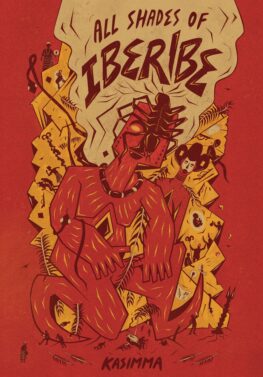
All Shades of Iberibe is a collection of thirteen short stories by Nigerian author Kasimma, published in 2021 by Sandorf Passage. The collection explores the complexities of Igbo culture, postcolonial Nigeria, gender dynamics, trauma, and the supernatural through a blend of magical realism, folklore, and contemporary social critique. The title “Iberibe” is an Igbo word meaning “senselessness” or “nonsense,” and the collection indeed examines the various shades of absurdity, injustice, and contradiction in Nigerian society and human experience.
The stories are set primarily in Igboland (southeastern Nigeria) and Lagos, spanning different time periods from the Biafran War era to the 1990s and beyond. Kasimma employs a rich narrative voice that weaves together Igbo proverbs, traditional beliefs, Christian imagery, and modern sensibilities.
Story Summaries
1. My “Late” Grandfather
Setting: Achina, Igboland
Plot Summary: The story opens with a piercing scream that wakes the narrator, Ije, and her family at 5:50 a.m. A crowd has gathered outside their compound, and the narrator discovers that her grandfather, who supposedly drowned in Agwa River six months ago, is sitting on his grave. The family initially fears he is a ghost, but Ezenwaka, a traditional diviner, performs rituals to determine what has happened.
Through Ezenwaka’s incantations and rituals involving kola nut, schnapps, a white fowl, and the digging of a new grave, it is revealed that a palm tree branch was buried in Grandpa’s stead a common practice in Igbo culture when someone dies far from home or when the body cannot be recovered. The diviner explains that Grandpa was never actually dead; the burial was performed in error. Ezenwaka offers the fowl to Ala (the earth goddess) in exchange for Grandpa’s spirit, and the old man is finally released back to the living.
The story ends with the family rushing to embrace Grandpa, and the narrator anticipating a long story about where he has been for nine months.
Themes:
- Igbo burial customs and beliefs about death
- The tension between traditional religion and Christianity
- The importance of proper funeral rites for the afterlife
- Community and family bonds
- The ambiguity of truth (did Grandpa attempt suicide? Was he really dead?)
Characters:
- Ije: The narrator, a twelve-year-old girl, observant and curious
- Ifeoma: Ije’s ten-year-old sister
- Cheta: Ije’s cousin, known for picking his nose
- Grandpa (Ike): An old man who disappeared and was presumed dead
- Ezenwaka: The diviner who performs the rituals
- The Mother: Protective and stern
2. Jesus’ Yard
Setting: Abuja and Jos, Nigeria, 1996 (during Sani Abacha’s military regime)
Plot Summary: Chinelo, a wealthy young woman from Abuja, decides to visit her distant relative Aunty Nkiru in Jos. Bored with her privileged life and the company of her father (a Lieutenant General serving Abacha’s government), she insists on taking a public bus despite having access to drivers and luxury cars.
The story follows Chinelo’s culture shock as she navigates Aunty Nkiru’s humble life in “Jesus’ Yard” a compound of seven flats with a sandy courtyard. The compound has over thirty residents who share one toilet and one bathroom. Chinelo witnesses the daily struggles of the residents: the queue for the bathroom, the constipated Mama Nkechi who inserts soap into her anus, the gossip and communal living.
The central incident involves a domestic violence situation. Tsimbe (Isimbe), a woman living with her boyfriend Emeka, is being beaten in the courtyard. The residents watch and even cheer, but Chinelo who has a black belt in taekwondo intervenes. She beats up Emeka and then slaps Isimbe when the woman attacks her for interfering. The compound erupts in cheers, calling her “Chinko” and “Bruce Lee.”
The story ends with Chinelo helping the man up and telling him to “knock the living daylight out of” Isimbe, who then goes inside with Emeka. The sounds of their lovemaking (not fighting) are heard, and Aunty Nkiru is disgusted by their behavior in front of children.
Themes:
- Class differences in Nigeria
- The resilience and humor of the working class
- Gender-based violence and complicity
- Cultural identity and the Igbo diaspora
- The contrast between Abuja (wealth) and Jos (working class)
Characters:
- Chinelo: A wealthy young woman from Abuja, narrator of the story
- Aunty Nkiru: Chinelo’s distant relative, a bold and humorous woman
- Chukwuwuikem and Ukamaka: Aunty Nkiru’s ten-year-old twins
- Emeka and Isimbe (Tsimbe): The couple in the domestic violence incident
- Mama Nkechi: A constipated neighbor
- Various other residents of Jesus’ Yard
Cultural Notes:
- “Abacha” refers to both the military dictator and a Nigerian food (dried cassava)
- “Okada” is a motorcycle taxi
- “Omugwo” is the traditional Igbo practice of a mother or mother-in-law visiting after childbirth
- “Ngiri-Igbo” means “Igbo amateur” or someone who claims to understand Igbo culture but doesn’t
3. Shit Faces
Setting: A traditional Igbo village (Amawa)
Plot Summary: Nnemeka, a fifty-three-year-old outcast, runs through the village ululating, causing panic. She runs into the evil forest where no one dares follow. The villagers report this to the king, who must decide what to do about her.
The story then flashes back to the king’s first encounter with Nnemeka after she beat a young girl who had been staring at her. Nnemeka is described as incredibly ugly her skin is white like a snake’s belly, covered in freckles, with golden-yellow hair. The king is both repulsed and fascinated.
The king, a wise and just ruler, decides to visit Nnemeka to learn her story. He takes his son, Nwigwe, with him to teach him about leadership and equality. They find Nnemeka living in isolation with her mother’s skeleton in one hut she has been eating and conversing with the bones because she could not bear to be separated from her mother in death.
Nnemeka reveals her tragic backstory: her mother, Ugomma, was childless and desperately sought a child. She visited the diviner Ezeagwo, who gave her a potion to make her husband sleep with her. When Nnemeka was born, she was discovered to be intersex having both male and female genitalia. This was considered an abomination. The villagers tried to drown her, but her mother fled with her into Ekwensu’s sacred space, dedicating the child to the trickster god for protection. Because of this, Nnemeka became an osu an outcast of the worst kind, dedicated to the god Ekwensu.
Now, five years after the king’s visit, Nnemeka has run into the evil forest, and the villagers are demanding her banishment. The king asks the question no one has considered: “Why did Nnemeka run out of her house? Did anybody go to where she lives to find out what chased her away?” Everyone falls silent.
Themes:
- The osu caste system in Igboland and its cruelty
- Intersex identity and societal rejection
- The power of a mother’s love
- Traditional religion and the fear of Ekwensu
- The king’s moral dilemma between tradition and justice
- Isolation and human dignity
Characters:
- Nnemeka: An osu (outcast) woman, intersex, artist who makes “shit faces” from cow dung
- The King: A wise and just ruler who questions the osu system
- Nwigwe: The king’s twelve-year-old son and heir
- Ugomma: Nnemeka’s mother, who died seven years ago
- Ezeagwo: The snake diviner who helped Ugomma conceive
- Obi and Uchendu: The king’s chiefs and friends
- Nwoye: The mother of the girl Nnemeka beat
- Mama Adamma, Ifeanyi, and others: Villagers
Cultural Notes:
- Osu: A person dedicated to a deity, considered outcast
- Ekwensu: The trickster/war god, associated with chaos
- Nzu: White chalk used for purification
- Obi: The king’s traditional meeting house
- Kola nut ritual: A traditional Igbo ceremony for welcoming guests and honoring ancestors
4. Virgin Ronke
Setting: Lagos, Nigeria, contemporary times
Plot Summary: Ronke, the daughter of the General Overseers of Return to the Cross Church and a future pastor herself, is being taken by her mother to undergo a “virginity test” at the hospital of her fiancé Laolu’s father. The story reveals Ronke’s hidden life: she was gang-raped by five masked men at her church’s altar, and since then she has been compulsively having sex with random men sometimes three per night to cope with the trauma.
Ronke wears a “blonde wig and brown contact lenses” to hide her identity during these encounters. She has sex with the Pharmacist Whose Head Was Shaped Like an Avocado, Mr. Giraffe at Jabi Lake Park, and a Gala and Lacasera seller along with his friend (who are so frightened by her voracious appetite that they flee without payment).
Her parents discovered her secret when they found her “vitamins” contraceptive pills and confronted her. When she claimed to still be a virgin, her mother decided to have her examined to prove she was lying.
The story reaches its climax when Ronke, unable to resist her mother’s demands, is examined by her future father-in-law. The examination reveals that her hymen is intact a medical impossibility given her extensive sexual history. The doctor concludes she is “still very much intact.”
Ronke, overwhelmed by the betrayal and the absurdity of the situation, walks out of the hospital, drops her engagement ring, and walks into the sunlight free from Laolu, her parents, and the hypocrisy of her life.
Themes:
- Sexual trauma and its aftermath
- The hypocrisy of religious institutions
- The commodification of female virginity
- Rape culture and victim-blaming
- The psychological toll of repression
- The absurdity of “virginity testing”
Characters:
- Ronke (Ibironke): The protagonist, a pastor’s daughter and future pastor
- The Mother: A strict, religious woman fixated on appearances
- The Father: A Bishop who is initially supportive but eventually disgusted
- Laolu: Ronke’s fiancé, a doctor’s son
- Doctor Adeyomi: Laolu’s father and the examining doctor
- The Hooded Hoodlums: The five masked men who raped Ronke
Cultural Notes:
- Virginity testing: A controversial practice in some cultures to “prove” a woman’s chastity
- “Yekpa!”: An Igbo exclamation of disbelief or disgust
- “Virgin Atilantiki”: “Atlantic Virgin” – a sarcastic term
- “Tani o je”: Yoruba for “Who did you sleep with?”
5. This Man
Setting: A funeral and the spirit world
Plot Summary: The story is narrated by a ghost who died during the Biafran War. He observes the funeral of “This Man,” a recently deceased man who is experiencing the transition from life to the afterlife. The ghost narrator, who has been trapped in limbo for decades because no one performed the proper funeral rites for him, watches as This Man is prepared for burial.
The narrative alternates between the funeral proceedings and the ghost’s memories of his own death. He died when a soldier smashed the butt of his AK47 into his temple. He roamed the earth, trying to revive his body, but it had decayed beyond recognition. He visited his family and saw his son eating a cockroach out of starvation.
The ghost explains that after a proper funeral with the killing of a goat and a cow the deceased’s soul is released to join the ancestors in the afterlife. This Man is fortunate; his family remembers him and performs the rituals. The ghost watches enviously as This Man’s soul ascends to the land of the ancestors, carried by his forefathers.
The story concludes with the ghost’s bitter resentment toward the Nigerian government, which declared “No victor, no vanquished” after the war but left countless dead without proper burial rites. The ghosts of the unburied war dead now roam the earth, causing chaos: they empty sand into people’s efforts at progress, drive leaders to corruption, and ensure that elections are rigged. They are the restless dead, and they will never find peace until their deaths are acknowledged.
Themes:
- The Biafran War and its aftermath
- The importance of funeral rites in Igbo culture
- The trauma of war and unacknowledged death
- Ghosts as metaphors for historical trauma
- Political corruption and national amnesia
- The connection between the living and the dead
Characters:
- The Ghost Narrator: A soldier who died in the Biafran War
- This Man: A recently deceased man whose funeral is being held
- The Pregnant Woman: A mourner who tries to climb into the coffin
- The Prayer Man: A minister officiating the funeral
- This Man’s Family: The relatives who organize the funeral
Cultural Notes:
- Igbo funeral rites: Killing a goat and cow to release the deceased to the ancestors
- Ala: The earth goddess who receives the dead
- Ossii: The coffin carriers
- Mazi Awele: An example of a man given a proper burial
- “Onweghi ebe eji azu eje”: “You cannot go anywhere while walking backward”
6. The Coffee Addict
Setting: Achina and the spirit world (the past)
Plot Summary: Mgbeke, a thirty-seven-year-old woman with sickle cell anemia and a “coffee addiction” (she loves the smell but doesn’t drink it), is at Ezekoro stream when she encounters a mysterious Woman who turns out to be a ghost. The Woman knows things about Mgbeke that no one could know, and she takes Mgbeke on a journey into the past specifically, into the life of Mgbeke’s own ancestor.
The Woman leads Mgbeke through the parted waters of the pond into a village scene from the pre-colonial past. Mgbeke sees women with uncovered breasts (unmarried girls), market women selling the same produce, a queen (Omu) who marries women, and a woman writing in nsibidi script to propose marriage to a girl. The Woman explains various Igbo customs: that women can marry wives, that women could inherit land before the white man’s laws, and that “all Igbo-born women of my time were feminists.”
The journey culminates in Mgbeke witnessing the death of her great-grandmother a woman who was bitten by a snake (Echi Eteka) while farming. Mgbeke realizes that the Woman is her ancestor, and the snakebite death is what she was brought back to see. The Woman tells Mgbeke, “A person who does nothing about their dream is like a person in a coma: both are alive, asleep, and dreaming. Go now. Tell your story.”
Mgbeke returns to the present, realizing her ancestor’s name was Mgbokwo. She has been given a second chance to understand her heritage and her own strength.
Themes:
- Igbo history and pre-colonial culture
- Female empowerment and the erasure of women’s rights
- The importance of knowing one’s heritage
- Sickle cell anemia and living with chronic illness
- Dreams and the fear of pursuing them
- The relationship between the living and the ancestors
Characters:
- Mgbeke: A thirty-seven-year-old woman with sickle cell anemia
- The Woman (Mgbokwo): Mgbeke’s ancestor, a ghost who died of sickle cell at ninety-nine
- The Sleeping Woman: Mgbeke’s great-grandmother who died of a snakebite
- Mgbeke’s Mother: A woman who worries about her daughter’s health and future
- Pemi Aguda: A reference to the real Nigerian writer
Cultural Notes:
- Ezekoro stream: A sacred stream in Achina
- Isi owu: A traditional Igbo hairstyle
- Utaba: Snuff
- Nisibidi: An Igbo writing system
- Omu: A queen who can marry women
- Echi Eteka: “Tomorrow is too far” – a deadly snake
7. Caked Memories
Setting: Enugu, Nigeria, contemporary times
Plot Summary: Kandudi wakes up in a hospital after being in a coma for eighteen months following a head injury. She has focal retrograde amnesia and cannot remember her husband, Chiemela Ezeudo, or her life before the accident.
Chiemela shows her photographs of their wedding, their life together, and their two-year-old twins, Taiwo and Kehinde. He tells her he sold their house and car to pay for her medical treatment and that they are now living with Folasade, an old friend who is their landlady.
As Kandudi recovers, she notices strange things: the children call her “Aunty” and call Folasade “Mummy”; Folasade is overly familiar with Chiemela; and the cushions in their new home are black, not red like in the photographs. She also begins experiencing headaches triggered by the sound of a pestle hitting a mortar (kpom-kpom-kpom).
The truth gradually emerges: Chiemela was having an affair with Folasade, who is Yoruba. His mother disapproved of the relationship, so he married Kandudi to please her. When Kandudi came home early one day with their son, she found Folasade on top of Chiemela. A fight ensued, and Folasade hit Kandudi on the head with a pestle, causing the injury that put her in a coma.
The story ends with Kandudi remembering everything. She resolves to leave Chiemela and Folasade, to start afresh and bake new memories. She will return for her son when she can afford to care for him.
Themes:
- Memory and identity
- Betrayal and infidelity
- The trauma of domestic violence
- The bond between mother and child
- The commodification of women (Chiemela married Kandudi to please his mother, then had an affair)
- The resilience of women
Characters:
- Kandudi (Kadi D): A thirty-year-old woman with amnesia
- Chiemela (Emi): Her husband, a man caught between two women
- Folasade (Fola): The landlady and Chiemela’s lover
- Taiwo and Kehinde: Kandudi’s two-year-old twins
- Nurse Ebo: Kandudi’s friend and confidante at the hospital
- Doctor Chioma and Doctor Tinu: The doctors treating Kandudi
8. Life of His Wife
Setting: Lagos, Nigeria, contemporary times
Plot Summary: This is a comedic short story consisting entirely of a phone conversation between a husband at work and his wife at home. The wife is calling to confront him about “stealing” five hundred naira from her bag. The conversation reveals their playful dynamic: she has recently lost her bank job, and since then she has been taking money from his wallet while he sleeps. He has started sleeping with his wallet under his pillow.
The wife claims she needs the money back because she owes a plumber three thousand naira and borrowed five thousand from someone else. She also asks him to send her back the airtime she used to call him. The husband, amused and indulgent, agrees to everything, and they end the call laughing.
Five minutes later, she calls back, and he declines the call and calls her back. She asks why he cut her call, and they banter about the airtime and the money again. The story reveals a deeply affectionate relationship, full of humor and love, even in the midst of financial struggles.
Themes:
- Marriage and partnership
- Financial struggles in Nigeria
- The humor and resilience of couples
- Gender roles and money management
- The bond between husband and wife
Characters:
- The Husband: The narrator, a man who works in an office
- The Wife: A woman who lost her bank job and now “steals” from her husband
- Azubuike: A colleague of the husband
9. Worthless Strength
Setting: Achina, Igboland
Plot Summary: Ikeemewuihe is a young man, the son of a woman who was kidnapped during the Biafran War and returned with him a “bastard Hausa son,” as the villagers call him. He is on his way to tell the family of Adamma that she has died, beaten to death by her husband.
The story reveals Ikeemewuihe’s tragic backstory: his mother was captured by Nigerian soldiers during the war and taken to Hausaland, where she gave birth to him. She returned to her village with him, but they were both treated as outcasts. His mother died when he was young, and he has been alone ever since.
Ikeemewuihe’s name means “strength is not the answer” or “worthless strength.” His mother taught him that wisdom is more important than strength. She believed he could become the president of Nigeria despite his poverty and lack of education. He adopted the magic words “Yes, I can” but found that they never actually worked.
When he arrives at Adamma’s family compound, he delivers the news with a kind of sadistic glee, enjoying the grief of the family who had mocked him and his mother. He watches as they wail and tear their clothes, and he sits on the grave of their patriarch, further provoking them. The story ends with him leaving, saying “Yes, I can” to himself.
Themes:
- The Biafran War and its legacy
- The treatment of “outsiders” in Igbo society
- Poverty and social exclusion
- The relationship between strength and wisdom
- The cycle of revenge and mockery
- The Nigerian dream and its failures
Characters:
- Ikeemewuihe Ezeude: A young man born of a Biafran woman and an unknown Hausa father
- His Mother: A woman who was kidnapped during the war and returned with her son
- Adamma: A woman beaten to death by her husband
- Adamma’s Family: Mama Adamma, Ebuka, Ifeanyi, and others
- Akwaanebereego: A villager
10. Ogbanje
Setting: Igboland, 1994
Plot Summary: Agu, an England-trained medical doctor and assistant pastor, has lost four children in infancy all dying on their ninth or tenth night. His father insists that the children are ogbanje (spirit children who reincarnate to torment their parents) and that Agu must consult a diviner named Abiankata to break the cycle.
Agu resists, relying on his medical training and Christian faith. He tries everything: prayer, the Divine Mercy Chaplet, a Catholic rosary, and a handkerchief blessed by a pastor. His wife, Amalachi, suffers social ostracism and eventually threatens suicide if he does not consult the diviner.
Agu finally visits Abiankata, who turns out to be a young police officer named Dikeogu. Dikeogu tells Agu that his wife is pregnant (which no one knew) and that this baby will also die unless they follow his instructions. When the baby dies, they must not touch the corpse until Dikeogu arrives.
The fifth baby is born and dies on the ninth night, just as predicted. Dikeogu comes, has Agu stab the corpse to “scar” the ogbanje spirit, covers it with omu leaves, and burns it. One year later, Amalachi gives birth to a son who has scars all over his body the same scars Agu inflicted on the dead baby.
Themes:
- Traditional beliefs vs. Western medicine vs. Christianity
- The ogbanje myth in Igbo culture
- Parental grief and desperation
- The power of belief
- The clash between modernity and tradition
- The role of diviners in contemporary Nigeria
Characters:
- Agu: A doctor and assistant pastor, the narrator
- Amalachi: Agu’s wife, ostracized by the village
- Agu’s Father: A traditionalist who believes in ogbanje
- Agu’s Mother: A harsh woman who blames Amalachi
- Dikeogu (Abiankata): A police officer and diviner
- The Ogbanje Spirit: A mysterious figure that steals the babies’ spirits
11. Where One Falls Is Where Their God Pushed Them Down
Setting: Lagos, Nigeria, contemporary times
Plot Summary: Okuchukwu (Okuchi/Okum) is a young woman who leads the Praise and Worship session at her church. She is secretly a lesbian, and she is deeply attracted to Pastor Dorcas, the seventy-year-old pastor of her church.
The story follows Okuchi’s internal struggle with her sexuality and her mother’s suspicion. Her mother, a surgeon, constantly asks her “What do you want with Pastor Dorcas?” and urges her to “go and get yourself a man.” Okuchi’s father is more supportive but oblivious.
Pastor Dorcas asks Okuchi to come to her office, ostensibly to offer her an opportunity to sing at a music festival in the USA. Okuchi hopes it is something more, but it is not. She leaves the office in tears, realizing that her chi (personal god) has “pushed her down” into this situation of unrequited love and familial rejection.
At home, Okuchi’s mother catches her in a compromising position (masturbating with a perfume bottle) and confronts her. Okuchi wants to tell her mother the truth about her sexuality but cannot bring herself to say the words.
Themes:
- Homosexuality and religion in Nigeria
- The closet and the fear of coming out
- Mother-daughter relationships
- The concept of chi (personal god) and destiny
- Sexual repression and its consequences
- The hypocrisy of the church
Characters:
- Okuchukwu (Okuchi/Okum): A twenty-something woman, a church singer, secretly a lesbian
- Pastor Dorcas: A seventy-year-old pastor whom Okuchi desires
- Okuchi’s Mother: A surgeon, suspicious and critical
- Okuchi’s Father: A supportive but somewhat oblivious man
- Uchenna: Okuchi’s schoolmate and first sexual experience with a woman
- Olaide: A senior student who molested Okuchi in secondary school
Cultural Notes:
- Chi: Personal god in Igbo cosmology
- Etighi: A Nigerian dance
- “Where one falls is where their god pushed them down”: An Igbo proverb
- Same-sex relationships: Illegal in Nigeria, punishable by up to 14 years in prison
12. Mbuz
Setting: Achina, Igboland, contemporary times
Plot Summary: Ten-year-old Aduago is a survivor of a catastrophic flood (mbuz) that destroyed her village. She lives in a refugee camp, waiting for her parents or brother to be found. Two men, Eze (an educated man) and Jide (a civil servant), argue about the cause of the flood. Eze blames climate change and a poorly constructed borehole by a corrupt senator; Jide blames Amadioha (the god of thunder) and believes a sacrilege was committed.
The story alternates between the camp and Aduago’s memories of the night of the flood. Her mother was swept away when the house collapsed, her father drowned trying to save them, and Aduago placed her baby brother in a plastic container and set him adrift on the floodwaters.
Aduago is told that her headmaster (Onye Nkuzi) is coming for her. She hopes this means her family has been found. The story ends with her having a recurring nightmare of the flood.
Themes:
- Climate change and environmental disaster in Nigeria
- The failure of government and infrastructure
- Traditional beliefs vs. scientific explanations
- The trauma of displacement
- The resilience of children
- The bond between siblings
Characters:
- Aduago: A ten-year-old girl, flood survivor
- Eze and Jide: Two men in the refugee camp arguing about the flood
- Aduago’s Mother: A woman who doted on her baby son
- Aduago’s Father: A man who taught Aduago psychic reading
- Aduago’s Baby Brother: An infant placed in a plastic container
- Onye Nkuzi: Aduago’s headmaster
- Esther: A camp worker
Cultural Notes:
- Mbuz: Erosion or flood
- Amadioha: The Igbo god of thunder and lightning
- Udala tree: A tree associated with spirits of infants
- Ezekoro stream: A sacred stream in Achina
13. Croscat Volcano
Setting: Olot, Catalonia, Spain
Plot Summary: Cristina, a thirty-seven-year-old pharmacist from Barcelona, has just been diagnosed with terminal metastatic breast cancer that has spread to her lungs. She has been given only five days to live. Rather than seeking treatment, she decides to spend her remaining time in the town of Olot, near the Croscat volcano, conquering her fears.
Cristina has many fears: heights, swimming, marriage, and having children. She is in a loving relationship with Eduardo, who has wanted to marry her and have children for years, but she has been afraid due to her parents’ toxic marriage. She finally agreed to have children and became pregnant through IVF, but now she is dying.
She hikes to the Croscat volcano, determined to overcome her fear of heights and nature. She reflects on her life, her love for Eduardo, and her regrets. She laughs at the irony of having “cheated death” for so long only to die now.
The story ends with an earthquake (or volcanic eruption) causing the sandy mountain to slide down and bury her alive. Her last words are “Nature is beautiful indeed.”
Themes:
- Death and mortality
- Fear and its overcoming
- Love and sacrifice
- The relationship between humans and nature
- The meaning of life
- The immigrant experience (Cristina is the daughter of an Igbo mother and Catalan father)
Characters:
- Cristina: A thirty-seven-year-old pharmacist with terminal cancer
- Eduardo: Her partner of twenty-two years
- The Swedish Doctor: The doctor who diagnoses her
- Cristina’s Parents: An Igbo mother and Catalan father with a toxic marriage
14. All Shades of Senselessness
Setting: Lagos, Nigeria, contemporary times
Plot Summary: Somkene, the daughter of a wealthy CEO, is asked by her mother to deliver an envelope to her father at his hotel. When she arrives, her father reveals a horrifying plan: because he has only daughters (seven of them), he needs a male heir to inherit his lands in the village. He has decided that Somkene will be the one to stay home and bear a son and he will be the one to impregnate her, citing biblical examples of Lot’s daughters and Abraham’s marriage to his sister as justification.
Somkene is held down by her father’s bodyguards as he beats and rapes her. She blacks out and wakes up in the hospital three days later. Her mother is there and reveals that she knew about the plan and agreed to it because she had no money of her own and would be thrown out if she refused.
Somkene, betrayed by both parents, considers suicide. She decides instead to leave the house and go to her friend Ebube’s place, planning to start a new life. The story ends with her contemplating her options.
Themes:
- Incest and sexual violence
- Patriarchy and the treatment of women as property
- The misuse of religion and tradition to justify abuse
- Wealth and its corrupting influence
- Betrayal by family
- The resilience of women
Characters:
- Somkene: A wealthy young woman, virgin, betrayed by her parents
- Ebube: Somkene’s friend who lost her banking job
- Somkene’s Father: A wealthy CEO, unapologetic philanderer
- Somkene’s Mother: A woman trapped in a loveless marriage, complicit in her daughter’s abuse
- Ejike: One of the father’s bodyguards