
Listen to the Book Summary Below
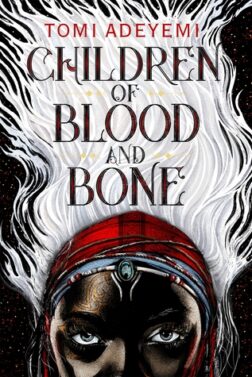
In Tomi Adeyemi’s Children of Blood and Bone, the land of Orïsha is a kingdom fractured by a history of magic and a legacy of systematic oppression. Eleven years before the story begins, magic “died” in an event known as the Raid, during which King Saran ordered the slaughter of all adult maji while magic was mysteriously absent from the world. Since then, their children known as divîners have lived as a marginalized underclass, recognizable by their snow-white hair and forced into heavy taxation or the stocks (state-sanctioned labor camps).
The Catalyst: A Fish and a Scroll
The narrative begins with Zélie Adebola, a seventeen-year-old divîner living in the ocean village of Ilorin. Zélie trains in the art of the staff under Mama Agba, a lethal elder who teaches divîner girls self-defense. The precariousness of their lives is highlighted when royal guards arrive to demand an increased “maggot tax,” leading to a violent confrontation where Zélie is assaulted by a guard. To pay the debt and save Zélie from the stocks, her father, Baba, and brother, Tzain, decide she must go to the capital city of Lagos to sell a rare, valuable red-tailed sailfish.
Simultaneously, in the royal palace, Princess Amari lives a life of sheltered luxury that masks a dark reality. Amari’s father, King Saran, believes magic is a “blight” that must be destroyed to ensure Orïsha’s safety. When Amari witnesses her father murder her best friend and handmaiden, Binta, simply because Binta manifested magic upon touching a mysterious ancient scroll, Amari’s world shatters. Driven by grief and a desire for justice, Amari steals the scroll and flees the palace.
The Meeting and the Escape
In the Lagos market, Zélie successfully barters the sailfish for five hundred silver pieces. Before she can leave, she is grabbed by a frantic, cloaked girl Amari who begs for help. Though terrified of the royal guards flooding the market, Zélie’s training in the “way of the staff” compels her to protect those who cannot defend themselves.
The two girls embark on a high-stakes chase through the slums of Lagos. They are nearly captured by Inan, the Crown Prince and captain of the guard, who rides a massive snow leopanaire. They are saved only by the timely arrival of Tzain on Zélie’s giant lionaire, Nailah. During the escape, a strange “shock like lightning” passes between Inan and Zélie, marking the beginning of their magical connection.
The Mission to Chândomblé
The group returns to Ilorin, only to find that Inan has pursued them and burned the village to the ground. After narrowly escaping the flames, they rendezvous with Mama Agba and Baba. Mama Agba reveals she was once a Seer (Aríran Clan) who hid her white hair to survive the Raid. Upon touching the scroll, she has a vision that reveals the group must travel to the legendary temple of Chândomblé.
At Chândomblé, they meet Lekan, the last surviving sêntaro (spiritual guardian). Lekan explains that the scroll, along with two other sacred artifacts the sunstone and the bone dagger is needed to perform a ritual during the centennial solstice. If the ritual is completed at a sacred island, magic will be permanently restored to Orïsha; if they fail, it will be gone forever. Lekan performs an awakening on Zélie, re-tethering her soul to Sky Mother and fully unlocking her powers as a Reaper (Ikú Clan), capable of commanding the dead.
However, Inan and his Admiral, Kaea, catch up to them at the temple. During a desperate escape across a rickety bridge, Lekan uses his magic to save Zélie but is murdered by Kaea. Inan, who has discovered that he too has magic as a Connector (Èmí Clan), accidentally kills Kaea when his powers spiral out of control during a confrontation about his identity.
The Horror of Ibeji
The group travels to the desert city of Ibeji, where the sunstone is being used as a prize in a barbaric naval arena. The competition involves divîner laborers forced to man ships that are blown apart for the entertainment of nobles. To get the stone, Zélie strikes a deal with the arena’s announcer to compete in the games.
The battle in the arena is a bloodbath. When their ship begins to sink, Zélie is forced to use blood magic a dangerous and forbidden practice to animate an army of spirits to save her friends and win the match. Though she succeeds and retrieves the sunstone, the trauma of the “sea of blood” and the physical toll of the blood magic leave her shattered. Amari, meanwhile, earns the title of “The Lionaire” after she saves Zélie by killing a rival captain in the fray.
The Maji Settlement and Inan’s Duality
Seeking the bone dagger, the group is ambushed and captured by a group of masked fighters who turn out to be an organized community of divîners led by a young girl named Zu. Zu is a Healer who was the first to touch the scroll in Warri. Also in the camp is Kwame, a powerful Burner.
Inan, who has been tracking Zélie using his Connector abilities, catches up to her. In a pivotal moment, instead of capturing her, he joins forces with the group, claiming he wants to build a “new Orïsha” where magic and the monarchy can coexist in peace. Zélie and Inan begin a tentative romance, bonding over their shared fear of their powers.
This peace is short-lived. King Saran’s army, having tracked divîners from the camp, launches a genocidal assault. In the chaos, Zu is killed by an arrow, and Kwame sacrifices himself using blood magic to incinerate the attackers so the remaining divîners can escape. Zélie is captured by the guards and taken to a fortress.
The Fortress and the Loss of Magic
At the fortress, King Saran interrogates Zélie. When she refuses to reveal how to destroy the scroll, he has a physician inject her with a serum to keep her conscious while he has “MAGGOT” carved into her back. This horrific torture, combined with the presence of majacite (a magic-dampening alloy), causes Zélie’s magic to vanish.
Amari and Tzain recruit Kenyon’s agbön team from a local bar to launch a rescue mission. Inan, finally choosing Zélie over his father’s “duty,” helps them escape from the inside. Though they escape, Zélie is a shell of her former self, convinced the gods have abandoned her.
The Final Confrontation
With the solstice only hours away, the group hires a band of mercenaries led by a man named Roën to sail them to the sacred island. They arrive at the golden temple of the gods, but King Saran is already waiting with an ambush.
In a cruel move, Saran offers a trade: the artifacts for Zélie’s father, Baba, whom they have captured. Zélie agrees to the trade, but as she retrieves her father, Saran orders his men to fire. Baba throws himself in front of Zélie and is killed.
Driven by the “ultimate sacrifice” of her father’s blood, Zélie’s magic returns in a violent surge of ancestral power. She unleashes shadows of death that incinerate the guards. Inan, however, attempts to destroy the scroll to “save Orïsha” from magic’s destruction, tricking Zélie into blasting it with her own magic. Saran, realizing Inan is a maji, stabs his own son, disowning him. Amari then faces her father and kills him, declaring she will be a better queen.
The Ritual and its Aftermath
Despite the scroll being ash, Zélie realizes that the connection to the gods is in her blood. Using the bone dagger, the sunstone, and the spirits of her ancestors, she recites a new, instinctive incantation as the solstice peaks. The power of all ten gods explodes through the temple, and Zélie seemingly dies as she completes the ritual.
In a vision of the afterlife, Zélie meets her mother, who tells her that her journey is “only just begun”. Zélie wakes up in a rowboat, alive. Though she initially fears the ritual failed, Amari reveals that she now has magic her hands glow with light and a white streak has appeared in her hair. Magic has returned to Orïsha, but the world has been changed forever.