The Polygamist by Sue Nyathi

Sue Nyathi’s The Polygamist is a complex, multi-perspective narrative that deconstructs the life and eventual death of Jonasi Gomora, a wealthy Zimbabwean businessman whose appetite for power and women leads to a tangled web of four wives and multiple mistresses. The novel is structured through the alternating voices of the women who shared his life Joyce, Matipa, Essie, and Lindani culminating in an epilogue voiced by the deceased Jonasi himself. The Prologue: The End of an Era The story begins at the end, at the funeral of Jonasi Gomora. His body lies contorted and ravaged by illness, his once-dark chocolate complexion turned a dull, ashy shade. The hundreds of mourners gathered at the Catholic church see only a fraction of the man he once was; to some, he was a pillar of the community, while to others, he was a “greedy one with an insatiable appetite for sex”. As his wives stand by the casket, their internal monologues reveal a mixture of relief, hatred, and lingering attachment. One wife reflects that she had lost the man she loved a long time ago, and she is glad he is dead so he can no longer cause her pain. Another looks at...

Membership Required

You must be a member to access this content.

View Membership Levels

Already a member? Log in here

Positively Me by Nozibele Mayaba and Sue Nyathi

In the poignant memoir Positively Me: Daring to Live and Love Beyond HIV, Nozibele Mayaba, writing alongside acclaimed author Sue Nyathi, provides a visceral and deeply personal account of her life journey, from a childhood marked by financial struggle to her public emergence as a prominent HIV activist. The narrative is framed by the central conflict of her life: a startling HIV-positive diagnosis at the age of twenty-two, which initially felt like the end of her world. Through its chapters, the book deconstructs the myth that certain “types” of women are immune to the virus, while exploring themes of generational trauma, religious rigidity, and the redemptive power of self-forgiveness. The Burden of Ancestry and the Foremothers The story begins not with Nozibele, but with the women who shaped her, starting with her mother, Sindiswa Fezzie Mbukanto. Sindiswa’s life was defined by early abandonment; her own father left for Johannesburg (the “City of Gold”) to find work and never returned, leaving her mother, Makhulu Nondiyazana, to raise five children alone. Makhulu died prematurely from the stress of single parenthood, leaving the children orphaned. These circumstances forced Sindiswa to grow up instantly, caring for her younger siblings in a mud hut where...

Membership Required

You must be a member to access this content.

View Membership Levels

Already a member? Log in here

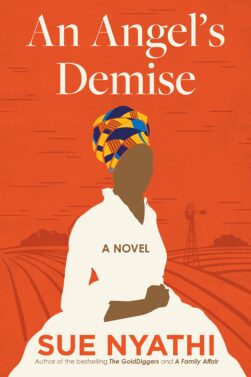
An Angel’s Demise by Sue Nyathi

Sue Nyathi’s An Angel’s Demise is a multi-generational epic that uses the life of one woman, Angel Velile Williams, as a lens through which to view the tumultuous history of Zimbabwe from the late colonial era through the liberation struggle, the horrors of Gukurahundi, and the chaotic land reform program of the early 2000s. The narrative is structured as a “Genesis” and an “Afterlife,” moving between the protagonist’s present-day imprisonment in 2008 and the historical events that shaped her existence. The Prologue: Purgatory in the High Court The novel begins in May 2008 at the High Court in Harare. The protagonist, Mrs. Angel Ngozi (the “General’s wife”), has been held in solitary confinement for thirty days, a “purgatory” where she has begun talking to cockroaches and spiders to maintain her sanity. She is a “Class-D” prisoner, considered a high flight risk, and her physical appearance shorn hair, jaded green prison frock, and black plastic flip-flops is a stark contrast to her former life of Brazilian hair, Gucci sunglasses, and Chanel suits. Angel has been subjected to regular beatings in the middle of the night by police sent by her husband, leaving scars on her back and the soles of her...

Membership Required

You must be a member to access this content.

View Membership Levels

Already a member? Log in here

A Family Affair by Sue Nyathi

Sue Nyathi’s A Family Affair is a sprawling contemporary African saga set predominantly in Bulawayo, Zimbabwe, during the early 2000s. The novel meticulously deconstructs the internal lives of the Mafu family, a household that projects a veneer of Christian perfection while harboring deep-seated secrets, trauma, and the suffocating pressures of a patriarchal society. The narrative is structured into five movements Birth, Growth, Maturity, Decline, and Epilogue tracking the lives of the three Mafu sisters, Xoliswa, Yandisa, and Zandile (the XYZ sisters), and the next generation. Part I: Birth – The Facade of the Perfect Wedding The story opens with the wedding of the youngest sister, Zandile, to Ndabenhle Khumalo. The event is a grand spectacle at Nesbitt Castle, a Gothic venue that Zandile fought to secure against her father’s wishes to host it at his church, the Kingdom of God. Zandile represents the societal “blueprint” for a successful woman: she is educated as an architect and enters marriage as a virginal bride, a status her father, Pastor Abraham Mafu, emphasized during lobola (bride price) negotiations. However, the wedding highlights the underlying tensions of the family. Xoliswa, the eldest, serves as matron of honor but is embittered by her own stalled...

Membership Required

You must be a member to access this content.

View Membership Levels

Already a member? Log in here
Select your currency