
Introduction
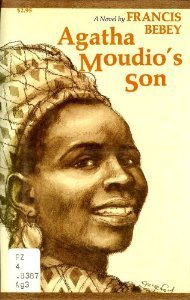
Agatha Moudio’s Son (originally published in French as Le fils d’Agatha Moudio in 1967) is a seminal novel by Cameroonian author Francis Bebey. The novel is a first-person narrative told by Mbenda, a young fisherman from a village near Douala, Cameroon, who is nicknamed “La Loi” (The Law) after a confrontation with white hunters. The story explores themes of tradition versus modernity, colonial power dynamics, polygamy, love, betrayal, and the complexities of village life in post-colonial Cameroon. Through the narrator’s personal experiences, Bebey paints a vivid picture of African communal life, its customs, its humor, and its contradictions.
The novel is structured in eleven chapters, each advancing the narrative while also delving into philosophical reflections on topics ranging from the nature of writing versus oral tradition, the role of women, the meaning of marriage, and the impact of European colonization on African societies.
Summary
Chapter 1: The Hunters and the Demand for Compensation
The novel opens in a village at the foot of a hill, on a peaceful June Sunday morning. The calm is interrupted by gunshots from the nearby forest, where white hunters have arrived for their weekly monkey-hunting expedition. The villagers are indifferent to the shots, but Moudiki, a villager, is troubled. He approaches Chief Mbaka with a proposition: the white hunters should pay compensation to the village for hunting in their forest. Moudiki argues that since the whites invented money and have plenty of it, they should share some with the villagers out of friendship or at least to show they appreciate hunting there.
Chief Mbaka initially resists, pointing out that the whites rule over them and it would be difficult to demand payment. However, he eventually agrees that Moudiki is right the community deserves compensation. He resolves to speak to the hunters that very day.
At four o’clock in the afternoon, the hunters emerge from the forest with Ekéké, the interpreter, and are greeted by the village children. When Moudiki approaches Ekéké to tell him Chief Mbaka wants to speak with the whites, the hunters are impatient and hungry, but they agree to wait briefly.
Chief Mbaka arrives and asks for “a little present for our village.” The whites are confused, then angry. One of them rudely dismisses the request, saying the villagers should be grateful the hunters are ridding them of monkeys. At this point, the narrator Mbenda steps forward. He is a strong, muscular young man, a champion wrestler, and a descendant of the legendary Bilé, son of Bessengué. He confronts the hunters boldly, telling them they will not leave with their monkeys unless they pay what Chief Mbaka asks. The whites, impressed by his audacity and build, reluctantly hand over some coins.
One of the whites takes out a notebook and asks Mbenda’s name. When Ekéké translates “Mbenda” as “La Loi” (The Law), the name sticks. The white man says, “You’ll be hearing from me,” which the villagers interpret as a promise of a job in the town. However, a week later, Commissioner Dubous arrives and arrests Mbenda, sentencing him to fifteen days in prison without trial for daring to demand money from white hunters.
Chapter 2: Agatha Moudio and the Rainy Day
The second chapter introduces Agatha Moudio, a seventeen-year-old girl with a notorious reputation. She visits Mbenda on a Sunday afternoon, having thrown salt into her kitchen fire to make it rain a traditional Douala method of ensuring privacy. The rain pours heavily, preventing villagers from questioning her presence in Mbenda’s house.
Agatha’s reputation is scandalous: she is said to “know men,” to visit the European quarter of town, and to have had an affair with Headman, a road foreman. Mbenda’s mother, Maa Médi, strongly disapproves of Agatha and wants her son to have nothing to do with her.
Despite her reputation, Agatha confesses her love for Mbenda, which began on the day he confronted the white hunters. She visited him in prison, bringing oranges and affection. Now, on this rainy day, she tells him her life story: her father, who had four wives, despised her mother for failing to produce a son. When Agatha was born (after two daughters), her father was furious. Her mother died three years ago, and since then, Agatha has been left to her own devices, which explains her wild behavior. She is intelligent and lucid, and she dreams of a better future with Mbenda.
Mbenda is torn between his attraction to Agatha and his duty to his mother, who has already arranged for him to marry Fanny, the daughter of his late father’s friend Tanga. The chapter ends with Mbenda reflecting on the differences between traditional African women and modern European women, and his fear of Agatha’s strong personality.
Chapter 3: The Public Fountain and Village Gossip
This chapter digresses into a discussion of the public fountain installed in the village by the colonial administration. The fountain has revolutionized village life, becoming a gathering place for women to exchange news and gossip. A scandalous incident occurs when Endalé, a woman married to a man who works in town, arrives at the fountain and tries to jump the queue. Dina, a neighbor, confronts her, and a fight ensues. Dina trips Endalé, who falls, spills her water, and has her dress torn off in the scuffle. The incident becomes the talk of the town.
The chapter also explores the nature of oral tradition versus writing, with Mbenda reflecting on how the spoken word retains sacred power in African society, especially at the hour of death. He explains that his father, before dying, arranged for him to marry Fanny, the daughter of his friend Tanga. Fanny is now thirteen, and Mbenda is twenty-two.
Maa Médi insists that Mbenda must marry Fanny, but Mbenda wants to marry immediately and he hopes to marry Agatha instead. His mother sees through his scheme and remains firmly opposed.
Chapter 4: The Fishing Expedition and the Secret Plan
Mbenda leaves for a month-long deep-sea fishing expedition with his crew, which includes his cousin Ekéké. During the trip, Ekéké reveals that the village women are saying Mbenda will marry as soon as he returns but not to Agatha. The crew refuses to tell him more, saying it’s a secret.
When Mbenda returns, he confronts his mother, who reveals that the village elders have met to arrange his marriage to Fanny. Chief Mbaka summons Mbenda to a meeting of the seven elders: Moudiki, Bilé, Ekoko, Mpondo-the-two-ends, King Solomon, Eya (the feared sorcerer), and Chief Mbaka himself. They tell Mbenda that the spirit of his father is present and that they are arranging his marriage to Fanny. Mbenda, intimidated by Eya and respectful of tradition, agrees to abide by their decision.
The elders then visit Tanga to “knock on his door” a formal marriage proposal involving gifts of whisky. Tanga’s brother Njiba raises complications: Fanny already has a suitor, Manfred Essombe, a salesman from Bonapriso who has given the family many gifts. Njiba demands seven thousand francs to compensate for breaking the engagement. King Solomon, however, has a plan.
Chapter 5: The Betrothal Negotiations
King Solomon investigates and discovers that Manfred Essombe has indeed been courting Fanny but that the family has been stringing him along for two years, taking his money without allowing the marriage. The elders collect three thousand francs and give it to Njiba, who promises to discuss the matter with “the others.”
Months pass, and Mbenda continues visiting Fanny’s family with gifts, though he has little interest in his young fiancée. He still sees Agatha secretly. Agatha, learning of his impending marriage, is furious and smashes his plates and glasses in a rage.
The chapter also introduces the subplot of Uncle Big-Heart, a man who works in town and has adopted European ways. He has built a stone house and sold village land to a Syrian trader without consulting the community. King Solomon spreads a rumor that Big-Heart has a magic frog, and when Dicky, the rumor-spreader, dies suddenly, the villagers accuse Big-Heart of sorcery. The elders torture him by placing a plank on his head and piling stones on it. Aunt Adela, Big-Heart’s wife, runs to town and fetches Commissioner Dubous, who arrests the elders. Most of the village elders, including Agatha’s father, are sentenced to four years in prison at Mokolo in northern Cameroon.
Chapter 6: The Abduction of Fanny
With the elders in prison, King Solomon (who avoided arrest by feigning illness) arranges for Fanny to be abducted a traditional practice when a bride’s family delays the marriage. Ekéké and other young men take Fanny from her parents’ home at night and bring her to Mbenda’s village. She is installed in Maa Médi’s house to be trained as a wife.
Months pass. Fanny learns domestic skills under Maa Médi’s tutelage. Finally, Maa Médi decides it is time for Fanny to become Mbenda’s wife. A ceremony is held, and Fanny is officially handed over to Mbenda. She lights her own hearth and becomes the mistress of her own home.
Chapter 7: Married Life and the Birth of Fanny’s Child
Mbenda, however, continues to see Agatha. He confesses to the reader that he has not yet consummated his marriage with Fanny, whom he still regards as a child. Meanwhile, Fanny becomes pregnant but not by Mbenda. His friend Toko, who had helped abduct Fanny, is the father. When Fanny’s pregnancy becomes known, Mbenda initially keeps the truth from his mother. Fanny gives birth to a daughter, Adela, and the village celebrates.
Chapter 8: Agatha’s Departure and Return
Agatha, frustrated by Mbenda’s marriage and his continued inability to commit to her, begins a relationship with a wealthy white man the hunter with gold teeth. She is seen riding in his blue car. Mbenda is furious and tries to stop her, but King Solomon intervenes, reminding him of his duty to the community.
Agatha leaves the village for town. Mbenda’s mother, Maa Médi, continues to oppose any union with Agatha. However, Fanny surprises everyone by suggesting that Mbenda should marry Agatha if he loves her. Eventually, Agatha returns to the village and moves in with Mbenda, with the support of her aunt. She becomes his second wife, and the village eventually accepts the situation though Maa Médi and Mother Evil-Eye remain hostile.
Chapter 9: Polygamy and Domestic Strife
Mbenda’s household now consists of two wives (Fanny and Agatha), his daughter Adela, and himself. The two wives initially get along well, but they soon quarrel, each claiming superiority over the other. Fanny points out that she is younger, while Agatha claims she knew Mbenda first. The wives separate their households, each living in her own house.
Agatha becomes pregnant and announces it to Mbenda. Maa Médi, initially hostile, softens when she learns of the pregnancy and offers to help. However, Mother Evil-Eye remains skeptical, insisting on examining Agatha to verify the pregnancy. She performs rituals and gives Agatha herbs and protections.
Chapter 10: The Return of the Prisoners and the Birth of Agatha’s Son
The prisoners return from Mokolo after four years. Some have died, including Chief Mbaka and Agatha’s uncle. The village holds a day of mourning and then prepares a feast. Agatha’s father, Moudio, returns and Mbenda formally presents gifts to him, acknowledging the marriage.
Agatha gives birth to a son but the child is white, with long straight hair. The village is scandalized. Mother Evil-Eye eventually reveals the truth: she saw the white man with gold teeth visiting Agatha at night while Mbenda was away. The child is not Mbenda’s.
Chapter 11: Resolution and Reflection
Mbenda is devastated, but King Solomon counsels him to accept the child. “A child is a child,” he says, regardless of its origins. Mbenda ultimately raises Agatha’s son as his own, though the child’s white skin is a constant reminder of his wife’s infidelity. The novel ends with Mbenda reflecting on the irony of Maa Médi’s prophecy: Agatha had indeed led him “a fine dance till you can’t tell black from white.”
Character Analysis
Mbenda (La Loi)
The narrator and protagonist, Mbenda is a young fisherman, champion wrestler, and descendant of the legendary Bilé, son of Bessengué. He is strong, brave, and proud of his heritage. His nickname “La Loi” (The Law) was given by the white hunters after he boldly confronted them. Throughout the novel, Mbenda struggles between tradition (represented by his mother and the village elders) and his personal desires (his love for Agatha). He is caught between two wives Fanny, the child bride chosen by his father, and Agatha, the woman he truly loves but who betrays him. Mbenda is a complex character: obedient yet rebellious, strong yet vulnerable. He ultimately accepts both wives and both children (Fanny’s illegitimate daughter and Agatha’s white son), embodying the novel’s theme of acceptance and the fluidity of paternity in African communal life.
Agatha Moudio
Agatha is the novel’s title character, a beautiful seventeen-year-old girl with a scandalous reputation. She is intelligent, passionate, and rebellious against traditional gender roles. Her wild behavior is explained by her troubled childhood: her father rejected her at birth because she was a girl, and her mother died when she was fourteen. She loves Mbenda deeply but refuses to be passive, pursuing him openly and challenging social norms. She is fiercely independent and unapologetic about her sexuality. Her affair with the white hunter with gold teeth produces a white child, which shocks the village. Despite her flaws, she is a sympathetic character a woman who refuses to be defined by others’ expectations.
Maa Médi
Mbenda’s mother is a strong-willed, protective widow who has dedicated her life to her only son. She embodies traditional values and is fiercely opposed to Agatha. She insists on Mbenda marrying Fanny, as arranged by his dying father. However, when she learns of Agatha’s pregnancy, she softens and accepts her daughter-in-law. Maa Médi is a complex character: domineering yet loving, traditional yet capable of change. Her prediction that Agatha would “lead Mbenda a fine dance till you can’t tell black from white” proves prophetic.
Fanny
Fanny is Tanga’s daughter, betrothed to Mbenda before she was born. She is thirteen when she comes to live with Maa Médi, and she grows into womanhood under her mother-in-law’s tutelage. She is initially shy and passive, but she matures into a confident woman. Her affair with Toko produces a daughter, Adela, whom Mbenda accepts as his own. Fanny surprises everyone by encouraging Mbenda to marry Agatha, showing a generosity of spirit that transcends jealousy.
King Solomon
The village’s wise man, a stonemason who is “crowned” king for his wisdom. He is Mbenda’s sponsor and advisor, often serving as a mediator between tradition and modernity. He is witty, diplomatic, and pragmatic. He uses storytelling and rumor (the magic frog) to achieve his ends. He counsels Mbenda to look forward, not backward: “You must never cast your eyes back: heaven placed them on the front of the face so that they look at what is ahead.”
Mother Evil-Eye
An old woman suspected of witchcraft, she controls births and sees everything that happens in the village. She is both feared and respected. She takes Fanny under her protection and later reveals the truth about Agatha’s white child. She represents the enduring power of traditional beliefs in the community.
Uncle Big-Heart
A man who works in town and has adopted European ways, Big-Heart is a controversial figure. He sells village land without consulting the community and builds a stone house, provoking resentment. He is accused of sorcery after Dicky’s death and is tortured by the elders. However, he eventually reconciles with the community, admitting his mistakes and acknowledging the importance of brotherhood.
Ekéké
Mbenda’s cousin and interpreter, Ekéké is the one who translates “Mbenda” as “La Loi.” He is loyal to Mbenda and helps in the abduction of Fanny. He represents the younger generation’s ability to navigate between African tradition and European influences.
Chief Mbaka
The village chief, who initially resists Moudiki’s proposal to demand compensation from the white hunters but eventually agrees. He presides over the elders’ meeting that arranges Mbenda’s marriage. He dies in prison at Mokolo.
Moudiki
The villager who first suggests that the white hunters should pay compensation. He is persistent and argumentative, often pushing Chief Mbaka to act.
Tanga
Fanny’s father and Mbenda’s late father’s friend. He is bound by his promise to give his first daughter to Mbenda. He is a pragmatic man who negotiates the marriage with the elders.
Njiba
Tanga’s brother and Fanny’s uncle, who handles the marriage negotiations. He is cunning and tries to extract as much money as possible from Mbenda’s family. He is also a heavy drinker.
Dooh
A villager who digs ditches in the road to trap cars during the rainy season, charging drivers to pull them out. He is imprisoned for this scheme. After his release, he becomes a hairdresser but continues to cause trouble. Mbenda beats him for insulting Agatha.
Toko
One of Mbenda’s friends who helps abduct Fanny. He becomes Fanny’s lover and the father of her daughter, Adela. He is ostracized from the village and never returns.
Thematic Analysis
Tradition vs. Modernity
The novel explores the tension between traditional African customs and the encroaching influence of European colonialism. Traditional practices such as arranged marriages, polygamy, bride abduction, and belief in sorcery are contrasted with modern institutions like the police, the public fountain, and the cash economy. The village elders represent tradition, while characters like Uncle Big-Heart and Agatha represent the pull of modernity. Mbenda is caught between these forces, ultimately finding a middle ground that allows him to honor tradition while embracing some aspects of modern life.
Colonialism and Power
The novel depicts the unequal power relations between the African villagers and their European colonizers. The white hunters feel entitled to hunt in the villagers’ forest without compensation. When Mbenda demands payment, he is arrested by Commissioner Dubous. The villagers are subject to the colonial legal system, which does not understand their customs. However, Bebey also shows how the villagers navigate this power dynamic sometimes resisting, sometimes accommodating, and sometimes using the colonizers’ systems to their own ends.
Polygamy and Marriage
Polygamy is presented as a traditional practice that has both benefits and drawbacks. Mbenda’s marriage to two wives creates domestic strife, but it also provides a home for both women. The novel explores the complexities of love, jealousy, and responsibility in a polygamous household. Fanny’s affair with Toko and Agatha’s affair with the white hunter highlight the double standards of a society that allows men multiple wives but expects women to be faithful.
Oral Tradition vs. Writing
Mbenda reflects extensively on the difference between oral and written traditions. In African society, the spoken word retains sacred power, especially at the hour of death. Writing, by contrast, is a European invention that “locks up” thoughts and removes them from the flow of life. The novel itself is a written text that preserves oral storytelling traditions, embodying this tension.
Paternity and Community
The novel challenges Western notions of paternity. Both Fanny’s daughter and Agatha’s son are fathered by other men, yet Mbenda accepts them as his own. The community considers children to belong to the village, not just to their biological parents. King Solomon’s advice “A child is a child” reflects this communal approach to parenting. The novel suggests that paternity is as much a social role as a biological one.
The Role of Women
Women in the novel occupy a paradoxical position. They are subject to male authority but also exercise significant power. Agatha’s sexuality gives her agency, while Fanny’s fertility makes her valuable. Mother Evil-Eye’s supposed supernatural powers give her influence over the community. The novel depicts women as both constrained by tradition and capable of subverting it.
Fate and Irony
The novel is full of ironic reversals. Mbenda’s nickname “La Loi” (The Law) is given to him by the very people who later imprison him. Maa Médi’s prediction that Agatha would “lead Mbenda a fine dance till you can’t tell black from white” is literally fulfilled when Agatha gives birth to a white child. The magic frog rumor that King Solomon spreads to destroy Big-Heart inadvertently leads to the imprisonment of the village elders. Fate, in this novel, mocks human plans.
Humor and Satire
Bebey uses humor to critique both African and European societies. The villagers’ gossip, the absurdity of the magic frog story, and the pomposity of the white hunters are all subjects of satire. The novel’s humor makes its serious themes more accessible and palatable.
Style and Narrative Technique
First-Person Narrative
The novel is told in the first person by Mbenda, giving it an intimate, confessional tone. Mbenda is not an omniscient narrator; he often admits his confusion and uncertainty, making him a relatable and human protagonist.
Conversational Tone
Bebey writes in a conversational, almost oral style, as if Mbenda is telling his story to a group of listeners. This reflects the novel’s celebration of oral tradition. The narrator frequently addresses the reader directly (“I tell you,” “You see,” “Believe me”), creating a sense of immediacy and intimacy.
Digressions and Reflections
The narrative is full of digressions on the nature of writing, the role of women, the meaning of marriage, and the impact of colonialism. These reflections slow the pace of the novel but add depth and philosophical richness. They also mimic the associative structure of oral storytelling.
Symbolism
Key symbols in the novel include:
- The public fountain: Represents modernity, progress, and the transformation of village life. It is also a site of gossip and conflict.
- The magic frog: Represents the power of superstition and rumor. It is used by King Solomon to manipulate the community.
- Uncle Big-Heart’s stone house: Represents European-style modernity and the tensions it creates within the community.
- Agatha’s white child: Represents the literal and figurative mixing of races and cultures, as well as the consequences of infidelity.
- The road through the village: Represents the intrusion of the outside world into village life. The villagers exploit it by trapping cars in the mud during the rainy season.
Irony
The novel is deeply ironic. The title itself Agatha Moudio’s Son refers to a child who is not biologically Mbenda’s, yet Mbenda raises him as his own. The novel’s ending, with Mbenda accepting the white child, is both tragic and comic, reflecting the absurdity of human existence.
Historical and Cultural Context
Cameroon in the 1960s
The novel is set in a village near Douala, Cameroon, in the years following independence (1960). The colonial legacy is still present: the French language, the police commissioner, the white hunters, and the cash economy all reflect the continuing influence of European colonialism. However, the villagers also assert their independence and dignity, as when Mbenda demands compensation from the hunters.
Douala Culture
The novel is rich in Douala cultural details: the importance of oral tradition, the practice of polygamy, the belief in sorcery and witchcraft, the role of the public fountain in village life, and the significance of wrestling as a marker of masculine prowess. Bebey draws on his own Cameroonian background to create an authentic portrait of village life.
Post-Colonial Literature
Agatha Moudio’s Son is a classic of post-colonial African literature. It explores themes of identity, tradition, and modernity that are central to the post-colonial experience. Bebey’s novel is part of a broader movement of African writers (including Chinua Achebe, Ngũgĩ wa Thiong’o, and Wole Soyinka) who sought to tell African stories from African perspectives.
Critical Reception and Legacy
Agatha Moudio’s Son was well-received upon its publication and won the Grand Prix Littéraire de l’Afrique Noire in 1968. It has been translated into English and other languages and is widely studied in African literature courses. Critics have praised Bebey’s humor, his vivid characterization, and his insightful portrayal of African village life. The novel is also valued for its exploration of gender relations, colonial power dynamics, and the tensions between tradition and modernity.
Francis Bebey (1929–2001) was a multifaceted artist a writer, musician, and musicologist. He was born in Douala, Cameroon, and studied in France and the United States. His experiences as an African intellectual navigating European culture inform the novel’s themes of cultural hybridity and colonial legacy.
Conclusion
Agatha Moudio’s Son is a rich, complex novel that offers a window into African village life in the post-colonial era. Through the story of Mbenda, Agatha, Fanny, and the other villagers, Francis Bebey explores timeless themes of love, betrayal, tradition, and change. The novel’s humor, its philosophical reflections, and its vivid characters make it a memorable and important work of African literature. It is a story about the resilience of community, the complexity of human relationships, and the enduring power of storytelling. In the end, Mbenda’s acceptance of Agatha’s white son is an act of grace a recognition that love and family are not defined by biology alone, but by commitment, care, and the shared life of a community.