
Listen to this Book Summary Below
Playback speed:
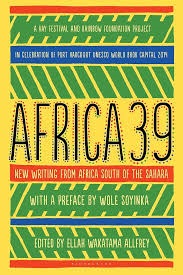
Africa39: New Writing from Africa South of the Sahara is a landmark literary anthology published in 2014 by Bloomsbury Publishing Plc. Curated under the auspices of the Hay Festival and in celebration of Port Harcourt’s selection as the UNESCO World Book Capital 2014, the collection brings together thirty-nine of the most promising and distinctive writers under the age of forty from sixteen countries south of the Sahara.
Part I: Prefaces and Editorial Frameworks
Wole Soyinka’s Introduction: “The Word Shall Fly Free!”
In his introduction, Nobel Laureate Wole Soyinka frames the collection around the twenty-fifth anniversary of the fall of the Berlin Wall. He reflects on how the historical “wind of change” that blew across post-colonial Africa in the mid-20th century changed character, carrying the debris of external ideological warfare. Soyinka distinguishes between a handful of genuine leaders who possessed conviction in social doctrines and a cynical majority who used radical ideologies as weapons to silence dissidence and demand conformity. In the Soviet Union and its captive bloc, creative choices were placed under a “testamentary microscope,” turning literature into a mechanism of party ideology. This ideological policing soon spread to African academic institutions, resulting in bitter, paralyzing debates.
For Soyinka, the Berlin Wall was not merely a physical barrier but a structure of “mind control and creative interdictions” that bifurcated the literary world into “literature that advanced the revolutionary cause” and “The Rest,” which was dismissed as fit for the garbage dump or branded a crime. Now, a new but ancient enemy of intellectual freedom has resurfaced on African soil: doctrinaire religious fundamentalism. He invokes the words of Nelson Mandela, who noted that “in the presence of Chinua Achebe, the prison walls fell down”. Soyinka argues that literature survives all such physical and intellectual blockades, whether located in Robben Island, Pyongyang, Pol Pot’s necropolis, or Ahmadou Ahidjo’s Cameroon.
Soyinka describes his lifelong fondness for searching “garbage dumps” and “flea markets” for old, browned, dog-eared, secondhand books. He celebrates these unstructured spaces as sites of “chance encounters” that foster curiosity and allow the mind to wander in unexpected directions, free from the rigid demands of dialectical materialism. He presents three recent literary discoveries made through such chance encounters:
- A collection of short stories discovered at a Fringe Mart outside a previous book festival in Port Harcourt. Soyinka praises the author’s acute social observation, which was committed only to exposing the artificial values of contemporary society without spouting ideological sermons.
- A personal narrative discovered in a mall in Dakar, detailing the day-to-day existence of a Cameroonian dissident inside a concentration camp under President Ahmadou Ahidjo. Despite lacking progressive socio-economic analysis, the book’s simple prose carried authentic experience and the triumph of the human spirit’s compulsion to testify.
- The novel Onitsha by J.M.G. Le Clézio, discovered on the freezing streets of Geneva. Soyinka notes how the name “Onitsha” recalls the famous “Onitsha Market Literature” of eastern Nigeria mostly pamphlet-format writings that captured the cultural transitions, social aspirations, and political awakenings of the proletariat through the stories of Pan-African heroes like Patrice Lumumba, Jomo Kenyatta, and Marcus Garvey. He recalls the serendipity of buying the French volume and later witnessing Le Clézio win the Nobel Prize for Literature.
Soyinka reflects on his interactions with Le Clézio in South Korea, where they discussed the grimmest systems of human regimentation, such as the personality cult of North Korea. He concludes by condemning theocratic fundamentalism exemplified by Boko Haram’s violent, transborder conspiracies against the creative mandate. He asserts that the primary function of literature is to capture, expand, and project the plural realities of life, and that any attempt to curtail or dictate to this creative capacity is a dual exercise in parricide and infanticide.
Ellah Wakatama Allfrey’s Editor’s Note
Editor Ellah Wakatama Allfrey opens her note with a quote from Chimamanda Ngozi Adichie: “When we reject the single story, when we realise that there is never a single story about any place, we regain a kind of paradise”. She explains that the featured writers were chosen after intensive research by Binyavanga Wainaina, founder of the literary journal Kwani?, and a panel of judges including Elechi Amadi, Margaret Busby, and Osonye Onwueme. Allfrey emphasizes the diverse, unbound imaginations of this generation of writers, whose styles and subjects refuse to be captured by a “single story” or a single unifying theme.
Part II: Summaries of the Pieces
1. “The Shivering” by Chimamanda Ngozi Adichie
Ukamaka, a young Nigerian woman living in Princeton, is glued to her laptop reading news of a plane crash in Nigeria an event that occurred on the same day the Nigerian First Lady died in Spain following a tummy-tuck surgery. A loud knock sounds at her door, and she opens it to find Chinedu, a pudgy, dark-skinned Nigerian man who lives on the third floor of her building. He asks to enter so they can pray together about their country. He takes her hands and prays in a rapid Pentecostal style, binding demons and covering things with the blood of Jesus, which makes Ukamaka uncomfortable. During the prayer, Ukamaka is seized by an involuntary, full-body shiver, recalling a similar childhood experience when she felt enveloped by the presence of God.
Ukamaka reveals that her ex-boyfriend, Udenna, was traveling to Abuja for his cousin’s wedding and might have been on the crashed flight. When her phone rings, she is terrified to pick it up, but Chinedu encourages her. Her mother informs her that Udenna and his companion missed the flight and are safe. Ukamaka breaks down in tears of relief and enters Chinedu’s embrace.
Over lunch, they debate faith; Ukamaka asks why God would keep Udenna safe but allow others to die. Chinedu responds that “God always makes sense but not always a human kind of sense”. Ukamaka reminisces about Udenna, recalling how he abruptly ended their three-year relationship in an ice-cream shop, calling it “staid”. She reflects on how she had meticulously arranged her life around him, even learning to cook stews with hot peppers just the way he liked.
Over the next few weeks, they form a close, asexual friendship; Ukamaka drives Chinedu grocery shopping and to his Pentecostal church in Lawrenceville. Chinedu eventually confesses that he is gay and describes his intense, two-year relationship with a wealthy banker’s son named Abidemi, which ended when Abidemi married a woman named Kemi to satisfy societal expectations. Chinedu explains that he ended the relationship because Abidemi felt no conflict and slept well at night, while Chinedu wanted him to experience the sleeplessness of a divided heart.
When Ukamaka compares Abidemi’s selfishness to Udenna’s, Chinedu snaps and asks her why she allowed Udenna to mistreat her, questioning if it was truly love. Their friendship fractures briefly, but Ukamaka eventually visits Chinedu’s apartment. There, Chinedu reveals his deep vulnerability: his visa expired three years ago, he is “out of status” (undocumented), the apartment belongs to a friend in Peru, and he is facing a deportation notice from Immigration. Squeezing his hand, Ukamaka reassures him that they will find a way, and they attend her Catholic church together, finding a shared moment of peace and lighthearted connection.
2. “The Banana Eater” by Monica Arac de Nyeko
Set in a Ugandan housing estate, this story centers on the narrator, Amito, her family, and their neighbors, the family of her friend Naalu. Their houses at the estate are similar in layout comprising a kitchen, store, sitting room, and bedroom painted in cream and magenta but Amito’s backyard is uniquely lush with paspalum grass, dahlias, hibiscus, and roses. Amito’s mother, Ma, learned her gardening skills at Our Lady of Good Counsel Catholic girls’ boarding school. Ma tolerates the neighborhood children but is highly irritated by the local market vendors. Every afternoon, the vendors cross Estate Close, sit in Ma’s beautiful yard to escape the hot market, rest their “sweaty bottoms,” gossip, and laugh.
Ma invites a strange, quiet man from their church, Patrick Aculu whom the Sunday school children call “Red Devil” because of his red-devil pepper eyes and fire-chewing speech to their home. Red Devil, who works skinning fish for export, becomes a daily guest, dining with them and offering unsolicited advice about evicting the market vendors. Ma confronts the vendors, but they refuse to leave, mocking her and telling her to move to Kampala’s hills if she wants to live like the rich. They insult Ma, calling her a “husbandless slut” and a “fanatic Christian”.
To aid her mother, Amito enlists the help of her friend Naalu. They attempt to throw stones at the vendors, but the men chase them, causing Amito to scrape her knees bloody. The next day, Amito fills a bucket with stinking, stale water used to clean fresh fish. She drags the bucket to the backyard and flings the foul water at the vendors resting under the umbrella tree. Ma returns to a riot of angry, stone-throwing men. Naalu’s father, who is the local residential chairman, arrives to settle the dispute. He tells the vendors that the market and the estates are separate entities and establishes a new law on a plywood sign, warning that anyone crossing over will be fined twenty thousand shillings.
When Red Devil tries to intervene on Ma’s behalf, a man humiliates him by revealing that he is not a true Christian but a hypocrite who infected women with gonorrhea while reciting the Song of Solomon. Red Devil and Naalu both disappear from Amito’s life; Naalu’s father, fearing Amito would turn her into a “good-for-nothing millet-eating uncivilised northerner,” enrolls Naalu in a silent Catholic boarding school, the Order of St. Bruno.
3. “The Tiger of the Mangroves” by Rotimi Babatunde
This historical excerpt from a novel in progress is set in the palm oil-producing creeks of the Niger Delta. It focuses on the clash between Chief Koko, a powerful African middleman who established a lucrative trade monopoly with arms bought from European merchants, and Consul Henry Hamilton, the territory’s newly appointed British pioneer consul. Following the Berlin Conference, the European merchants converted to the “gospel of free trade” and began to resent Chief Koko’s massive profits, waiting eagerly for the British Crown to fly the Union Jack over the hinterland.
Consul Henry Hamilton, a man who spends his time painting on the deck of ships, meets Chief Koko under a brightly colored parasol on a beach. Hamilton is surprised by Koko’s youth, dandyish appearance, and manicured fingers, which contrast sharply with his fearsome military reputation. Hamilton has learned Koko’s language during his journey from Plymouth to Fernando Po, having struck a deal to help an old seaman transfer routes in exchange for language lessons.
They converse in Koko’s native tongue, discussing geography, Hamilton’s travels down the Nile, and his attempt to climb Mount Kilimanjaro. When Hamilton claims to have “discovered” a river source despite the presence of local guides, Koko raises sharp, logical doubts about the concept of discovery. Hamilton admires Koko’s walking stick, which is carved with a menagerie of marine creatures and a snarling mangrove tiger. When Hamilton asks if the mangrove tiger truly exists, Koko replies cryptically: “You never see it until the instant before you become its carcass… The mangrove tiger sitting here… is also one you haven’t yet seen”.
The narrative jumps forward a century: local fishermen and soldiers guarding modern oil rigs claim to see the ghosts of Koko’s canoe boys and the British constabulary still glowering at each other on the beach. The narrative shifts to a welcome dinner hosted for Hamilton by John Holt, a taciturn, ruthless mercantile titan, and attended by the famous woman explorer Mary Kingsley. During a post-dinner discussion in the smoking room, the merchants confront Hamilton for “jaw-jawing” with Koko as an equal. John Holt declares that Chief Koko is a “greedy middleman” who must be removed, and Hamilton, feeling foolish and pressured, nods in agreement, sealing the Chief’s tragic fate.
4. “Two Fragments of Love” by Eileen Almeida Barbosa
This two-part translated piece explores themes of art, separation, and exile:
- Part I: Graffiti: Written in an epistolary format, the narrator addresses her lover, an artist named Saladine. They met on a school bench in Coimbra. She describes herself as the studious, serious one, while he was the silent, expressive artist who drew on book covers, toilet walls, and public buildings. She kept all of his sketches, viewing herself as his muse and patron. She reveals that she could read his silent emotions through the quality of his strokes: bold strokes meant happiness, trembling strokes meant hesitation, contrasting colors meant comparison, and wavering strokes signaled his desire to leave. She laments that he is now drawing new faces, leaving her drawn only in the past, and she contemplates destroying his paint out of spite and fear of abandonment.
- Part II: I am Not a Witch: The narrator describes her grueling daily life working as a vaccinator in a remote country with no running water or television, dealing with malaria, open wounds, and victims of rape. She sews mosquito nets out of metres of white gauze, which prompts her to reflect on brides, purity, and her past. She recalls her journey to Spain, where she lost her lover and went ashore in Barcelona to escape her seasickness. She lived for six years in a flat with a massive fish tank filled with orange fish, until her Catalan lover swapped her for a more cheerful woman. She fled to a Greek island, and eventually to her current location, where she finds perspective among people with short lifespans. She reflects on her drab, washed-out existence, dragging herself through the day to midnight.
5. “Why Radio DJs Are Superstars in Lagos” by A. Igoni Barrett
This excerpt from the novel Blackass follows Furo, a young man who has mysteriously turned white but retained his black buttocks, as he navigates the complex social landscape of Lagos. At the Ikoyi passport office, Furo retrieves his new Nigerian passport. His girlfriend, Syreeta, is shocked to read his Nigerian surname, exclaiming, “But you’re white!”. Furo invents a plausible lie: he claims his black Nigerian parents adopted him in America, returned to Lagos when he was a baby, and subsequently quarreled, leaving him stranded in Lagos after his mother’s death.
As they drive on the Lekki-Ajah highway, Furo realizes why radio DJs are superstars in Lagos. Persistent power cuts across Nigeria mean that battery-operated, cheap radios are the essential entertainment appliance for both rich and poor, independent of the undependable power grid. Commuters stuck for hours in Lagos traffic find comforting confidantes in the feigned accents and invented personalities of the DJs.
Stuck in a massive, chaotic traffic jam caused by road construction and narrowed bottlenecks, Syreeta pays a two-hundred-naira illegal toll to a band of street touts to take an unauthorized shortcut. A state traffic warden in a yellow-and-red uniform leaps onto the bonnet of the Honda, demanding her keys. Syreeta refuses and argues defiantly, ignoring his threats to impound her car. She tells Furo to get out of the car and walk to the gates of Victoria Garden City (VGC).
Furo approaches the double gates of the affluent estate, where an armed security guard aggressively rejects a cornrowed Nigerian man who cannot reach his host. However, when Furo who appears to be a white expatriate approaches, the guard’s demeanor instantly shifts. He smiles, calls Furo “sir,” politely waves him in without credentials, and even offers to bring him a chair. Syreeta picks him up three minutes later, having quickly resolved her encounter with the traffic warden, and they drive through the quiet, litter-free streets of VGC, far removed from the chaotic Lagos Furo knows.
6. “Our Time of Sorrow” by Jackee Budesta Batanda
Set in a highly controlled, apocalyptic religious sect known as “the Movement,” the narrator wakes up to the urgent ringing of a prayer bell made of an old tyre rim. She feels weak and disconnected, dreading prayer. She carries the deep, internal guilt of her birth: she is the “love child” of a married woman and a Catholic priest, and she is blamed by the community for possessing the “demon of seductive temptation”. A policeman in the sect’s inner circle, Byaruha (one of the “Blessed Ones”), had claimed he would cleanse her of this sin, but instead used his spiritual authority to violate her body, a compromise she accepted as penance.
The Movement is run by a female visionary named Owa Puroguramu, a vicar, and a bishop. Owa Puroguramu has declared a strict seven-day communal fast where the congregation is permitted to drink only water to prepare for the End of the World. However, the narrator’s job is to cook rich, elaborate meals (steamed matooke, rice, beef, and eshabwe) for the elders, who do not observe the fast they impose on others.
The narrator brings food to the “Secret Woman,” a wild-haired, locked-up captive kept in a damp store near the chapel. The Secret Woman speaks of voices from beneath the earth and reveals that the church elders are hypocrites with “the biggest sins and secrets”. She notes that Mzee Turomwe a member who openly doubted the movement has been murdered.
The narrator recalls a past crisis when Father Romaro, one of the original apostles, deserted the sect after disagreeing with Owa Puroguramu’s vision ordering followers to sell all their property and give the money to the Movement. Owa Puroguramu had publicly cursed Father Romaro, predicting his bowels would burst open and he would bleed to death in an open field, though he survived.
Owa Puroguramu calls a special 4 p.m. Mass. She reveals that someone pushed a “Sitanish” Picfare exercise book under her office door demanding the return of their sold property. She rages against this doubt, comparing the movement to Noah’s Ark, and the visionaries sprinkle holy water to cleanse the congregation of the “Sitani” in their midst.
7. “Alú” by Recaredo Silebo Boturu
Alú is a young boy born on an island bordered on one side by the sea and on the other by dense, dark forests. His mother, Sita Konno, gave birth to him in a remote village with the aid of an elderly aunt who used boiled leaves and forest bark to remove the dried blood, slapping the baby repeatedly until his lungs filled with air. Alú is highly poetic and loves watching the sun set behind the majestic Pico Basilé, an extinct volcano whose green mantle shrouds mysteries, including a rare bird incapable of surviving anywhere else in the world.
Alú’s neighbors nickname him the “witch child” simply because he questions everything around him, while others never stop to wonder at the “why of things”. The narrator reflects on the colonial history of the island, where white men carrying crosses plundered the land, forests, and names of the native peoples, forcing them to adopt Spanish and Christian surnames. Sita Konno and her husband chose to give their son the African name “Alú,” which means “night”.
Following independence, the island fell under the control of native dictatorships propped up by the West. The local population abandoned their African names (like Boiye, Bohiri, and Rioko) in favor of imported European names (like Giovanni, Ronny, and Steyci). Alú is deeply saddened by his surroundings; successive mayors order the island’s trees to be cut down in a bizarre campaign of civil hygiene, leaving the land exposed to a stifling, burning heat. Furthermore, many children continue to die of preventable tropical diseases like typhoid fever and malaria.
Sitting inside their home eating fuludum, Sita Konno shares her past with Alú. She explains that her ancestors taught through oral stories to feed the soul and teach the difference between good and evil. At age fourteen, she lost her parents to a devastating cholera epidemic that swept through her village, forcing her to move to the big city to weave new dreams.
8. “Mama’s Future” by Nana Ekua Brew-Hammond
This allegorical piece depicts “Mama” (Africa) on her deathbed, where she has lingered for nearly a century while a “cavalcade of PhDs and MDs” theorize about whether poverty, corruption, or foreign lovers are killing her. Her children, who have been scattered across the globe (North, South, and Central America, Asia, Europe, the Middle East, and Oceania), are summoned to her crumbling mansion to say their final goodbyes.
The children recall Mama’s historical height, when she was the richest, most sought-after woman in the world, receiving suitors from China, Arabia, Portugal, and France who brought her silk, jade, velvet, and gold. Now, she is impoverished but refuses to adapt, insisting on custom-fit, loomed garments, free-range organic meat, and imported food. She views foreign aid not as charity, but as remittance owed to her for the empires built on the backs of her children and the theft of her resources.
An aide announces that Mama wants to speak to her children individually. Ananse, who stayed at her bedside when the others left or were kidnapped, fears his status as sole heir is threatened. He recalls nursing Mama after European powers carved her up at the Berlin Conference. He also recalls colluding with her to hide a massive reserve of commodities in the “Future”.
Temisha (whom Mama calls Aminatu) enters first. She looks upon her mother’s shrunken body, which is covered in makeup, false eyelashes, and a Diana Ross wig, while a brigade of flies hovers over her treated mosquito net. Temisha details the historic traumas of her capture, the slave ships, rape, lynching, prison, and systemic racism in America, explaining that the only name she now answers to is “Survivor”.
Xiomara (Xio) enters next, singing a childhood lullaby with her mother. They reflect on the painful distance between them, and Xio rocks her mother.
Musa enters and confronts Mama about the Chinese symbol tattooed on her face, criticizing her for allowing China to exploit her. He accuses her of squandering their inheritance and creating a haven for mismanagement, corruption, and fundamentalists. Mama tells them that the treasure is hidden in the “Long Term Future,” and that they must “dig until you find it”.
9. “The Occupant” by Shadreck Chikoti
This speculative excerpt from the novel Azotus, the Kingdom follows Kamoto, an “Occupant” who lives a highly regulated, comfortable life inside his automated home. Kamoto is kept entirely secure, communicating with the outside world solely through his “Telecommunication Curtain” (TC) in his living room. Recently, however, he has developed a habit of carrying a chair outside at dusk to watch the real sunset, realizing that the digital representation on his TC lacks the untamed display of colors and grandiosity of the actual sky.
As he surveys his surroundings, Kamoto notices that his neighbors’ houses are identical to his large dwellings with white walls, red roofs, and massive satellite balls on the rooftops. He explores the back of his house, discovering a wide yard with neatly cut grass, a colorful array of flowers, and a water fountain bubbling out of a rock shaped like a canoe. He is shocked to find that the back wall of his house is completely blank, devoid of doors or windows.
Kamoto is secretly watched by Tina, an agent of the “Department of Room Service”. Squatting behind the oversized leaves of a tree, Tina is alarmed to see an Occupant acting so freely outdoors. She pulls out a metal writing device and a glass pad to record her observations but has to conceal them when she is seized by a sudden sneeze. Tina reflects on the nature of their society, realizing that the citizens have taken their freedom for granted for so long that “they did not know enough about bondage to go beyond being free, to reach the place of feeling free”.
Tina returns to her gravity mobile and drives to the Central Square, where she opens the live video feed for Kamoto’s house (G8) on her TC. She watches him sit blankly on his couch, noting that the camera angles are deliberately positioned facing away from his screen to protect the privacy of the Occupants.
10. “The Professor” by Edwige-Renée Dro
Gabrielle Essien attends a high school reunion of Côte d’Ivoire’s “Lycée of Excellence” held under a marquee on a sandy beach. She is approached by Chantal, the bossy organizer of the event, which has gathered 120 women from three different continents to raise funds for their school library. When Gabrielle inquires after her former French literature teacher, Jacques Sylla, a colleague informs her casually that Jacques died a couple of years ago.
Devastated and feeling hot despite the whirring fans, Gabrielle flees to a rock on the beach. She lights a cigarette, weeping behind her sunglasses and reminiscing about her close, intellectual, and deeply emotional bond with Jacques. She recalls the strict, value-driven environment of the lycée, which sought to train the “future elite of Côte d’Ivoire”. Jacques had stood apart from the heavy-handed administration, inspiring her passion for literature by telling his class about French literary giants like Baudelaire, Gautier, Rimbaud, and Lamartine, who fueled their imaginations with opium.
As a teenager, Gabrielle would visit Jacques at his house to discuss literature and her dream of opening a literary salon. She wrote poetry about love and sex, using her essays as a code to communicate her reading to him.
Five years after graduating, she met Jacques in Paris. They strolled the streets, sat outside a café in Montmartre, and shared a Gauloise cigarette. Standing inside a rare bookstore, Gabrielle confessed her love to Jacques. Jacques, then fifty-five, pulled her into an embrace, kissing her forehead and saying, “I love you too, ma chérie. Un vieil homme”. They had lunch at a bistro but chose not to consummate their relationship to preserve its magic. A year later, Jacques telephoned her to announce he had met a doctor with a scientific mind, and they said their final, silent goodbyes. Gabrielle now lives in England with her husband, Martin, where she runs a successful literary salon, forever carrying the seed Jacques sowed in her.
11. “New Mom” by Tope Folarin
This excerpt follows Tunde, a young boy whose childhood is disrupted when his schizophrenic mother leaves their family in Utah to return to Nigeria. His father assumes the role of a superhero, working long hours as a mechanic, laughing off sadness, and maintaining a loving home for Tunde and his brother, Tayo. Tunde and Tayo imagine their mother receiving world-class treatment from Black, Yoruba-speaking doctors.
However, their father gradually grows less confident and begins crying in the living room, eventually telling the boys that their mother is too sick and “America is no good for her”. He stops playing with them and spends nights yelling at the phone to Nigeria.
Six months later, their father sits the boys down and hands them a photograph of a beautiful, bronze-skinned woman with deep dimples from Lagos. “This is your new mother,” he announces, stating he is traveling to Nigeria to pick her up.
While their father is away, the boys are placed in the custody of an elderly, wealthy white couple, Missy and Mr. Devlin. Tunde is fascinated by Missy’s long, silver hair, and the couple showers the boys with love, movies, candy, and trips to church. Missy even takes Tunde to daily karate classes, and they feel safe and happy.
However, after a month, the couple’s behavior shifts. Missy discovers the photograph of the “new mother,” and after whispering with Mr. Devlin about “no divorce,” she informs the boys that their father lied to them and they can no longer live there. Tunde and Tayo are taken to a foster home.
Their father returns from Nigeria two days later, alone and angry. He tells the boys to “kick her out of your memory” and never mentions the new mother or their biological mother again. Their father changes jobs frequently and encourages his sons to study hard, emphasizing that America is the only place they can become leaders. At night, Tunde and Tayo huddle in bed with a flashlight, reading biographies and making up imaginative stories about elephants with purple noses.
12. “No Kissing the Dolls Unless Jimi Hendrix is Playing” by Clifton Gachagua
Set in a surreal, futuristic Kenya (2067), this story presents a fragmented, highly sensory world. Posters of a red-haired girl infamous for seventeen murders are pasted across Nairobi’s walls. The protagonist, a poet named Dik Dik, falls in love with a girl who has red hair, a blue-blazoned tongue, and Bengali bangles. They navigate a city characterized by “beautification programmes,” cyborgs who eat human intestines, and blind, deaf street musicians who sing in baritones.
Dik Dik and his companion, whom he calls Chromosome-1972, enter a venue called Mocha Cola, which features blown-up balloons with tongues made of old turntables. A large red poster on the wall warns: “NO KISSING THE DOLLS UNLESS JIMI HENDRIX IS PLAYING”.
They share an octane tank, taking puffs in quick succession, and walk down Short Lane. Dik Dik recounts a violent memory from 1977, when a clash between a Gikuyu man and a Somali woman escalated into a bloody local war where “red ceased to be a colour, it became everything they know”.
They encounter young boys in an alley, and Dik Dik blesses them with a reversed “way of the cross” and three insistence kisses on the lips. Dik Dik reminisces about his childhood search for his father a man with long nipples and his relationship with a diplomat’s son from South Sudan.
Chromosome-1972 calls Dik Dik in her sleep, describing “what Chromosome sees in the eyes of the goat”. The story ends with Dik Dik dialling the police to report her address as his register runs low.
13. “Talking Money” by Stanley Gazemba
Mukidanyi stands in his doorway, screaming and waving his fists at his elder brothers, Ngoseywe and Agoya. His brothers have arrived to warn him against selling a portion of his ancestral land, but Mukidanyi is furious and demands they leave his compound.
That night, his wife, Ronika, begs him to listen to his brothers, suggesting he lease the land instead of selling it to the “Galos,” whose money is rumored to be “not good”. Outraged by her interference, Mukidanyi retrieves his hippo-hide whip from the ceiling and beats Ronika brutally, her screams echoing through the dark August night.
The next day, Bwana Galo, a stout, wealthy man, arrives in a large four-wheel-drive accompanied by a thin, bespectacled clerk carrying a leather attaché case. They survey the fertile riverfront land, and Galo agrees to Mukidanyi’s aggressive opening price of half-a-million shillings. Because Mukidanyi is illiterate, the clerk provides an inkpad, and Mukidanyi applies his thumbprint to the contract.
The clerk opens a black leather briefcase, revealing neat rows of bundled money secured with rubber bands. Mukidanyi, overwhelmed by the sight, declines to count the cash, claiming he trusts his clansman.
Later that night, Mukidanyi padlocks the briefcase to his bedpost. As the night matures into silence, he and Ronika hear tinny, playful, disembodied voices speaking directly from inside the briefcase under the bed. The voices say: “This place is nice… close to the fire. We will grow fat in a couple of days… magu! magu!”.
Terrified and covered in sweat, Ronika declares that these are “viganda spirits” and rages at Mukidanyi for his greed. The voices complain about the shouting, wishing for silence. Ronika forces Mukidanyi to unlock the briefcase, hurls it out into the dark yard, and throws Mukidanyi out after it.
Mukidanyi carries the heavy briefcase through the terrifying, shadowy night to Bwana Galo’s high wrought-iron gate. Dodging Galo’s snarling guard dogs, Mukidanyi dumps the briefcase at the gate, tells Galo he has changed his mind about selling, and flees breathlessly into the darkness.
14. “Day and Night” by Mehul Gohil
At age six, the narrator learned of the Earth’s rotation when his father turned an orange in the yellow beam of an Eveready flashlight in their dark kitchen.
Now an adult, he wears a fashionable striped shirt and black trousers to work as an inventory and SAP database auditor for “Organic Body Building” at the Sarit Centre in Nairobi. He clashes with his young, arrogant boss whom he calls “Striped Shirt” who accuses him of being a “fizzy drink” that starts great but exhibits diminishing returns.
The narrator is highly skilled at translating SAP transactions (POS entries, CNs, STs, and stock adjustments) into layman’s terms. However, he finds his job a prison of files arranged alphabetically from “Assorted toiletries” to “Teas” exceedingly boring. He daydreams about the 1989 Safari Rally, recalling a tense day when his angry, silent father watched the rally cars zoom past while a nude man walked down Uhuru Highway.
As his workday ends, the narrator describes downtown Nairobi as an “underwater metropolis” where cars move like submarines and commuters navigate the traffic like shoals of multicolored fish. At home, his aging father is struggling with a severe flu.
The narrator wrestles with “the talent of sloth,” which prevents him from fulfilling his deep desire to write on his laptop. He falls asleep with the lights on and has a dream of a Boeing landing in Nairobi. He reflects on his resemblance to his father sharing his fingers, slim nose, and curly hair realizing, “I think I am Daddy”.
15. “The Score” by Hawa Jande Golakai
Vee, an investigative journalist for City Chronicle, is at the Grotto Lodge, a rustic establishment near Oudtshoorn. Dawn arrives, and Vee, alongside guests Chlöe and Zintle, discovers the body of a white man, Gavin Berman, hanged from a coat hook outside a workroom door. The man is suspended by Vee’s own purple silk scarf.
As they wait for the police, Vee suppresses her acute phobia of corpses and snaps close-up pictures of the crime scene with her phone. Spotting a triangular tip of white paper poking out of the dead man’s chinos, Vee surreptitiously slides the object into her pocket, ignoring Chlöe’s warning glares.
A hard-faced police officer in a trench coat arrives, cuts the body down, and questions the shaken Zintle. He confronts Vee, noting she claimed not to know Gavin Berman but immediately blurted out his name. He orders them to accompany him to the station.
The narrative shifts back to the City Chronicle office, where Vee clashes with her managing editor, Nico Van Wyk. Nico accuses her of “meddling” and “overtaking specific projects without permission,” citing a reference letter from her old boss, Portia Kruger. Vee defends herself, complaining about the office manager, Saskia Schoeman, whom she suspects is sleeping with Nico.
Nico assigns Vee to write a travel review for the Grotto Lodge to secure advertising. He then asks her directly, “Did you take it?” prompting Vee to storm out of his office in a rage.
16. “The Pink Oysters” by Shafinaaz Hassim
Irfan is a University of Kabul Philosophy graduate living in a modest, rented room in Mayfair, Johannesburg. At dawn, he witnesses a police crowd gathering around an abandoned Mercedes-Benz, inside the open boot of which lies the bloodied corpse of an odd, oily-haired neighbor.
That evening, Mahmood Hassan, a local Somali trader, knocks on his door. Mahmood nervous, zippers his jacket, and tells Irfan that they have a “big job” from an old, powerful criminal named Fidel (The Trader).
They ride a motorcycle to a barber shop canteen, where Fidel sits with his armed card-playing henchmen. Fidel mockingly calls Mahmood “ya Mahmood” and tasks them with delivering a parcel and returning with fifty million rand. Mahmood explains to Irfan that his clean, Pakistani-looking face makes him the perfect, unsuspected courier for a diamond delivery.
Irfan wears a new suit to the wedding of an Indian industrialist’s daughter at the Sandton Convention Centre. He is approached by a short, bald man in a white suit who mistakes him for “Kamal” and steals the bag of diamonds from his pocket.
The man hands Irfan keys to a Toyota parked in the back containing “payment in the boot”. Irfan drives to his uncle Rafi’s fruit shop, opens the boot, and finds a “sea of tightly packed wads of R200 notes” fifty million rand in pink notes known as “The Pink Oysters”.
The next day, Salman (Fidel’s goon) delivers the news that Mahmood has been found murdered in his room. Fidel threatens Uncle Rafi, demanding the money. Salman and Fidel’s men abduct Irfan, bringing him to a rundown building in Fordsburg, where Fidel beats him and demands the cash, threatening to kill Uncle Rafi.
Irfan takes them to Rafi’s garage, but when Fidel opens the boot, it is empty. Salman holds a knife to Irfan’s back. Suddenly, the door opens, and Bilal Hassan (Mahmood’s older brother) enters with his armed men, disarming Salman.
Uncle Rafi enters, revealing he was part of the operation. He explains that the diamonds were brought from Angola to aid the migrant community, and that Fidel’s greed led to Mahmood’s death. Bilal Hassan’s men usher Fidel and Salman out to their fate. Rafi tells Irfan he must leave South Africa immediately to work with Bilal’s youngest brother, Said, in the North.
17. “Echoes of Mirth” by Abubakar Adam Ibrahim
The fifteen-year-old narrator is deeply resentful of his elder brother Audu’s girlfriend, Princess, who “desecrated” their house with loud laughter only two weeks after their mother, Mammy, died of breast cancer.
Mammy had always insisted the family have dinner together to maintain the “benign illusion that everything was fine,” ignoring the epileptic power supply, inflation, and political corruption. Following her death, the family places her portrait above her empty chair to maintain the dinner ritual.
Audu is a lanky, unhappy school teacher. His girlfriend Princess is tall, dark-skinned, and wears bright red lipstick. The narrator resents their relationship and hates leaving the room he shares with Audu when Princess visits.
Meanwhile, their father sits on the veranda staring into the setting sun, while their sister Ladidi takes charge of the kitchen and washes their younger sister Asabe’s clothes.
The narrator is infatuated with Salia, the daughter of a violent, alcoholic police sergeant who beats his wives and chases young lovers from the Queen of the Night bushes outside his house. One morning, the narrator finds Salia’s beige silky chemise drying in the bathroom, steals it, and hides it under his shirt. In his room, he spreads the chemise on his bed, caressing it and imagining Salia’s skin.
Audu bursts in and catches him. They struggle over the underwear, and Audu accuses him of wanting to be a “transvestite” or “dan daudu”. When Ladidi approaches, Audu shields the narrator from view, claiming they are merely rough-housing to conceal the embarrassing evidence.
Later, Audu teases him but offers to talk to Salia on his behalf. Audu begins to tickle the narrator brutally until he screams and laughs uncontrollably. The narrator realizes that he and Audu have also “desecrated” Mammy’s memory by laughing in the house where she died, but Audu smiles, noting, “It’s been ages since you laughed”.
18. “The Old Man and the Pub” by Stanley Onjezani Kenani
Kadam’manja, a Malawian living in Geneva, stands in a tiny lift with a petite strawberry blonde secretary named Alina, ascending to the seventh-floor office of a lawyer named Monsieur Bentchartt.
Kadam’manja runs “The Three Little Boys Irish Pub” on Rue de Lausanne, opposite the Catholic church of Notre Dame. He established the bar ten years ago with a bank loan of a quarter of a million francs after losing his job at “Hope for Humanity”. He chose the name to project an “Irish air,” decorating the walls with shamrocks, selling Guinness on tap, and playing classical music by Mozart and Mahler.
However, his business has been devastated by a real Irish pub opening next door, and his five bartenders are threatening to resign because he has not paid their wages.
Monsieur Bentchartt reveals he acts on behalf of the estate of a deceased client, Mr. Brandenberger. For nine years, Mr. Brandenberger a tall, lean, silent old man in jeans and a white shirt visited the pub every Friday at 7 p.m.. He sat alone in a reserved corner, drinking Cabernet Sauvignon Syrah until 2 a.m., paying accurately, and leaving a meager five-franc tip.
On rare nights when Mr. Brandenberger drank too much and threw up, Kadam’manja wrote off his bill and personally drove him home to his eleventh-floor apartment. During one such ride, Mr. Brandenberger revealed he knew Malawi and its founding president, Hastings Kamuzu Banda. He explained that he and his late wife, Tatiana, had traveled across Africa, but since her death seventeen years ago, he had never left Geneva.
Bentchartt reveals that Mr. Brandenberger died nine months ago and bequeathed 5% of his massive fortune three million francs to Kadam’manja’s bar, writing in his will that the pub’s staff were the only family he knew in his final years. Overwhelmed with tears of joy, Kadam’manja runs down the stairs, past the Payot Bookshop, shouting “Eureka, eureka!”. He returns to his protesting bartenders, orders a double Jameson’s, and raises a toast to Mr. Brandenberger, declaring, “The bar will not close!”.
19. “Sometime Before Maulidi” by Ndinda Kioko
A female traveler whose name is “not Anah” visits Lamu town during the Maulidi festival. She has traveled from Nairobi to Malindi and Lamu to escape the “stain of everyday noise” and “think of nothing except wonder what it feels like to be a cloud”.
However, she is truly there because her husband, Issa, was recently murdered on Nairobi’s streets, and Lamu was the last place the bus stopped.
She watches the dhows bobbing in the water and recalls her friend Boni congratulating her for a “good funeral, as if it were a birthday party”. She remembers Nairobi’s chaotic streets, the beggars, the hawkers, and the newspaper headline reporting her husband’s death: “Suspected gangster killed, two guns and explosives recovered”.
She remembers Issa’s love for Lamu and his laughter when he suggested they move there so she could finish her book.
She sits at a restaurant overlooking the sea, drinking masala chai brought by a waiter in a blue uniform. She walks through the maze of narrow, coral-walled alleys, meeting a man in an embroidered hat with his donkey.
That evening, she meets the same man at a floating bar and joins him for a slow Taarab dance. They step outside to smoke, and the man takes her in his speedboat to a hotel with a carved teakwood front door.
On the rooftop, they roll and smoke a joint, watching the old town orbit around them. When they go to his room, she demands they take a shower.
Afterward, the man removes his embroidered hat, revealing he is bald with small bushes of curly white hair, looking thirty years older. He fucks her “in chunks, like he is about to give up… like a generator running out of fuel”.
She leaves the hotel, realizing her lips were “too cold to kiss”. The next morning, she rides in a speedboat to Shela Beach, noting graffiti on the walls: “MRC (Mombasa Republican Council), Lamu sio Kenya”.
At a restaurant, she asks for a table for one, but is offered a table for two, reflecting on how the “binaries of the world refuse to leave her alone”.
20. “All Our Names” by Dinaw Mengestu
The narrator looks out at the capital city from a secluded corner, recalling a story his father told him about a city that disappeared each night once its last inhabitant fell asleep. His father delivered stories in a calm, measured voice to comfort the narrator after he developed an irrational fear of the dark.
In the story, the city’s residents initially kept different parts of the city alive by dreaming of their gardens, their neighbors’ houses, or the local café. However, they grew tired of the burden of dreaming the same images night after night.
Eventually, a young man whom no one trusted announced he would take on the sole burden of dreaming of the entire city. The citizens felt free to dream of foreign lands and castles, but the young man used his power to slowly erase the city parks, hills, and homes disappeared, and citizens who complained went missing.
When the residents tried to dream of the city again, they could only see it as it looked years ago, realizing that in a world where “seeing was power, nostalgia meant nothing”.
The narrator and his companion, Isaac, share a room on the top floor of a safe house run by a formal, gentle-spoken man named Joseph. Sometime around 3 a.m., Isaac rises from his bed, gets dressed, and slips out of the room.
The narrator pretends to be asleep, respecting the silent deal they struck to ignore Isaac’s nocturnal operations. When the narrator wakes the next morning, Isaac is back in his bed, deeply asleep.
The narrator feels a sudden protective urge toward Isaac. He picks up Isaac’s dirty, wrinkled clothes from the floor, folds them neatly, and places them next to his bed recreating a tender, maternal gesture he missed from his home, which allowed a sleeping person to know they were watched over.
21. “Number 9” by Nadifa Mohamed
A young Somali-British woman walks carefully across the smooth, white marble floor of Hammersmith Broadway in her narrow, high-heeled boots. She avoids the Piccadilly Tube line, choosing instead to ride the Number 9 bus to Aldwych to meet a man she met on a dating website.
The man is 6’3″ and had uploaded eighteen travel photos, though he wore mirrored sunglasses in most of them. In his photos from Dubai, she noticed the cropped reflection of a pretty girl with a red, lacquered smile.
The narrator has recently started wearing a hijab, which has made men in her neighborhood more intrigued.
She boards the bus, using an Oyster card with a low balance, reflecting on how her salary from a temporary reception job at an outpatient ward hemorrhages into public transport.
She has lied to her date, claiming she is twenty-nine instead of her real age of thirty-four, and pretending she works in public health.
As the bus passes Kensington Gardens, she notices a terrible smell of sweat, urine, and vomit. A drunk Irish man with oily, dandruff-covered hair is sitting beneath her. When she looks at him, he mouths slowly, “Suck. My. Dick,” and giggles.
At Harrods, a wealthy, middle-class family with a sleeping baby boards the bus. The mother, a brittle woman with silicone-swollen lips and Tipp-Ex-whitened teeth, sharply tells the drunk to move the pushchair.
The drunk refuses, calling the father a “posh cunt” and mocking the mother.
The confrontation escalates, and the mother slaps the drunk across the mouth. The Polish bus driver stops the engine, announcing that the police are coming.
Frustrated by the delay, the narrator presses the emergency exit button and runs past the Ritz toward the Eros statue in Piccadilly Circus, her makeup running from sweat and damp air.
She arrives at fifteen minutes past seven, waiting anxiously in the rain under the statue’s bow and arrow.
Her phone vibrates, and she opens a text message from her date: “Sum ting came up, not gonna make it. raincheck?”.
22. “Rusty Bell” by Nthikeng Mohlele
The narrator reminisces about his university friend, Rusty Bell, a capable debater who visited his room at midnight to discuss poverty, “sugar daddies,” and South African music videos.
Their friendship was highly intellectual but charged with a magnetic, unconsummated desire. They resisted kissing on the mouth, settling for “gangster kisses” on the cheeks, even as Rusty developed bold wishes, such as asking him to check her breasts for cancer lumps or spend nights in his bed when she suffered from period pains.
To fortify his defenses against this sexual tension, the narrator introduced Rusty to his handsome friend, Christopher Wentzel, whom he nicknamed “Columbus”. Columbus was a quiet History of Art student who believed that art was “the sum total of human depravation… capturing naked beings in wood, stone and iron”.
During a visit to an apartment on Louis Botha Avenue, Columbus began laughing hysterically until he collapsed and suffered a fatal cardiac arrest. Paramedics declared he had died of laughter.
Columbus left detailed, typed “Funeral Commandments” at his family attorney’s office. He demanded a polished mahogany casket pulled by a single white horse, tulips in clay pots, twelve white pigeons released at fifteen minutes before midnight, and strawberries and cream served by the graveside.
He explicitly banned funeral hymns, permitting only the Song of Solomon to be read.
During the evening funeral at Braamfontein Cemetery, the mourners wore pyjamas and carried lit candles, eating strawberries and licking cream to the sounds of Bon Jovi and AC/DC.
The narrator subsequently spent eight months receiving psychiatric help from Dr. West. He recalls a consultation where he became infatuated with Dr. West’s barefoot assistant, Audrey, who wore a black mini dress with a giant red button. They shared a passionate, seven-minute kiss on Dr. West’s desk, an affair he now fears Dr. West will discover.
23. “Cinema Demons” by Linda Musita
Derrick is an educated man who graduated with first-class honors in “Recreation and Leisure Management” from a Kenyan university. However, employers laughed at his papers, and his self-published book, Ten Ways to Become Leisurely, ended up as a green leaflet at a few newsstands.
Unemployed, broke, and unable to pay his HELB student loan, Derrick lives in a three-thousand-shilling iron-sheet house in Kawangware with his girlfriend Beatrice and their three children.
To be honest, Derrick is “afraid of money,” viewing it as a woman who hates him and pukes at the sight of him.
As he sits on a bench, he is approached by Pastor Agostinho, a yellow-skinned Brazilian missionary holding a Bible and pamphlets. Agostinho calls him “Dederick,” claims his parents cursed him, and offers to deliver his soul from the “claws of demons”.
He prays loudly, shouting “Hallelujah! Hallelujah! Leave Dederick’s body”. He tells Derrick that there are six demons in his eyes including “the demon of poverty” and “the demon of polluting farts” and invites him to their church service at a local cinema hall in town.
On Sunday, Derrick enters the cinema, which has a massive banner reading “THE CHURCH OF THE PEOPLE OF DAMASCUS”.
The service is highly theatrical; ushers wipe white throne-like seats with cloths dipped in oil, and Bishop Abraao commands the congregation to raise their hands and raise their burdens.
Suddenly, a woman screams, strips off her blouse, and begins convulsing. The ushers drag her to the stage, where fifty “evil spirits” crawl on the floor, kickboxing the ushers and mocking the pastors.
Abraao interrogates a demon named “Zapara the Third,” who claims he was sent by the woman’s ex-husband to “sex him every day and night so that he does not desire his wife”.
The congregation screams “Fire, Fire, Fire!” and Abraao blows air into the man’s eyes seven times.
Derrick watches the performance with cynical detachment, recognizing it as a form of “mass hysteria” that is highly useful to shrewd men. Realizing that only his own two hands and sweat will deliver him, Derrick walks out of the cinema back to his reality.
24. “Ebamba, Kinshasa-Makambo” by Richard Ali A Mutu
Ebamba lives in Kinshasa (“Kinshasa-makambo” Kinshasa the troublemaker), a vibrant party city where beer flows like water and go-getters dance ndombolo in the bars of Matonge.
At a birthday party at the Muguyla-guyla bar, Ebamba gets heavily drunk. His fiancée, Eyenga, has gone home early because she felt unwell. Under the influence of alcohol, Ebamba nearly touches the breasts of his best friend’s girlfriend, prompting his friend to slap him across the face.
Ebamba returns to his rented compound at 1:05 a.m.. Finding the gate locked and having lost his mobile phone to a pickpocketing bar owner, he pounds on the gate and eventually slumps in the gateway, sleeping.
At 1:30 a.m., Maguy, the voluptuous daughter of his landlady, opens the gate. She is wrapped only in a pagne (wrapper).
Ebamba staggers to his studio and falls asleep on his bed. Maguy slips inside, caresses his body, and they have unprotected sex, an encounter that leaves Ebamba stone-cold sober and sweating.
A month later, Ebamba meets his friend Tshiamwa at a café. Ebamba has vowed never to drink beer again and orders a grenadine. He reveals his terrifying dilemma: Maguy is pregnant with his child, Eyenga is preparing for their upcoming wedding, and he sees no way out.
Tshiamwa advises an abortion, but Ebamba flatly refuses. Tshiamwa then suggests a shocking alternative: he encourages Ebamba to enter a homosexual relationship with a wealthy male client, admitting that he himself has been attracted to Ebamba for a long time.
“There’s nothing wrong with homosexuality! It’s exactly like doing it with a woman,” Tshiamwa urges.
Ebamba’s eyes grow wide in horror; he growls “Shut up!” in a rage as the other customers turn to stare.
25. “By the Tracks” by Sifiso Mzobe
Detective Jabu of the South African Police Service drives his diesel car to a mansion at number D 11773 in the affluent D section of Umlazi Township.
He carries a state-issue Z88 pistol on his hip, a torch, a camera, and latex gloves.
In the yard, a group of elderly residents in silk pyjamas and slippers are waiting. They usher Jabu toward a filthy, dreadlocked homeless man who is rolling on the lawn in terror, screaming, “It smells of death… He is dead!”.
The elders point toward the nearby railway tracks, explaining that the hermit keeps pointing to them.
Jabu step onto the track ballast, walking in the dark toward a curve near a bridge. He is suddenly hit by a sharp, suffocating smell of death that burns his nose, windpipe, and lungs.
Tying his T-shirt over his nose, Jabu approaches a large lump covered by a green plastic sheet. Under the sheet, he discovers two bodies piled on top of each other.
- The top body is a young man, around twenty years old, dressed in expensive clothes (a YSL belt, Lacoste sneakers, and a Diesel watch) with a clean gunshot wound to his left temple.
- The bottom body is bound with ropes at the ankles and waist, wearing True Religion jeans and an Iceberg t-shirt soaked in blood. His fingers have been severed at the joints, and he has been completely decapitated; his head is missing.
Overcome by the horrific scene, Jabu runs back to find fresh air. However, the lungful of air triggers a violent physical reaction; his stomach empties, and he vomits three times, bellowing like a dying bull.
Dizzy and lightheaded, Jabu collapses onto the crushed stone, blacking out.
He wakes on a stretcher with an oxygen mask on his face and his partner, Shezi, and Station Commander Sithole securing the scene. Sithole reveals a shocking detail: the young man with the bullet wound to his temple had a faint pulse and was transported to the hospital alive.
Sithole tells Jabu to go home, rest, and prepare to take over the murder investigation in the morning.
26. “My New Home” by Glaydah Namukasa
Ten-year-old orphan Joshua Mondo lives with his abusive grandmother, Jjaja, in a mud-and-wattle house. For three years, Jjaja has hated Joshua, calling him “devil’s pet” and spraying her house with holy water to ward off his “curse”.
However, yesterday, the pattern of his life changed inexplicably: Jjaja served him millet porridge with sugar, let him smear his body with Movit Herbal Jelly, and served him a piece of fried fish ball.
This morning, she hands him a one-thousand-shilling note and a plastic jug to wait for the milkman.
At the local kiosk, a group of boys accuse Joshua of drinking alcohol because he holds his grandfather Mukulu’s walking stick when Mukulu goes to bars. A boy named Juma defends Joshua, and they fight.
Jjaja suddenly appears, but instead of beating Joshua, she takes him to buy fresh dairy milk and hands him a black plastic bag containing new clothes. She bathes him with Dettol soap, scrapes his head hairless with a piece of broken glass, and dresses him in a blue T-shirt featuring a smiling Didier Drogba and a pair of jeans.
At night, while Mukulu is drunk asleep in his room, an impatient knock sounds at the door. A man in a boxed cap and a woman in a full-length green kitenge enter.
Joshua watches through a slit in the door as Jjaja kneels, plucking at her skirt, and receives a bundle of money from the man, which she happily buries in her brassiere.
Jjaja leads Joshua out, presenting the strangers as his parents. Joshua protested, stating Aunty Lito told him his parents were dead, but Jjaja snaps, “If I say that these are your parents, it means they are”.
The man slings Joshua across his chest like a newborn, and Jjaja pinches his ear, warning him to behave.
Joshua is taken to a sterile, white-tiled house and placed in the custody of a terrifying, skinny man with gigantic ostrich-like feet (“Ostrich feet”). Ostrich feet leads him down a scary white corridor, locks him in a room, and commands him to strip naked.