
Introduction
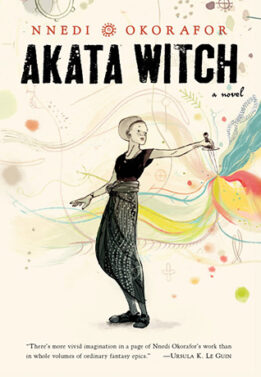
Akata Witch is a young adult fantasy novel by Nigerian-American author Nnedi Okorafor, published in 2011. The novel follows the journey of twelve-year-old Sunny Nwazue, an albino girl of Nigerian descent who was born in the United States and now lives in Nigeria. The story is a rich tapestry of West African mythology, magic, identity, and coming-of-age themes, set against the backdrop of contemporary Nigeria. Okorafor masterfully weaves together elements of Igbo cosmology, Leopard People lore, and the universal struggles of adolescence to create a unique and compelling narrative that challenges Western-centric fantasy tropes while celebrating African culture and spirituality.
The novel is the first in what has become known as the Nsibidi Scripts series, followed by Akata Warrior (2017) and Akata Woman (2022). Akata Witch has received critical acclaim for its authentic portrayal of Nigerian culture, its complex world-building, and its nuanced treatment of themes such as identity, belonging, and the power of knowledge.
Summary
Prologue: The Candle
The novel opens with a prologue that establishes Sunny’s fascination with candles and her first encounter with the supernatural. One night, during a power outage (a common occurrence in Nigeria due to the inefficiencies of the Power Holding Company of Nigeria, or PHC), Sunny lights a candle and gazes into its flame. She sees a terrifying vision of the end of the world raging fires, boiling oceans, toppled skyscrapers, and dead and dying people. In her shock, she inadvertently sets her hair on fire, and her mother rushes in to extinguish the flames. This incident leaves Sunny with half her hair gone and a profound sense of dread about what she has witnessed. This prologue sets the tone for the novel, introducing the themes of premonition, danger, and the hidden world that Sunny is about to discover.
Chapter 1: Orlu
The narrative proper begins with Sunny walking into her school yard, where she is immediately mocked for her new, shortened hairstyle. Her former friends, including Chelu and Buchi, laugh at her, and Sunny feels humiliated and angry. Her day worsens when her literature teacher, Miss Tate, announces that Sunny’s essay about her arrogant brother Chukwu received the highest mark in the class. Miss Tate uses this as an opportunity to berate the other students for their poor performance, and when Sunny is called to the front of the class, Miss Tate places a switch in her hand and orders her to strike her classmates as punishment. Sunny is horrified and refuses, throwing the switch to the ground. Miss Tate then takes over, beating the students herself, and Sunny is blamed by her classmates for not protecting them.
After school, Sunny is ambushed by a group of students led by Jibaku, the school bully. They beat her and call her derogatory names, including “akata witch” and “oyibo,” highlighting the discrimination she faces as an albino and a foreign-born Nigerian. Orlu, a quiet boy from her class, intervenes and helps stop the fight. He walks home with Sunny, and they begin to form a friendship. Orlu reveals that he lives next to a mysterious woman named Nimm and her daughter, Chichi.
Chapter 2: Chichi
Over the next two weeks, Sunny and Orlu develop a routine of walking home together, driven partly by the fear of Black Hat Otokoto, a ritual killer targeting children. Chichi, Orlu’s neighbor, begins to join them, and despite initial friction between Sunny and Chichi, they gradually become friends. Chichi is eccentric, outspoken, and mysterious she doesn’t attend school, lives in a dilapidated hut with her mother, and claims to have traveled vast distances on foot. She is also the daughter of the famous musician Nyanga Tolotolo, though her father abandoned them and provides no support.
Chichi invites Sunny to her home, where Sunny meets Chichi’s mother, Asuquo (who prefers to be called Miss Nimm). The hut is filled with books, and Miss Nimm is reading a book called In the Shadow of the Bush by P. Amaury Talbot, which she claims contains important secrets. During this visit, Chichi reveals that Orlu has a special ability: he can “undo” bad things, including juju. This revelation leads to a confrontation between Orlu and Chichi about how much to tell Sunny. Orlu insists on performing a trust knot a juju ritual that binds Sunny to secrecy before revealing anything further.
The trust knot involves drawing symbols on a book, pricking their tongues with a knife, and swearing an oath. After the ritual, Sunny experiences a profound shift in perception, as if reality is “blossoming.” Orlu and Chichi then explain that they are Leopard People individuals with mystical abilities and that Sunny might be one too. They invite her to return the next day for further explanations.
Chapter 3: Initiative
Sunny returns home and tries to process what she has learned. She sleeps deeply and wakes up feeling better. The next morning, she meets Chichi and Orlu, who take her to see Anatov, a powerful scholar and teacher. They travel through a hidden path in the bush and cross a dangerous river to reach Leopard Knocks, the secret headquarters of the West African Leopard People.
Anatov is a tall, imposing man with an American accent who tests Sunny by initiating her into the Leopard world. The initiation involves a ritual where Sunny is pulled through the earth and water, emerging transformed. She receives a large number of chittim the currency of Leopard People, earned through learning and is told that she is a “free agent,” a Leopard Person born to non-Leopard parents. Anatov explains that Sunny’s abilities likely come from her grandmother, who may have been a Leopard Person.
Sunny also meets Sasha, a boy from Chicago who has been sent to Nigeria to live with Orlu’s family after getting into trouble in the United States. Sasha is arrogant and defensive, and he and Orlu immediately clash. Despite the tension, the four young people Sunny, Orlu, Chichi, and Sasha are destined to become an Oha coven, a group of four Leopard People brought together to defend against a great evil.
Chapter 4: Leopard Knocks His Foot
Chichi explains more about the Leopard world to Sunny as they prepare to cross the bridge to Leopard Knocks. She reveals that Leopard People have two faces a human face and a spirit face and that crossing the bridge requires calling forth one’s spirit face. Chichi demonstrates by transforming her face into a ceremonial mask, revealing her spirit name, Igri. Sunny is initially horrified but eventually learns to call forth her own spirit face, which looks like the sun with golden rays.
They cross the bridge, and Sunny gets her first glimpse of Leopard Knocks, a sprawling town of clay and mud buildings decorated with intricate white drawings. They visit various shops, including a bookstore where Sunny buys Fast Facts for Free Agents, a book written by a prejudiced author that nonetheless contains valuable information. They also eat at Mama Put’s Putting Place, where a tungwa (a floating bag of teeth, bone, meat, and hair) explodes above their table, covering them in debris.
The chapter ends with Sunny returning home late and facing her parents’ anger. Her mother slaps her, and her father threatens to flog her, highlighting the strict and sometimes abusive environment she lives in.
Chapter 5: Sunny Day
After her initiation, Sunny experiences a profound physical transformation. She discovers that she is no longer sensitive to sunlight the very sun that was once her enemy is now a source of strength. She can stand in the sun without burning, and she realizes she can now play soccer, a sport she loves but was previously unable to participate in due to her albinism.
She reads the newspaper and learns that Black Hat Otokoto has killed again, this time a five-year-old child. The horror of the news weighs heavily on her, but she is also excited about her newfound abilities. She practices bringing forth her spirit face and begins to explore the limits of her powers.
Chapter 6: The Skull
Sunny reads Fast Facts for Free Agents and learns that her ability likely stems from her albinism her “one foot in the physical world and one foot in the wilderness.” She also learns the Etuk Nwan juju, a charm that allows her to pass through locked doors. To perform the juju, she needs a sheep’s skull, chamomile leaves, palm oil, and rainwater. She buys a sheep’s head from the market and spends hours cleaning the skull, a gruesome but necessary task.
That night, she successfully performs the juju and becomes invisible, passing through her locked bedroom door. She meets Chichi, Orlu, and Sasha, and they travel to Anatov’s hut for their first official lesson. Anatov explains that each of them has unique abilities: Sasha has a photographic memory, Chichi has the same ability, Orlu can undo juju, and Sunny can become invisible and access the wilderness (the spirit world). He also reveals that they are an Oha coven, destined to face a great evil.
Chapter 7: Night Runner Forest
Anatov sends the four to meet Kehinde, one of the four scholars of Leopard Knocks, who lives in Night Runner Forest. The journey is perilous they are attacked by bats under the control of a bush soul, and Chichi is injured. They use juju to defend themselves and eventually reach Kehinde’s hut.
Kehinde is a tall, imposing man with a long braided goatee and a pet monkey. He tests them and is particularly impressed by Sasha, whom he agrees to mentor for his second level. He also reveals that the four have been chosen to stop Black Hat Otokoto, a task that will put their lives at risk.
Chapter 8: Red Stew and Rice
Sunny struggles to balance her two lives her normal life at school and her secret life as a Leopard Person. She is exhausted from late-night lessons and the demands of her double existence. At school, Jibaku continues to bully her, and Sunny barely restrains herself from using juju to retaliate. Orlu warns her against using juju on Lambs (non-magical people) for petty revenge.
Sunny’s home life is also strained. Her father is distant and sometimes cruel, and her mother is overprotective. Sunny begins to question her identity and her place in both the Lamb and Leopard worlds.
Chapter 9: Treetop
The four friends visit Taiwo, another scholar, who lives in a hut perched atop a palm tree. They are initially ignored but eventually gain entry after treating Taiwo’s Miri Bird with respect. Taiwo reveals that they are West Africa’s first pre-level Oha coven and that they have been chosen to stop Black Hat Otokoto. She explains that Black Hat is a Leopard Person who has turned to dark juju and is planning to bring Ekwensu, a powerful and evil masquerade, into the physical world.
Taiwo tells them that they have three months to prepare before they must confront Black Hat. Sunny is terrified and angry, feeling that they are being used as pawns by the scholars. Despite her reservations, she knows she has no choice but to participate.
Chapter 10: Facing Reality
Sunny returns to school and continues to navigate the challenges of her double life. She practices her jujus and learns more about her abilities. She also discovers that her grandmother, Ozoemena, was a powerful Leopard Person who was killed by Black Hat Otokoto. This revelation deepens her connection to the Leopard world and her determination to stop Black Hat.
Sunny is summoned to the Obi Library to face punishment for using her spirit face against Jibaku. She meets Sugar Cream, the Head Librarian and one of the most powerful scholars in West Africa. Sugar Cream is initially stern but eventually reveals that she is considering mentoring Sunny. She also tells Sunny the truth about her grandmother that Ozoemena was Black Hat’s mentor and that Black Hat killed her to steal her powers.
Chapter 11: Lessons
Anatov teaches the four young people about healing juju. Sunny discovers that she has a natural talent for it, successfully healing a bruise on her arm. Anatov also announces that they will be traveling to Abuja for the Zuma Festival, where Sunny will choose her juju knife and they will watch the Zuma National Wrestling Match finals.
Chapter 12: Abuja
The group travels to Abuja on a “funky train,” a juju-powered vehicle. They stay at the Hilton, and Sunny is overwhelmed by the luxury. They visit the Abuja market, where Sunny meets Junk Man, a vendor of magical items. She chooses a juju knife with a blade made of a mysterious clear green substance a rare and powerful material. The knife chooses her, and she pays thirteen copper chittim for it.
Chapter 13: Zuma Rock
The group attends the Zuma Festival, held at the foot of Zuma Rock. The festival is a massive gathering of Leopard People from across Africa, and Sunny is overwhelmed by the scale and diversity of the Leopard world. She meets Miknikstic, a kind and wise man who is one of the wrestling finalists. He gives her a yellow handkerchief and offers her words of encouragement.
The wrestling match between Miknikstic and Sayé is brutal and ends with Miknikstic’s death but he is resurrected as a guardian angel, ascending into the sky. Sunny is deeply affected by the violence and the loss, and she begins to question the Leopard world’s values.
Chapter 14: The Football Cup
After the wrestling match, Sunny and Sasha participate in the Zuma Football Cup, a soccer match between Leopard students. Despite being the only girl on her team and facing discrimination, Sunny plays brilliantly, scoring goals and earning the respect of her teammates and the audience. Her team loses, but she is proud of her performance and grateful for the opportunity to play the sport she loves.
Chapter 15: Hold Your Breath
The group attends a student social, where Chichi and Sasha engage in a dangerous juju duel with Yao and Ibou. Chichi summons a masquerade using a spell from Udide’s Book of Shadows, but the masquerade, Mmuo Aku, goes out of control and attacks the students. Orlu saves the day by using his ability to undo the masquerade’s power, but Chichi is punished by the Leopard Council for her recklessness.
Chapter 16: Trouble at Home
Sunny returns home to find her father drunk and her mother worried. She calls her Auntie Chinwe, who tells her to look for a box in her mother’s belongings a box that may contain information about her grandmother. Sunny also receives a newspaper with a headline about Black Hat stealing a top-secret book from the Obi Library. She realizes that Black Hat is planning something even more dangerous than before.
Chapter 17: Basic Juju
The next two weeks pass quickly. Sunny continues to study and practice her jujus, and she grows closer to Orlu. Chichi and Sasha begin a romantic relationship, and Chichi recovers from her caning. Sunny’s wasp artist, Della, builds intricate sculptures, and Sunny learns to appreciate the wasp’s creativity.
Chapter 18: Seven Rainy Days
It rains for seven days straight an unnatural occurrence that signals Ekwensu’s impending arrival. The scholars summon the four young people to the Obi Library and reveal that Black Hat has kidnapped two more children and plans to sacrifice them to bring Ekwensu into the physical world. The four are tasked with stopping him.
Chapter 19: Under the Hat
The four friends track Black Hat to a gas station near Aba. They confront him and his minions, fighting through bush souls and juju attacks. Orlu revives the two dead children using his ability, while Sunny and Chichi face Black Hat. Chichi uses a spell from Ozoemena to inflict Black Hat with his past sins, but Black Hat kills himself to complete the ritual, bringing Ekwensu through.
Ekwensu is a terrifying, massive masquerade made of dried palm fronds. Sunny, drawing on her grandmother’s legacy and her own courage, faces Ekwensu and sends her back to the wilderness with a single word: “Return.”
Chapter 20: I See You
The four friends recover from the battle. The children are returned to their parents, and Black Hat’s gas station is destroyed by lightning. Sunny is praised for her bravery, and Sugar Cream agrees to mentor her. Sunny returns home and finally learns the truth about her grandmother from her mother.
Chapter 21: Timing
Sunny’s mother tells her about Ozoemena her intelligence, her independence, and her mysterious disappearance at night. She also reveals that Ozoemena was killed on a rainy day, and that she believes something similar could happen to Sunny. Sunny finds the box her aunt told her about and reads a letter from her grandmother, who explains her Leopard heritage and her ability to travel between the physical and spirit worlds. The letter also includes a photograph of Ozoemena and a sheet of Nsibidi symbols.
Chapter 22: Headless and Headlines
The novel ends with a newspaper article reporting that the kidnapped children have been returned safely. Black Hat’s gas station has been struck by lightning and destroyed. Sunny reflects on her journey and the challenges ahead, knowing that she has found her place in the Leopard world and that she is no longer alone.
Character Analysis
Sunny Nwazue
Sunny is the protagonist of the novel, a twelve-year-old albino girl of Nigerian descent who was born in the United States and now lives in Nigeria. She is intelligent, curious, and brave, but also insecure and self-conscious about her appearance. Her albinism has made her an outsider in both the Lamb and Leopard worlds, and she struggles to find her place.
Sunny’s character arc is one of self-discovery and empowerment. At the beginning of the novel, she is passive and uncertain, defined by her physical differences and her family’s expectations. By the end, she has embraced her identity as a Leopard Person and a free agent, and she has learned to use her abilities to protect others. Her journey is also one of reconciliation with her grandmother’s legacy, with her parents’ limitations, and with her own fears.
Sunny’s abilities include invisibility, the ability to enter the wilderness (the spirit world), and premonition. She is also a talented soccer player, a skill that becomes a metaphor for her ability to navigate both the physical and spiritual worlds. Her spirit face, Anyanwu (“eye of the sun”), reflects her inner strength and her connection to light.
Orlu Ezulike
Orlu is Sunny’s first friend in the Leopard world and her love interest. He is a quiet, thoughtful boy with a talent for undoing juju a rare and powerful ability. He is dyslexic, which in the Lamb world is seen as a disability but in the Leopard world is a sign of his unique gift. Orlu is patient, kind, and deeply principled, often serving as the voice of reason among the four friends.
Orlu’s character represents the value of humility and selflessness. He is constantly helping others, whether by stopping fights, undoing dangerous juju, or reviving the dead children. His relationship with Sunny is tender and supportive, and he serves as a counterbalance to her impulsiveness.
Chichi (Chijioke)
Chichi is Orlu’s neighbor and Sunny’s eventual friend. She is eccentric, outspoken, and fiercely intelligent, with a photographic memory and a talent for juju. She is the daughter of a Nimm priestess and a famous musician who abandoned the family. Chichi is reckless and impulsive, often getting herself and her friends into trouble, but she is also brave and loyal.
Chichi’s character embodies the tension between tradition and rebellion. She is proud of her Nimm heritage but also critical of the Leopard world’s rules and hierarchies. Her relationship with Sasha is passionate and volatile, and their dynamic adds an element of romance and conflict to the group.
Sasha Jackson
Sasha is a fourteen-year-old boy from Chicago who is sent to Nigeria after getting into trouble in the United States. He is arrogant, defensive, and quick to anger, but also brilliant and resourceful. He has a photographic memory and a talent for juju, and he is mentored by Kehinde, one of the four scholars.
Sasha’s character represents the African American experience and the tensions between African and African American cultures. He is initially dismissive of Nigerian culture and resentful of his exile, but he gradually comes to appreciate the Leopard world and his place in it. His relationship with Chichi is fiery and passionate, and his friendship with Orlu evolves from antagonism to respect.
Anatov
Anatov is one of the four scholars of Leopard Knocks and the teacher of the four young people. He is tall, imposing, and eccentric, with an American accent and a fondness for incense. He is demanding and sometimes harsh, but also deeply caring and committed to his students’ growth. He is the “scholar on the outside,” responsible for interacting with the Lamb world.
Sugar Cream
Sugar Cream is the Head Librarian of the Obi Library and one of the most powerful scholars in West Africa. She is old, wise, and physically deformed (she has severe scoliosis), but she is also kind and compassionate. She becomes Sunny’s mentor and helps her understand her grandmother’s legacy.
Black Hat Otokoto
Black Hat Otokoto is the novel’s primary antagonist. He is a former Leopard scholar who turned to dark juju in his quest for power. He kidnaps and kills children to fuel his rituals, and he is ultimately revealed to be working to bring Ekwensu, a powerful and evil masquerade, into the physical world. He is arrogant, cruel, and utterly without remorse.
Ekwensu
Ekwensu is the novel’s ultimate antagonist, a powerful and evil masquerade from the wilderness. She is described as a massive, terrifying creature made of dried palm fronds, and her presence brings chaos and destruction. She represents the forces of darkness and chaos that the Leopard People are sworn to oppose.
Supporting Characters
- Jibaku: The school bully who torments Sunny. She represents the discrimination and cruelty that Sunny faces in the Lamb world.
- Miss Tate: Sunny’s literature teacher, who is strict and sometimes cruel but also recognizes Sunny’s intelligence.
- Sunny’s Parents: Her mother is a doctor who is overprotective and secretive about her own mother. Her father is a lawyer who is distant and sometimes abusive, favoring his sons over Sunny.
- Chukwu and Ugonna: Sunny’s older brothers, who are typical teenage boys sometimes annoying but ultimately loving.
- Miknikstic and Sayé: The two wrestling finalists at the Zuma Festival. Miknikstic’s death and resurrection as a guardian angel is a pivotal moment in the novel.
- Kehinde and Taiwo: Two of the four scholars of Leopard Knocks. Kehinde is a recluse who lives in Night Runner Forest, and Taiwo lives in a hut atop a palm tree.
- Junk Man: A vendor of magical items who sells Sunny her juju knife.
- Della: Sunny’s wasp artist, a small creature that builds intricate sculptures.
- Godwin: The captain of Sunny’s soccer team at the Zuma Festival.
Thematic Analysis
Identity and Belonging
The central theme of Akata Witch is identity and belonging. Sunny is a character who exists between worlds she is Nigerian by blood but American by birth, albino in a dark-skinned society, and a Leopard Person in a world of Lambs. Her journey is one of reconciling these different aspects of her identity and finding a place where she belongs.
The novel explores this theme through multiple characters. Orlu is dyslexic, which makes him an outsider in the Lamb world but a powerful Leopard Person. Sasha is an African American who feels out of place in Nigeria. Chichi is the daughter of a Nimm priestess and a Lamb musician, straddling two worlds. Each character must navigate the tensions between their different identities and find a way to integrate them.
Knowledge and Power
The Leopard world is built on the principle that knowledge is the source of all power. Chittim, the currency of Leopard People, is earned through learning, and the highest honor in Leopard society is to be a scholar. This stands in stark contrast to the Lamb world, where money and material wealth are the measures of success.
The novel celebrates intellectual curiosity and the pursuit of knowledge. Sunny’s journey is one of learning about her abilities, about the Leopard world, and about herself. The book Fast Facts for Free Agents, despite its prejudiced author, is a valuable source of knowledge that helps Sunny understand her powers. The Obi Library, with its vast collection of books and its community of scholars, represents the ideal of knowledge as a communal resource.
Good vs. Evil
The novel presents a classic battle between good and evil, but it complicates this binary by showing that evil can come from within the Leopard community. Black Hat Otokoto was once a respected scholar, but his hunger for power corrupted him. The scholars of Leopard Knocks are not perfect some are prejudiced, some are power-hungry, and some are willing to sacrifice children for the greater good.
The novel also explores the idea that evil is not always obvious. Black Hat appears as a successful businessman and philanthropist, while the Leopard People who oppose him are often marginalized and misunderstood. The true nature of evil is revealed through actions, not appearances.
Tradition and Modernity
Akata Witch is set in contemporary Nigeria, a country that is simultaneously traditional and modern. The novel explores the tensions between these two worlds between the ancient traditions of the Leopard People and the modern conveniences of the Lamb world. The funky train, which runs on a combination of fuel and juju, is a symbol of this hybridity.
The novel also critiques the ways in which tradition can be used to justify oppression. The scholars of Leopard Knocks are guardians of ancient knowledge, but they are also capable of cruelty and injustice. The novel suggests that tradition must be constantly re-examined and adapted to the needs of the present.
Gender and Power
The novel explores issues of gender and power, particularly through Sunny’s experiences as a girl in a patriarchal society. Her father favors her brothers and dismisses her achievements. At school, she is bullied by Jibaku and underestimated by her teachers. In the Leopard world, she faces discrimination as a girl who wants to play soccer.
However, the novel also shows women wielding power. Sugar Cream is the most powerful scholar in West Africa. Chichi’s mother is a Nimm priestess. Taiwo is one of the four scholars of Leopard Knocks. Sunny herself becomes a powerful Leopard Person, challenging the gender norms of both the Lamb and Leopard worlds.
Disability and Ability
The novel redefines disability as ability. Orlu’s dyslexia is not a limitation but a sign of his unique gift for undoing juju. Sunny’s albinism, which makes her an outsider in the Lamb world, is the source of her Leopard abilities. Sugar Cream’s scoliosis is a physical deformity that coexists with her immense power and wisdom.
The novel suggests that what the Lamb world sees as imperfections are actually markers of special abilities. This is a radical reframing of disability that celebrates difference rather than pathologizing it.
Cultural and Mythological Context
Igbo Cosmology
Akata Witch is deeply rooted in Igbo cosmology and mythology. The Leopard People are based on the ekpe, a secret society among the Efik people of Nigeria. The term “Leopard Person” is derived from the Efik word “ekpe,” which means “leopard.” The novel also draws on Igbo concepts such as chi (personal spirit), anyanwu (the sun), and Ekwensu (a trickster deity associated with war and chaos).
The novel’s depiction of masquerades is particularly significant. In Igbo culture, masquerades are spirits of the dead or other supernatural beings who visit the physical world during festivals and ceremonies. They are represented by masked dancers, but in the Leopard world, they are real and dangerous. The novel explores the power and terror of these beings, as well as their role in maintaining the balance between the physical and spiritual worlds.
Nsibidi Script
Nsibidi is a system of symbols used by the Ekpe secret society of the Cross River region of Nigeria. In the novel, Nsibidi is a magical language that can only be read by those with special abilities. Sunny’s ability to read Nsibidi is a sign of her connection to her grandmother and her Leopard heritage.
The Nsibidi symbols in the novel are actual symbols from the real Nsibidi script, which adds authenticity to the world-building. The novel also incorporates other African scripts and languages, including Efik, Yoruba, and Hausa, reflecting the linguistic diversity of Nigeria.
The Zuma Festival
The Zuma Festival is a fictional event created by Okorafor, but it draws on real Nigerian festivals and traditions. The wrestling match, the food, the music, and the social gathering all reflect the vibrant culture of Nigeria. The festival also serves as a microcosm of the Leopard world, showing both its beauty and its brutality.
The Obi Library
The Obi Library is based on the concept of the obi, which in Igbo culture is the central meeting place of a compound or village. In the novel, the Obi Library is the heart of Leopard Knocks, a place where knowledge is preserved and shared. The library’s chaotic appearance books stacked everywhere, people reading and performing juju reflects the idea that knowledge is not static but alive and constantly evolving.
Literary Style and Technique
Narrative Voice
The novel is narrated in the first person by Sunny, giving readers direct access to her thoughts, feelings, and experiences. This intimate perspective allows readers to empathize with Sunny’s struggles and to see the world through her eyes. The narrative voice is engaging and authentic, capturing the voice of a twelve-year-old girl who is smart, curious, and sometimes insecure.
Pacing
The novel’s pacing is generally fast and engaging, with short chapters that keep the story moving. Okorafor balances action sequences with quieter moments of reflection and character development. The pacing slows down in the middle of the novel, during Sunny’s training and the Zuma Festival, but picks up again in the final chapters as the confrontation with Black Hat approaches.
World-Building
Okorafor’s world-building is one of the novel’s greatest strengths. Leopard Knocks is a fully realized community with its own economy, government, educational system, and cultural practices. The details are rich and specific the chittim currency, the veve symbols, the juju knives, the masquerades and they create a sense of a world that exists alongside our own, hidden but real.
The novel also incorporates real Nigerian culture and geography. The markets, the food, the music, the languages, and the landscapes all feel authentic. The novel does not exoticize Nigeria but presents it as a complex, modern society with both beauty and problems.
Use of Nigerian English and Pidgin
The novel incorporates Nigerian English and Pidgin English, adding authenticity to the dialogue and reflecting the linguistic diversity of Nigeria. Characters use expressions like “wahala” (trouble), “oyibo” (white person), and “akata” (bush animal, a derogatory term for foreign-born blacks). The novel also includes Igbo, Efik, and Yoruba words and phrases, though they are usually translated or explained in context.
Symbolism
The novel is rich in symbolism. The candle that Sunny gazes into in the prologue represents her ability to see the future and her connection to the wilderness. The sun, which is both Sunny’s enemy and her spirit face, symbolizes her dual nature she is both vulnerable and powerful. The juju knife with the clear green blade represents her unique destiny and her connection to her grandmother.
Critical Reception and Significance
Akata Witch has received widespread critical acclaim for its authentic portrayal of Nigerian culture, its complex world-building, and its nuanced treatment of themes such as identity, belonging, and the power of knowledge. The novel has been praised for centering a black, albino, female protagonist and for challenging Western-centric fantasy tropes.
The novel has been compared to works such as Harry Potter and Percy Jackson, but critics have noted that Akata Witch is distinct in its African setting and its incorporation of West African mythology. The novel has been praised for its representation of diverse characters and its celebration of African culture.
Akata Witch has also been recognized for its feminist themes and its treatment of disability. Sunny’s journey is one of self-acceptance and empowerment, and her albinism is depicted as a source of strength rather than a limitation. The novel challenges the gender norms of both the Lamb and Leopard worlds, showing that girls can be powerful, brave, and intelligent.
The novel has been used in classrooms and has been the subject of academic study, particularly in the fields of children’s literature, African literature, and fantasy studies. It has been praised for its contribution to the growing body of diverse young adult literature and for its role in introducing readers to Nigerian culture and mythology.
Conclusion
Akata Witch is a rich, complex, and deeply satisfying novel that combines elements of fantasy, coming-of-age, and cultural exploration. Nnedi Okorafor has created a world that is both familiar and strange, drawing on West African mythology and culture to tell a story that is universal in its themes but specific in its details. The novel’s protagonist, Sunny Nwazue, is a compelling and relatable character whose journey of self-discovery and empowerment will resonate with readers of all ages.
The novel’s exploration of themes such as identity, belonging, knowledge, and power is both timely and timeless. In a world that is increasingly diverse and interconnected, Akata Witch offers a vision of a society that values difference and celebrates the unique abilities of each individual. It is a novel that challenges readers to think about what it means to belong, what it means to be powerful, and what it means to be human.
Akata Witch is not just a story about magic it is a story about the magic that exists within all of us, waiting to be discovered. It is a story about the power of friendship, the importance of knowledge, and the courage to face the unknown. It is a story that will stay with readers long after they have finished the last page, and it is a story that deserves to be read and re-read for generations to come.