
Listen to this Book Summary Below
Playback speed:
Book One: The Great Horned Owl
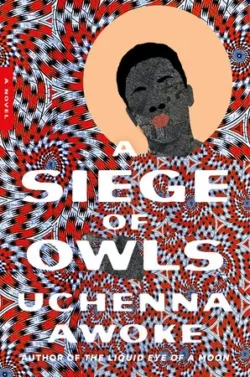
The Forbidden Act and the Departure from Enu-Ozara The narrative of A Siege of Owls begins in the village of Enu-Ozara, where eight-year-old Ekwe lives within the Adada River basin. The village is a place of agricultural tradition, centered around the local market, Eke Enu-Ozara, and the rock formation known as Ogele, where water once spurted but now merely dribbles due to a prolonged drought. Ekwe’s father, Papa Ekwe, is a hardworking but impoverished farmer with a large, polygamous family that struggles to survive on scant harvests. On a morning trek to the farm, Ekwe encounters a great horned owl with spooky eyes. His father has long warned him of the mystical leaf known as ekwukwonju, claiming that touching it causes a person to be consumed by wanderlust and lose their sense of direction. Driven by curiosity and a desire for adventure, Ekwe defies the taboo, touching and plucking the menthol-scented leaf when his sister Oyibo is out of sight.
Later that day, Ekwe watches the sunset from a hill and reflects on his family’s life, including the many suitors who have recently approached his father for Oyibo’s hand in marriage proposals he is happy she has rejected. That night, after a dinner of ayaraya, Ekwe falls into a deep, trance-like sleep. He wakes to find himself in a “transitional state of consciousness” and wanders to the village motor park. There, he listens to the blind ukulelist Nkwa before climbing into a crumbling yellow bus that takes him to Obollo Afor. Driven by hunger, he sneaks onto a Mercedes 911 cargo lorry (a gwongworo) filled with fruits. The lorry speeds northward, carrying him far from his home to the city of Maiduguri.
Life with Danjuma and the Northern Insurgency In the Sahelian grasslands near Maiduguri, Ekwe meets Danjuma, a Fulani cowherd who drives cattle for wealthy Higi merchants. Despite the language barrier Ekwe speaks only Igbo while Danjuma speaks Hausa and Fula the man accepts Ekwe into his family, which includes three wives and eight children. Ekwe begins to learn the nomadic lifestyle, assisting Danjuma’s sons in herding cattle. However, the peace is shattered by news of rising violence; Danjuma’s transistor radio brings constant reports of bombings and killings in neighboring towns like Mubi. Danjuma lives in fear, haunted by the image of owls pecking out the eyes of a lamb a grisly scene he witnessed in the meadows.
One night, while the family is eating a supper of tuwo shinkafa and miyan kuka, the compound is ambushed by insurgents identified as Jama’atu Ahlis-Sunna Lidda’awati Wal-Jihad. In the chaos, Danjuma attempts to shield his family, but he is shot in the shoulder. His first wife, Zainab, and his youngest daughter, Azhaar, are murdered in the attack. Following the massacre, Danjuma is left broken, often talking to the “ghosts” of his dead loved ones whose fresh graves lie in his garden. Fearing further attacks, he decides to lead his surviving family and cattle southward, toward the “coastal plains of the southeast”.
The Pastoral Sojourn and Tribal Conflicts The journey south lasts for months. They trek through wooded savannas, losing cattle to disease and lightning but gaining newborn calves. On the Mambilla Plateau, they briefly find a lush “Eden,” but their peace is short-lived. While grazing near Jalingo, they are attacked by local youths with machetes who kill six of their cattle. A local trader named Elijah explains that they have blundered into a “tribal war” between the Tiv and Jukun peoples over land rights. Elijah warns Danjuma that the south is no longer safe for cowherds, as farmers now view them as “dangerous, armed militia”.
Determined to find peace, Danjuma eventually leads the group to the mangrove valleys north of the Adada River, an area that feels “frighteningly familiar” to Ekwe. They meet Ali Mustapha, an Igbo imam from Ugbene-Ajima, who offers to mediate a lease for them to graze their cattle legitimately. Ali Mustapha introduces Danjuma to Igwe Okosisi Idoko, the king of Enu-Ozara. In a secret meeting with his council of chiefs including the violent youth leader Eche and the shrewd president-general the King agrees to the lease. However, Ali Mustapha betrays Danjuma, inflating the lease price from 4.5 million to 5 million naira and pocketing the difference, then later extorting another 500,000 naira for “restitution” for alleged crop damage.
The Escalation of Violence Tensions between the cowherds and the local villagers reach a breaking point during a severe harmattan. Following a dispute over trespassing cattle, the villagers slaughter twenty heads of Danjuma’s cattle. Encouraged by his wealthy employers in the North, Alhaji Garba Shehu and Alhaji Babangida Tukur, Danjuma seeks “bloody revenge”. He orders his sons and Ekwe to unleash the cattle on the villagers’ irrigated farmlands to “swallow the farmland”.
The conflict takes a tragic turn when Danjuma’s son Balarabe goes missing. Danjuma searches the rivulet and finds the boy’s body; he has been murdered. Overpowered by grief and haunted by the ghosts of his family, Danjuma spends his days moping and plotting further vengeance. Ekwe, feeling the weight of the sadness in the household, wanders toward the valley, where he sees a “monstrous raptorial bird”.
Book Two: Jafari’s Interception
The Mercenary Path in Central Africa In a surreal turn, the enormous bird swoops down and grabs Ekwe, flying him across changing landscapes into Central Africa. He is saved by Jafari, a scrawny but lethal former mercenary who speaks Hausa. Jafari lives in a “wattle and daub” hut with his wife Mariya and their five children. Jafari is bored and penniless, having returned from the Liberian Civil War with nothing but a now-drowned Nokia 3310. He frequently visits the shop of Joe, an Igbo migrant who has built a successful business in the remote mountain village.
Jafari’s world changes when his old contact, Yacine, arrives with a job offer. Yacine is recruiting mercenaries to go to Nigeria to ensure that the opposition candidate an ex-general referred to as “Baba” is not “rigged out” of the upcoming election. Jafari, dreaming of a better life in a “land flowing with milk and honey,” accepts the job and brings Ekwe along.
The Election in Kano and the Vengeance of Radaminho Jafari and Ekwe arrive in Kano, where they camp with mercenaries from various African nations. The city is electric with support for “Baba,” whose gap-toothed smile dominates billboards. On election day, they witness widespread multiple voting by children and adults alike in support of Baba. When Baba is declared the winner in a landslide, the city erupts in wild jubilation. However, the victory is a “travesty” for Jafari; once in power, Baba has no more use for the mercenaries and abandons them.
Left broke and hungry, Jafari and Ekwe turn to banditry, robbing people in the streets of Kano. They eventually flee to Maiduguri, where they meet a lieutenant in the army named Radaminho. Radaminho reveals that his grandfather was a Chadian mercenary hired for the Nigerian Civil War who was subsequently abandoned by the government. Seeking vengeance for this “man’s inhumanity to man,” Radaminho is mobilizing 2,500 men to make Nigeria “ungovernable”. He takes Jafari and Ekwe to a mansion where they swear loyalty to Lamashtu, an “unforgiving Mesopotamian goddess”. Radaminho provides Jafari with a cache of weapons, twenty cattle to hide them in, and two teenage herders, Garba and Mandla.
The Kidnapping and the Anunuebe Tree Under the guise of herding cattle, Jafari’s team moves south, engaging in kidnapping and robbery. They abduct Ezuhio, the teenage son of an Egbira chief, and demand a five-million-naira ransom. Jafari chooses to collect the ransom at the foot of an anunuebe tree, which Papa Ekwe had described as the “king of trees” and a “no-perch for any bird”. Despite the tree’s mystical reputation, Jafari approaches it, only to be shot in the shoulder by a mysterious arrow. The wound festers, leading to the amputation of Jafari’s arm.
Now a “raging wildfire” of destruction, Jafari leads a trail of violence into the rainforests of Igboland. They arrive in a village that bears a striking resemblance to Enu-Ozara. When a mob of villagers attacks their cattle, Jafari calls Radaminho for reinforcements. A trailer load of weapons and mercenaries arrives, and Jafari plans a midnight ambush. As an “orange flame” consumes the village, Ekwe wakes up.
Book Three: Bad Omen
Reality and the Suitor’s Proposal Ekwe realizes that his entire journey northward and his time as a mercenary were an astral projection induced by the ekwukwonju leaf. Papa Ekwe explains that his “chi” guided his spirit back to his body after traveling into the future. However, the premonitions of violence are real. The “Great Horned Owl” from his dream is seen as a bad omen for the community.
In the physical world, the village is in a state of crisis. News arrives of a “holocaust” in Nimbo, where 500 armed militia slaughtered the villagers. Fearing a similar fate for Enu-Ozara, a wealthy, bald suitor named Chief Agubata who drives a “fine big red motorcar” proposes marriage to Ekwe’s young sister, Oyibo. He offers to renovate Papa Ekwe’s mud house and provide the family with a large house in the city to escape the militants. While Papa Ekwe and Mama Ekwe are eager for the match, Oyibo rejects him, finding him “ugly” and “old” with a “nose as flat and wide as that of a Sanga cow”.
Amadi’s Intervention and the Corruption of the Law As the family bickers over the proposal, Ekwe’s cousin Azuka flees to the farm settlement of Umulokpa to escape the household rancour. There, she meets Zaram, a city-educated young man, and Amadi, a highly educated man who has returned to the village to set up a scholarship fund. Amadi, who “abhorred oppression,” vows to stop the underage marriage of Oyibo. He takes his case to the tribunal of kinsmen, accusing Papa Ekwe of “forcing a rich old man… on his young daughter”.
The kinsmen, including the orator Okoboyi, the drunk Ikoh, and the brawny Odum, are divided. The suitor attempts to sway the verdict by gifting the kinsmen a carton of White Horse whisky and a wrap of currency. When Amadi realizes the tribunal is being sabotaged by bribery, he involves the police. He brings Lance Corporal Okute and Inspector Agatha (Iron Lady) to arrest Papa Ekwe on the day of the wedding.
However, the suitor uses his “power of money” to manipulate the legal system. He visits the DPO, making a “small gift” in the form of a signed check. The DPO, Ogazi, then releases Papa Ekwe without the promised “undertaking” to protect Oyibo’s schooling, telling Amadi that “in this country, the law is only for the poor”.
The Premonition Fulfilled The book concludes with the community in a state of perpetual fear. Rumors of spies in the village and the murder of a herdsboy on the farm create an atmosphere of impending war. The suitor, now acting “brusque,” takes his family to his own village in Aku, where he begins to mistreat Oyibo, who has developed fistula following a difficult childbirth.
The novel ends on a chilling note of suspense. During a lunch of jollof rice, a “frantic voice” raises an alarm that militants have stormed the village. As the family flees in terror, Ekwe hesitates for a moment to save his plate of rice, only to find Papa Ekwe hiding in the banana grove with a bow and machete, waiting in ambush for the killers. The “false alarm” is revealed to be a regular occurrence, but the danger remains absolute as the village sits between the threat of the militants and the internal “terror” of a corrupt vigilante group known as the Ishiawo. Ekwe stands scowling at his fallen rice, the dream and reality finally converging in a landscape of “charred remains” and “haunting acoustics”.