
Introduction
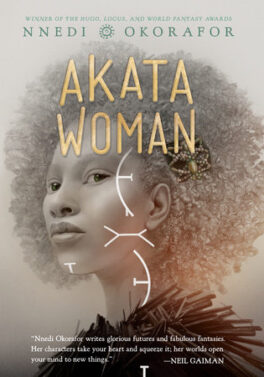
Akata Woman is the third installment in Nnedi Okorafor’s acclaimed Akata series, following Akata Witch (2011) and Akata Warrior (2017). Published in 2022, this young adult fantasy novel continues the story of Sunny Nwazue, a Nigerian-American albino girl who is also a Leopard Person a practitioner of juju (magic). The novel represents a significant expansion of Okorafor’s richly imagined world, taking readers on an epic journey that spans multiple realms, including the spirit world, a parallel dimension called Ginen, and the mystical Road of Spirits.
The book is dedicated to Okorafor’s mother, Dr. Helen Okorafor, and notably was completed during the COVID-19 pandemic lockdown of 2020, a fact the author acknowledges in her acknowledgments as having provided the necessary time to finish the novel. The title “Akata Woman” builds upon the controversial term “akata” a derogatory Igbo word for a wild animal or someone of African descent born outside Africa reclaiming it as a marker of identity and power.
Summary
Part One: The Setup and the Summons
The novel opens with Sunny and her mentor Sugar Cream walking through the Dark Market in Leopard Knocks, the secret settlement of Leopard People. Sugar Cream is teaching Sunny about “holding” the powerful ability to stop time which Sunny has only done once before in a moment of extreme emotion. During this lesson, Sunny successfully performs the holding technique using her zyzzyx comb, a gift from her wasp artist Della, as her talisman. The comb serves as her anchor to return to the correct moment.
The narrative then shows Sunny playing soccer, a activity she loves because her initiation into Leopardom accidentally granted her the ability to withstand the sun, which her albinism would normally make dangerous. During a game, a new boy named Izuchukwu makes an inappropriate advance toward her, and she responds by knocking him to the ground, demonstrating her growing physical strength as a Nimm warrior.
Meanwhile, Sunny’s friends are experiencing their own supernatural developments. Chichi passes her Mbawkwa test the second level of Leopardom and begins experiencing strange effects where everything she touches reveals its history to her. She develops mysterious Nsibidi markings below her neck that eventually reveal the message: “Because the leopard does not speak, the moment it speaks, it becomes a woman.”
Sasha, the American Leopard Person, also passes his Mbawkwa test but disappears for five minutes during the process. When he returns, he reveals that Udide the Great Spider Artist spoke to him during his test and told him he needed to bring a specific object to a specific place. This object turns out to be a gin bottle that was used to purchase his enslaved ancestors, which he stole from his mother’s bookcase.
The central plot is set in motion when Udide, the Great Spider Artist, appears to Sunny in the middle of the night. Udide reveals that a ghazal (a type of poem) written on a Möbius band was stolen from her by Nimm women specifically Chichi’s mother and her cousins in the 1990s. Udide demands that Sunny and Chichi retrieve it within seven days, threatening to destroy the Nimm Village and cause widespread devastation if they fail. She has already killed the Nimm queen (though this later turns out to be an illusion) and turned Sunny’s palm tree outside her window into a dead, threatening figure.
Part Two: The Journey Begins
Sunny and Chichi, joined by Sasha and Orlu, embark on their quest despite having no clear idea of where the Nimm Village is or how to find the ghazal. They call a funky train (a magical bus) to take them toward Cross River National Park, where they believe the Nimm Village might be located. During the journey, they encounter ghost hoppers large insect-like creatures that sing to stressed travelers and learn from their driver that the Nimm Village is notoriously difficult to find.
At the park entrance, they meet the Lizard Biker Club, a group of Leopard researchers who offer to help them get closer to their destination. The bikers take them deep into the park, where Sasha uses the gin bottle to locate the exact spot where his ancestors were sold. At this location, the bottle begins to glow, and Sasha pours its contents onto the roots of an iroko tree, causing a supernatural encounter with his ancestors. The spirits speak to him in old Igbo and accept his offering, formally welcoming him and giving him a sense of belonging he had been missing.
Part Three: The Nimm Village
The group eventually finds the Nimm Village through a combination of Chichi’s blood memory and Sunny’s Nsibidi skills. Chichi creates a “Seven” juju a powerful spell that amplifies an effect seven times causing the African nutmeg trees surrounding the village to become aggressive and attack the Nimm women. This distraction allows Sunny to glide into the village’s heart, the baobab tree called Never Fall, where she meets Queen Abeng, also known as Auntie Nimm.
Queen Abeng reveals crucial backstory: Chichi’s mother was exiled from the Nimm Village after killing two of her cousins, Omni and Ndom, who had betrayed the village by plotting to sell Udide’s ghazal to General Sani Abacha, Nigeria’s brutal military dictator. The queen explains that the ghazal is not in the village but somewhere along “The Road” a mystical spirit highway that constantly changes. She gives Sunny a piece of wood with Nsibidi written on it, which serves as an invocation to The Road.
The encounter with the Nimm women is violent and dangerous, with Chichi being beaten by her cousins (the Eperi triplets, Soon, Far, and Now) before Sunny and Chichi manage to escape with the help of Queen Abeng, who allows them to leave.
Part Four: The Journey Through Ginen
Back on Earth, Sunny and Chichi join Sasha and Orlu, and together they invoke The Road using the Nsibidi instructions. The invocation transports them to the wilderness, where Sunny uses her “holding” ability to keep her friends alive in the spirit world. They follow a Nsibidi path that leads them to a village of root people and eventually to the Desert Magician, a trickster figure who guards the entrance to Ginen a parallel world where nature and technology have merged into a futuristic, environmentally harmonious civilization.
The Desert Magician opens the way to Ginen, warning them that they must return to the same spot to get back to the living world. In Ginen, the group discovers a world that is both alien and familiar: a planet entirely covered in jungle, where buildings are grown from plants, vehicles run on bioelectricity, and the people live in harmony with nature. They meet Zed, an elderly Biafran pilot who crashed into Ginen in 1967 and has lived there ever since, along with his bush cow companion Nnabuike and the Gari, gentle blob-like creatures who serve as judges.
Zed directs them to Gra Gra, a mysterious figure who can see spirit faces and who runs a business selling “iriran” a plant that grants visions. Gra Gra agrees to help them reach The Road but demands payment: Orlu gives him a “clockwork seed,” a plant-machine hybrid from Earth. Gra Gra burns a large bundle of iriran leaves, creating smoke that serves as a bridge to The Road.
Part Five: The Road of Spirits
The group emerges onto The Road a terrifying, awe-inspiring spirit highway filled with countless spirits, deities, monsters, and ancestors traveling in both directions. Sunny must use her gliding ability to move along The Road while keeping her friends alive through a combination of Orlu’s juju (which transforms them into “ewedu wolves,” plant-based creatures that blend in) and her own ability to navigate the spirit world.
The most dramatic encounter on The Road is with the Bone Collector a massive beast made of asphalt and concrete that represents the spirit of Nigeria’s haunted roads. It attacks the group, and Anyanwu (Sunny’s spirit face) engages it in battle while Sunny holds back. During this encounter, Sunny learns a crucial truth about herself: she is an ogbanje, a spirit child who is born, dies, and is born again. Her ability to glide comes from this nature, not from her albinism. Her father had a son before her who died at birth a son he had wanted to name Anyanwu and this explains his complicated feelings toward Sunny.
The Bone Collector “eats” both Sunny and Anyanwu but eventually releases them after Anyanwu invokes Udide’s name. This experience gives Sunny access to all of Anyanwu’s memories thousands of years of knowledge and experience which she must now carry.
Part Six: The Power House and the Ghazal
The Nsibidi path leads the group to a wall of dried bushes, which catches fire to reveal a structure called the Power House a museum of dangerous artifacts guarded by the masquerade Danafojura (the Burning Bush). Danafojura allows only Sunny and Chichi to enter, warning that they “will not come out human.”
Inside, they encounter Ajofia, the Evil Forest masquerade a massive, terrifying figure draped in animal pelts and raffia. Ajofia carries a purse filled with numbing herbs and guards the Power House’s secrets. In a moment of extraordinary courage, Sunny glides directly at Ajofia and snatches its purse, earning the title of “masquerade peer” a rare achievement that means she has mastered the kind of witchcraft that allows one to extract power from negative sources.
In one of the Power House’s rooms, Sunny discovers the ghazal a Möbius band made of the same green, glass-like material as her juju knife. She is able to find it because her knife vibrates in resonance with the ghazal (both are made from kala beetle exoskeletons). The ghazal is inscribed with incredibly complex Nsibidi that Sunny can barely read.
Part Seven: The Return and Confrontation with Udide
Sunny and Chichi reunite with Sasha and Orlu, and together they use The Road to return to Earth. Sunny draws a Nsibidi symbol for Della, her wasp artist, and uses ash from the burned bushes to mark The Road, creating a path back to where she buried her zyzzyx comb. They return to Orlu’s driveway at the exact same time they left no time has passed on Earth, thanks to the nature of The Road.
The group returns home to find Nigeria entering COVID-19 lockdown. Sunny has an emotional reconciliation with her father, who apologizes for slapping her and acknowledges that he sees her now. The family gathers to watch news of the pandemic.
Sunny and Chichi then return the ghazal to Udide at the dead palm tree outside Sunny’s house. However, Udide is not satisfied she demands that the Nimm women who used her secrets without permission also be brought to her. In a moment of quick thinking, Sunny uses one of the jujus she read on the ghazal during the journey: “Over All Things,” a spell that transports Udide to what she most desires. This sends Udide to the bottom of the ocean, to the Great Crab the love of Udide’s life, whom she only sees once every millennium.
In the depths of the ocean, encased in a bubble, Sunny watches as Udide and the Great Crab reunite. Anyanwu confronts Udide, urging her to honor her promise and let go of her anger at the Nimm women. Udide eventually relents and transports them back to land. She reveals that her “killing” of the Nimm queen was an illusion, a mere incentive. Udide takes her ghazal back, wrapping it around her leg, and tells Sunny to tell the Nimm women never to speak her name again unless they are ready for her answer.
Before leaving, Sunny asks Udide if she can weave away the COVID-19 virus. Udide responds that humanity will see this through or it will not it is none of her business. However, she notes that it is good she now has all her tools. Udide scratches Nsibidi into the dead palm tree, which then falls, before departing.
Part Eight: Resolution and Growth
The novel concludes with Sunny preparing to take her Mbawkwa test the second level of Leopardom. Sugar Cream leads her to the Sacred Grove, where she must fight and undergo a transformative experience. She succeeds in the first part of the test and then falls through the earth into a desert night, where she sees five enormous figures gathered around a fire spirits or masquerades. She grasps her tiny crystal chittim (earned in the Power House) and walks toward them confidently, ready for whatever comes next.
Throughout the novel, Sunny’s relationship with Anyanwu undergoes significant development. They begin the story somewhat estranged, with Anyanwu frequently leaving Sunny and feeling unappreciated. By the end, after Sunny acknowledges Anyanwu’s greatness and apologizes for trying to make her “small,” they reach a new understanding. They are no longer just “free agent” and “spirit face” but something new that they will name themselves.
Character Analysis
Sunny Nwazue
Sunny is the protagonist and narrator of the novel. She is a Nigerian-American girl of Igbo descent, born in New York and raised in Nigeria, who has albinism. She is a free agent (a Leopard Person born to Lamb parents) who was initiated into Leopardom at age twelve. Sunny is doubled she has a spirit face named Anyanwu who is fully separate and autonomous, a condition that is considered obscene and disturbing by most Leopard People.
Throughout Akata Woman, Sunny undergoes tremendous growth. She transitions from a girl who is uncertain of her place in the Leopard world to a confident young woman who can face masquerades, navigate the spirit road, and command respect from beings as powerful as Udide. Her Nimm warrior heritage inherited from her grandmother gives her superhuman strength and muscle mass, which she learns to accept as part of her identity.
Sunny’s relationship with her father is a significant subplot. He slapped her when she returned from the Nimm Village, causing a subconjunctival hemorrhage in her eye. However, by the end of the novel, he apologizes and acknowledges that he sees her fully. This reconciliation is complicated by the revelation that he had a son before her who died at birth a son he wanted to name Anyanwu. Sunny’s albinism and her doubling are both sources of trauma and power for her.
Sunny is also revealed to be an ogbanje a spirit child who dies and is reborn. This explains her ability to glide (which comes from her ogbanje nature, not her albinism) and her connection to the three fireflies that follow her in the wilderness (her spirit friends). This revelation helps her understand herself more fully and gives her a new sense of purpose.
By the end of the novel, Sunny has earned a tiny crystal chittim (a unit of magical currency) for becoming a “masquerade peer” a rare achievement that means she has faced a masquerade and not turned away. She is ready to take her Mbawkwa test and continue her journey through the levels of Leopardom.
Anyanwu
Anyanwu is Sunny’s spirit face but she is also much more. She is ancient, having lived for thousands of years, and she has her own memories, experiences, and personality. She is described as having a “rich, husky smoker’s voice” and glows with a bright, sunshine-like light. Her spirit face appearance is that of a wooden sun with hollow, round eyes.
Throughout Akata Woman, Anyanwu is frequently absent, going off on her own to explore the wilderness and other realms. This causes tension between her and Sunny, who feels abandoned and unappreciated. Anyanwu, for her part, feels that Sunny and everyone else expects her to diminish herself to “come down” to their level rather than allowing her to be her full, magnificent self.
The turning point in their relationship comes when Sunny realizes that she has been treating Anyanwu like a mother who is expected to give up her genius to raise a child. She apologizes and acknowledges that Anyanwu is not her mother she is her. They are one. From this point forward, their relationship is more balanced and harmonious.
Anyanwu’s knowledge and power are immense. She knows about the Bone Collector, the Desert Magician, and countless other beings and realms. When the Bone Collector “eats” her, Sunny gains access to all of Anyanwu’s memories thousands of years of experiences that she must now carry. This is a heavy burden but also a tremendous gift.
Chichi
Chichi is Sunny’s best friend and a fellow Leopard Person. She is described as short, impulsive, and brilliant, with a sharp tongue and a fierce loyalty to her friends. She is a Nimm princess her mother was a powerful Nimm woman who was exiled from the village after killing her cousins.
Chichi’s arc in Akata Woman involves confronting her mother’s past and her own heritage. She is beaten by her cousins in the Nimm Village, an experience that leaves her with physical and emotional scars. However, she refuses to seek revenge, choosing instead to “let it die with them” as Gra Gra advises.
Chichi passes her Mbawkwa test early in the novel, which gives her the ability to hear the history of objects she touches. She also develops mysterious Nsibidi markings that eventually reveal the message about the leopard becoming a woman when it speaks.
Sasha
Sasha is an American Leopard Person of African descent who moved to Nigeria. He is described as having a bushy Afro and a confident, sometimes abrasive personality. He is a free agent like Sunny, and his natural ability involves working with juju in innovative ways.
Sasha’s arc in Akata Woman involves confronting his ancestry and the legacy of slavery. The gin bottle he carries the one used to purchase his enslaved ancestors is a powerful symbol of this legacy. When he pours its contents onto the iroko tree in Cross River National Park, he connects with his ancestors for the first time and finds a sense of belonging he had been missing.
Sasha loses his juju knife in the Power House when it melts after he throws it at the fire set by Danafojura. He later travels to Abuja with Orlu to buy a new one.
Orlu
Orlu is Sunny’s love interest and a fellow member of their Oha coven. He is described as kind, thoughtful, and deeply knowledgeable about juju. His natural ability is “undoing” he can see and dismantle jujus that others have worked. He is dyslexic, which is referenced by the Desert Magician.
Orlu’s arc in Akata Woman involves passing his Mbawkwa test and dealing with the aftermath. He breaks his arm during the journey to the Power House, and a “papa” a stick creature that serves as a healing cast attaches itself to his arm. The papa remains with him throughout the novel, and he must learn to care for it.
Orlu gives Gra Gra a “clockwork seed” a plant-machine hybrid from Earth as payment for helping them reach The Road. He also receives a coral bead bracelet from Zed, who wants him to check on his family when he returns to Nigeria.
Sugar Cream
Sugar Cream is Sunny’s mentor an elderly, hunchbacked woman who is one of the most powerful Leopard People in Leopard Knocks. She is the Head Librarian of the Obi Library and has a no-nonsense personality. She teaches Sunny about “holding” (stopping time), Nsibidi reading, and many other skills.
Sugar Cream’s backstory is revealed in this novel: when she was seven years old, she was killed by a mysterious man who pushed her into the wilderness, where she found herself on the precipice of The Road. She was saved by Eze, the woman who would later become her mentor. This experience left her with a deep respect for and fear of The Road.
Udide
Udide is the Great Spider Artist a powerful deity who appears as a giant spider the size of a house. She is the creator of mmanwu (masquerades) from raffia straw and the author of the ghazal that was stolen from her. Her breath smells of burning houses, and her venom runs through the blood of those she has marked (including Sunny and Chichi).
Udide is capricious and dangerous but also capable of love she is deeply devoted to the Great Crab, whom she only sees once every millennium. She demands the return of her ghazal and threatens terrible consequences if she doesn’t get it. However, in the end, she honors her word and takes her ghazal back without destroying the Nimm Village.
Queen Abeng (Auntie Nimm)
Queen Abeng is the leader of the Nimm Village. She lives inside the baobab tree called Never Fall, which serves as the village’s heart. She is ancient and powerful, with a spirit face that is described as a giant mask with a black abyss at its center. She gives Sunny the Nsibidi invocation that allows the group to find The Road.
The Desert Magician
The Desert Magician is a trickster figure who guards the entrance to Ginen. He is described as short, potbellied, and annoying, with long dreadlocks that cover his face. He dances constantly and speaks in riddles. He agrees to let the group pass into Ginen but warns them that they must return to the same spot to get back.
Gra Gra
Gra Gra is a mysterious figure in Ginen who can see spirit faces and runs a business selling iriran. He is tall, wears a beaded mask, and speaks bluntly. He helps the group reach The Road by burning a large bundle of iriran leaves, creating smoke that serves as a bridge between worlds. He demands payment the clockwork seed from Orlu and offers Chichi advice about letting go of her anger toward her cousins.
Zed
Zed is an elderly Biafran pilot who crashed into Ginen in 1967 and has lived there ever since. He is muscular, bald, and dark-skinned, with a pet bush cow named Nnabuike who steals things. He provides the group with food, shelter, and guidance. He gives Orlu a coral bead bracelet and asks him to check on his family when he returns to Nigeria.
Themes and Analysis
Identity and Belonging
One of the central themes of Akata Woman is identity who we are, where we belong, and how we navigate the spaces between different worlds. Sunny is a girl who exists at the intersection of multiple identities: Nigerian and American, albino and Leopard Person, human and ogbanje. She is doubled, which means she literally contains two selves herself and Anyanwu within one body. This doubling is a metaphor for the experience of being between worlds, of not fully belonging to any single category.
Sasha’s arc also explores identity. As a descendant of enslaved Africans, he struggles with his connection to Africa and to his ancestors. The gin bottle is a physical symbol of this broken connection a object that was used to purchase human beings and that carries the weight of that history. When he pours its contents onto the iroko tree and is accepted by his ancestors, he finds a sense of belonging that had been missing from his life.
The Nimm Village represents another kind of belonging one based on blood and inheritance. Sunny is a Nimm warrior by birth, but she grew up outside the Nimm community. When she enters the village, she feels “homecoming” a sensation of being recognized and accepted that she has never experienced before. However, the village is also dangerous and violent, and she must leave it behind.
Ancestry and Heritage
The novel is deeply concerned with ancestry and heritage. Chichi’s mother’s story reveals the complicated history of the Nimm women their power, their violence, and their capacity for both creation and destruction. Sunny’s grandmother was Nimm, which makes Sunny part of this lineage whether she wants to be or not.
The Bone Collector is a powerful symbol of ancestral trauma. It is a beast made of the souls of those who died on Nigeria’s roads victims of accidents, wars, and violence. When it “eats” Sunny and Anyanwu, they experience the memories of those it has consumed. This is a reminder that the past is never truly past it lives on in the land, in the spirits, and in the bodies of those who come after.
The Power of Stories and Language
Nsibidi, the ancient writing system of the Igbo people, is central to the novel’s magic system. It is not just a writing system but a living, breathing, powerful juju a way of seeing, feeling, and experiencing the world. Sunny’s ability to read Nsibidi is a rare gift that allows her to access knowledge and power that most Leopard People cannot even imagine.
Udide’s ghazal is a story that is also a weapon, a memoir that is also a spellbook, a poem that is also a map. This reflects the novel’s belief that stories have power that they can shape reality, heal wounds, and destroy worlds. The act of writing Nsibidi is itself a dangerous and transformative act, one that requires skill, courage, and a willingness to risk personal harm.
Gender and Power
Akata Woman is deeply concerned with gender and power. The Nimm women are an ancient, powerful community of women who are devoted to the pursuit of knowledge. They are feared by the British colonialists who wrote about them as “the terrible” and “the object of women’s devotion.” They are also capable of terrible violence Chichi’s mother kills her cousins in self-defense, slicing them into twenty pieces each with a plantain-slicing juju.
Chichi’s experiences in the Nimm Village are shaped by gender. She is beaten by her female cousins, who are violent because their mothers are violent. Gra Gra advises her to let go of her anger and not seek revenge advice that is both wise and gendered, as women are often expected to be forgiving in ways that men are not.
Sunny’s father’s treatment of her is also shaped by gender. He wanted a son and got a daughter and an albino daughter at that. He slaps her when she disobeys him, an act that is both patriarchal and deeply personal. However, by the end of the novel, he apologizes and acknowledges that he sees her fully. This is not a complete resolution of the novel’s gender politics, but it is a step toward healing.
The Environment and Technology
Ginen is a world where nature and technology have merged into a harmonious whole. Buildings are grown from plants, vehicles run on bioelectricity, and the people live in balance with the jungle that covers their entire planet. This is a stark contrast to Earth, where environmental destruction and climate change are threatening the future of humanity.
The novel suggests that Ginen represents a possible future for Earth a future in which humans learn to work with nature rather than against it. However, it also suggests that this future is not inevitable; it requires conscious choices and collective action. The COVID-19 pandemic, which begins as the group returns from their journey, is a reminder that humanity’s relationship with nature has consequences that the destruction of ecosystems can lead to the emergence of deadly new diseases.
Symbolism and Imagery
The Ghazal
The ghazal is a physical object a Möbius band made of green, glass-like material etched with Nsibidi. But it is also a symbol of many things: the theft of knowledge by the Nimm women, the weight of the past, the power of stories, and the complexity of love. Udide describes it as a memoir fueled by love a testament to the many kinds of love that exist in the world.
The Road
The Road is a symbol of the journey of life and death. It is a place where spirits, ancestors, deities, and monsters all travel a highway that connects different realms and different worlds. It is dangerous, unpredictable, and constantly changing. Sunny must learn to navigate it without losing herself, and she must carry the weight of what she learns there.
The Bone Collector
The Bone Collector is a symbol of the violence and trauma that are embedded in Nigeria’s roads. It is a beast made of asphalt and concrete, a spirit of the highways that have claimed countless lives through accidents, wars, and violence. When it “eats” Sunny and Anyanwu, it is a reminder that the past is never truly past that the dead are always with us.
The Palm Tree
The dead palm tree outside Sunny’s window is a symbol of Udide’s power and the threat she poses. Udide turns it from a living tree into a dead, threatening figure with a mere movement of one of her legs. At the end of the novel, Udide scratches Nsibidi into the tree, which then falls a symbol of the resolution of her conflict with Sunny and Chichi.
Della and the Zyzzyx Comb
Della is Sunny’s wasp artist a magical insect that creates beautiful works of art. The zyzzyx comb that Della made for Sunny is a symbol of their bond and of Sunny’s connection to the Leopard world. It is also a practical object Sunny uses it as her talisman for “holding,” and she buries it in the wilderness to mark her return point. Della’s loyalty to Sunny is tested when Udide sends minions to try to kill it, but Della remains steadfast.
The Fireflies
The three fireflies that follow Sunny in the wilderness are her spirit friends companions from her life as an ogbanje. They are a symbol of her connection to the spirit world and of the love that surrounds her even when she feels alone. When Sunny finally recognizes them and speaks to them, it is a moment of healing and reconciliation with her own nature.
Style and Structure
Akata Woman is written in the first person, from Sunny’s perspective. The narrative is fast-paced and action-packed, with frequent shifts between different realms and different challenges. The novel uses Igbo words and phrases throughout, often without translation, creating an immersive reading experience that reflects Sunny’s bilingual and bicultural identity.
The novel is divided into twenty-four chapters, each titled with a phrase or word that reflects the chapter’s content. The chapters are relatively short, which contributes to the fast pace of the narrative. The novel also includes Nsibidi symbols at the beginning of some chapters, which serve as both decoration and as a way of introducing the reader to the Nsibidi writing system.
Okorafor’s prose is vivid and sensory, particularly in her descriptions of the various worlds and creatures that Sunny encounters. The novel is rich in imagery the burning houses smell of Udide’s breath, the wavering grass of the wilderness, the sleek androids of Ginen that brings the various realms to life.
Conclusion
Akata Woman is a fitting conclusion to the Akata trilogy (though Okorafor has left open the possibility of further books). It expands the world of Leopard People in exciting new directions, introduces memorable new characters, and deepens the development of the existing characters. The novel is particularly notable for its exploration of identity, ancestry, and belonging themes that are central to the experiences of people of African descent around the world.
Sunny’s journey from uncertain free agent to confident Nimm warrior and masquerade peer is a powerful coming-of-age story. Her reconciliation with Anyanwu and with her father are emotionally satisfying. The novel’s ending, with Sunny preparing to take her Mbawkwa test and walking confidently toward a fire surrounded by giant spirits, is a fitting conclusion to her journey.
Akata Woman is a book about the power of stories, the importance of ancestry, and the courage it takes to face the unknown. It is a celebration of Nigerian culture, Igbo language, and the magical possibilities that exist in the world. It is also a reminder that even the most powerful beings even Udide herself are capable of love, and that love is the most powerful juju of all.