
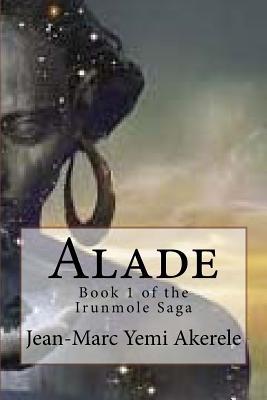
Overview
The novel is a dark, first-person metaphysical fantasy that blends Yoruba Orisha mythology, Kongo cosmology, Abrahamic angelology, and urban noir. It follows Alade Akeju, a prince of the hidden race of Omo Orisa in the dream-realm of Ile-Ife, who rejects his divine destiny, flees to the human world, becomes a powerful amoral “special consultant,” is destroyed by betrayal, imprisoned, corrupted into a soul-eating monster, and finally is reforged into a new god Alakharu, the Destroyer whose mandate is to oppose the cosmic balance.
The novel’s engine is a “game within a game”: the Orishas, the younger gods, and even the One God are all being manipulated by deeper forces, and Alade’s fall is engineered from before his birth.
Summary
Prologue
Alade reflects on his youth in Ile-Ife a “spiritual stasis” of orthodox belief, sheltered privilege as the youngest son, and growing restlessness. He describes hearing an alien “call,” leaving home, and his arrogant ascent and fall into “the Abyss.” He frames the book as the story of that fall.
Part 1: Separation
The cosmic frame. The Triple Being (Oludumare) awakens from cosmic sleep, finds creation unbalanced by the war between gods, and splits into components to restore equilibrium. We learn of the Irunmoles (401 original beings), the Orishas (256 chosen to maintain balance), the creation of Ile-Ife and the Omo Orisa, and the threat of the Interloper a self-created younger god who seeks to become the sole servant of the One God.
The conspiracy. Yemoja and Esu meet: Yemoja fears the Interloper is draining the Orishas’ worship-power; Esu gives her a portion of his chaotic power and tells her to forge a weapon. Yemoja calls her high priest Inioluwa Akeju, claims the sacrifice of his newborn son Alade, and seeds a dark, chaotic magic into the child corrupting his ase so that his despair will grow into a weapon.
Alade’s fall. Alade grows up gifted, arrogant, and increasingly disillusioned. In the temple of Nana Buukun he receives a vision of an alternate creation story (Ashe → Oludumare → Oron; Nana Buukun as Thought/Grandmother of divinities), learns the Orishas have concealed truths, and eventually flees Ile-Ife. He wanders Europe for centuries (Crusades, forging the sentient sword Akharu in Moses’ Burning Bush, slavery in America), learning to pass as human and gradually losing his ase.
Modern day. Alade becomes “the Grey Man,” a Washington D.C. fixer for the rich and amoral. His protégé Brian Batard betrays him, seizing his clients and business. On the subway he meets Raziel, avatar of Yemoja, who prophesies his fall, tells him he must “kill the old Alade,” and answers three questions. He is arrested (RICO), his assets seized, and his lawyer abandons him. Agent Reeves, an avatar of Esu, tells him his destruction is orchestrated and that he must descend into darkness and be reborn as the Destroyer. In court he sees his father Inioluwa in the gallery, then attacks Brian with dark ase, planting a seed of madness in him.
Prison. At CDF Alade befriends Tim, a hybrid with latent ase, cultivates Tim’s power, and eventually kills him stealing his ase via a DMT-induced trance. He meets D’Andre Rogers, a drug lord, and through him builds influence. At Lakeview federal prison he corrupts the Warden, meets Nino (Jose Perez Sanchez), a Colombian drug lord and secretly an initiated babalawo of Orunmila with True Sight. Nino reveals the Orishas are silent/fading and demands Alade lead him to Ile-Ife in exchange for access to the criminal underworld. A prophecy box brands Alade with a vision: “Darkness approaches… A weapon forged in pain / That the Destroyer will be reborn.” After his release, Alade works as a supernatural enforcer for Nino’s people a soul-eating “boogeyman” then breaks away, renaming himself Lucius and giving Nino his blood as a key to cross into Ile-Ife.
Recruitment. In the pocket realm of Georgia Avenue (a “nexus of nothingness” invisible to gods), Lucius gathers a “family”:
- Shawn a crack addict possessed by an Mwbiri demon, later revealed as a human/Omo Orisa hybrid.
- Sunshine a Kpelekpe (were-hyena) who becomes his lover.
- Samantha a Machlyes, an ancient hermaphrodite reality-shifter, last of its kind.
- Lulu (Mbilia Nsimba Kimpanzu) a 300-year-old Bokor of the Makaya sect, secretly the immortal daughter of the last king of Kongo, carrying the entire Kongo pantheon hidden inside her soul.
Lulu’s backstory. Her father, King Nzinga Elenke Kimpanzu, was seduced and destroyed by the Quandisa (fallen Goddess of Lust), sent by the Interloper causing the fall of Kongo. Lulu hid the Kongo gods within herself, was enslaved, and has lived for centuries, now forced to drink bourbon constantly as penance/libation to her gods. She reveals that Esu = Lungombe, the anti-creator half of Nzambi/Oludumare i.e., Esu is one aspect of the One God.
Lo the Nephilim. Lucius recruits Lo, a Nephilim with a seeded power like his own, who trains him in a timeless pocket dimension for what amounts to a hundred years teaching him to draw on and store vast power, to manipulate reality, and to combine his dark ase with a deeper power. In the end Lucius impales and consumes him with a spear of pure darkness, absorbing his power.
Part 2: Initiation
Lucius returns to Georgia Avenue to find seven years have passed; the Leopard Society (true shapeshifters, not the colonial-era cannibal cult) has taken over and his group has been hiding. He starts a war of extermination against the leopards to feed on death and despair, then ends it by negotiating a peace and creating a free state for supernaturals on Georgia Avenue. He proposes to Sunshine.
The Quandisa, now embedded in the community, manipulates a jealous leopard named Kilenga (whose mate Lucius killed in the war) into murdering Sunshine partly to force Lucius back onto the path of darkness, partly to free herself from the Interloper. Sunshine is ambushed and devoured.
Grief-stricken, Lucius captures the Quandisa (Lulu got there first and tortured her). The Quandisa reveals: Yemoja intends to rip the weapon from him when it matures he was always a tool; and Sunshine’s death was aided by a god-level agent of Yemoja. Enraged, Lucius’ power detonates; he seals himself in the pocket dimension where he killed Lo to avoid destroying his friends.
Part 3: Return
In the Cosmic Egg (the realm of Nana Buukun’s creation vision), Lucius is questioned by a thousand-mouthed presence (Nana Buukun). His old sword Akharu which had left him to fight in humanity’s wars arrives, and the two are shattered and reforged into a single new being: Alakharu, the Destroyer, whose mandate is to oppose the balance. “Even the balance must have balance.”
Alakharu returns, kills the Quandisa by absorbing her essence, frees the Kongo gods, and transforms Lulu into the Goddess Mbilia. He befriends the Interloper, who reveals he knelt to Esu because Esu is an aspect of the One God. Meanwhile, in Ile-Ife, the Omo Orisa conclave decides Alakharu must be destroyed; Inioluwa proposes a two-fold trap using “war captives” and a mysterious bait. Orunmila brings Nino into Ile-Ife to undergo apotheosis as the new Witness of Fate. Nana Buukun and Esu watch, preparing to leave this cosmos.
The book ends with Mbilia declining to join Alakharu immediately, telling him he is “Trimurti” and doesn’t yet understand his power and Samantha asking: “What exactly did you do to the Nephilim? And where is his body?”
Character Guide
Protagonist
- Alade Akeju → Lucius → Alakharu. Youngest son of the Akeju clan, consecrated to Yemoja before birth, seeded with dark chaotic power. Arrogant, sensual, brilliant, morally ambiguous. His arc: privileged believer → faithless exile → human-world fixer → betrayed prisoner → soul-eating monster → new god. His defining wound is that he was made to fall; his defining tragedy is Sunshine. He is neither hero nor villain a “Destroyer” mandated to oppose balance, sympathetic and monstrous at once.
The Akeju Family
- Inioluwa Akeju Alade’s father, high priest of Yemoja for 30,000+ years, unshakably faithful; gave his son as sacrifice. At the conclave he engineers the trap to stop Alakharu and his “bait” is clearly personal (likely Sunshine-related, or Alade’s own past). He weeps watching his son through a scrying pool.
- Isima Alade’s mother, a priestess of Esu; battle instructor, independent thinker, cryptic (“you also belong to me and my God”). A key unresolved thread her Esu connection may explain much.
The Orishas
- Yemoja Goddess of fresh waters; the architect of Alade’s fate; desperate, cunning, willing to sacrifice her “weapon’s” happiness.
- Esu / Lungombe God of Chaos, secretly one aspect of the Triple Being; the true game-master, giving power to Yemoja, the Interloper, the Kongo gods, and Lulu. His “chaos” is balance-maintenance by another name.
- Orunmila Witness of Fate, first servant of Oludumare; knows Esu’s true nature; orchestrates Nino’s apotheosis and his own merger with his “counterparts.”
- Nana Buukun Goddess of Thought and Magic, revealed as part of the Triple Being (female aspect), the “Grandmother of all Divinities” who shaped Ashe into Oludumare. She guides Alakharu’s rebirth.
- Obatala, Sango, Oya, Ogun, Osun, Osonyin, Oko, Ososi, Oke, Ori, Olulukun the pantheon, mostly in decline/stasis, with Obatala humiliated in single combat with the Interloper.
The Interloper’s Faction
- The Interloper self-created younger god; white-haired, time-manipulating, power-hungry but ultimately revealed as another destined counterpart of Alakharu. He cannot act on what he foresees (balance rule). Ends as Alakharu’s “friend” and near-equal.
- The Quandisa fallen Goddess of Lust; seduced and destroyed Kongo’s king; sent to watch/neutralize Alade; engineers Sunshine’s death; destroyed and absorbed by Alakharu.
- The Seraphim/angels and fallen gods his servants, including “Dying Gods” used to fuel his religion.
Alakharu’s Circle
- Sunshine Kpelekpe were-hyena; fierce, loving, possessive; killed to re-darken Alade. Her death is the pivot of Part 3.
- Shawn crack addict possessed by an Mwbiri; hybrid with latent ase; becomes Alakharu’s empowered lieutenant.
- Samantha Machlyes; ancient, gentle, hermaphroditic reality-shifter; provides transport, logistics, and moral grounding.
- Lulu / Mbilia Nsimba Kimpanzu Bokor, princess of Kongo, vessel of the Kongo pantheon; becomes the Goddess Mbilia; serves “both sides of the balance.”
- Lo Nephilim mentor; killed and consumed by Lucius; his missing body is the book’s final mystery.
- Raziel avatar of Yemoja; delivers prophecy; physically overpowers Alade when he defies her.
- Agent Reeves avatar of Esu; delivers the “kill the old Alade” message.
- Nino Colombian drug lord and Orunmila’s babalawo; True Sight; crosses into Ile-Ife and is chosen for apotheosis.
- D’Andre Rogers / Miguel prison and underworld contacts.
The Kongo Pantheon
Nzambi/Lungombe (the dual One God), Nkesi (gods/spirits), Kobayemede (King of the Dead, Disease), Mariguanda (Gatekeeper Life/Death), Ma’Lango (Water/Fertility), Nkuyu (Woods/Roads/Balance), Chola Wengue (Riches/Pleasure), Kimababula (Divination/Winds), Watariamba (Hunt/War), Ma’Kengue (Wisdom/Justice), Sarabanda (Work/Strength), Lubaniba (spirit of communication between veils). They hid inside Mbilia for 300 years and are freed by Alakharu.
Ile-Ife
- Teju (high priestess of Oya) allies with Inioluwa.
- Tunji (Obatala), Kole (Ogun), Tade (Ososi), Folusha (Olukun), Ronke (Oko), Abodurin (Ori) conclave faction leaders.
- Laiye high priest of Orunmila, prepares Nino’s transformation.
4. Themes & Analysis
The Manipulation of Destiny
Every major character is a pawn: Alade is seeded before birth; Lulu is bound by her gods; the Interloper is bound by Esu; even Yemoja is being played. The novel asks whether “destiny” is divine will or a con imposed by those with power. Alade’s rebellion “no one controls Alade, not even the Gods” is ironically the most predestined act of all.
Gods as Bureaucrats, Not Saviors
The Orishas are petty, lazy, jealous, and dependent on worship. The novel demythologizes divinity: gods are energy parasites, and “heaven” is a political arena. The Interloper’s monotheistic project is critique of religious conquest; Yemoja’s “good” cause is equally cynical.
The Triple Being and the Theology of Balance
The book’s metaphysical core: Ashe → Oludumare (Order/neutral creator) + Esu/Lungombe (Chaos/anti-creator) + Nana Buukun (Thought/Magic) a triple, not a duality. Balance requires opposition; a universe of only balance-servants is itself unbalanced. Hence Alakharu, the Destroyer, is necessary. This inverts standard fantasy morality: the “villain’s” function is cosmically essential.
Corruption, Ase, and Dark Ase
ase is earned through moral action and service; dark ase grows through despair, betrayal, and predation. Alade’s power literally feeds on suffering an allegory for how trauma and power intertwine. His tragedy is that the system that made him corrupts him by design.
Love as Vulnerability and Weapon
Sunshine is Alade’s redemption her love makes the darkness recede. Therefore Yemoja’s faction must destroy her to restore the weapon. The novel treats love as the one force that can rebalance the cosmic game and thus the one thing the powerful will kill to control. The final “bait” Inioluwa holds is almost certainly connected to Sunshine.
The Leopard Society and Colonial Critique
The novel rewrites colonial-era “Leopard Society” cannibal panics as a distortion of a true shapeshifter race, and parallels the Kongo kingdom’s fall with the Interloper’s monotheistic conquest a critique of how colonialism weaponized religion and erased African spiritual systems. Lulu’s enslavement and the Middle Passage sequence explicitly tie cosmic war to real history.
Identity, Names, and Rebirth
Alade (“the crowned one”) → Lucius (the outsider who chose his own name) → Alakharu (the Destroyer, fused with Akharu the sword). Names are masks; identity is mutable. “You must kill the old Alade” is the book’s thesis: transformation requires annihilation.
The Problem of Memory and Truth
The Nana Buukun temple vision gives an alternate creation myth history is controlled by the powerful. Lulu’s and Alade’s stories “compare notes,” revealing Esu’s fingerprints everywhere. Knowledge is dangerous; forgetting is bondage.
Style and Structure
- First-person retrospective narration confessional, sardonic, self-aware. Alade addresses the reader directly (“Well therein lies my tale”), with heavy foreshadowing and irony.
- Frame narration: The Prologue and interlude asides create a memoir-like tone, though the narrator’s knowledge shifts as he becomes Alakharu.
- Pacing: Part 1 is slow-burn cosmic setup; Part 2 is prison/crime procedural; Part 3 accelerates into apocalyptic god-war. Some readers may find the middle sections digressive (long Lulu backstory, extended training montage).
- Genre hybrid: Mythic fantasy + urban fantasy + prison noir + metaphysical essay. Dense exposition, extended dialogue on theology and creation.
- Weaknesses: Repetitive interior monologue; occasional typos/OCR errors in text; heavy exposition; abrupt POV shifts (e.g., Brian’s death scene, Yemoja interludes); the Interloper’s rapid conversion to “friend” is under-earned.
- Strengths: Inventive cosmology; genuinely original monsters (Machlyes, Kpelekpe, Mwbiri); strong tragic romance; a morally complex protagonist; vivid set pieces (Burning Bush forging, Georgia Avenue pocket realm, Cosmic Egg reforging).
Key Conflicts & Unresolved Threads (Setup for Book 2)
- Inioluwa’s trap the conclave empowers two “war captives” to hunt and neutralize Alakharu, and Inioluwa’s secret “bait” is meant to make Alakharu surrender and be imprisoned in the Maze of Mirrors. What is the bait? (Probably Sunshine restored, or her soul.)
- Yemoja’s betrayal Alakharu now knows she had Sunshine killed and planned to harvest him. The reckoning is pending.
- Lo’s missing body Samantha’s final question implies Alakharu may have done something to Lo beyond killing him (absorbed him incompletely? created something?). This is the cliffhanger.
- Orunmila’s apotheosis Nino is to drink Alade’s blood and become the new Witness of Fate; Orunmila will merge with his “counterparts.”
- The Interloper’s transformation he is becoming Alakharu’s equal/counterpart (a second aspect).
- The Triple Being’s departure Nana Buukun and Esu intend to leave this cosmos; the younger gods will be left to maintain it.
- Mbilia and the Kongo gods restored but relocated to a hidden realm; they will aid Alakharu “when the time comes.”
- Brian Batard carrying Alakharu’s seed of madness; a loose end for vengeance.
- Tim’s fate catatonic; his stolen ase is part of Alakharu.
- The Omo Orisa their ase is failing as the Orishas fade; Ile-Ife is destabilizing.
Quick Reference: Cosmology
| Concept | Meaning |
| Ashe | Primal creative force before creation |
| Oludumare | The Triple Being / One God (also Nzambi) |
| Esu / Lungombe | Chaos aspect / Anti-Creator; secretly one with Oludumare |
| Nana Buukun | Thought/Magic; female aspect; grandmother of divinities |
| Irunmoles | 401 original beings; 256 became Orishas |
| Orishas | Gods maintaining balance; worship-dependent |
| Ase | Personal spiritual power earned by moral service |
| Dark Ase | Corrupted ase grown through despair and predation |
| Ile-Ife | Dream-realm home of the Omo Orisa |
| Omo Orisa | Created guardian race, bound to the Orishas |
| Ajogun | Beneficial/detrimental universal forces controlled by Esu |
| Interloper | Self-created younger god seeking sole worship |
| Younger Gods | Gods born from human worship, challenging the Orishas |
| The Destroyer | Alakharu mandated to oppose the balance itself |
Conclusion
Alade is an ambitious, philosophically dense dark fantasy that treats African traditional religion not as folklore decoration but as a living metaphysical system then interrogates and weaponizes it. Its protagonist’s journey from entitled prince to broken exile to cosmic monster is compelling, and the “game within a game” structure (Esu/Oludumare/Nana Buukun manipulating everyone) gives the book real intellectual bite. Its weaknesses repetition, exposition-heavy dialogue, uneven pacing are real, but the central tragedy (a man engineered to fall, who finds love only to have it murdered to re-arm him) lands. The ending sets up a sequel with strong momentum: Alakharu vs. his own family, with the fate of two pantheons and a dying dream-realm in the balance.