
Overview
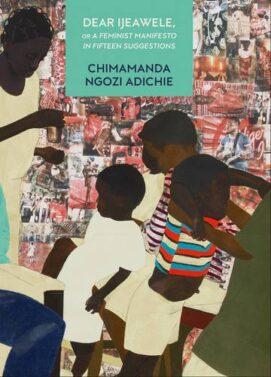
Dear Ijeawele, or a Feminist Manifesto in Fifteen Suggestions is a 2017 book by Nigerian author Chimamanda Ngozi Adichie. It is an expanded version of a letter Adichie wrote as a Facebook post on October 12, 2016, in response to her childhood friend Ijeawele, who had asked her how to raise her newborn daughter, Chizalum Adaora, as a feminist. The book is structured as a personal letter offering fifteen practical, context-specific suggestions for feminist parenting.
The book is dedicated to Uju Egonu and to Adichie’s “baby sis,” Ogechukwu Ikemelu. At the time of writing the expanded version, Adichie herself had become the mother of a baby girl, which she acknowledges adds a new layer of humility to the advice she dispenses.
Context and Framing
Adichie opens by explaining that when her friend first asked her how to raise a feminist daughter, she initially felt the task was too huge and that she did not know. However, she had spoken publicly about feminism, cared for many babies of loved ones, worked as a babysitter, helped raise nephews and nieces, and done extensive watching, listening, and thinking. She decided to write a letter that would be honest and practical while serving as a map of her own feminist thinking.
She acknowledges that now that she is a mother herself, she realizes how easy it is to dispense advice when not facing the complex reality of parenting. Still, she believes it is morally urgent to have honest conversations about raising children differently and creating a fairer world for women and men. Her friend replied that she would “try” to follow the suggestions, and Adichie, rereading them as a mother, is also determined to try.
The Two Feminist Tools
Before presenting her fifteen suggestions, Adichie offers two foundational “Feminist Tools” that form the starting point for her approach:
Tool 1: The Premise
Your solid, unbending belief should be: I matter. I matter equally. Not “if only.” Not “as long as.” I matter equally. Full stop.
Tool 2: The Reversal Question
Can you reverse X and get the same results? For example, if a husband’s infidelity is forgiven, would the same be true if the wife were unfaithful? If the answer is yes, then forgiveness can be a feminist choice because it is not shaped by gender inequality. In most marriages, the answer would be no, and the reason would be gender-based the absurd idea that “men will be men,” which means having a lower standard for men.
Adichie emphasizes that feminism is always contextual for her; she has no set-in-stone rules. She also warns that even if her friend does everything suggested, Chizalum may still turn out different from what was hoped, because “sometimes life just does its thing.” What matters is that you try, and always trust your instincts above all else, guided by love for the child.
The Fifteen Suggestions
First Suggestion: Be a Full Person
Adichie urges her friend not to define herself solely by motherhood. Motherhood is a glorious gift, but a woman should remain a full person. She cites American journalist Marlene Sanders, the first woman to report from Vietnam during the war, who advised: “Never apologize for working. You love what you do, and loving what you do is a great gift to give your child.”
Adichie notes that the friend’s sister-in-law says she should be a “traditional” mother and stay home because Chudi can afford a single-income family. Adichie responds that people selectively use “tradition” to justify anything. She points out that a double-income family is actually the true Igbo tradition, since mothers farmed and traded before British colonialism, and trading was exclusively done by women in some parts of Igboland. She advises ignoring such opinions, rejecting the idea that motherhood and work are mutually exclusive.
She encourages the new mother to be kind to herself, ask for help, expect to be helped, and give herself room to fail. There is no such thing as a Superwoman. Parenting is about practice and love. She criticizes the modern middle-class phenomenon of “parenting” as an endless, anxious journey of guilt. Above all, the focus should be on remaining a full person taking time for oneself and nurturing one’s own needs.
Adichie rejects the cultural celebration of women who “do it all,” noting that this praise assumes caregiving and domestic work are singularly female domains. She argues that domestic work and caregiving should be gender-neutral, and the question should not be whether a woman can “do it all” but how best to support parents in their dual duties at work and home.
Second Suggestion: Do It Together
Adichie reminds her friend that a father is as much a verb as a mother. Chudi should do everything biology allows which is everything but breastfeeding. She warns that mothers, conditioned to be all and do all, are often complicit in diminishing fathers’ roles. Even if Chudi doesn’t bathe the baby exactly as the mother would like, “what is the worst that can happen? She won’t die at the hands of her father.”
She advises arresting perfectionism, stilling the socially conditioned sense of duty, and sharing child care equally. “Equally” doesn’t have to mean literal fifty-fifty or day-by-day scorekeeping, but true equality will be evident by the absence of resentment. She rejects the language of “help” Chudi is not “helping” by caring for his child; he is doing what he should. Fathers are not “babysitting” people who babysit are people for whom the baby is not a primary responsibility.
Chudi does not deserve special gratitude or praise, nor does the mother both made the choice to bring a child into the world, and responsibility belongs equally to both. She notes that this would be different for a single mother, but one should not be a “single mother” unless truly a single mother. Her friend Nwabu, whose wife left when his children were young, called himself “Mr Mum,” but he was not being a “Mr Mum” he was simply being a dad.
Third Suggestion: Reject Gender Roles
Adichie teaches that the idea of “gender roles” is absolute nonsense. Never tell a child she should or should not do something because she is a girl. “Because you are a girl” is never a reason for anything. Ever.
She recalls being told as a child to “bend down properly while sweeping, like a girl,” which implied sweeping was about being female. She wishes she had been told simply to bend down and sweep properly to clean the floor better and wishes her brothers had been told the same.
She discusses Nigerian social media debates about women and cooking, how wives have to cook for husbands. She finds it sad and funny that cooking is still treated as a marriageability test for women. The knowledge of cooking does not come pre-installed in a vagina. Cooking is learned. Domestic work is a life skill both men and women should have.
She questions the idea of marriage as a prize to women, which is the basis of these absurd debates. If we stop conditioning women to see marriage as a prize, there would be fewer debates about a wife needing to cook to earn that prize.
Adichie shares a personal anecdote about buying a blue outfit for Chizalum from the boys’ section because she thought blue would be adorable against her brown skin and photograph better. At the checkout, the cashier said it was the perfect present for a new boy. When Adichie said it was for a baby girl, the cashier looked horrified: “Blue for a girl?” Adichie wonders about the clever marketing person who invented the pink-blue binary and criticizes the “gender-neutral” section as silly because it is premised on the idea of male being blue and female being pink.
She observes that toys for boys are mostly active (trains, cars) while toys for girls are mostly passive (dolls). She recalls a seven-year-old Nigerian girl who saw a toy helicopter and asked for one; her mother said, “No, you have your dolls.” The girl responded, “Mummy, is it only dolls I will play with?” Adichie wonders if the girl could have become a revolutionary engineer had she been given the chance to explore that helicopter.
She tells of a young Nigerian woman who behaved “like a boy” liked football, was bored by dresses until her mother forced her to stop her “boyish” interests. Now she is grateful to her mother for helping her start behaving like a girl. Adichie found the story sad, wondering what parts of herself she had silenced and stifled, because what she called “behaving like a boy” was simply behaving like herself.
Another acquaintance in the Pacific Northwest noticed at a baby playgroup that mothers of baby girls were very restraining, constantly saying “don’t touch” or “stop and be nice,” while baby boys were encouraged to explore more and were almost never told to “be nice.” Her theory was that parents unconsciously start very early to teach girls how to be baby girls are given less room and more rules, baby boys more room and fewer rules.
Adichie concludes that gender roles are so deeply conditioned that we often follow them even when they chafe against our true desires, needs, and happiness. She urges teaching self-reliance, telling Chizalum it is important to do for herself and fend for herself, to try to fix physical things when they break. Buy her toys like blocks and trains and dolls, too, if desired.
Fourth Suggestion: Beware Feminism Lite
Adichie warns against “Feminism Lite” the idea of conditional female equality. She rejects this entirely as hollow, appeasing, and bankrupt. Being a feminist is like being pregnant: you either are or you are not. You either believe in the full equality of men and women or you do not.
Feminism Lite uses analogies like “he is the head and you are the neck” or “he is driving but you are in the front seat.” More troubling is the idea that men are naturally superior but should be expected to “treat women well.” There must be more than male benevolence as the basis for a woman’s well-being.
Feminism Lite uses the language of “allowing.” Theresa May is the British prime minister, and a progressive British newspaper described her husband: “Philip May is known in politics as a man who has taken a back seat and allowed his wife, Theresa, to shine.” Adichie asks us to reverse it: “Theresa May has allowed her husband to shine.” Does that make sense? If Philip May were prime minister, we might hear that his wife had “supported” him from the background, or was “behind” him, or “stood by his side,” but never that she had “allowed” him to shine.
“Allow” is a troubling word it is about power. Members of the Nigerian chapter of the Society of Feminism Lite say, “Leave the woman alone to do what she wants as long as her husband allows.” A husband is not a headmaster. A wife is not a schoolgirl. Permission and being allowed, when used one-sidedly, should never be the language of an equal marriage.
Another example: men who say, “Of course a wife does not always have to do the domestic work, I did domestic work when my wife travelled.”
Adichie recalls a badly written piece about her that accused her of being “angry,” as though being angry were something to be ashamed of. Of course she is angry about racism and sexism. But she recently realized she is angrier about sexism than racism because in her anger about sexism, she often feels lonely. She loves and lives among many people who easily acknowledge race injustice but not gender injustice. People she cares about have expected her to “prove” sexism while never having the same expectation for racism.
She mentions their friend Ikenga, who is always quick to deny that anything is caused by misogyny, never interested in listening or engaging, always eager to explain how it is in fact women who are privileged. He once said, “Even though the general idea is that my father is in charge at our home, it’s my mother who is really in charge behind the scenes.” He thought he was refuting sexism, but he was making her case. Why “behind the scenes”? If a woman has power, why do we need to disguise that she has power?
Adichie observes that our world is full of men and women who do not like powerful women. We have been conditioned to think of power as male, so a powerful woman is an aberration and is policed. We ask of powerful women: Is she humble? Does she smile? Is she grateful enough? Does she have a domestic side? Questions we do not ask of powerful men. This shows our discomfort is not with power itself but with women. We judge powerful women more harshly than powerful men, and Feminism Lite enables this.
Fifth Suggestion: Teach Her to Read
Adichie urges teaching Chizalum to read and love books, primarily by casual example. If she sees you reading, she will understand that reading is valuable. Even if she never went to school and merely read books, she would arguably become more knowledgeable than a conventionally educated child. Books help her understand and question the world, express herself, and succeed in whatever she wants to become chef, scientist, singer all benefit from reading skills.
She means books that have nothing to do with school: autobiographies, novels, histories. If all else fails, pay her to read. She tells of Angela, a remarkable Nigerian single mother in the United States, whose child did not take to reading, so she paid her five cents per page. An expensive endeavor, she later joked, but a worthy investment.
Sixth Suggestion: Teach Her to Question Language
Language is the repository of our prejudices, beliefs, and assumptions. To teach her that, you must question your own language. A friend says she will never call her daughter “princess” because it is loaded with assumptions of a girl’s delicacy, of the prince who will come to save her. The friend prefers “angel” and “star.”
Adichie advises deciding what you will not say to your child, because what you say teaches her what to value. She used to say the Igbo joke to tease girls: “What are you doing? Don’t you know you are old enough to find a husband?” Now she chooses to say, “You are old enough to find a job,” because she does not believe marriage is something girls should be taught to aspire to.
She advises against using words like “misogyny” and “patriarchy” too often jargon can feel too abstract. Don’t just label something misogynistic; tell her why it is and what would make it not be.
Teach her that if you criticize X in women but not in men, then you do not have a problem with X; you have a problem with women. For X, insert words like anger, ambition, loudness, stubbornness, coldness, ruthlessness.
Teach her to ask: What are the things women cannot do because they are women? Do these things have cultural prestige? If so, why are only men allowed to do the things that have cultural prestige?
Use everyday examples. Remember the television commercial where a man cooks and his wife claps for him? True progress is when she doesn’t clap for him but just reacts to the food itself she can praise or not praise the food, just as he can praise or not praise hers. What is sexist is that she is praising the fact that he has undertaken the act of cooking, praise that implies cooking is inherently a female act.
Remember the mechanic in Lagos described as a “lady mechanic” in a newspaper profile? Teach Chizalum that the woman is a mechanic, not a “lady mechanic.”
Point out how wrong it is that a man who hits your car in Lagos traffic gets out and tells you to go and bring your husband because he “can’t deal with a woman.”
Show her with examples that misogyny can be overt and subtle, and both are abhorrent.
Teach her to question men who can have empathy for women only if they see them as relational rather than as individual equal humans men who, when discussing rape, say “if it were my daughter or wife or sister.” Such men do not need to imagine a male victim of crime as a brother or son to feel empathy. Teach her to question the idea of women as a special species. An American politician once spoke of how women should be “revered” and “championed” a sentiment that is all too common. Tell Chizalum that women don’t need to be championed and revered; they just need to be treated as equal human beings. There is a patronizing undertone to the idea of women needing to be “championed and revered” because they are women it recalls chivalry, whose premise is female weakness.
Seventh Suggestion: Never Speak of Marriage as an Achievement
Adichie insists that marriage is not an achievement, nor is it what a girl should aspire to. A marriage can be happy or unhappy, but it is not an achievement.
We condition girls to aspire to marriage and do not condition boys to aspire to marriage, creating a terrible imbalance at the start. Girls grow up preoccupied with marriage; boys grow up not preoccupied with marriage. The women marry those men. The relationship is automatically uneven because the institution matters more to one than the other. Is it any wonder that in so many marriages women sacrifice more, at a loss to themselves, because they have to constantly maintain an uneven exchange? One consequence is the shabby and familiar phenomenon of two women publicly fighting over a man while the man remains silent.
When Hillary Clinton was running for president, the first descriptor on her Twitter account was “Wife.” The first descriptor on Bill Clinton’s account is “Founder,” not “Husband.” Adichie has an unreasonable affection for the very few men who use “husband” as their first descriptor. It feels normal that Hillary would define herself as a wife while he doesn’t define himself as a husband because it is so common our world still largely values a woman’s marital and maternal roles more than anything else.
After marrying Bill Clinton in 1975, Hillary kept her name, Hillary Rodham. Eventually she began to add Clinton and then dropped Rodham because of political pressure her husband would lose voters offended that his wife had kept her name. Adichie thought not only of American voters’ retrograde marital expectations but of her own experience with her name.
She recalls how a journalist unilaterally decided to give her a new name Mrs Husband’s Surname on learning she was married, and how she asked him to stop because that was not her name. She will never forget the smoldering hostility from some Nigerian women in response. There was more hostility from women than from men, many of whom insisted on calling her what was not her name, as though to silence her voice. Perhaps for many of them, her choice represented a challenge to their idea of the norm.
Even some friends said, “You are successful and so it is OK to keep your name.” This made her wonder: why does a woman have to be successful at work to justify keeping her name? The truth is she has not kept her name because she is successful. Had she not been published and widely read, she would still have kept her name. She kept it because it is her name, because she likes her name.
People say, “Well, your name is also about patriarchy because it is your father’s name.” Indeed. But whether it came from her father or from the moon, it is the name she has had since birth, the name with which she traveled life’s milestones, the name she answered to on her first day of kindergarten in Nsukka on a hazy morning when her teacher said, “Answer ‘present’ if you hear your name. Number one: Adichie!”
Every woman should have the choice of keeping her name, but there is overwhelming societal pressure to conform. There are women who want to take their husband’s name, but there are women who do not want to conform yet for whom the required energy mental, emotional, even physical is too much. How many men would be willing to change their name on getting married?
Adichie dislikes the title “Mrs” because Nigerian society gives it too much value. She has observed too many cases of men and women who proudly speak of the title of Mrs as though those who are not Mrs have somehow failed. Mrs can be a choice, but to infuse it with as much value as our culture does is disturbing. The value we give to Mrs means marriage changes the social status of a woman but not that of a man. (Is that perhaps why many women complain of married men still “acting” as though they were single? Perhaps if society asked married men to change their names and take on a new title different from Mr, their behavior might change as well? Ha!) But more seriously, if a twenty-eight-year-old master’s degree holder goes overnight from Ijeawele Eze to Mrs Ijeawele Udegbunam, surely it requires not just the mental energy of changing passports and licenses but also a psychic change, a new “becoming.” This new “becoming” would not matter so much if men, too, had to undergo it.
She prefers “Ms” because it is similar to “Mr.” A man is Mr whether married or not; a woman is Ms whether married or not. Teach Chizalum that in a truly just society, women should not be expected to make marriage-based changes that men are not expected to make. A nifty solution: each couple that marries should take on an entirely new surname, chosen however they want as long as both agree, so that a day after the wedding, both husband and wife can hold hands and joyfully journey off to the municipal offices to change their passports, driver’s licenses, signatures, initials, bank accounts, etc.
Eighth Suggestion: Teach Her to Reject Likeability
Adichie teaches that a girl’s job is not to make herself likeable; her job is to be her full self a self that is honest and aware of the equal humanity of other people.
She recalls how upsetting it was that their friend Chioma would often tell her that “people” would not “like” something she wanted to say or do. She always felt from Chioma the unspoken pressure to change herself to fit some mold that would please an amorphous entity called “people.” It was upsetting because we want those close to us to encourage us to be our most authentic selves.
Do not ever put this pressure on your daughter. We teach girls to be likeable, to be nice, to be false. We do not teach boys the same. This is dangerous. Many sexual predators have capitalized on this. Many girls remain silent when abused because they want to be nice. Many girls spend too much time trying to be “nice” to people who do them harm. Many girls think of the “feelings” of those hurting them. This is the catastrophic consequence of likeability. We have a world full of women unable to exhale fully because they have for so long been conditioned to fold themselves into shapes to make themselves likeable.
Instead of teaching Chizalum to be likeable, teach her to be honest. And kind. And brave. Encourage her to speak her mind, to say what she really thinks, to speak truthfully. Praise her when she does. Praise her especially when she takes a difficult or unpopular stand because it happens to be her honest position.
Tell her kindness matters. Praise her when she is kind. But teach her that her kindness must never be taken for granted. Tell her she too deserves the kindness of others. Teach her to stand up for what is hers. If another child takes her toy without permission, ask her to take it back, because her consent is important. Tell her that if anything makes her uncomfortable, to speak up, to say it, to shout.
Show her that she does not need to be liked by everyone. Tell her that if someone does not like her, there will be someone else who will. Teach her that she is not merely an object to be liked or disliked; she is also a subject who can like or dislike. In her teenage years, if she comes home crying about boys who don’t like her, let her know she can choose not to like those boys yes, it’s hard, remembering Adichie’s own crush on Nnamdi in secondary school, but still she wishes somebody had told her this.
Ninth Suggestion: Give Her a Sense of Identity
Adichie urges giving Chizalum a deliberate sense of identity. Let her grow up thinking of herself as, among other things, a proud Igbo woman. Be selective teach her to embrace the beautiful parts of Igbo culture and reject the parts that are not.
You can say: “Igbo culture is lovely because it values community and consensus and hard work, and the language and proverbs are beautiful and full of great wisdom. But Igbo culture also teaches that a woman cannot do certain things just because she’s a woman, and that is wrong. Igbo culture also focuses a little too much on materialism, and while money is important because money means self-reliance you must not value people based on who has money and who does not.”
Be deliberate about showing her the enduring beauty and resilience of Africans and black people. Because of global power dynamics, she will grow up seeing images of white beauty, white ability, and white achievement, no matter where she is. It will be in TV shows, popular culture, and books. She will also probably see many negative images of blackness and Africans.
Teach her to take pride in the history of Africans and the black diaspora. Find black heroes, men and women, in history. They exist. You might have to counter some things she learns in school the Nigerian curriculum isn’t infused with teaching children to have pride in their history. Her teachers will be fantastic at teaching mathematics, science, art, and music, but you will have to do the pride-teaching yourself.
Teach her about privilege and inequality and the importance of giving dignity to everyone who does not mean her harm teach her that the household help is human just like her, teach her always to greet the driver. Link these expectations to her identity for example, “In our family, when you are a child, you greet those older than you no matter what job they do.”
Give her an Igbo nickname. When Adichie was growing up, her Aunty Gladys called her Ada Obodo Dike. She always loved that. Apparently her village, EziAbba, is known as the Land of Warriors, and to be called Daughter of the Land of Warriors was deliciously heady.
Tenth Suggestion: Be Deliberate About Appearance
Adichie advises being deliberate about how you engage with Chizalum and her appearance. Encourage her participation in sports. Teach her to be physically active. Take walks, swim, run, play tennis, football, table tennis all kinds of sports. This is important not only for obvious health benefits but because it can help with body-image insecurities the world thrusts on girls.
Studies show girls generally stop playing sports as puberty arrives. Not surprising breasts and self-consciousness can get in the way. Adichie stopped playing football when her breasts first appeared because all she wanted to do was hide their existence, and running and tackling didn’t help. Try not to let that get in Chizalum’s way.
If she likes make-up, let her wear it. If she likes fashion, let her dress up. But if she doesn’t like either, let her be. Don’t think raising her feminist means forcing her to reject femininity. Feminism and femininity are not mutually exclusive. It is misogynistic to suggest they are. Women have learned to be ashamed and apologetic about pursuits seen as traditionally female, such as fashion and make-up. But society does not expect men to feel ashamed of pursuits considered generally male sports cars, certain professional sports. Men’s grooming is never suspect the way women’s grooming is a well-dressed man does not worry that because he is dressed well, assumptions might be made about his intelligence, ability, or seriousness. A woman, on the other hand, is always aware of how a bright lipstick or a carefully put-together outfit might make others assume her to be frivolous.
Never link Chizalum’s appearance with morality. Never tell her a short skirt is “immoral.” Make dressing a question of taste and attractiveness instead of morality. If you clash over what she wants to wear, never say things like “You look like a prostitute,” as Ijeawele’s mother once told her. Instead say: “That dress doesn’t flatter you like this other one,” or doesn’t fit as well, or doesn’t look as attractive, or is simply ugly. But never “immoral.” Clothes have absolutely nothing to do with morality.
Try not to link hair with pain. Adichie thinks of her childhood and how often she cried while her dense long hair was being plaited, how a packet of Smarties was kept in front of her as a reward if she sat through having her hair done. And for what? Imagine if they had not spent so many Saturdays of childhood and teenagehood doing their hair. What might they have learned? In what ways might they have grown? What did boys do on Saturdays?
With her hair, redefine “neat.” Part of the reason hair is about pain for so many girls is that adults are determined to conform to a version of “neat” that means Too Tight and Scalp-Destroying and Headache-Infusing. We need to stop. Adichie has seen girls in Nigerian schools being terribly harassed for their hair not being “neat,” merely because some of their God-given hair had curled up in glorious tight little balls at their temples. Make Chizalum’s hair loose big plaits and big cornrows and don’t use a tiny-toothed comb that wasn’t made with our hair texture in mind. Make that your definition of neat. Go to her school and talk to the administration if you have to. It takes one person to make change happen.
Chizalum will notice very early because children are perceptive what kind of beauty the mainstream world values. She will see it in magazines, films, and television. She will see that whiteness is valued. She will notice that the hair texture valued is straight or swingy, and hair that is valued falls down rather than stands up. She will encounter these values whether you like it or not. So create alternatives for her to see. Let her know that slim white women are beautiful, and that non-slim, non-white women are beautiful. Let her know there are many individuals and cultures that do not find the narrow mainstream definition of beauty attractive. You will know your child best and so will know best how to affirm her own kind of beauty, how to protect her from looking at her own reflection with dissatisfaction.
Surround her with a village of aunties women who have qualities you’d like her to admire. Talk about how much you admire them. Children copy and learn from example. Adichie particularly admires the African American feminist Florynce Kennedy. Some African women she would tell Chizalum about are Ama Ata Aidoo, Dora Akunyili, Muthoni Likimani, Ngozi Okonjo-Iweala, and Taiwo Ajai-Lycett. There are so many African women who are sources of feminist inspiration because of what they have done and because of what they have refused to do. Like Ijeawele’s grandmother, that remarkable, strong, sharp-tongued babe.
Surround Chizalum, too, with a village of uncles. This will be harder, judging from the kind of friends Chudi has. Adichie still cannot get over that blustering man with the over-carved beard who kept saying at Chudi’s last birthday party, “Any woman I marry cannot tell me what to do!!” So find some good non-blustering men men like Ijeawele’s brother Ugomba, men like their friend Chinakueze. She will encounter a lot of male bluster in her life, so it is good to have alternatives from very early on.
Adichie cannot overstate the power of alternatives. Chizalum can counter ideas about static “gender roles” if she has been empowered by familiarity with alternatives. If she knows an uncle who cooks well and does so with indifference then she can smile and brush off the foolishness of somebody who claims “women must do the cooking.”
Eleventh Suggestion: Question Biology as Justification for Social Norms
Adichie teaches Chizalum to question our culture’s selective use of biology as “reasons” for social norms.
She knows a Yoruba woman married to an Igbo man who was pregnant with her first child and thinking of first names. All the names were Igbo. Shouldn’t her children have Yoruba first names since they would have their father’s Igbo surname? Adichie asked, and the woman said, “A child first belongs to the father. It has to be that way.”
We often use biology to explain men’s privileges, the most common reason being men’s physical superiority. It is true that men are generally physically stronger than women. But if we truly depended on biology as the root of social norms, then children would be identified as their mother’s rather than their father’s, because when a child is born, the parent we are biologically and incontrovertibly certain of is the mother. We assume the father is who the mother says the father is. How many lineages all over the world are not biological?
For many Igbo women, the conditioning is so complete that women think of children only as the father’s. Adichie knows of women who have left bad marriages but not been “allowed” to take or even see their children because the children belong to the man.
We also use evolutionary biology to explain male promiscuity but not female promiscuity, even though it really makes evolutionary sense for women to have many sexual partners the larger the genetic pool, the greater the chances of bearing offspring who will thrive.
Teach Chizalum that biology is an interesting and fascinating subject, but she should never accept it as justification for any social norm. Social norms are created by human beings, and there is no social norm that cannot be changed.
Twelfth Suggestion: Talk About Sex, and Start Early
Adichie advises talking to Chizalum about sex and starting early. It will probably be awkward but is necessary.
She recalls a seminar in class 3 where they were supposed to be taught about “sexuality” but instead listened to vague semi-threats about how “talking to boys” would end up with them pregnant and disgraced. She remembers that hall and seminar as a place filled with shame. Ugly shame. The particular brand of shame that has to do with being female. May Chizalum never encounter it.
Don’t pretend sex is merely a controlled act of reproduction or an “only in marriage” act, because that is disingenuous. (Ijeawele and Chudi were having sex long before marriage, and Chizalum will probably know this by the time she is twelve.) Tell her sex can be a beautiful thing and that, apart from obvious physical consequences (for her as the woman!), it can also have emotional consequences. Tell her her body belongs to her and her alone, that she should never feel the need to say yes to something she does not want or feels pressured to do. Teach her that saying no when no feels right is something to be proud of.
Tell her you think it’s best to wait until she is an adult before she has sex. But be prepared because she might not wait until she’s eighteen. And if she doesn’t wait, you have to make sure she is able to tell you that she hasn’t.
It’s not enough to say you want to raise a daughter who can tell you anything; you have to give her the language to talk to you. Literally what should she call it? What word should she use? Adichie remembers people used “ike” when she was a child to mean both “anus” and “vagina”; “anus” was the easier meaning, but it left everything vague, and she never quite knew how to say, for example, that she had an itch in her vagina.
Most childhood development experts say it is best to have children call sexual organs by their proper biological names vagina and penis. Adichie agrees, but that is a decision the parents have to make. Decide what name you want her to call it, but there must be a name, and it cannot be a name weighed down with shame.
To make sure she doesn’t inherit shame from you, you have to free yourself of your own inherited shame. Adichie knows how terribly difficult that is. In every culture in the world, female sexuality is about shame. Even cultures that expect women to be sexy like many in the West still do not expect them to be sexual.
The shame we attach to female sexuality is about control. Many cultures and religions control women’s bodies in one way or another. If the justification for controlling women’s bodies were about women themselves, it would be understandable if, for example, the reason was “women should not wear short skirts because they can get cancer if they do.” Instead the reason is not about women but about men. Women must be “covered up” to protect men. Adichie finds this deeply dehumanizing because it reduces women to mere props used to manage the appetites of men.
Speaking of shame never, ever link sexuality and shame. Or nakedness and shame. Do not ever make “virginity” a focus. Every conversation about virginity becomes a conversation about shame. Teach her to reject the linking of shame and female biology. Why were we raised to speak in low tones about periods? To be filled with shame if menstrual blood stained our skirt? Periods are nothing to be ashamed of. Periods are normal and natural, and the human species would not be here if periods did not exist. Adichie remembers a man who said a period was like shit. “Well, sacred shit,” she told him, “because you wouldn’t be here if periods didn’t happen.”
Thirteenth Suggestion: Romance Will Happen, So Be on Board
Adichie writes assuming Chizalum is heterosexual she might not be, obviously but she assumes that because it is what she feels best equipped to talk about.
Make sure you are aware of the romance in her life. The only way is to start very early giving her the language to talk to you not only about sex but also about love. This doesn’t mean you should be her “friend”; it means you should be her mother to whom she can talk about everything.
Teach her that to love is not only to give but also to take. This is important because we give girls subtle cues about their lives we teach girls that a large component of their ability to love is their ability to sacrifice their selves. We do not teach this to boys. Teach her that to love she must give of herself emotionally but she must also expect to be given to.
Adichie thinks love is the most important thing in life whatever kind, however defined but she thinks of it generally as being greatly valued by another human being and greatly valuing another human being. But why do we raise only one half of the world to value this? She was recently in a roomful of young women and was struck by how much of the conversation was about men what terrible things men had done to them, this man cheated, this man lied, this man promised marriage and disappeared, this husband did this and that. She realized sadly that the reverse is not true. A roomful of men do not invariably end up talking about women and if they do, it is more likely in flippant terms rather than as lamentations of life. Why?
It goes back to early conditioning. At a recent baby’s baptism ceremony, guests were asked to write wishes for the baby girl. One guest wrote: “I wish for you a good husband.” Well-intentioned but very troubling. A three-month-old baby girl already being told that a husband is something to aspire to. Had the baby been a boy, it would not have occurred to that guest to wish for him “a good wife.”
Speaking of women lamenting about men who “promise” marriage and then disappear isn’t it odd that in most societies today, women generally cannot propose marriage? Marriage is such a major step in your life, yet you cannot take charge of it; it depends on a man asking you. So many women are in long-term relationships and want to get married but have to wait for the man to propose and often this waiting becomes a performance, sometimes unconscious and sometimes not, of marriageworthiness. If we apply the first Feminism Tool here, it makes no sense that a woman who matters equally has to wait for somebody else to initiate what will be a major life change for her.
A Feminism Lite adherent once told Adichie that the fact our society expects men to make proposals proves women have the power, because only if a woman says yes can marriage happen. The truth is the real power resides in the person who asks. Before you can say yes or no, you first must be asked. Adichie truly wishes for Chizalum a world in which either person can propose, in which a relationship has become so comfortable, so joy-filled, that whether or not to embark on marriage becomes a conversation, itself filled with joy.
Adichie wants to say something about money here. Teach her never ever to say such nonsense as “my money is my money and his money is our money.” It is vile. And dangerous to have that attitude means you must potentially accept other harmful ideas as well. Teach her that it is NOT a man’s role to provide. In a healthy relationship, it is the role of whoever can provide to provide.
Fourteenth Suggestion: About Oppression and Saintliness
In teaching her about oppression, be careful not to turn the oppressed into saints. Saintliness is not a prerequisite for dignity. People who are unkind and dishonest are still human and still deserve dignity. Property rights for rural Nigerian women, for example, is a major feminist issue, and the women do not need to be good and angelic to be allowed their property rights.
There is sometimes, in the discourse around gender, the assumption that women are supposed to be morally “better” than men. They are not. Women are as human as men are. Female goodness is as normal as female evil.
And there are many women in the world who do not like other women. Female misogyny exists, and to evade acknowledging it is to create unnecessary opportunities for anti-feminists to try to discredit feminism. Adichie means the sort of anti-feminists who will gleefully raise examples of women saying “I am not a feminist” as though a person born with a vagina making this statement somehow automatically discredits feminism. That a woman claims not to be feminist does not diminish the necessity of feminism. If anything, it makes us see the extent of the problem, the successful reach of patriarchy. It shows us, too, that not all women are feminists and not all men are misogynists.
Fifteenth Suggestion: Teach Her About Difference
Adichie teaches Chizalum about difference. Make difference ordinary. Make difference normal. Teach her not to attach value to difference. The reason is not to be fair or nice but merely to be human and practical. Difference is the reality of our world. By teaching her about difference, you are equipping her to survive in a diverse world.
She must know and understand that people walk different paths in the world and that as long as those paths do no harm to others, they are valid paths she must respect. Teach her that we do not know we cannot know everything about life. Both religion and science have spaces for the things we do not know, and it is enough to make peace with that.
Teach her never to universalize her own standards or experiences. Teach her that her standards are for her alone, not for other people. This is the only necessary form of humility: the realization that difference is normal.
Tell her that some people are gay, and some are not. A little child has two daddies or two mummies because some people just do. Tell her that some people go to mosque, others to church, others to different places of worship, and still others don’t worship at all, because that is just the way it is for some people.
You say to her: You like palm oil but some people don’t like palm oil.
She says: Why?
You say: I don’t know. It’s just the way the world is.
Adichie notes she is not suggesting raising her to be “nonjudgmental,” which slightly worries her. The general sentiment behind the idea is fine, but “nonjudgmental” can easily devolve into meaning “don’t have an opinion about anything” or “I keep my opinions to myself.” Instead, what she hopes for Chizalum is this: that she will be full of opinions, and that her opinions will come from an informed, humane, and broad-minded place.
May she be healthy and happy. May her life be whatever she wants it to be.
Adichie closes with a joke: “Do you have a headache after reading all this? Sorry. Next time don’t ask me how to raise your daughter feminist.” Signed, “With love, oyi gi, Chimamanda.”
Characters and Figures
Chimamanda Ngozi Adichie (Narrator/Author): The narrator and author, writing to her friend Ijeawele. She is a Nigerian feminist, novelist, and public intellectual. She positions herself as a guide drawing on her own experiences, observations, and reflections. She acknowledges her own imperfections and the gap between theory and practice, especially now that she is a mother herself. Her voice is conversational, warm, humorous, and occasionally snarky (as when she imagines telling Ijeawele’s sister-in-law that reading books is “such an alien enterprise” to her). She uses personal anecdotes to illustrate her points, demonstrating vulnerability and self-awareness.
Ijeawele: The recipient of the letter, Adichie’s childhood friend. She is described as having grown into “a brilliant, strong, kind woman.” She has just given birth to a daughter, Chizalum Adaora, and has asked Adichie how to raise her as a feminist. She is Nigerian, likely Igbo, and has a brother named Ugomba and a mother who once told her she looked like a prostitute. She is married to Chudi. She sent a reply saying she would “try” to follow the suggestions.
Chizalum Adaora: Ijeawele’s newborn daughter, the subject of the letter. She is described as beautiful, curious about the world, and only a week old at the time of the letter. Adichie addresses suggestions directly to her future self. She is a symbol of hope and the possibility of a different kind of upbringing.
Chudi: Ijeawele’s husband and Chizalum’s father. He is mentioned as someone who can afford a single-income family and whose friends include a blustering man with an over-carved beard. Adichie insists he should do everything biology allows everything but breastfeeding and that he is not “helping” but simply doing what he should. He and Ijeawele had sex long before marriage.
Ijeawele’s Sister-in-Law: A traditionalist figure who tells Ijeawele she should be a “traditional” mother and stay home because Chudi can afford it. Adichie dismisses her opinion with humor and a sharp critique of selective traditionalism.
Ijeawele’s Mother: Mentioned as having told Ijeawele she looked like a prostitute. Adichie uses this as an example of what not to say to Chizalum about her appearance.
Ijeawele’s Brother Ugomba: Cited as an example of a good non-blustering man, someone Adichie would want in Chizalum’s “village of uncles.”
Ijeawele’s Grandmother: Described as “that remarkable, strong, sharp-tongued babe” an example of a woman to admire.
Marlene Sanders: The pioneering American journalist, the first woman to report from Vietnam during the war, and mother of a son. She advised a younger journalist: “Never apologize for working. You love what you do, and loving what you do is a great gift to give your child.” Adichie finds this advice wise and moving.
Nwabu: Adichie’s friend who became “Mr Mum” when his wife left him with young children. Adichie corrects this: he was not being a “Mr Mum”; he was simply being a dad.
Chioma: Their friend who would tell Adichie that “people” would not “like” something she wanted to say or do. Adichie uses her as an example of the pressure to be likeable that girls face.
Ikenga: Their friend who denies misogyny and claims his mother is “really in charge behind the scenes” at home. Adichie uses his comment to illustrate how sexism is refuted in ways that actually reinforce it.
Theresa May and Philip May: The British prime minister and her husband. Adichie uses the description of Philip May as a man who “allowed” his wife to shine as an example of Feminism Lite’s language of “allowing.” She asks us to reverse the sentence to see how absurd it is.
Hillary Clinton and Bill Clinton: Used to illustrate the imbalance in how women’s and men’s marital roles are valued. Hillary’s first Twitter descriptor was “Wife”; Bill’s was “Founder.” Hillary kept her name, Hillary Rodham, then added Clinton, then dropped Rodham due to political pressure.
The Cashier at the Children’s Shop: Horrified that Adichie bought a blue outfit for a baby girl. She represents the policing of gender norms.
The Seven-Year-Old Nigerian Girl and Her Mother: The girl wanted a toy helicopter; her mother said, “No, you have your dolls.” The girl asked, “Mummy, is it only dolls I will play with?” Adichie never forgot this and wonders if the girl could have been an engineer.
The Young Nigerian Woman: She behaved “like a boy” (liked football, bored by dresses) until her mother forced her to stop. Now she is grateful for having been made to behave like a girl. Adichie finds this sad and wonders what parts of herself she silenced.
The American Acquaintance in the Pacific Northwest: She noticed at a baby playgroup that mothers of baby girls were more restraining (“don’t touch,” “stop and be nice”) while baby boys were encouraged to explore and almost never told to “be nice.” Her theory: parents unconsciously start early to teach girls how to be, giving girls less room and more rules.
The Yoruba Woman Married to an Igbo Man: She planned to give her child only Igbo first names because “a child first belongs to the father. It has to be that way.” Adichie uses this as an example of how biology is selectively used to justify social norms.
Angela: A remarkable Nigerian single mother in the United States who paid her child five cents per page to read. Adichie calls it an expensive but worthy investment.
Florynce Kennedy: An African American feminist whom Adichie particularly admires and would tell Chizalum about.
Ama Ata Aidoo, Dora Akunyili, Muthoni Likimani, Ngozi Okonjo-Iweala, Taiwo Ajai-Lycett: African women Adichie lists as sources of feminist inspiration, because of what they have done and refused to do.
The Blustering Man with the Over-Carved Beard: A friend of Chudi’s who said at Chudi’s last birthday party, “Any woman I marry cannot tell me what to do!!” He represents the male bluster Chizalum will encounter.
Chinakueze: A friend of Adichie’s and Ijeawele’s, cited as a good non-blustering man.
Nnamdi: Adichie’s crush in secondary school. She mentions him when advising Ijeawele to tell Chizalum she can choose not to like boys who don’t like her.
Aunty Gladys: Adichie’s aunt who called her Ada Obodo Dike (Daughter of the Land of Warriors), an Igbo nickname she loved.
The Man Who Said a Period Was Like Shit: Adichie corrected him: “Well, sacred shit, because you wouldn’t be here if periods didn’t happen.”
The American Politician: Spoke of women needing to be “revered” and “championed.” Adichie uses him as an example of the patronizing undertone in such sentiments.
The Mechanic in Lagos: Described as a “lady mechanic” in a newspaper profile. Adichie insists she is a mechanic, not a “lady mechanic.”
The Man in Lagos Traffic: Who hits your car and tells you to go and bring your husband because he “can’t deal with a woman.” An example of overt misogyny.
The Guest at the Baptism: Wrote “I wish for you a good husband” for a three-month-old baby girl. Adichie finds this troubling and notes no one would wish a baby boy “a good wife.”
The Feminism Lite Adherent: Who told Adichie that women have power because they can say yes or no to marriage proposals. Adichie refutes this: the real power resides in the person who asks.
Analysis and Themes
1. Contextual Feminism
Adichie’s feminism is explicitly contextual. She states, “For me, feminism is always contextual. I don’t have a set-in-stone rule.” Her two Feminist Tools the premise “I matter. I matter equally” and the reversal question provide a flexible framework rather than rigid rules. This allows her to address specific cultural situations, particularly Nigerian and Igbo contexts, while maintaining a universalist commitment to gender equality. She acknowledges that even with the best suggestions, Chizalum may turn out differently than hoped, because “sometimes life just does its thing.”
2. Rejection of Feminism Lite
A central argument of the book is the rejection of “Feminism Lite” conditional, appeasing, and hollow female equality. Adichie identifies several manifestations: the “he is the head, you are the neck” analogy; the language of “allowing” (a husband allowing his wife to shine); men who do domestic work only when their wives travel; and the idea that men are naturally superior but should treat women well. She insists that being a feminist is binary like being pregnant, you either are or you are not. There must be more than male benevolence as the basis for women’s well-being.
3. Gender Roles as Nonsense
Adichie argues that gender roles are absolute nonsense. “Because you are a girl” is never a reason for anything. She traces how early gender conditioning begins in baby clothes (pink vs. blue), toys (dolls vs. helicopters), and parental behavior (girls restrained, boys encouraged to explore). She shows how gender roles are so deeply conditioned that we follow them even when they chafe against our true desires. Her solution is to teach self-reliance, offer alternatives, and measure children on a scale of being the best version of themselves rather than on a scale of what a girl or boy should be.
4. Marriage as Not an Achievement
Adichie repeatedly insists that marriage is not an achievement. We condition girls to aspire to marriage but not boys, creating an imbalance that leads to women sacrificing more in marriages. She critiques the title “Mrs” and the expectation that women change their names while men do not. She proposes a radical solution: each couple should take on an entirely new surname. She also critiques the idea that women must wait for men to propose, arguing that the real power resides in the person who asks. She wishes for Chizalum a world where either person can propose and where marriage is a joyful conversation rather than a performance of marriageworthiness.
5. Language as Repository of Prejudice
Adichie devotes a suggestion to questioning language. Words like “princess” carry loaded assumptions about delicacy and rescue. Jokes about girls being “old enough to find a husband” should be replaced with “old enough to find a job.” She warns against overusing jargon like “misogyny” and “patriarchy” without explanation. She teaches a simple test: if you criticize X in women but not in men, you have a problem with women, not with X. She also critiques the “lady mechanic” label and the man who tells a woman to bring her husband after a traffic accident.
6. Likeability and Authenticity
Adichie argues that girls are taught to be likeable, nice, and false, while boys are not. This is dangerous many girls remain silent when abused because they want to be nice; many think of the feelings of those hurting them. Instead, she teaches honesty, kindness, and bravery. A girl should not be merely an object to be liked or disliked; she is also a subject who can like or dislike. She should speak her mind, take stands, and stand up for what is hers.
7. Identity and Pride
Adichie urges deliberate cultivation of identity specifically, a proud Igbo and African identity. She acknowledges that global power dynamics mean Chizalum will see images of white beauty and ability, and negative images of blackness. Parents must counter this by teaching black history, finding black heroes, and affirming black beauty. She also urges teaching about privilege and inequality, giving dignity to everyone household help, drivers and linking these expectations to family identity.
8. Appearance and Morality
Adichie separates appearance from morality. Clothes have nothing to do with morality. Parents should speak of taste and attractiveness, not immorality. She urges encouraging sports and physical activity to counter body-image insecurities, especially as puberty arrives. She also critiques the pain associated with hair grooming and calls for redefining “neat” to mean loose, big plaits and cornrows. She acknowledges that mainstream beauty standards are narrow and encourages creating alternatives.
9. Biology and Social Norms
Adichie teaches Chizalum to question the selective use of biology to justify social norms. If biology were truly the basis of social norms, children would be identified as their mother’s rather than their father’s, because maternity is incontrovertible. Evolutionary biology is used to explain male promiscuity but not female promiscuity. Social norms are created by human beings, and no social norm is unchangeable.
10. Sex, Shame, and Female Sexuality
Adichie urges talking about sex early and honestly. She critiques the vague, shame-filled “sexuality” seminars of her childhood, which threatened girls with pregnancy and disgrace. She advises teaching that sex can be beautiful and that the body belongs to the girl alone. She insists on naming sexual organs without shame and rejecting the link between sexuality and shame. She critiques the control of women’s bodies, which reduces women to props for managing men’s appetites. She also critiques the focus on virginity and the shame attached to menstruation.
11. Romance and Love
Adichie assumes Chizalum will experience romance and urges being on board. Parents should give her the language to talk about love, not just sex. She teaches that love is not only to give but also to take girls are taught to sacrifice themselves in love, while boys are not. She critiques the roomful of young women talking about men while a roomful of men would not do the same. She critiques the wish for a baby girl to have “a good husband” and the expectation that women wait for men to propose. She also critiques the attitude “my money is my money and his money is our money” and teaches that it is not a man’s role to provide whoever can provide should provide.
12. Oppression and Saintliness
Adichie warns against turning the oppressed into saints. Saintliness is not a prerequisite for dignity. Women are as human as men female goodness is as normal as female evil. She acknowledges female misogyny and argues that acknowledging it strengthens rather than weakens feminism, because it shows the reach of patriarchy.
13. Difference and Humility
Adichie teaches that difference is normal and ordinary. People walk different paths, and as long as those paths do no harm, they are valid and must be respected. She warns against universalizing one’s own standards or experiences. This is the only necessary form of humility: the realization that difference is normal. She distinguishes this from being “nonjudgmental,” which can devolve into having no opinions. Instead, she hopes Chizalum will be full of opinions that come from an informed, humane, and broad-minded place.
Style and Structure
The book is structured as a letter intimate, conversational, and direct. Adichie addresses Ijeawele in the second person, creating a sense of warmth and personal connection. The tone is by turns humorous (“Next time don’t ask me how to raise your daughter feminist”), snarky (“She would know this if reading books were not such an alien enterprise to her. OK, that snark was to cheer you up”), tender (“May she be healthy and happy. May her life be whatever she wants it to be”), and urgent (“I think it is morally urgent to have honest conversations about raising children differently”).
The fifteen suggestions are numbered and titled, providing a clear structure. Each suggestion blends personal anecdote, cultural critique, practical advice, and philosophical reflection. Adichie draws on her own childhood in Nigeria, her observations of friends and strangers, her reading, and her experiences as a public figure. The result is a book that is both deeply personal and broadly applicable.
The book is also a meta-commentary on its own advice. Adichie acknowledges the gap between theory and practice, especially now that she is a mother. She admits she does not have all the answers, that she sometimes gets “foolishly emotional,” and that she too is “determined to try.” This humility makes the book more persuasive, not less it is a manifesto, but a manifesto written by someone who knows she is still learning.
Conclusion
Dear Ijeawele is a concise but rich book that offers a practical, contextual, and deeply humane vision of feminist parenting. It is not a rigid manual but a set of tools and suggestions starting with the premise “I matter. I matter equally” and the reversal question. Adichie’s feminism is intersectional, attentive to race, class, and culture, and rooted in the specific realities of Nigerian and Igbo life. She rejects Feminism Lite, gender roles, the glorification of marriage, the language of likeability, the selective use of biology, and the shame attached to female sexuality. She advocates for full personhood, shared parenting, reading, questioning language, identity pride, deliberate engagement with appearance, honest talk about sex and love, acknowledgment of female humanity (including female misogyny), and a deep respect for difference.
The book’s power lies in its blend of the personal and the political, the humorous and the serious, the idealistic and the practical. Adichie does not claim to have all the answers, but she offers a map of her own feminist thinking a map she invites Ijeawele, and by extension the reader, to follow, adapt, and try. The final wish “May she be healthy and happy. May her life be whatever she wants it to be” encapsulates the book’s ultimate goal: not to produce a perfect feminist daughter, but to create the conditions for a girl to become her full self.