
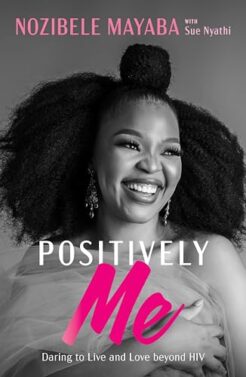
In the poignant memoir Positively Me: Daring to Live and Love Beyond HIV, Nozibele Mayaba, writing alongside acclaimed author Sue Nyathi, provides a visceral and deeply personal account of her life journey, from a childhood marked by financial struggle to her public emergence as a prominent HIV activist. The narrative is framed by the central conflict of her life: a startling HIV-positive diagnosis at the age of twenty-two, which initially felt like the end of her world. Through its chapters, the book deconstructs the myth that certain “types” of women are immune to the virus, while exploring themes of generational trauma, religious rigidity, and the redemptive power of self-forgiveness.
The Burden of Ancestry and the Foremothers
The story begins not with Nozibele, but with the women who shaped her, starting with her mother, Sindiswa Fezzie Mbukanto. Sindiswa’s life was defined by early abandonment; her own father left for Johannesburg (the “City of Gold”) to find work and never returned, leaving her mother, Makhulu Nondiyazana, to raise five children alone. Makhulu died prematurely from the stress of single parenthood, leaving the children orphaned. These circumstances forced Sindiswa to grow up instantly, caring for her younger siblings in a mud hut where they often lacked even paraffin for light and ate sparse meals of umphokoqo with water.
The cycle of hardship continued when Sindiswa was forced into an unsolicited, arranged marriage at age twenty-two to a man she did not know, simply because an elderly matriarch was impressed by her diligent yard cleaning. This marriage to Lulamile Qamngana was characterized by domestic servitude and abuse. Sindiswa was the only makoti (daughter-in-law) in a household ruled by an iron-fisted mother-in-law who demanded fresh bread every morning and breakfast in bed. For five years, Sindiswa struggled to conceive, leading to vicious rumors of barrenness. Her mother-in-law even quipped that the family dog was more fertile than she was.
The supposed infertility sparked Lulamile’s blatant infidelity and physical abuse. In one horrific incident, one of Lulamile’s girlfriends arrived at the house to insult Sindiswa; the ensuing fight saw Sindiswa’s mother-in-law side with the mistress, eventually whipping Sindiswa with barbed wire, leaving a permanent scar on her neck. After nearly ten years of misery, Sindiswa escaped the marriage under the cover of darkness, taking only what she could carry.
The Complex Roots of Identity
Sindiswa eventually found refuge with her sister in Port Elizabeth, where she met Nozibele’s father, Malathisi Garlick Mhlanga. Garlick was a short, charming, and enterprising man who had secured an influential job with the local municipality. Despite the palpable attraction, their relationship was complicated: Garlick was already married to a woman named Nomthunzi, and Sindiswa was still technically married to her first husband. Garlick was a man of many mistresses, most of whom were professional nurses, leaving the uneducated Sindiswa feeling deeply insecure and humiliated by her lower social status as a hospital cleaner.
In 1983, Sindiswa finally fell pregnant, a “vindication” that erased years of mockery about her barrenness. She gave birth to a boy, Malathisi Junior, and seven years later, in 1990, Nozibele was born. Because Sindiswa was still legally married to her first husband, she registered both children under the surname Qamngana to avoid the legal ordeal of involving Garlick’s family. Consequently, Nozibele grew up carrying the name of a man she had never met, while her biological father remained a sporadic visitor who never officially claimed his children.
The Domestic Dictatorship and the Bed Burning
Nozibele’s early childhood was marked by a longing for her father’s presence. She lived for the days his red bakkie appeared in the driveway, though he would spend his entire visit sequestered in her mother’s bedroom. When Nozibele was ten years old, this cycle ended abruptly. She returned from school to find her mother’s bed in the street and her mother pacing frantically. Sindiswa and Malathisi Junior carted the bed to a field to burn it.
A few days later, Sindiswa announced she had “found Jesus” and needed to live a holy life, which necessitated destroying the bed where she had done “dirty things”. From that point forward, Garlick was banned from the home, and Nozibele’s heart was broken by the realization that she might never see him again. This shift began an era of religious rigidity; Nozibele was raised as a “church girl” who was used as a model of discipline for other children, while her mother’s temper became a “firecracker” that demanded absolute compliance.
Education as an Escape Hatch
The book details the severe financial strain of Nozibele’s youth. Her father provided no maintenance money and occasionally sent expired groceries filled with weevils. Despite this, Nozibele excelled academically, becoming a perfectionist to seek the validation her mother rarely gave. At age eleven, she joined a pen-pal program initiated by Jacob Lief and the Ubuntu Education Fund, pairing with an American student named Zakiya.
In 2002, this program afforded Nozibele the life-changing opportunity to travel to New York. For a girl from a township who had never been on a plane, the sixteen-hour flight and the sights of Times Square and the Empire State Building were transformative. A visit to the United Nations and a meeting with Nane Annan (wife of Kofi Annan) convinced Nozibele that she was not constrained by her present circumstances.
Her high school years at Harvest Christian School, a private institution, were a culture shock. She was initially the only Black student in her class and struggled with the Cambridge curriculum, which required analysis and comprehension rather than the rote memorization she had mastered in township schools. She also felt the sting of class disparity; while her father eventually bought a Mercedes-Benz ML320, he and her stepmother complained bitterly about her school fees and cut off her transport allowance, forcing her to find her own way to school while still seeking the “fleeting” admiration of her peers by being seen in the luxury car.
The Path to Purpose and Permanent Employment
During high school, Nozibele participated in a mission trip to Uganda to build a two-room school. Living in a village without electricity or running water taught her a profound lesson in gratitude; she realized that despite her leaking roof, she was blessed with a family and an education.
Funding her tertiary education became the next hurdle. Her brother had been forced to drop out of university because their father refused to pay his fees. Nozibele, however, secured a full scholarship from the Ubuntu Education Fund, which covered her tuition, books, and taxi fare. She studied marketing at Nelson Mandela University, maintaining a rigorous routine of sitting in the front row and studying all night to achieve distinctions.
Her career began while she was still a student. After a successful interview at a career expo, she was selected for a six-month graduate trainee program at Continental Tyre South Africa. She quickly moved through manufacturing, sales, and PR departments, eventually securing a permanent position as an event, branding, and merchandising coordinator at age nineteen. Despite her success, she began to feel the heavy weight of “black tax”; her mother demanded R4,000 of her R7,000 net salary for household expenses and funeral cover.
The Traumatic Diagnosis
The memoir reaches its most critical juncture in 2012. After returning from a prestigious one-year training program in Hanover, Germany, Nozibele fell deeply in love with a man named Sbu. He was a “charmer” who promised to wait for her and respected her desire to avoid sex before marriage. However, just before she left for a work trip to Zambia, they had their first sexual encounter. It was far from the romantic scene she had envisioned; it happened on a bean bag in Sbu’s apartment while his sister slept in the next room, and Nozibele felt only pain and a sense of loss.
Shortly after, during a workplace wellness event, Nozibele decided to take an HIV test just to get a free first-aid kit. To her absolute horror, the test came back positive. She was in total shock, waailing to the nurse that she had only ever been with one man. Sbu’s reaction to the news was cold and dismissive; he initially refused to accompany her to re-tests and avoided fetching his own results. When she finally forced him to hear her confirmed results from Dr. Sishi, he only hung his head in shame or resignation.
Denial, Toxicity, and Termination
The ensuing months were a “vicious cycle” of toxicity. Nozibele stayed with Sbu out of fear that no one else would want her and that she would have to disclose her status to a judgmental world. She endured his increasing alcoholism, his infidelity, and his refusal to use condoms, which put them both at risk of reinfection.
In 2014, Nozibele discovered she was pregnant after missing her period. Floored by the same despair she felt at her HIV diagnosis, she decided she could not have a baby. She feared the shame it would bring her family and knew she was not ready to be a mother. She chose to have a surgical termination without telling Sbu. The experience was heartbreaking; she spent nights talking to her unborn baby, apologizing and saying goodbye, before undergoing the procedure in a state of emotional numbness.
Eventually, the discovery of Sbu professing his love to another woman via text gave her the strength to end the relationship. Sbu moved on almost immediately, flaunting his new girlfriend on social media, while Nozibele “drowned in despair,” stalking his profiles and comparing herself to the new woman.
Finding Skhu and Public Disclosure
The road to recovery began with self-reflection and spiritual renewal. Nozibele realized she needed to forgive not just Sbu, but herself, for her role in her own lack of protection. In 2016, she met Skhumbuzo “Skhu” Mayaba at an airport. Skhu was persistent and eventually convinced her to have lunch. Nozibele, wanting to “rip off the bandage,” disclosed her HIV status to him immediately. Skhu was completely unfazed, having lost a sister to the disease, and he treated it like any other chronic illness.
Their relationship flourished, and Skhu became her greatest support system. He encouraged her to start antiretroviral (ARV) treatment in 2017, which she had previously refused because it felt like an “admission of guilt”. Skhu also gave her the courage to come out publicly as HIV-positive in 2019. Nozibele realized that her story could be a vessel to “preserve the lives of many people”. She launched a YouTube channel and a TV show, #YesIHaveHIV, to help others navigate disclosure and treatment.
Marriage, Loss, and Second Chances
Marriage negotiations with Skhu were complicated by Nozibele’s family, particularly her mother and brother, who initially demanded an exorbitant lobola of R200,000. Nozibele was enraged, feeling like they viewed her only as a “cash cow,” and she stopped speaking to them for two months. Eventually, the negotiations resumed, and she insisted on involving her biological father to give the affair dignity. During this time, she learned that her father had cancer, and he was only able to attend her wedding reception, where he spoke briefly and prayed, which made her happy. He passed away in May 2020.
Nozibele and Skhu married in April 2019. After four years of trying and fearing that her previous termination had rendered her infertile, Nozibele fell pregnant again in 2022. This pregnancy was welcomed with joy, though she struggled with the fear that her child might be born HIV-positive. Because she maintained an undetectable viral load through consistent ARV use, she was able to conceive safely. Her son, Lumingonaphakade (“God’s love stands forever”), was born via C-section on June 15, 2023.
Conclusion: Positively Nozibele
The memoir concludes with Nozibele’s final disclosure to her mother, facilitated by her brother. Though Sindiswa was initially shocked and cried hysterically, she eventually accepted the situation, constantly asking her daughter, “Is there anything I can do for you?”.
Nozibele Mayaba is now a renowned activist, podcaster, and TV host who no longer sees the world through the lens of judgment. She credits her mother’s strength and her father’s work ethic for her resilience, but she has finally claimed her own identity. Her story is a testament to the fact that while an HIV diagnosis changes everything, it does not prevent one from finding purpose, love, and a family of one’s own. She remains “positively me,” using her platform to pull others up and ensure that no one has to walk the path of diagnosis alone.