
Listen to the Book Summary Below
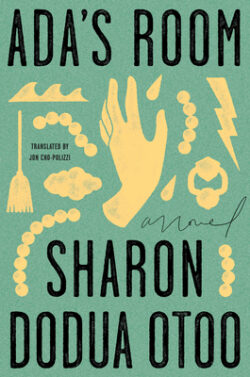
Sharon Dodua Otoo’s Ada’s Room is a genre-defying, multi-layered novel that explores the interconnected lives of four women named Ada across different centuries and continents. The narrative is bound together by a unique narrator a sentient spirit or consciousness that reincarnates into various household objects and a sacred golden bracelet with thirty-three beads. The book is guided by the Asante principle of Sankofa: “Return and retrieve! It is not taboo to return for what has been forgotten. Learn from your past”.
The Narrator and the Concept of the Orbits
The novel is structured around “Orbits,” representing the recurring lives of Ada. The story is narrated by a being that exists outside of human time, engaging in ongoing philosophical debates with God. This narrator experiences the world through the objects it inhabits: a brushwood broom in 1459, a brass door knocker in 1848, a concentration camp room in 1945, and a British passport in 2019.
In the “Between the Orbits” sections, the narrator and God discuss the nature of human existence using the analogy of sausage making. They suggest that all beings originate from a common “sausage meat” mass of souls, pressed through a meat grinder into individual “casings” (human lives). The narrator is a piece that got “stuck in the nozzle,” allowing it to witness the fluid transitions between Ada’s lives while she, as a mortal, repeatedly forgets her past.
The First Orbit: Totope, 1459
The story begins in Totope (in modern-day Ghana) during the longest night of the year. Ada is a young woman mourning the death of her five-day-old baby boy. This is her second child to die in infancy, a grief that is compounded by the “toothless” village elders who tell her to forget the child quickly and move on to the next.
Ada finds solace in Naa Lamiley, her companion and fellow mother, who helps her prepare for a ritual since they do not want to bury the child in a grave that will be forgotten. Ada possesses a golden bracelet with thirty-three beads, which she uses as a spiritual tool to pray for her child’s protection. She decides the beads should adorn the baby’s waist so they can return to her foremothers in the afterlife (Asamando).
The arrival of the first Europeans shatters this domestic tragedy. Guilherme Fernandes Zarco, an insolvent Portuguese merchant from the ship São Cristóvão, arrives on the coast seeking gold and the mythical King Mansa Uli II. Zarco is a “wandering pillar of pain,” fleeing debts and driven by greed.
When Zarco enters Ada’s courtyard, he is struck by the quality of the gold beads in her hand. The encounter is marked by a total lack of common language. As a storm breaks, Ada tries to tie the bracelet around her dead son. Zarco offers to help carry the child, but his intentions are mixed with the desire for the gold. In a chaotic confrontation on the beach, Zarco’s “stick” (a firearm) “vomits fire,” killing Ada. As Zarco attempts to swim back to his ship with the baby’s body, he loses his grip, and the child, adorned with the golden beads, drifts away into the dark waves.
The Second Orbit: Stratford-le-Bow, 1848
The second Ada is Lady Ada, a brilliant mathematician living in London. She is a historical reimagining of Ada Lovelace, obsessed with calculations for the Analytical Engine and the future of science. She is married to Lord William King, but their marriage is a “broken” one, defined by his rigid need for control and her secret “special friendship” with a storyteller named Charles (implied to be Charles Dickens).
Ada is plagued by gambling debts to “Shylocks,” a secret she keeps from William but confides to her Irish chambermaid, Lizzie. Lizzie has her own trauma; she and her brother Alfie fled the Potato Famine in Ireland, only to lose their parents to starvation in a London poorhouse. Ada, in a moment of thoughtless cruelty born of her own stress, mocks the famine by telling Lizzie to fetch potatoes, failing to recognize that Lizzie’s suffering is immeasurably greater than her own.
The golden bracelet reappears as a wedding gift from William, inherited from his mother. Driven by desperation to pay her debts, Ada has Lizzie hide her jewelry, including the bracelet. She buries it under a tree on Battersea Road.
The orbit ends in violence. William returns unexpectedly from Paris and sees Charles leaving the house. He confronts Ada on the threshold, demanding to know where the bracelet is. As Ada flees the house in the rain, Lizzie arrives and tries to show William the retrieved bracelet to appease him. However, William, consumed by rage and suspicion, aims his pistol and fires. Ada falls, a victim of her husband’s need for possession. Lizzie later sells the bracelet to a fishmonger, Charlie Huckle, using the money to rescue herself and Alfie from destitution.
The Third Orbit: Kohnstein bei Nordhausen, 1945
The third Ada is a prisoner in the Mittelbau-Dora concentration camp in Germany. She is interned in the “Special Barracks” (Thirty-Seven), a camp brothel where women are forced into “pleasurable use” for other prisoners and SS officers. The narrator is the room itself, condemned to witness every moan and cry while remaining unable to intervene.
Ada finds a fragile companionship with Linde (Cuddle Bear), another prisoner who tries to maintain a sense of humanity by exchanging recipes for foods they cannot eat. The bracelet returns through Walde, a prisoner functionary who gives it to Linde after stealing it from the camp’s warehouse.
The presence of the bracelet attracts the attention of SS-Obersturmbannführer Helmut Wilhelm, a man obsessed with “order” and the preservation of German beech trees but indifferent to human life. While inspecting the camp, Wilhelm catches a glint of the bracelet on Linde’s wrist.
The tension in Thirty-Seven culminates when Ada sees the body of a fellow prisoner (a “cookie thief”) outside her window. She transforms into a “Scream,” an ear-splitting release of repressed trauma. In the ensuing commotion, an SS officer discovers the bracelet on the floor. Ada realizes she must act; she tears herself free from her captors and runs toward the electric fence. She is shot by the guards just as her fingers are millimeters from the wires. Helmut Wilhelm takes the bracelet for himself, stowing it in a chest that he hides in his cellar as the Third Reich collapses.
The Next Orbit: Berlin, 2019
The final Ada is Augusta Adanne Lamptey, a pregnant Ghanaian-British woman looking for an apartment in Berlin. She is accompanied by her sister Elle, a vegan activist who is more attuned to the systemic racism of German society.
This Ada is struggling to find a home while dealing with the fallout of her relationship with the baby’s father, Cash, and a difficult phone call with her father, Francis (Papa), who lives in Ghana. Through a chance encounter during an apartment viewing, Ada meets two elderly Igbo women. These women knew her mother, Ijemma, in London decades ago. They reveal a truth Papa had hidden: Ijemma did not die in a simple house fire, but in a racially motivated arson attack. This revelation connects the 2019 Ada to the historical violence of the previous orbits.
The bracelet makes its final appearance in a museum catalog titled “Precolonial West Africa,” having been donated by a private collector. The “collector” is revealed to be Alfons Müller, the grandson of Helmut Wilhelm. While showing Ada his apartment, Alfons (who possesses the scar and features of his grandfather and the previous men) has a stroke. In his delirium, he hallucinates the voices of Zarco, William, and Helmut, confessing the theft of the bracelet across time.
In the hospital, the elderly Wilhelm/Alfons mistakes Ada for his daughter. He tries to “give” her the bracelet, but Ada, finally claiming her power and her lineage, counters: “How do you want to give me something that doesn’t belong to you at all?”. She asserts that she and her sisters will get it back on their own terms.
Epilogue: Me. We.
The novel concludes with the birth of Ada’s daughter during the longest night of the year reversing the tragedy of the first orbit. Ada wakes in the hospital to find Elle watching over her, draped in the sweater Ada had knitted for Cash. The baby is healthy, described as Ada’s “future” and a “treasure”. Ada finally understands who she is: not just an individual, but a part of a collective “We” that has survived centuries of deception and violence. The cycle of grief is broken as Ada chooses to “return and retrieve” her history, ensuring that her daughter will grow up in a world where her mother’s name and story are finally known.