
Introduction
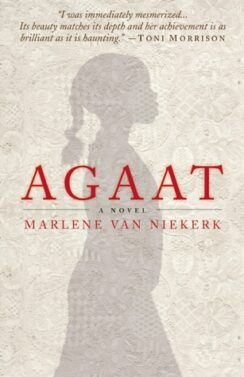
Agaat is a monumental work of South African literature that operates on multiple levels simultaneously as a family saga, a political allegory, a meditation on race and power, and an intimate portrait of the relationship between two women whose lives are inextricably bound together across four decades. Originally published in Afrikaans in 2004 and translated into English by Michiel Heyns in 2006, the novel represents a masterful exploration of the complexities of South African society during and after apartheid, told through the prism of one woman’s struggle with a degenerative illness and her relationship with her long-time servant and caregiver.
The novel’s structure is immediately striking: it alternates between present-tense narration of Milla de Wet’s final days, paralyzed and unable to speak, and extensive flashbacks that span from the 1940s through the 1980s, reconstructed partly through Milla’s diaries which her caregiver Agaat reads aloud to her. This dual narrative structure creates a complex dialogue between past and present, between memory and reality, and between the two women whose relationship defies easy categorization.
Summary
Part One: The Prologue and the Present
The novel opens in Toronto, Canada, in December 1996, where Jakkie de Wet, now in his mid-thirties, receives a telegram: “MÉME DYING STOP CONFIRM ARRIVAL STOP LOVE AGAAT.” He is an ethnomusicologist who has been living in exile from South Africa for eleven years. As he prepares to fly home, he reflects on his childhood on the farm Grootmoedersdrift, his complicated relationship with his mother Milla, his father Jak, and most importantly, Agaat the “coloured” woman who raised him and who has been caring for his dying mother. The narrative establishes the novel’s central tension: Jakkie is returning to a world he fled, to a mother he barely knows, and to a woman who was more of a mother to him than his own.
The novel then shifts to the present moment on Grootmoedersdrift in 1996. Milla de Wet, now seventy years old, lies paralyzed in her sickbed. She has advanced ALS (amyotrophic lateral sclerosis), also known as Lou Gehrig’s disease. She cannot move, cannot speak, and can only communicate through eye blinks. Agaat, her caregiver, has been with her for nearly four years in this capacity, though their relationship spans over four decades. The narrative is told from Milla’s interior perspective her thoughts remain sharp and observant even as her body fails.
Agaat enters the room. She is described in meticulous detail: her starched white cap, her black uniform dress with the elongated right sleeve that covers her deformed hand, her strong left arm and her small, crippled right hand. She prepares Milla for the day washing her, changing her, feeding her through a drip tube, administering medicines. The routine is precise, almost ritualistic, and it reveals the depth of Agaat’s knowledge of Milla’s body and needs. But it also reveals the power dynamic between them: Agaat controls everything what Milla eats, when she is moved, what she sees, who she sees. Milla is entirely dependent on Agaat’s care, and Agaat exercises this power with a mixture of competence and something harder to name resentment, perhaps, or a kind of controlled cruelty.
The narrative establishes the parameters of their relationship in these early pages. Milla cannot speak, but she can think, and her thoughts are filled with memories, observations, and a fierce intelligence that refuses to be extinguished. Agaat speaks to her, but often in riddles, proverbs, or quotations from the Farmer’s Handbook and the Bible a kind of code that only the two of them understand. When Milla tries to communicate something specific through eye blinks or, later, through an alphabet chart Agaat often misinterprets her deliberately, forcing Milla to find new ways to make herself understood.
Part Two: The Past Milla’s Marriage and the Early Years
The novel then moves back in time, to 1947, when Milla Redelinghuys marries Jak de Wet. Milla is the only child of a farming family from Barrydale. She is intelligent, well-educated (she has a BA in languages from Stellenbosch and training in music and drama), and deeply frustrated by the limitations placed on women in her society. She marries Jak because he represents everything she feels she lacks: he is handsome, confident, socially adept, and wealthy. He is a “gentleman farmer,” educated at Bishops and Stellenbosch, with a law degree and a diploma in agriculture. He is also vain, self-absorbed, and emotionally unavailable.
The marriage is troubled from the beginning. On the day before their wedding, Jak drags Milla by the hair across the back stoep and pushes her so that she falls. She covers the bruises with a high collar and long sleeves on her wedding dress. She tells no one not her mother, not her friend Beatrice. This is the first instance of the pattern that will define their marriage: Jak’s violence, Milla’s silence, and her complicity in maintaining the facade of a happy marriage.
The early years on Grootmoedersdrift are marked by Milla’s struggle to make the farm profitable and Jak’s disinterest in actual farming. Milla takes over the management of the farm, hiring and firing workers, planning crops, and making decisions about livestock. Jak is more interested in appearances buying new cars, new implements, and new clothes than in the hard work of farming. He is also increasingly violent, both toward Milla and toward the farm workers. He shoots at children who steal pumpkins, kicks his dogs, and beats Milla when she confronts him.
Milla, for her part, is complicit in this violence. She does not leave Jak, does not report him, does not tell anyone what is happening. She rationalizes his behavior, makes excuses for him, and even, at times, provokes him. The novel suggests that she is trapped in a cycle of abuse that she cannot escape not because she lacks the resources (she has money, education, and family connections) but because she has internalized the belief that she must endure, that she must keep up appearances, that she must be a “good wife.”
Part Three: The Rescue of Agaat
The novel’s central event occurs in December 1953. Milla is visiting her mother on the neighboring farm, Goedbegin, for the Christmas holidays. She has been married for six years and has not been able to conceive. Her childlessness is a source of great pain and social stigma. Her mother mentions, in passing, that there is a child in the labourers’ cottages the daughter of Maria Lourier who has been badly neglected. The child is deformed and does not speak; she sits in the fireplace all day, covered in ash.
Milla goes to investigate. She finds the child in the corner of a dark, squalid room, crouched in the fireplace, covered in soot and filth. The child’s right arm is deformed thin and twisted, with a hand that looks like a claw. She is malnourished, covered in sores, and clearly traumatized. When Milla tries to speak to her, the child makes a guttural sound “Ggggg” that is the closest she can come to a name.
Milla’s decision to take the child home is impulsive and profound. She sees in this damaged creature an opportunity to do something meaningful with her life to save someone, to create something good out of the misery around her. But the novel is careful to show that this decision is also an exercise of power. Milla does not ask the child’s mother for permission; she informs her that she is taking the child. She renames the child “Agaat” after the semi-precious stone because “Asgat” (ash-hole) is not a proper name. She strips the child of her original identity, her family, and her culture, and remakes her in her own image.
The first year with Agaat is documented in detail in Milla’s diaries. Agaat is a difficult child traumatized, withdrawn, and unable to speak. She resists Milla’s attempts to care for her, hiding under the bed, refusing to eat, and wetting herself. Milla is patient but also strict, using a combination of rewards (sweets, jelly) and punishments (the duster stick, being locked in her room) to train the child. The diaries reveal Milla’s genuine affection for Agaat but also her need for control, her frustration when Agaat does not respond as expected, and her occasional cruelty.
The breakthrough comes when Milla discovers that Agaat is fascinated by fire. She teaches the child to light fires, to tend them, to blow on the bellows. This becomes the foundation of their relationship fire as a symbol of life, of transformation, of the spark that animates the human soul. Agaat begins to speak, to read, to write, and to learn all the skills that Milla teaches her cooking, cleaning, sewing, farming, and music.
Part Four: The Birth of Jakkie and the Fracturing of the Family
In 1960, after twelve years of marriage, Milla finally becomes pregnant. The pregnancy is a turning point both in her marriage and in her relationship with Agaat. Jak is initially pleased, but he becomes increasingly distant and then openly hostile as the pregnancy progresses. He is jealous of the attention Milla receives, threatened by the prospect of sharing her with a child, and perhaps most importantly, terrified of the responsibility of fatherhood.
The birth is dramatic. Milla goes into labor prematurely while Jak is away at a sporting event. She and Agaat are alone. Agaat, who is only thirteen or fourteen years old, has to deliver the baby on the side of the road in the Tradouw Pass. The scene is visceral, terrifying, and triumphant. Agaat uses the skills she has learned from assisting with animal births she cuts the umbilical cord, cleans the baby, and keeps Milla calm. The baby is a boy, Jakkie. Milla loses a great deal of blood and nearly dies.
After the birth, the relationship between Milla and Agaat becomes even more complicated. Agaat becomes Jakkie’s primary caregiver she feeds him, bathes him, sings to him, and cares for him with a devotion that Milla cannot match. Milla is weak from the birth and struggles with breastfeeding; she is also depressed and overwhelmed. Agaat, by contrast, is tireless, competent, and entirely devoted to the child.
This creates a rivalry between the two women. Milla is jealous of Agaat’s relationship with Jakkie, but she is also grateful for it she knows that Agaat is a better mother to the child than she could ever be. The novel explores this contradiction in detail: Milla’s love for her son, her guilt at not being able to care for him, and her resentment of the woman who can.
Part Five: The Christening Robe and the Conflict Over Jakkie
The tension between Milla and Agaat comes to a head over the christening of Jakkie. Agaat has embroidered a beautiful christening robe for the baby a white gown covered in delicate white-on-white embroidery. She presents it to Milla, clearly hoping that she will be allowed to carry the baby into the church for the ceremony. Milla is moved by the gift but also uncomfortable she knows that it would be inappropriate for a “coloured” servant to carry the baby in a white church.
Milla refuses to ask the dominee for permission. Agaat is deeply hurt. She retreats into silence and passive resistance she stops speaking to Milla, stops eating, and stops doing her work properly. Milla, in turn, becomes increasingly harsh, punishing Agaat with extra work, with restrictions on her freedom, and with physical punishment.
The conflict escalates over several weeks. Milla gives Agaat a series of increasingly difficult tasks braying hides, ploughing a field by hand, calculating seeding rates as a way of breaking her spirit. Agaat performs every task with competence, but her resentment grows. She begins to sabotage small things breaking dishes, burning food, ruining clothes.
The conflict is finally resolved or at least, submerged when Milla realizes that she needs Agaat more than she can afford to lose her. Jak is becoming increasingly unstable, and the farm cannot run without Agaat’s labor. Milla gives Agaat a small gift a red jersey and allows her to keep the christening robe, even though it cannot be worn in the church. The two women return to their uneasy coexistence.
Part Six: The Botulism Crisis and the Poisoning of the Cattle
In October 1960, a devastating crisis strikes the farm. A herd of new Simmental cattle, bought by Jak from South West Africa, eats poisonous tulip bulbs and then drinks water, causing a condition called botulism. One by one, the cattle sicken and die a horrible death that involves paralysis, inability to swallow, and eventual suffocation.
Milla is devastated. She has raised these animals since they were calves, and she loves them as only a farmer can love the creatures she has cared for. She stays with the dying cattle, holding their heads, trying to keep them comfortable, weeping over their bodies.
Agaat is the one who organizes the rescue effort. She remembers reading in the Farmer’s Handbook about treatments for botulism raw linseed oil, lime, coffee, brandy and she directs the farm workers in administering these remedies. Her competence and authority are absolute; even Jak, who has been drinking heavily, follows her orders.
The crisis reveals the true balance of power on the farm. Jak is useless in an emergency he panics, gives up, and retreats into drink. Milla is emotionally shattered she is grief-stricken and unable to function. Agaat is the one who takes charge, who makes decisions, who saves what can be saved. The novel makes clear that Grootmoedersdrift is not run by Jak or even by Milla it is run by Agaat.
Part Seven: The Garden and the Dream of Paradise
In the 1960s and 1970s, Milla embarks on her greatest project the creation of a large, formal garden around the homestead. She has dreamed of this garden since she was a girl, and she throws herself into it with a passion that borders on obsession. She hires workers, buys plants, and designs the layout. The garden becomes her “paradise” a place of beauty, order, and meaning in a life that has been filled with disappointment and betrayal.
Agaat is her partner in this project. She helps with the planning, the planting, and the maintenance. Together, the two women create a garden that is the envy of the district terraces, fountains, flowerbeds, and trees, all arranged with a precision that is both beautiful and slightly unsettling.
The garden becomes a symbol of Milla’s life and her relationship with Agaat. It is a place of beauty and cooperation, but it is also a place of labor and exploitation. The garden was built on the backs of convict laborers and farm workers. It is maintained by Agaat’s labor. It is, in short, a paradise built on injustice a metaphor for South Africa itself.
Part Eight: Jakkie’s Childhood and the Games with Agaat
Jakkie grows up in this complicated world, surrounded by three adults who each want something different from him. Milla wants him to be her musical protégé she teaches him to sing, to play the piano, and to appreciate classical music. Jak wants him to be a “real man” he takes him hunting, climbing, and racing, and is disappointed when the boy shows no interest in these activities. Agaat wants him to be her child she tells him stories, plays games with him, and gives him the unconditional love that his parents cannot provide.
The novel is filled with scenes of Agaat and Jakkie’s games their elaborate call-and-response rituals, their secret language, their shared fascination with nature. Agaat teaches Jakkie to identify birds, plants, and animals. She teaches him to whistle, to sing, and to tell stories. She creates a world for him that is rich, imaginative, and full of meaning a world that his parents can never enter.
But this world is also shadowed by the racial hierarchy that surrounds them. Jakkie learns early that Agaat is “different” that she is a servant, that she belongs to a different world, that he must not love her too much. The novel is heartbreaking in its depiction of the ways in which apartheid poisons even the most innocent relationships.
Part Nine: Jak’s Decline and Death
Jak becomes increasingly erratic as the years pass. He drinks heavily, has mood swings, and becomes paranoid. He accuses Milla of trying to control him, of undermining his authority, of turning Jakkie against him. His violence escalates he hits Milla, kicks the dogs, and threatens the workers. He also becomes obsessed with Jakkie he wants to make him a “man,” to initiate him into the world of hunting and mountaineering, to make him his heir.
The climax comes in 1971, when Jak takes Jakkie on a week-long mountaineering expedition in the Tradouw mountains. The trip is a disaster the weather is terrible, the route is too dangerous, and Jakkie is nearly killed. When they return, Milla is furious. She accuses Jak of trying to kill their son, and the two of them have a terrible fight. Jak has a breakdown, weeping and accusing Milla of sucking the life out of him.
Jak’s death comes in 1985, shortly after Jakkie’s 25th birthday party/farewell. Jak has just read a letter that Jakkie wrote to Agaat a letter in which Jakkie explains that he is leaving South Africa, that he cannot be part of the apartheid system, that he is going to Canada. Jak is devastated. He drives away from the farm, drunk and distraught, and crashes his car in the drift. He is impaled on a branch and dies at the scene.
The novel treats Jak’s death with a mixture of horror and dark comedy. The farm workers have a saying about it: “The baas of Grootmoedersdrift! Aheu! And so he saw his arse! In the drift of Grootmoedersdrift!” The saying captures the contempt that the workers feel for Jak a contempt that Milla has never been able to acknowledge.
Part Ten: Jakkie’s Departure and Milla’s Illness
After Jak’s death, Jakkie leaves South Africa for Canada. He does not return for eleven years. He becomes an ethnomusicologist, studying the songs and laments of indigenous peoples. He writes to Agaat regularly but rarely writes to his mother.
Milla, meanwhile, begins to show signs of the illness that will eventually kill her. She has trouble with her hands, with her balance, with her speech. She is eventually diagnosed with ALS, a degenerative neurological condition with no cure. She knows that she will die, and she knows that she will need care.
She chooses Agaat to be her caregiver. She writes a living will that gives Agaat complete authority over her care, including the right to refuse medical intervention. She also makes over the farm to Agaat, ensuring that Agaat will be provided for after her death.
The novel’s present-tense narrative takes place during the last months of Milla’s life. Agaat cares for her with a combination of tenderness and cruelty. She washes her, feeds her, and massages her limbs but she also taunts her, withholds things she wants, and uses her power to control what Milla sees and experiences. The relationship between them is characterized by a love that is also a battle a struggle for control that neither of them can win.
Part Eleven: The Alphabet Chart and the Restoration of Speech
The novel’s most powerful section describes how Agaat creates an alphabet chart a large piece of cardboard with the letters of the alphabet and common words and phrases that allows Milla to spell out words by blinking her eyes. This is a profound act of generosity it gives Milla back her voice, at least in a limited way but it is also an act of power. Agaat controls the chart; she decides when Milla can use it, what she can say, and how long she can speak.
Using the chart, Milla is able to ask questions, make requests, and ultimately confront Agaat about their shared history. She asks about the fire that destroyed the hay barn, about the drowning of Agaat’s goat, about the christening robe, about Jakkie. Agaat’s responses are evasive, indirect, and often filled with quotations from the Farmer’s Handbook or the Bible. She does not give straight answers; she gives riddles, proverbs, and songs.
The alphabet chart sections are the novel’s most technically daring they consist of Milla spelling out words letter by letter, with Agaat repeating them back to her, often with her own commentary. These sections are difficult to read but immensely rewarding they create a sense of intimacy and immediacy that no other narrative technique could achieve.
Part Twelve: The Final Days and Milla’s Death
In the novel’s final sections, Milla’s condition deteriorates. She can no longer swallow; she has a feeding tube inserted. She has episodes of fainting and hallucination. She knows that she is dying and that she does not have much time left.
Agaat’s behavior becomes increasingly strange. She sharpens knives by Milla’s bed, peels vegetables, and arranges elaborate displays of flowers and maps. She recites passages from the Farmer’s Handbook and the Bible. She makes Milla look at the embroidered cloth the huge, intricate embroidery that depicts scenes from Grootmoedersdrift and tells her that it will be her shroud.
The novel’s climax comes with Milla’s death. The exact circumstances are ambiguous Agaat may have helped her to die, or she may simply have allowed her to die. The final scene shows Agaat dressing Milla’s body in the embroidered cloth, sewing her into it, and arranging her for the funeral. She then goes to the grave that she has dug for Milla and lies in it, wrapped in the embroidered cloth, looking at the stars.
Part Thirteen: The Epilogue
The epilogue is written from Jakkie’s perspective. He arrives at Grootmoedersdrift after his mother has already died and been buried. He spends several days at the farm, sorting through his mother’s belongings, talking to Agaat, and trying to make sense of what happened.
The epilogue reveals the contents of Milla’s will: the farm is left to Agaat, with the provision that it will pass to Jakkie upon Agaat’s death. Jakkie is not surprised he knew that his mother and Agaat had an arrangement. What surprises him is the depth of their relationship, the complexity of their love and hate, the impossibility of fully understanding what they meant to each other.
Jakkie also reads some of his mother’s diaries the ones that Agaat had been reading to her during her illness. He learns things about his parents that he never knew: his father’s violence, his mother’s loneliness, Agaat’s role in holding the family together. He is shocked, moved, and finally, in a strange way, grateful.
The novel ends with Jakkie on a plane, flying back to Canada. He is carrying some objects that Agaat gave him a ram’s horn, a pair of bellows, a bag of fennel seed. These objects are symbols of the world he came from a world of farming, of tradition, of connection to the land. But they are also symbols of what he is leaving behind the complicated, painful, beautiful world of Grootmoedersdrift.
The Novel’s Structure and Narrative Technique
The novel employs several distinct narrative modes that work together to create a complex, multi-layered text:
The Present Narrative: Written in first-person present tense from Milla’s perspective, these sections occur during 1996, as she lies paralyzed in her sickbed. Though she cannot speak or move, her mind remains active, and she communicates with Agaat through eye signals and, later in the novel, through an alphabet chart. These sections are characterized by interiority, stream-of-consciousness, and a poetic sensibility that becomes increasingly fragmented as Milla’s condition deteriorates.
The Past Narrative: Told in second person (“you”), these sections recount Milla’s life from her marriage to Jak de Wet in 1947 through the birth of her son Jakkie in 1960 and into the 1980s. The second-person address creates an interesting effect it is as if Milla is addressing her past self, or perhaps as if Agaat is reconstructing Milla’s life for her. This technique distances the reader while simultaneously creating intimacy, as if we are overhearing a conversation between Milla and herself.
The Diaries: Milla’s diaries, written in first person, are interspersed throughout the novel. Agaat reads these aloud to Milla during her illness, and their content reveals Milla’s private thoughts, fears, and observations that she never shared with anyone else. The diaries begin in 1960 with the preparation for Agaat’s arrival and continue through the decades, providing a detailed record of farm life, marital discord, and the evolution of Milla’s relationship with Agaat.
The First Narrative: A crucial final section (Chapter 18) reveals the circumstances of Milla’s discovery of Agaat the neglected, abused child hiding in a fireplace in the labourers’ cottages on her mother’s farm in December 1953. Written in first person present tense, this section differs from all others in its immediacy and raw emotion, describing Milla’s impulsive decision to rescue the child and the immediate aftermath of that decision.
The Epilogue: Written from Jakkie’s perspective as he flies back to Canada after his mother’s funeral, the epilogue offers an outsider’s view of the events and relationships that have shaped the novel. Jakkie’s voice provides distance and perspective, allowing readers to see Milla, Agaat, and the entire farm of Grootmoedersdrift through new eyes.
This complex narrative structure mirrors the novel’s central concerns with memory, power, and the impossibility of ever fully knowing another person. Just as Milla cannot communicate directly with Agaat, we as readers must piece together the story from multiple, sometimes contradictory sources. The novel insists that truth is never singular it is always a composite of different perspectives, different memories, different interpretations.
Characters
Milla de Wet: The Protagonist
Kamilla (Milla) Redelinghuys de Wet is the novel’s central consciousness and its most complex character. Born in 1926 to a farming family in the Overberg region of the Western Cape, Milla is intelligent, well-educated, and deeply frustrated by the limitations placed on women of her class and generation. She has a BA in languages from Stellenbosch University, with additional training in music and drama, and she dreams of a life filled with culture and intellectual stimulation.
Her Marriage: Milla marries Jak de Wet in 1947, largely because he represents the qualities she feels she lacks: wealth, confidence, social ease, and conventional attractiveness. The novel makes clear that this is not a love match in any simple sense Milla is drawn to Jak’s surface charm while remaining deeply uncertain about his character. Her mother warns her against him, and Milla’s own intuition tells her that something is wrong, but she proceeds with the marriage anyway.
The marriage quickly deteriorates into a relationship characterized by emotional distance, mutual resentment, and periodic physical violence. Jak is vain, self-absorbed, and increasingly unstable, while Milla becomes more isolated and frustrated. The novel traces the evolution of their relationship over four decades, showing how two people who once seemed like a promising match become trapped in a cycle of mutual destruction.
Her Childlessness: One of the central tragedies of Milla’s life is her inability to conceive for the first twelve years of her marriage. In the context of an Afrikaans farming community in the 1950s, this is a profound stigma. Milla internalizes society’s judgment, feeling that she is somehow inadequate as a woman. Her eventual pregnancy, announced on New Year’s Day 1960, becomes a turning point but not in the way she hopes.
Her Relationship with Agaat: The most significant relationship in Milla’s life is not with her husband but with Agaat, the child she rescues from abuse and neglect in December 1953. This relationship is the novel’s central concern, and it is fraught with contradictions. Milla sees herself as Agaat’s savior, her teacher, her benefactor but she is also Agaat’s owner in a system of racial hierarchy that she never seriously questions. She loves Agaat, but her love is mixed with possessiveness, control, and a need for gratitude that Agaat can never adequately express.
Her Illness: The novel opens with Milla already in the advanced stages of a degenerative neurological condition (the text strongly suggests Amyotrophic Lateral Sclerosis, or ALS, also known as Lou Gehrig’s disease). She is paralyzed, unable to speak, and dependent on Agaat for every aspect of her care. This illness strips away everything that Milla once was her active life as a farmer, her music, her social position and reduces her to a consciousness trapped in a body that no longer responds to her will.
This physical deterioration parallels the novel’s broader themes about power, dependency, and the loss of control. Milla, who once controlled every aspect of farm life, now cannot control her own bodily functions. She who once demanded gratitude from Agaat must now depend entirely on Agaat’s care. The novel explores the psychological consequences of this reversal with unflinching honesty.
Her Character: Milla is not an easy character to like. She is intelligent but often self-pitying; well-meaning but frequently blind to her own privileges; loving but capable of cruelty. The novel presents her with all her contradictions intact, neither excusing her nor condemning her. She is a product of her time and class, with all the limitations that implies, but she is also capable of genuine insight and growth.
Agaat Lourier: The Caregiver
Agaat is the novel’s other central character, and in many ways she is its most enigmatic figure. We see her almost entirely through Milla’s eyes, and Milla’s understanding of Agaat is always partial, always filtered through her own needs and assumptions.
Her Origins: Agaat is born to Maria Lourier and Damon (Joppies) Steefert in the labourers’ cottages on Goedbegin, Milla’s mother’s farm. Her biological father is abusive and alcoholic; her mother is passive and overwhelmed. Agaat is born with a deformed right arm and hand a condition that marks her as “defective” in the eyes of her community. When Milla finds her in December 1953, the child is hiding in the fireplace, covered in ash, malnourished, and profoundly traumatized.
Her “Rescue”: Milla’s decision to take Agaat into her home is presented as an act of charity, and in some ways it is the child would likely have died or suffered continued abuse had Milla not intervened. But the novel complicates this narrative of rescue by showing how Milla’s “charity” is also an exercise of power. Milla renames the child (her original name, “Asgat,” meaning “ash-hole,” is replaced with “Agaat,” a semi-precious stone whose name derives from the Greek word for “good”). She strips Agaat of her original identity, her family, her culture, and remakes her in her own image.
Her Education: Milla undertakes to “civilize” Agaat to teach her to speak properly, to read and write, to do needlework, to cook, to keep house. These lessons are given with genuine care but also with a kind of missionary zeal that treats Agaat’s original culture as something to be overcome. The novel documents this education in detail, showing both its successes and its cruelties. Agaat becomes exceptionally capable she is smarter, more diligent, and more competent than anyone around her but she also becomes profoundly alienated, caught between the world of her white employers and the world of her own people.
Her Role in the Household: As Agaat grows up, she becomes indispensable to the functioning of Grootmoedersdrift. She is the one who actually runs the farm managing the workers, overseeing the harvest, handling crises, and keeping the household running while Milla and Jak are absorbed in their own conflicts. The novel makes clear that Agaat is the true power behind the farm’s success, even as she remains formally subordinate to both Milla and Jak.
Her Relationship with Jakkie: Agaat’s most intense emotional attachment is to Jakkie, Milla and Jak’s son. From his birth in 1960, Agaat becomes his primary caregiver, his teacher, his confidante, and the person who shapes his early understanding of the world. Their relationship is characterized by games, stories, songs, and a kind of intimacy that neither Milla nor Jak can replicate. Milla’s jealousy of this bond is one of the novel’s recurring themes.
Her Later Life: As the novel progresses, Agaat becomes increasingly inscrutable. She stays on at Grootmoedersdrift through Jak’s death in 1985 and Milla’s illness, caring for Milla with a mixture of devotion and something darker perhaps resentment, perhaps a need for control, perhaps a complex mixture of both. The novel never fully reveals Agaat’s inner life; she remains an enigma, her motivations always just beyond our grasp.
Her Power: Despite her subordinate position, Agaat wields enormous power in the household. She controls access to Milla, manages all communication with the outside world, and makes decisions about everything from what Milla eats to what Milla sees. The novel explores the paradoxes of this power how Agaat’s position as caregiver gives her a kind of authority that she could never achieve through any formal channel.
Jak de Wet: The Husband
Jak de Wet is the novel’s primary antagonist, though he is a more complex figure than a simple villain. He is handsome, charming, and socially adept everything that Milla feels she is not but he is also vain, emotionally stunted, and increasingly unstable.
His Background: Jak is the only son of the district surgeon in Caledon, educated at Bishops (a prestigious boys’ school) and at Stellenbosch University, where he studied law before obtaining a diploma in agriculture at Elsenburg Agricultural College. He is a “gentleman farmer,” more interested in appearances than in actual farming.
His Marriage: Jak’s decision to marry Milla is motivated by a mixture of attraction and calculation. He is drawn to her intelligence and independence, but he also sees in her a partner who can help him achieve the social standing he craves. The marriage quickly reveals fundamental incompatibilities Jak is superficial and self-absorbed, while Milla is intense and demanding. Their relationship devolves into a cycle of neglect, recrimination, and periodic violence.
His Violence: The novel documents Jak’s violence against Milla with unflinching clarity. He slaps her, pushes her, drags her by the hair, and treats her with contempt. This violence is presented not as aberrant behavior but as part of a continuum of male dominance in Afrikaner farming society. Milla’s acceptance of it and her participation in the system that enables it is part of the novel’s investigation of how women can be complicit in their own oppression.
His Relationship with Jakkie: Jak’s relationship with his son is characterized by competitive masculinity and emotional distance. He wants to make Jakkie “a man” teaching him to hunt, climb mountains, and endure hardship but he has little understanding of his son’s actual needs and sensitivities. His attempt to involve Jakkie in docking a lamb on his ninth birthday is one of the novel’s most disturbing scenes, revealing how masculine initiation in this culture is built on cruelty to animals and to children.
His Decline: As the novel progresses, Jak becomes increasingly unstable. He drinks heavily, has erratic mood swings, and finally suffers a breakdown in 1971 in which he accuses Milla of “sucking him dry.” His death in 1985 driving his car into the drift after reading a letter from Jakkie is presented as both accident and suicide, a final act of violence that leaves Milla and Agaat to make sense of what happened.
Jakkie de Wet: The Son
Jakkie is the novel’s most tragic figure a child born into a family system that cannot nurture him, who grows up caught between three adults (Milla, Jak, and Agaat) who each want something different from him.
His Childhood: Jakkie’s early years are dominated by Agaat, who becomes his primary caregiver almost from birth. He learns to talk, to play, and to understand the world through Agaat’s stories and games. Their relationship is characterized by deep mutual affection, but it is also complicated by the racial hierarchy that surrounds them. Jakkie loves Agaat, but he also learns early that she is “different” that she is a servant, that she belongs to a different world.
His Education: Jakkie is sent to boarding school at the age of five or six, an experience that separates him from Agaat and places him in a predominantly white, male world where the values of apartheid and Afrikaner nationalism are enforced. The novel suggests that this education damages Jakkie, alienating him from the world he knew and forcing him into a system he does not fully understand.
His Military Service: As a young man, Jakkie joins the South African Air Force, becomes a fighter pilot, and is deployed in Angola during the Border War. The novel is critical of this military adventure, presenting it as a senseless waste of lives and a betrayal of everything Jakkie might have been. His experiences in the war and his realization of what he has been part of precipitate his departure from South Africa.
His Departure: Jakkie leaves South Africa in 1985, shortly after his 25th birthday party/farewell at Grootmoedersdrift. He goes to Canada, where he becomes an ethnomusicologist, studying the songs and laments of indigenous peoples. The novel suggests that this career is an attempt to understand what happened to him in South Africa to recover something that was lost in his upbringing.
His Return: Jakkie returns to Grootmoedersdrift for his mother’s funeral in December 1996 or rather, he arrives after she has already died. The epilogue is written from his perspective as he flies back to Canada, trying to make sense of the relationships that shaped his life. His voice provides a kind of closure, but it is a closure that remains uneasy he is still trying to understand what happened, and he knows he will never fully understand.
Major Themes
Race and Power: The novel’s most important theme is the complex dynamic of race and power in South African society. The relationship between Milla and Agaat embodies all the contradictions of apartheid: intimacy and distance, love and exploitation, care and control. Milla genuinely loves Agaat, but she loves her as an owner loves a prized possession not as one human being loves another. Agaat, for her part, serves Milla with devotion, but that devotion is inseparable from the power imbalance that makes it possible.
The novel shows how apartheid infiltrates even the most intimate relationships, poisoning them with inequality and mistrust. Milla’s decision to “rescue” Agaat is both generous and violent she saves the child’s life, but she also steals her identity and places her in a position of permanent subordination. The novel refuses to resolve this contradiction, insisting that we hold both truths simultaneously.
Gender and Domesticity: The novel explores the constraints placed on women in Afrikaner farming society. Milla is intelligent, ambitious, and capable, but she is expected to be a housewife and mother. Her frustration at these limitations and her guilt at not being able to fulfill them is a recurring theme. The novel shows how women become complicit in their own oppression, how they enforce the very rules that keep them subordinate.
Agaat, meanwhile, is doubly oppressed as a woman and as a “coloured” person. Yet she also wields considerable power within the household, controlling access to Milla and managing the farm in ways that give her a kind of authority denied to most women of her race. The novel explores the paradoxes of this power how it is both real and illusory.
Language and Communication: The novel is deeply concerned with language with who speaks, who is heard, and who is silenced. Milla, who has been so articulate throughout her life, is reduced to silence by her illness. Agaat, who was silenced as a child, becomes the one who speaks for Milla, reading her diaries, interpreting her eye signals, and eventually giving voice to her thoughts. The novel suggests that communication is never simple it is always mediated by power, by history, by the assumptions we bring to language.
The alphabet chart that Agaat creates for Milla is a crucial symbol. It represents an attempt to restore language to someone who has lost it, but it also represents the power dynamic between them Agaat controls access to language, decides which words Milla can speak, and interprets what those words mean. The novel asks whether communication is possible when the balance of power is so unequal.
Memory and History: The novel is structured around memory Milla’s memories of her life, Agaat’s reading of Milla’s diaries, and the collective memory of the farm and its people. The diaries serve as a kind of archive, preserving events that Milla might otherwise forget or misremember. But the diaries are also selective Milla chooses what to record and what to leave out, shaping the narrative of her own life.
The novel suggests that history is never objective it is always someone’s version of events. The same events look different depending on who is telling the story, and the novel refuses to privilege any single perspective. Milla’s diaries, Agaat’s readings, and Jakkie’s epilogue all offer different versions of the same events, and none of them is fully complete.
Death and Dying: The novel is a prolonged meditation on death and dying. Milla’s physical deterioration is described in clinical detail her loss of mobility, her inability to swallow, her dependence on machines and tubes. But the novel is also interested in the psychological and spiritual dimensions of dying what it feels like to know you are approaching death, to lose control of your body, to depend on others for every aspect of your care.
Agaat’s role as caregiver is central to this theme. She represents both the possibility of care and the threat of control she keeps Milla alive, but she also keeps her captive. The novel asks whether there is such a thing as a good death, and what role other people should play in facilitating or preventing it.
The Garden and Nature: The garden that Milla creates at Grootmoedersdrift is one of the novel’s central metaphors. The garden represents Milla’s attempt to create something beautiful and lasting a “paradise” that will redeem the ugliness of her marriage and the compromises of her life. But the garden is also a site of labor Agaat and the farm workers do most of the work, and Milla’s vision of paradise is built on their sweat and labor.
The novel’s descriptions of nature the mountains, rivers, plants, and animals of the Overberg provide a kind of counterpoint to the human dramas that unfold. Nature is indifferent to human concerns, and its beauty persists even as human relationships fail.
Names and Identity: The novel is preoccupied with names and naming. Agaat’s original name “Asgat,” meaning “ash-hole” is a mark of her degradation. Milla renames her “Agaat,” a semi-precious stone whose name derives from the Greek word for “good.” This renaming is an act of power Milla determines who Agaat will be but it is also an act of love, an attempt to give the child a better life.
Jakkie, meanwhile, is named after his father, a repetition that suggests the weight of inheritance the way parents try to make their children into versions of themselves. The novel explores how names shape identity, and how changing one’s name can be both liberating and destructive.
Setting and Symbolism
Grootmoedersdrift: The farm is the novel’s central symbol, representing both the beauty and the brutality of Afrikaner farming culture. The name means “Grandmother’s Ford,” suggesting the deep connection between family and place that characterizes this society. The farm is a place of abundance wheat fields, sheep, cattle, gardens but it is also a place of exploitation, where black workers labor for white owners and where the land itself is exhausted by overuse.
The drift (ford) that gives the farm its name is a recurring symbol. It represents crossing, transition, and danger the place where you must be careful, where the waters can rise suddenly and sweep you away. Jak’s death in the drift is the novel’s most dramatic use of this symbol.
The Garden: Milla’s garden is her attempt to create paradise on earth a space of beauty and order that will redeem the chaos and ugliness of her life. The garden is described in loving detail the terraces, the fountains, the flowerbeds, the trees. But the garden is also a site of labor and exploitation, built on the backs of convict laborers and farm workers. The novel uses the garden to explore the relationship between beauty and injustice, suggesting that even our most precious creations may be implicated in systems of oppression.
The Hearth/Fireplace: Fire is a crucial symbol in the novel, representing both life and destruction. Agaat is found in a fireplace, surrounded by ash she emerges from fire, and fire is her element. The lessons Milla teaches Agaat often involve fire lighting fires, tending fires, understanding fire. The novel’s climax involves a fire that destroys the hay barn and almost spreads to the house, suggesting that fire can be both creative and destructive.
The Bellows: The bellows that Milla gives Agaat as a gift are another important symbol. They represent breath, life, and speech the ability to blow air into a fire, to make it burn. Agaat learns to speak by blowing on the bellows, and she keeps them with her throughout her life. The bellows are both a practical tool and a symbol of Agaat’s power her ability to give life to what would otherwise be dead.
The Embroidered Cloth: The large embroidered cloth that Agaat works on throughout the novel is a symbol of Agaat’s creative power and her relationship to Milla. The cloth depicts scenes from Grootmoedersdrift the farm, the animals, the people, the history. It is a kind of visual diary, a record of Agaat’s life and the life of the farm. The cloth is also a shroud Agaat uses it to wrap Milla’s body after death, transforming it from a celebration of life into a garment of death.
The Blue Butterfly: The Apatura iris, or purple emperor butterfly, is a recurring symbol in the novel. Milla first tells Agaat about the butterfly its black exterior and brilliant blue interior as a way of teaching her about hidden beauty. The butterfly becomes a symbol of the soul, of transformation, and of the possibility of finding beauty in unexpected places. When Milla and Agaat finally see the butterfly together, it is a moment of profound connection a shared experience of wonder that transcends their unequal relationship.
Literary and Cultural Context
South African Literature: “Agaat” belongs to a tradition of South African literature that explores the complexities of race, power, and identity in the context of apartheid and its aftermath. It is in dialogue with works by J.M. Coetzee, André Brink, Nadine Gordimer, and others who have grappled with similar themes. But van Niekerk’s novel is distinctive in its focus on the intimate relationship between a white woman and her “coloured” servant a relationship that is both personal and political, both loving and exploitative.
Afrikaans Literature: The novel is also situated within Afrikaans literature, and it engages with the traditions of that literature the farm novel (plaasroman), the family saga, the confessional narrative. Van Niekerk draws on these traditions but also subverts them, using the farm novel’s conventions to critique the patriarchal and racist assumptions that underlie them.
The Farm Novel (Plaasroman): The plaasroman is a genre of Afrikaans literature that celebrates farm life and the values associated with it self-reliance, connection to the land, patriarchal authority. “Agaat” engages with this genre critically, showing how the farm is not a place of innocence but a site of exploitation and violence. The novel’s title “Agaat” names the farm’s true center: not the white owners but the “coloured” woman who actually runs it.
Apartheid and Its Aftermath: The novel spans the period from 1947 to 1996 from the beginning of apartheid to its aftermath. It shows how apartheid shaped every aspect of life on Grootmoedersdrift, from the most intimate relationships to the largest political events. The novel’s treatment of this history is complex it does not simply condemn or celebrate, but rather tries to understand how ordinary people were shaped by and participated in an extraordinary evil.
Gender and Sexuality: The novel is also concerned with gender and sexuality, exploring how women’s lives are constrained by patriarchal structures. Milla’s frustration at her limited role, her difficult relationship with her body, and her complicated feelings about motherhood are all explored in detail. The novel also hints at non-normative sexualities Jak’s repressed homoeroticism, Agaat’s ambiguous relationship with Jakkie suggesting that the rigid gender roles of Afrikaner society were damaging to everyone, not just women.
The Novel’s Ending
The novel’s ending is deliberately ambiguous. Milla dies that much is certain but the meaning of her death, and of her life, remains open. Did Agaat help Milla to die, or simply allow her to die? Was Agaat’s care an act of love, or of revenge, or both? What did Milla finally understand about her life and her relationship with Agaat?
The epilogue, written from Jakkie’s perspective, offers one interpretation. Jakkie sees Grootmoedersdrift as a place of “abundance that never suffices” a place where there is always more than enough, but never enough to satisfy. He sees his mother and Agaat as trapped in a relationship that neither could escape, a relationship that was both loving and destructive. He sees himself as a child of this system, shaped by it in ways he is still trying to understand.
But Jakkie’s perspective is not definitive. The novel leaves open the question of what really happened between Milla and Agaat what they meant to each other, what they gave each other, what they took from each other. The final image is of Jakkie on a plane, flying away from South Africa, carrying with him the objects that Agaat gave him: a ram’s horn, a pair of bellows, a bag of fennel seed. These objects are symbols of the world he came from a world of farming, of tradition, of connection to the land. But they are also symbols of what he is leaving behind the complicated, painful, beautiful world of Grootmoedersdrift.
Conclusion
“Agaat” is a novel of extraordinary depth and complexity. It tells the story of two women Milla de Wet and Agaat Lourier whose lives are inextricably bound together across four decades. It is a story of love and hate, of power and dependency, of race and gender, of memory and loss. It is a story about South Africa about the beauty and the brutality of a society built on inequality and about the possibility of finding meaning in a world that is always, inevitably, imperfect.
The novel’s greatness lies in its refusal to simplify. It does not offer easy resolutions or comfortable conclusions. It shows us characters who are both good and bad, both loving and cruel, both victims and perpetrators. It insists that the truth is always complex, always contested, always unfinished. And it asks us to hold all of this in our minds at once to see the beauty and the cruelty, the love and the violence, the hope and the despair without looking away.
“Agaat” is a novel that will stay with you long after you finish reading it. It is a novel that will change the way you think about South Africa, about race, about gender, about love. It is, in short, a masterpiece one of the most important novels of the post-apartheid era, and one of the most powerful works of literature to come out of Africa in the last century.