
Introduction
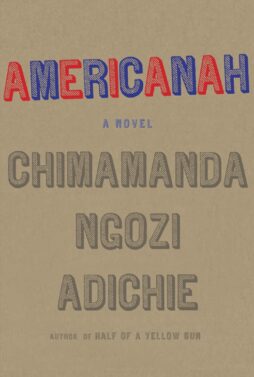
Americanah (2013) is Chimamanda Ngozi Adichie’s third novel and arguably her most ambitious work. It tells the story of Ifemelu and Obinze, two young Nigerians who fall in love as teenagers in Lagos, are separated by circumstance and geography, and eventually find their way back to each other. The novel is a sweeping exploration of race, identity, immigration, home, and belonging, spanning three continents and over a decade. Adichie uses her protagonists’ journeys to examine what it means to be African in America, what it means to return home, and how the experience of migration transforms people in ways both visible and invisible.
The title itself is significant: “Americanah” is a Nigerian slang term for someone who has lived in America and returned with acquired American mannerisms, sensibilities, and affectations. It is often used mockingly, suggesting that the person has forgotten their roots or adopted foreign ways. Throughout the novel, Ifemelu grapples with this label and what it means for her sense of self.
Part One: Princeton and the Decision to Return (Chapters 1-2)
The novel opens with Ifemelu, now in her early thirties, living in Princeton, New Jersey, where she has just completed a fellowship. She is preparing to move back to Nigeria after thirteen years in America. The opening chapters establish her ambivalent relationship with America: she appreciates the tranquility and order of Princeton but feels a deep sense of dislocation and “cement in her soul.” She has been writing an anonymous blog called “Raceteenth or Various Observations About American Blacks (Those Formerly Known as Negroes) by a Non-American Black,” which has become enormously popular.
These early chapters introduce several key themes. First, there is the matter of hair: Ifemelu travels from Princeton to Trenton to braid her hair because there is no salon in Princeton that serves Black women. This physical journey becomes a metaphor for the broader experience of navigating spaces where one is marked as different. The braiding salon, with its Senegalese and Malian braiders, becomes a microcosm of immigrant life, where women from different African countries negotiate their identities, share stories, and confront their own prejudices.
Second, we meet Aisha, the Senegalese braider who becomes a recurring presence in the novel. Aisha has two Igbo boyfriends, both of whom want to marry her but are constrained by family pressure to marry Igbo women. She asks Ifemelu to intervene, to tell these men that Igbo people can marry non-Igbo people. This request, absurd and poignant, reveals the desperation of immigrant life and the ways in which women are often caught between cultural expectations and personal desires.
Third, we learn that Ifemelu has cut off contact with Obinze years ago and has not spoken to him since. She sends him an email announcing her return to Nigeria, and he receives it while stuck in Lagos traffic.
The flashback structure of the novel is established here: we move between Ifemelu’s present (Princeton, Trenton, her decision to return) and her past (growing up in Nigeria, falling in love with Obinze, coming to America). This structure allows Adichie to layer experiences and emotions, showing how the past informs the present and how the present reinterprets the past.
Part Two: Childhood, Adolescence, and the Meeting of Obinze (Chapters 3-22)
This section is the longest in the novel and covers Ifemelu’s life in Nigeria from childhood through her university years and her decision to leave for America.
Ifemelu’s Family and Early Life
Ifemelu grows up in Lagos in a lower-middle-class family. Her father is a civil servant who is eventually fired for refusing to call his new boss “Mummy,” a humiliation that breaks something in him. He retreats into his books and his bitterness, his affected English becoming a shield against his sense of failure. Ifemelu’s mother undergoes a dramatic religious transformation after receiving a vision of an angel, transitioning from conventional Catholicism to a series of Pentecostal churches, each more demanding than the last. Her faith becomes a source of comfort and absurdity, a way of making sense of a life that offers little material security.
The family’s landlord threatens them over unpaid rent, and Aunty Uju, Ifemelu’s cousin and closest confidante, eventually provides the money to pay two years’ rent. Aunty Uju is a doctor who has become the mistress of a military general known only as “The General,” who provides her with a house in Dolphin Estate, a car, and a lifestyle far beyond what her salary could support. Ifemelu watches this relationship with a mixture of fascination and disapproval, seeing in Aunty Uju’s choices a cautionary tale about the compromises women make.
Meeting Obinze
Ifemelu meets Obinze at a party hosted by their mutual friend Kayode. Originally, Kayode intends to introduce Obinze to Ginika, Ifemelu’s beautiful half-caste friend, but there is an immediate connection between Obinze and Ifemelu. They dance, then sit outside and talk for hours, discovering that they share hometowns, that they both speak Igbo, that they both love reading. “I’m chasing you,” Obinze tells her, and this phrase becomes a defining moment in their relationship.
Their teenage romance is tender, passionate, and intellectually stimulating. Obinze introduces Ifemelu to American literature and culture; she teases him about his “proper books” while secretly being impressed. They lose their virginity to each other and have a pregnancy scare that turns out to be appendicitis. Obinze’s mother, a professor of literature at the University of Nsukka, becomes a mentor to Ifemelu, treating her as a daughter and offering advice about love, sex, and responsibility.
University Years and the Strike
Both Ifemelu and Obinze end up attending the University of Nsukka, largely because Obinze’s mother has health problems and he wants to be near her. Their university years are marked by the intermittent strikes that paralyze Nigerian universities, forcing students to spend months at home waiting for resolution. During one of these strikes, Ifemelu becomes vaguely interested in Odein, a charismatic student activist, and Obinze’s jealousy reveals the intensity of his feelings for her.
The strikes become a recurring motif in the novel, symbolizing the broader dysfunction of Nigerian institutions and the ways in which talented young people are driven to seek opportunities abroad.
Aunty Uju and The General
Meanwhile, Aunty Uju’s relationship with The General progresses. She becomes pregnant and gives birth to a son, Dike, whom The General adores. Ifemelu witnesses the complexities of this relationship: The General’s generosity, his casual cruelty, the ways in which Aunty Uju compromises her dignity to maintain her position. When The General dies in a plane crash, his relatives descend on the house, trying to claim his property and hurling insults at Aunty Uju. This scene is a powerful indictment of the ways in which women without legal standing are vulnerable to exploitation and loss.
The Decision to Leave for America
As the strikes continue and Obinze’s plans to get a visa to America are repeatedly frustrated, Ifemelu begins to consider applying to American universities. Obinze encourages her, seeing in her a chance to achieve the dream that has so far eluded him. She takes the SATs, receives a scholarship to a university in Philadelphia, and obtains a student visa. Her departure marks the beginning of the novel’s central separation.
Part Three: Obinze’s Story (Chapters 23-30)
Adichie shifts perspective in this section to tell Obinze’s story. After Ifemelu leaves for America, Obinze remains in Nigeria, struggling to find work and increasingly frustrated by his inability to secure a visa to the United States. His mother, wanting to help him, puts his name on her British visa application as her research assistant, allowing him to travel to England.
Life in London
Obinze arrives in London with high hopes but finds himself in a precarious situation. His cousin Nicholas, now married to Ojiugo and living in a London suburb, is less welcoming than Obinze had hoped. Obinze takes a series of menial jobs cleaning toilets, delivering kitchens using the National Insurance number of a man named Vincent Obi, whom he pays thirty-five percent of his earnings. He lives with Nicholas and his family, where he witnesses the tensions in their marriage and the ways in which the pressures of immigrant life have transformed them.
The British setting allows Adichie to explore a different dimension of the immigrant experience: the desperation of those without papers, the humiliations of working under someone else’s name, the constant fear of discovery. Obinze meets Iloba, a distant relative from his hometown, who helps him navigate these challenges. He also reconnects with Emenike, a former classmate who has been remarkably successful in England, married to a white woman named Georgina, and who now treats Obinze with a condescension that reveals the hollowness of his success.
The Attempted Sham Marriage
Desperate to remain in England, Obinze agrees to a sham marriage with a young Angolan woman named Cleotilde. The marriage brokers, two Angolan men, arrange everything the paperwork, the witnesses, the ceremony but on the day of the marriage, immigration officers raid the registry office and arrest Obinze. He is detained in Manchester, then Dover, and eventually deported back to Nigeria.
The deportation is a deeply humiliating experience. Obinze is handcuffed, paraded through airports, and confined in detention centers where he meets other deportees, many of whom have suffered much worse fates. The experience strips him of something essential: the belief that his intelligence, his education, his family background would protect him from the world’s cruelties.
Return to Nigeria
Obinze returns to Nigeria with nothing. His mother meets him at the airport, and he moves back to Nsukka. He has no job, no money, no prospects. He spends months applying for jobs, attending interviews, but nothing materializes. The novel captures the particular despair of returning to a country that should be home but feels like a stranger’s.
Eventually, his cousin Nneoma introduces him to Chief, a wealthy businessman who gives him an opportunity to participate in a suspicious land deal. Obinze agrees, and this marks the beginning of his transformation. The deal makes him rich, and with wealth comes access: he buys a house in Lagos, travels abroad, gets a visa to America easily. But he is haunted by the feeling that his success is not entirely his own, that he has been swept along by forces he does not fully understand or control.
He marries Kosi, a beautiful, deeply religious woman he meets at a wedding. Their marriage is comfortable but passionless, and Obinze often wonders if he married her because he wanted to or because he was supposed to. When Ifemelu sends him an email from America after years of silence, he deletes it without responding, too wounded by her abandonment to engage.
Part Four: Ifemelu’s American Life (Chapters 31-42)
This section returns to Ifemelu’s story after she stops responding to Obinze’s letters. She has fallen into a deep depression, unable to attend classes, unable to care for herself, surrounded by roommates who do not understand her.
The Tennis Coach
In her desperate search for work, Ifemelu answers an advertisement for a “personal assistant” to a tennis coach in Ardmore, Pennsylvania. The man is crude, entitled, and vaguely threatening. He pays her to “help him relax” a euphemism for a sexual encounter that leaves Ifemelu feeling violated and ashamed, even though she participated voluntarily. The experience becomes a source of deep trauma, a secret she carries for years, unable to tell Obinze or anyone else.
Depression and Recovery
Ifemelu’s depression is profound. She lies in bed for days, neglects her classes, does not respond to phone calls or emails. Ginika, her old friend from Nigeria, eventually intervenes, helping her get a job as a babysitter for the Turners, a wealthy white family in the suburbs of Philadelphia. The job provides her with money, stability, and a connection to a world she had only glimpsed from afar.
Kimberly and the Turners
Kimberly Turner is well-meaning, sincere, and profoundly condescending. She refers to Black women as “beautiful” in a way that reveals her inability to see them as fully human, and she apologizes constantly for her sister Laura’s casual racism. Ifemelu develops a complicated relationship with Kimberly, recognizing her good intentions while also being exhausted by her. The Turners become a window into American upper-middle-class life, with its anxiety about race, its earnest liberalism, and its profound blind spots.
Curt and the Hot White Ex
Kimberly’s cousin Curt falls in love with Ifemelu after hearing her laugh at his nephew’s antics. Curt is handsome, wealthy, charming, and utterly sure of himself. He has never been with a Black woman before, and he finds Ifemelu exotic and exciting in ways that make her uncomfortable even as they flatter her. Their relationship is happy, easy, and free of the complications that defined her relationship with Obinze.
But Curt’s obliviousness to race eventually becomes unbearable. He says things that reveal his assumptions about what Black women look like, about what people should be able to do with their hair and Ifemelu finds herself increasingly frustrated by his inability to see her experiences. Their relationship ends when Ifemelu cheats on Curt with a white man named Rob, a person she isn’t even particularly attracted to. The affair is less about desire than about self-sabotage, about testing whether she can destroy the life she has built.
The Blog
Ifemelu’s blog begins as a response to the frustrations of her life with Curt. She writes about the microaggressions she experiences daily, the casual racism that people don’t even recognize as racism, the particular exhaustion of being Black in America. The blog becomes enormously popular, attracting readers from around the world, offering speaking engagements and eventually a book deal.
The blog also becomes a source of anxiety. Ifemelu worries that she is exploiting her experiences, that she is turning trauma into a commodity, that the people who read her blog are not really interested in the conversations she wants to have. She begins to feel like a fraud, performing an identity that is not entirely hers.
Blaine
Ifemelu meets Blaine on a train and is immediately drawn to him. He is an assistant professor at Yale, handsome, thoughtful, and deeply committed to social justice. They have a passionate relationship, and Ifemelu is thrilled to be with someone who understands her, who shares her values, who does not require explanations.
But their relationship is marked by Blaine’s rigidity, his constant need to be right, his inability to see nuance in situations that challenge his worldview. When Ifemelu chooses to attend a colleague’s farewell lunch instead of a protest Blaine has organized, Blaine interprets this as a personal betrayal, and their relationship fractures. The fight is not really about the protest; it is about Blaine’s need for Ifemelu to be a certain kind of person, to conform to his expectations of how a partner should behave. Ifemelu begins to feel trapped, confined, diminishing.
Obama and the Election
Ifemelu and Blaine share a passionate investment in Barack Obama’s presidential campaign. The campaign becomes a way for them to reconnect, a shared hope that allows them to ignore the deeper problems in their relationship. The election night scene, with Ifemelu and Blaine and their friends gathered around the television, is one of the novel’s most emotionally powerful moments. As Obama delivers his victory speech, Ifemelu feels, for a moment, that America is a place of extraordinary possibility.
Dike’s Suicide Attempt
The pivotal event in this section is Dike’s suicide attempt. Dike, now a teenager living in Massachusetts with Aunty Uju and her new husband Bartholomew, has been struggling with his identity. He has internalized the subtle and not-so-subtle messages that he is different, that he does not belong. When Ifemelu arrives, she tries to connect with him, to understand what he is going through, but she cannot reach him.
Dike takes an overdose of Tylenol and lies down in the basement. Aunty Uju finds him and rushes him to the hospital. The experience is a wake-up call for Ifemelu, forcing her to confront her own guilt, her own failures, her own sense of helplessness. She realizes that she has not been present enough, that she has been too distracted by her own life to be there for the people she loves.
Part Five: Return to Nigeria (Chapters 43-44)
Ifemelu finally returns to Nigeria, and the novel shifts into a different register. She is no longer an outsider looking in; she is a returnee, an “Americanah,” trying to find her place in a country that has changed and that she has changed.
Reunion with Ranyinudo
Ranyinudo, Ifemelu’s old friend, picks her up at the airport and immediately begins narrating the changes that have taken place: the new money, the new buildings, the new politics of dating and marriage. Ifemelu is struck by how much has changed and how much has stayed the same. The roads are still bad, the traffic is still unbearable, the corruption is still pervasive. But there is also a new energy, a new confidence, a new sense that Nigeria is a place of opportunity.
The Job at Zoe
Ifemelu takes a job as the features editor at a women’s magazine called Zoe. The job is frustrating her boss, Aunty Onenu, is more interested in pleasing advertisers than in producing quality journalism, and the magazine’s content is bland and uninspiring. Ifemelu clashes with Doris, the American-accented editor who prioritizes style over substance, and finds an unlikely ally in Zemaye, the assistant editor who is sharp, perceptive, and skeptical of Ifemelu’s American sensibilities.
The Blog and the Return of Obinze
Ifemelu starts a new blog, The Small Redemptions of Lagos, writing about the city and its people, the small moments of beauty and absurdity that make up daily life. She sees Obinze from a distance, or thinks she does, but she does not contact him. She tells everyone that she is dating a Nigerian man named Blaine who will be joining her soon. But Blaine is not coming; their relationship has ended.
Part Six: Obinze’s Return (Chapter 44)
The novel returns to Obinze’s perspective. He has become a wealthy businessman, with a wife and child, a position in society, and a life that should be satisfying but is not. When he learns that Ifemelu has returned to Nigeria, he is consumed by memories and desires that he thought he had buried.
Part Seven: Reunion and Resolution (Chapters 45-55)
The Reunion
Ifemelu and Obinze finally meet at Jazzhole, a bookstore in Lagos. The scene is charged with emotion, with history, with all the things they have not said to each other. They sit in the café and talk, rediscovering each other, finding that the connection they shared as teenagers is still there.
The Affair
They begin an affair, meeting in secret, spending weekends together, pretending that they are not doing what they are doing. Ifemelu knows that Obinze is married, knows that she is the other woman, knows that she is doing exactly what she criticized Aunty Uju for doing. But she cannot stop. She is in love, and the love is consuming.
The Confrontation
Kosi, Obinze’s wife, knows about the affair. She does not confront Ifemelu; she confronts Obinze, begging him to stay, invoking their child, their vows, their responsibility. Obinze is torn between his desire for Ifemelu and his sense of duty to his family. He tells Ifemelu that he needs time to think, and he goes to Abuja alone, leaving Ifemelu furious and heartbroken.
The Breakup
Ifemelu breaks up with Fred, the man she has been seeing casually. She knows that she cannot be with anyone else while she is still in love with Obinze.
The Return
Obinze returns to Lagos and goes to Ifemelu’s flat. He has written her a long letter explaining everything his marriage, his feelings, his decision. He tells her that he has moved out of the house he shares with Kosi, that he wants to be with her, that he is chasing her. Ifemelu, after a moment of hesitation, lets him in.
The novel ends with the possibility of a new beginning, but it is not a simple happy ending. Obinze is still married, still a father, still entangled in a life that he cannot simply walk away from. Ifemelu is still carrying the wounds of her past, still uncertain about the future. But they are together, and that is enough, for now.
Character Analysis
Ifemelu
Ifemelu is the novel’s central consciousness, and her journey is the novel’s central subject. She is intelligent, opinionated, and fiercely independent, but also vulnerable, uncertain, and prone to self-sabotage. Her time in America transforms her in ways she does not fully understand, making her simultaneously more confident and more anxious, more American and more Nigerian.
Ifemelu’s relationship to race is central to her character. In Nigeria, she never thought of herself as Black; she was Igbo, Yoruba, Nigerian, but not Black. In America, she becomes Black, a category that carries with it a history, a set of assumptions, a weight she was not prepared for. Her blog becomes a way of processing this experience, of making sense of a world that insists on seeing her in ways she does not see herself.
Ifemelu’s hair is a recurring motif, a physical manifestation of her struggle with identity. She straightens it for a job interview, then cuts it all off, then grows it into a natural Afro. Each change corresponds to a shift in her sense of self, a new understanding of what it means to be beautiful, to be professional, to be authentic.
Obinze
Obinze is Ifemelu’s great love, but he is also a character in his own right. He is intelligent, thoughtful, and deeply moral, but also passive, conflict-avoidant, and prone to letting life happen to him rather than making choices.
His experience in England is the defining trauma of his life. The deportation shames him, strips him of his dignity, leaves him feeling like a failure. His subsequent success in Nigeria is a kind of compensation, a way of proving to himself and to the world that he is not the man who was handcuffed and led onto a plane.
His marriage to Kosi is a choice he makes because he is supposed to, because it is what people do, because he cannot think of a reason not to. He does not love her the way he loves Ifemelu, but he is fond of her, comfortable with her, grateful to her for creating a life that looks like the life he is supposed to want.
His decision to leave Kosi and pursue Ifemelu is his first truly active choice, his first real act of agency. It is also a choice that will have consequences he cannot fully anticipate, for himself, for Kosi, for Buchi, for Ifemelu.
Aunty Uju
Aunty Uju is Ifemelu’s cousin, mentor, and cautionary tale. She is intelligent, ambitious, and beautiful, but she makes choices that compromise her integrity, that leave her dependent on a man who can never fully be hers. Her relationship with The General is a study in the compromises women make, the ways in which they trade their autonomy for security, their dignity for comfort.
After The General’s death, Aunty Uju moves to America, where she struggles to rebuild her life. She passes her medical exams, gets a residency, moves to Massachusetts, marries Bartholomew. But she is never happy, never fulfilled, never at peace. Her relationship with Dike is fraught, complicated by her own unresolved issues, her own need to control, her own fear of losing him.
Dike
Dike is the novel’s most tragic figure, a child caught between cultures, between identities, between the expectations of his mother and the reality of his life. He is smart, funny, charming, but also lost, uncertain, unable to find a place where he truly belongs.
His suicide attempt is a cry for help, but it is also a statement about the impossibility of his situation. He is Black in a white world, American in a Nigerian family, a child of a father he never knew, a son of a mother who cannot fully see him. He is everything and nothing, and he does not know how to be any of it.
Blaine
Blaine is Ifemelu’s American boyfriend, a professor at Yale, a committed activist, a man who believes in justice, in truth, in doing the right thing. But his beliefs are rigid, unbending, and they leave no room for Ifemelu to be herself, to make mistakes, to be human.
Their relationship is a study in the limits of love, the ways in which two people can care for each other and still be wrong for each other, the ways in which good intentions are not enough.
Curt
Curt is Ifemelu’s white American boyfriend, a man who has never had to think about race, who believes in his own goodness, who is genuinely kind but also profoundly oblivious. His love for Ifemelu is real, but it is also a kind of possession, a way of proving something to himself, to his family, to the world.
Kosi
Kosi is Obinze’s wife, a woman who is beautiful, devout, and conventional. She wants what she is supposed to want a husband, a child, a home and she does not understand why Obinze wants something else. Her confrontation with Obinze, her refusal to let him go, is both a plea and a threat. She is not a villain; she is a woman trying to hold onto a life that is slipping away.
Ranyinudo
Ranyinudo is Ifemelu’s best friend in Nigeria, a woman who has stayed, who has built a life in Lagos, who has made compromises and choices that Ifemelu cannot fully understand. She is funny, sharp, and deeply loyal, and her friendship with Ifemelu is one of the novel’s most enduring relationships.
Themes and Analysis
Race and Racism
Americanah is, above all, a novel about race. Adichie explores the ways in which race is constructed, performed, and experienced in America, and the ways in which it differs from race in Nigeria. Ifemelu’s blog becomes a vehicle for these explorations, allowing Adichie to write directly about the microaggressions, the assumptions, the structural inequalities that shape Black life in America.
The novel is particularly interested in the difference between American Blackness and non-American Blackness. Ifemelu did not become Black until she came to America; in Nigeria, she was Igbo, Yoruba, Nigerian, but not Black. This distinction is crucial, because it reveals the ways in which race is not a natural category but a social one, a set of meanings imposed on bodies by history and culture.
Adichie is also interested in the ways in which race intersects with class, gender, and nationality. The novel shows how Black immigrants are treated differently from Black Americans, how class privilege can mitigate but never eliminate racism, how gender shapes the experience of race in ways that are often invisible to men.
Identity and Belonging
Ifemelu’s journey is a search for identity, for a sense of self that is not defined by others. She struggles to reconcile the person she was in Nigeria with the person she becomes in America, the person she is with Obinze with the person she is with Curt, the person who writes the blog with the person who lives the life.
This struggle is particularly acute for immigrants, who must navigate between two worlds, two sets of expectations, two versions of themselves. The novel shows how this navigation can be exhausting, alienating, and ultimately transformative.
Home and Return
What does it mean to go home? Can you ever really go home? These questions haunt the novel, which is structured around journeys from Nigeria to America, from America to Nigeria, from Lagos to London, from Lagos to Nsukka and the returns that follow.
Ifemelu’s return to Nigeria is not a simple homecoming. She has changed, and Nigeria has changed, and the two no longer fit together the way they once did. She must learn to navigate a country that is familiar and strange, to find a place for herself in a society that does not quite know what to make of her.
Hair as Metaphor
Throughout the novel, hair is a recurring symbol of identity, beauty, and resistance. Ifemelu’s hair is a source of pride and anxiety, a marker of her Nigerianness and her Americanness, a battleground on which she fights for control over her own body.
The novel’s most famous passage about hair, from Ifemelu’s blog, is a meditation on the politics of Black hair in America. It describes the ways in which natural hair is seen as unprofessional, unattractive, and political, while straight hair is seen as normal, beautiful, and apolitical. This double standard is a metaphor for the broader double standards that govern Black life in America.
Love and Choice
The novel is, finally, a love story. It is the story of Ifemelu and Obinze, their teenage romance, their years apart, their reunion, their decision to be together despite the obstacles in their path. But it is also a story about the choices we make, the ways in which we choose our partners, our homes, our identities.
Obinze’s decision to leave Kosi is a choice, but it is not a simple one. He has a child, a wife, a life. He must weigh his happiness against his responsibilities, his desires against his duties. The novel does not resolve this tension; it simply presents it, showing that love is never simple, that choices always have consequences.
Style and Structure
The Blog Posts
One of the novel’s most distinctive features is the inclusion of Ifemelu’s blog posts, which appear as interludes between chapters. These posts are written in a different voice more direct, more polemical, more humorous and they allow Adichie to explore ideas that are not easily expressed in the narrative.
The blog posts are also a commentary on the novel itself, a way of drawing attention to the constructedness of the story, the ways in which race and identity are performed. They are, in a sense, the novel’s conscience, always pushing back against the temptation to simplify or sentimentalize.
The Third-Person Omniscient
The novel is written in the third person, with a narrator who moves between Ifemelu and Obinze, between past and present, between Nigeria and America. This narrator is not neutral; it is sympathetic, wry, and occasionally judgmental. It is, in many ways, a kind of superego, commenting on the characters’ actions, revealing their contradictions, exposing their self-deceptions.
The Flashbacks
The novel’s structure is complex, moving back and forth in time, weaving together the stories of Ifemelu and Obinze. The flashbacks are not simply background; they are essential to the novel’s meaning, showing how the past shapes the present, how the people we become are rooted in the people we were.
The structure also creates a sense of inevitability, of destiny. We know, from the opening chapters, that Ifemelu and Obinze will find each other again; the novel’s pleasure lies in discovering how, and why, and at what cost.
Conclusion
Americanah is a novel of extraordinary scope and ambition. It is a love story, a social commentary, a meditation on race and identity, a travelogue, a bildungsroman. It is funny, sad, angry, and hopeful, sometimes all at once.
Adichie’s achievement is to make the personal political and the political personal, to show how the forces of history and culture shape individual lives, and how individual lives, in turn, shape history and culture. Ifemelu and Obinze are not just characters; they are representatives of a generation, of a diaspora, of a moment in history that is still unfolding.
The novel ends not with a resolution but with a possibility. Ifemelu and Obinze are together, but their future is uncertain. The novel asks us to believe in that possibility, to hope that love can overcome the obstacles that history has placed in its path, to imagine a world in which people can be fully themselves, fully at home, fully loved.
That is the promise of Americanah, and it is a promise that the novel, in its best moments, makes good on.