Africa 39 New Writing from Africa South of the Sahara
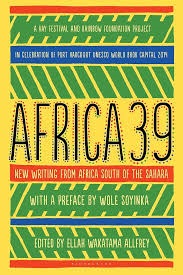
Africa39: New Writing from Africa South of the Sahara is a landmark literary anthology published in 2014 by Bloomsbury Publishing Plc. Curated under the auspices of the Hay Festival and in celebration of Port Harcourt’s selection as the UNESCO World Book Capital 2014, the collection brings together thirty-nine of the most promising and distinctive writers under the age of forty from sixteen countries south of the Sahara. Part I: Prefaces and Editorial Frameworks Wole Soyinka’s Introduction: “The Word Shall Fly Free!” In his introduction, Nobel Laureate Wole Soyinka frames the collection around the twenty-fifth anniversary of the fall of the Berlin Wall. He reflects on how the historical “wind of change” that blew across post-colonial Africa in the mid-20th century changed character, carrying the debris of external ideological warfare. Soyinka distinguishes between a handful of genuine leaders who possessed conviction in social doctrines and a cynical majority who used radical ideologies as weapons to silence dissidence and demand conformity. In the Soviet Union and its captive bloc, creative choices were placed under a “testamentary microscope,” turning literature into a mechanism of party ideology. This ideological policing soon spread to African academic institutions, resulting in bitter, paralyzing debates. For Soyinka, the …

Read more

A Shuttle in the Crypt by Wole Soyinka

Wole Soyinka’s A Shuttle in the Crypt is a profoundly visceral collection of poetry written during his two years of solitary confinement (1967–1969) during the Nigerian Civil War. Soyinka was imprisoned by the federal government for writings perceived as sympathetic to secessionist Biafra, and this volume serves as a “map of the course trodden by the mind” during that period of extreme sensory and social deprivation. The book is defined by its core metaphor of the “shuttle” a restless, energy-charged tool of a loom that Soyinka identifies as a “natural weapon” against “inhuman isolation”. The Central Metaphor: The Shuttle and the Crypt The title and the preface establish the psychological framework of the collection. Soyinka describes the shuttle as a “unique species of the caged animal,” a “trapped weaver-bird” that remains “charged in repose with unspoken forms and designs”. In the silence of the “crypt” (his prison cell), the shuttle becomes a symbol of innate repletion and creative mystery. Soyinka explains that identifying with the shuttle allowed him to absorb every incidental thought, dream, and event into a “loom-shuttle unity” of existence. This was a survival tactic against the “landscape of the loss of human contact,” where reality begins to …

Read more

A Play of Giants by Wole Soyinka

Wole Soyinka’s A Play of Giants is a blistering satire that dissects the grotesque nature of power, the complicity of international interests, and the intellectual rationalizations of tyranny. Set within the Bugaran Embassy to the United Nations in New York, the play features a quartet of African dictators modeled on real-life figures as they navigate diplomatic tensions, internal dissent, and their own megalomania while posing for a monumental sculpture intended for the UN building. The Protagonists: The “Supermen” of Africa The play’s central figures are four African heads of state, each representing a specific brand of 20th-century despotism. Soyinka explicitly identifies their real-life counterparts in his introductory notes: Field-Marshal Kamini: Modeled on Idi Amin of Uganda. He is the central “Hero of Heroes,” a physically imposing, semi-literate, and psychopathic leader who maintains power through raw brutality and a “common man” persona. Emperor Kasco: Based on Jean-Baptiste Bokassa of the Central African Republic. He is depicted as a “dwarfish creature” who parodies Kamini’s military aesthetic but adds a cloak of imperial purple, reflecting his obsession with Napoleonic grandeur. Benefacio Gunema: Modeled on Macias Nguema of Equatorial Guinea. A tall, thin man in immaculate tails, he is the philosopher of “voodoo power,” …

Read more

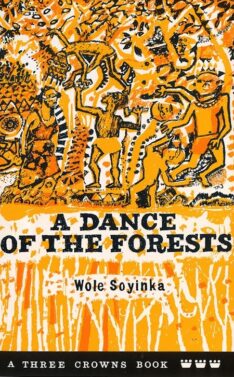
A Dance of the Forests by Wole Soyinka

Wole Soyinka’s A Dance of the Forests is a complex, multi-layered play that was first performed in 1960 as part of the Nigerian Independence Celebrations. The play serves as a profound critique of the tendency of new nations to romanticize their past while ignoring the repetitive patterns of human cruelty and failure. The central dynamic of the work is a conflict between the desire of the dead for judgment and the desire of the living to avoid it, all while being manipulated by the mysterious Forest Father. The Frame Story: The Gathering of the Tribes The play begins during a major festivities referred to as the “Gathering of the Tribes,” which serves as an analogue for Nigerian Independence. The human community, led by figures like the Old Man, decides that they must invite their “illustrious ancestors” to participate in this historical moment of rejoicing. They ask the spirits of the forest to send them great forebears warriors, sages, and builders of empires hoping to “drink from their resurrected glory”. However, the spirits, specifically Aroni the Lame One, choose to send two “restless dead” who are not the idealized figures the townspeople expected. These ancestors, known simply as the Dead Man …

Read more