
Introduction
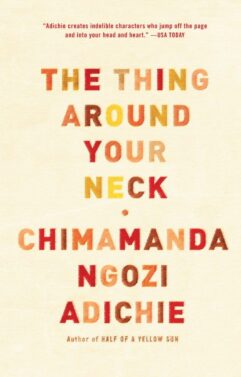
The Thing Around Your Neck (2009) is Chimamanda Ngozi Adichie’s collection of twelve short stories that explore the complexities of Nigerian identity, the immigrant experience, gender dynamics, political oppression, and the enduring legacy of colonialism. The collection moves between Nigeria and America, examining the lives of characters caught between cultures, traditions, and competing loyalties. Adichie, who grew up in Nigeria and divides her time between the United States and Nigeria, brings an insider’s perspective to these narratives, rendering them with emotional precision and political acuity.
The stories in this collection are united by several recurring themes: the tension between traditional African values and Western modernity; the psychological and physical violence of patriarchal structures; the corruption and brutality of military regimes; the alienation of immigrants in America; the resilience of women; and the complicated nature of love, family, and home. Adichie’s prose is characterized by its clarity, its psychological insight, and its ability to render both the specific textures of Nigerian life and the universal dimensions of human experience.
This analysis will provide a detailed summary of each story, examine the major characters, and offer a comprehensive thematic and structural analysis of the collection as a whole.
Story-by-Story Summary
1. “Cell One”
The opening story is narrated by a young woman whose brother, Nnamabia, has been arrested and imprisoned in a police cell in Enugu. The narrative establishes the family’s history of theft: first, a neighbor named Osita stole their television and VCR; later, Nnamabia himself faked a break-in and stole their mother’s gold jewelry. The story reveals the culture of theft that has become normalized on the Nsukka university campus, where the sons of professors engage in criminal behavior while their parents publicly blame “riffraff from town.”
Nnamabia is arrested during a period of cult violence on campus. The police sweep up young men indiscriminately, and Nnamabia is caught in the net. The family visits him daily, bringing food and bribes for the police. Nnamabia initially treats his imprisonment as a performance, entertaining his family with stories of how he hid money in his anus and ingratiated himself with “General Abacha,” the cell’s chief. His tone is histrionic, and his sister (the narrator) finds his performance tiresome.
However, Nnamabia’s attitude changes when an elderly man is thrown into the cell. The old man’s son is wanted for armed robbery, and when the police cannot find the son, they arrest the father instead. The old man is ill, his hands shake, and he cannot afford to buy bathing water. He is humiliated by the other prisoners and the police, who mock his shriveled body and force him to parade naked. Nnamabia, who has been friendly with the cell chief, becomes increasingly disturbed by the old man’s treatment.
When the policemen ask the old man to undress and parade the corridor, Nnamabia shouts at them, calling the old man innocent and ill. For his defiance, Nnamabia is beaten and taken to Cell One, the dreaded punishment cell where prisoners are sent to disappear. The family learns that Nnamabia has been transferred, and they race to find him. When they finally locate him, he is bruised and bloodied but alive. He does not dramatize his suffering; instead, he tells the story quietly, with a new sobriety. The narrator realizes that her brother has been changed by his ordeal, that he has learned something about courage and dignity.
Characters:
- The Narrator: A young woman, observant and skeptical, who narrates with a mixture of affection and exasperation for her brother.
- Nnamabia: The narrator’s brother, handsome, charming, and spoiled. He is seventeen when he steals his mother’s jewelry and later a university student when he is arrested. His transformation from a performative sufferer to a genuine defender of the vulnerable is the story’s emotional core.
- The Mother: Indulgent, emotional, and protective of Nnamabia. She cries about the price of the stolen jewelry and insists on visiting her son daily.
- The Father: A professor, calm and deliberate. He believes that Nnamabia’s imprisonment has “shaken him for once.”
- The Old Man: A retired civil servant in his seventies, arrested in place of his son. His suffering and humiliation catalyze Nnamabia’s moral awakening.
- General Abacha: The chief of Nnamabia’s cell, a prisoner who controls the others through a system of bribes and favors.
Themes:
- The normalization of corruption and violence in Nigerian society.
- The arbitrary nature of police power and the vulnerability of ordinary citizens.
- The possibility of moral transformation through suffering.
- The contrast between performative masculinity and genuine courage.
- The failure of the older generation (the parents) to hold their children accountable.
2. “Imitation”
Nkem is a Nigerian woman living in suburban Philadelphia with her two children, Adanna and Okey. Her husband, Obiora, a wealthy Nigerian businessman, lives primarily in Lagos and visits only two months a year. Nkem’s friend Ijemamaka calls from Nigeria to tell her that Obiora has a girlfriend a young woman with short curly hair who has moved into their house in Lagos and drives Obiora’s cars around the city.
The news devastates Nkem, although she has long suspected her husband’s infidelity. She walks through her empty house, staring at the African art objects Obiora has collected a Benin mask, a Nok terracotta, an Ife bronze head. These objects, which Obiora describes with passionate erudition, are “imitations,” copies of originals stolen by the British. The metaphor of imitation extends to Nkem’s life: she is an imitation wife, living in an imitation marriage, in an imitation American life.
Nkem cuts off her long hair, which Obiora loved, and has it texturized into the short, curly style of Obiora’s girlfriend. She calls the house in Lagos and speaks to a new houseboy, Uchenna, who hesitates when she asks if anyone else is there. She knows the girl is in her house.
When Obiora visits, Nkem confronts him indirectly. She asks if they can “cram a year’s worth of marriage into two months in the summer and three weeks in December.” She tells him that they are moving back to Lagos at the end of the school year. Obiora is surprised Nkem has never spoken up before but he agrees, saying, “If that is what you want.” Nkem knows that there is nothing to talk about; it is done.
Characters:
- Nkem: A Nigerian woman in her thirties, married to a wealthy man, living a life of material comfort in America but emotionally starved. Her decision to cut her hair and demand a return to Nigeria represents her reclaiming of agency.
- Obiora: Nkem’s husband, a successful businessman who collects African art and keeps a girlfriend in Lagos. He is charming, learned, and selfish.
- Ijemamaka: Nkem’s friend in New Jersey, who delivers the news of Obiora’s girlfriend with a mixture of concern and schadenfreude.
- Amaechi: Nkem’s housegirl, a young Nigerian woman who has become Nkem’s confidante. Amaechi advises Nkem to forgive Obiora, saying, “Men are like that.”
- Adanna and Okey: Nkem’s children, who are excited to see their father but will eventually question his absence.
Themes:
- The commodification of African art and culture by wealthy Nigerians and Western collectors.
- The loneliness and isolation of immigrant wives.
- The power dynamics of marriage and the ways women are expected to accommodate male infidelity.
- The tension between material comfort and emotional fulfillment.
- The metaphor of imitation: imitation art, imitation marriages, imitation lives.
3. “A Private Experience”
Chika, a Nigerian university student, is caught in a riot in Kano. She takes refuge in an abandoned store with a Hausa Muslim woman. The two women are from different ethnic and religious backgrounds Chika is Igbo and Christian, the woman is Hausa and Muslim but they are united by their shared fear and vulnerability.
The woman notices that Chika is bleeding from a cut on her leg. She wets her scarf at a rusty tap and ties it around Chika’s wound. The woman also asks Chika to examine her nipples, which are cracked and burning. Chika, a medical student, examines her and advises her to use cocoa butter. The woman tells Chika that she is a trader, that she has five children, and that her first daughter, Halima, is missing in the market.
As they wait in the store, they hear the sounds of the riot outside running feet, shouting, gunfire. The woman prays, facing Mecca, and Chika looks away, respecting her privacy. Chika thinks about her sister Nnedi, who was with her in the market and is now missing. She also thinks about her own lack of faith, her inability to pray.
When Chika leaves the store to find help, she sees a burned body in the street. She runs back to the store, terrified. The woman cleans her wound again and they spend the night together. In the morning, the woman leaves to find her daughter. Chika gives her back the scarf, but the woman tells her to keep it.
Later, Chika will search for Nnedi in hospitals and morgues, but she will never find her. She will remember the woman’s kindness, her gentleness, and she will reject the easy narratives of ethnic and religious hatred.
Characters:
- Chika: A medical student at the University of Lagos, Igbo and Christian, from a privileged background. Her encounter with the Hausa woman challenges her assumptions about ethnicity and religion.
- The Woman: A Hausa Muslim trader, mother of five, whose daughter Halima is missing. She is gentle, practical, and deeply religious.
- Nnedi: Chika’s sister, a political science student who is lost in the riot. She is never found.
- Halima: The woman’s daughter, a groundnut seller, also lost in the riot.
Themes:
- The senselessness of ethnic and religious violence.
- The possibility of human connection across difference.
- The contrast between abstract political narratives and lived experience.
- The vulnerability of women in times of crisis.
- The private nature of faith and grief.
4. “Ghosts”
Professor James Nwoye, a retired mathematics professor of seventy-one, visits the university Bursary to inquire about his pension, which has not been paid in three years. He encounters a group of former colleagues and workers, including Vincent, his former driver, who complain about the corruption of the vice chancellor and the government.
As he leaves, James sees Ikenna Okoro, a colleague who was presumed dead during the Biafran War. Ikenna was a sociology lecturer, a fiery orator, and a Zikist who had gone back to campus on the day of evacuation and was never seen again. James and Ikenna greet each other with shock and uncertainty.
Ikenna tells James that he left Biafra on a Red Cross plane to Sweden, where he has lived for thirty-seven years. He never remarried; his family was killed in Orlu. James tells Ikenna that his wife, Ebere, died three years ago, and that his daughter, Zik, died during the war. They have another daughter, Nkiru, who is a doctor in America.
James reveals that Ebere visits him her ghost comes to him at night, massaging his arms and legs with Nivea cream, as she did in life. Ikenna is skeptical, but James insists. He does not go to church anymore because he is no longer uncertain about the afterlife.
Ikenna talks about his work for Biafra, organizing fund-raising and rallies in Europe. He speaks with a mixture of pride and defensiveness, as if he has spent years justifying his survival. James tells Ikenna about the state of the university the corruption, the cults, the falling standards. They part, and James knows he will not see Ikenna again.
Characters:
- Professor James Nwoye: A retired mathematics professor, widower, and father. He is dignified, skeptical, and haunted by the past. His belief in his wife’s ghost represents his refusal to let go of love and memory.
- Ikenna Okoro: A former sociology lecturer, presumed dead, who has lived in Sweden for thirty-seven years. He is a man carrying the weight of what could have been.
- Ebere: James’s late wife, who visits him as a ghost. She is playful, loving, and irreverent.
- Nkiru: James and Ebere’s daughter, a doctor in America, who worries about her father and wants him to move to America.
- Vincent: James’s former driver, now a cobbler, who complains about the pension system.
Themes:
- The lasting trauma of the Biafran War.
- The corruption and decay of Nigerian institutions.
- The nature of faith and the afterlife.
- The persistence of love and memory.
- The tension between survival and guilt.
5. “On Monday of Last Week”
Kamara, a Nigerian woman, works as a nanny for Josh, the seven-year-old son of Neil, a white Jewish lawyer, and Tracy, an African-American artist. Tracy lives in the basement, working on a commission, and Kamara is instructed not to bother her.
Kamara is lonely and unhappy in America. Her husband, Tobechi, has changed he speaks with a fake American accent, he is obsessed with money and status, and he wants a year of “just the both of them” before having children, so she secretly stops taking her birth control pills. She longs for a child.
One afternoon, Tracy comes upstairs. She is curvy, beautiful, and exudes a sensual confidence that captivates Kamara. Tracy touches Kamara’s chin, compliments her teeth, and asks if she has ever been an artist’s model. She invites Kamara to the basement to see her painting, where she asks Kamara to take off her clothes for her. Kamara is flustered but intrigued. Tracy says, “Think about it.”
Kamara becomes obsessed with Tracy. She diets, exercises, gets her hair braided, buys new makeup. She hopes Tracy will come upstairs again. When Tracy finally does, she is distracted and impatient. She asks Kamara to take her clothes off, but then says, “Not today. Today isn’t a good day.”
Kamara is devastated. She realizes that Tracy has been flirting with her as a game, that she is not genuinely interested. The story ends with Kamara watching Tracy flirt with Maren, Josh’s French teacher, using the same line: “Have you ever been an artist’s model?”
Characters:
- Kamara: A Nigerian woman, educated but unemployed, lonely and unhappy in her marriage. Her attraction to Tracy represents her longing for beauty, desire, and agency.
- Tracy: An African-American artist, sensual and narcissistic. She uses her sexuality as a form of power, manipulating Kamara and others.
- Neil: Kamara’s employer, a white Jewish lawyer, anxious and overprotective. He represents the well-meaning but patronizing white liberal.
- Josh: Neil and Tracy’s son, a sweet and observant child. He is caught between his parents’ dysfunction.
- Tobechi: Kamara’s husband, a Nigerian immigrant who has adopted American mannerisms and values. He is ambitious, materialistic, and emotionally distant.
- Maren: Josh’s French teacher, another object of Tracy’s flirtation.
Themes:
- The loneliness and dislocation of the immigrant experience.
- The performance of desire and the power of sexuality.
- The dysfunction of American families and parenting.
- The tension between traditional African values and American individualism.
- The search for identity and belonging.
6. “Jumping Monkey Hill”
Ujunwa, a Nigerian writer, attends a two-week African Writers Workshop at a resort called Jumping Monkey Hill outside Cape Town. The workshop is organized by Edward Campbell, an elderly white British Africanist, and funded by the Chamberlain Arts Foundation. The participants come from various African countries: South Africa, Tanzania, Uganda, Zimbabwe, Kenya, Senegal, and Nigeria.
Edward is condescending and patronizing. He tells the participants that their stories must be “real” and “authentic,” and he dismisses stories that do not fit his preconceptions about Africa. When the Senegalese participant reads a story about a lesbian relationship, Edward says it is “not reflective of Africa.” When Ujunwa reads her story about a young Nigerian woman who faces sexual harassment and corruption in the workplace, Edward says it is “implausible” and “agenda writing.”
Ujunwa realizes that Edward has been sexually harassing her throughout the workshop. He stares at her body, makes suggestive comments (“I’d rather like you to lie down for me”), and tells the Senegalese participant that he dreamed of her naked navel. The other participants notice but say nothing, until Ujunwa confronts them in the bar. They admit that they have seen Edward’s behavior but have been reluctant to speak up.
Ujunwa’s story is based on her own experience. She had been sexually harassed by an alhaji while working at a bank, and she had walked out. She had also been harassed by her father’s friend, and she had been estranged from her father since he left her mother for another woman. The workshop becomes a mirror of the power dynamics she has experienced throughout her life.
In the end, Ujunwa leaves the workshop. She calls her mother and tells her she is coming home.
Characters:
- Ujunwa Ogundu: A Nigerian writer, formerly a banker, who has lost her job. She is sharp, observant, and angry. Her story is a fictionalized account of her own experiences.
- Edward Campbell: An elderly white British Africanist, the organizer of the workshop. He is patronizing, sexist, and racist, although he believes himself to be enlightened.
- Isabel: Edward’s wife, an animal rights activist and “old Africa hand.” She is complicit in Edward’s behavior.
- The Senegalese Woman: A young lesbian writer from Senegal, the youngest participant. She is confident and unapologetic about her sexuality.
- The Kenyan Man: A writer who befriends Ujunwa and acknowledges Edward’s behavior.
- The Zimbabwean Woman: A writer whose story about a Pentecostal minister is criticized by Edward.
- The Ugandan Man: The workshop leader, a prizewinning writer who aligns himself with Edward.
- The Tanzanian Man: A writer who defends Edward’s behavior, arguing that they should not antagonize a man with connections.
Themes:
- The politics of representation and the Western gaze on Africa.
- Sexual harassment and the abuse of power.
- The tension between “authenticity” and artistic freedom.
- The complicity of silence.
- The resilience of women in the face of patriarchal violence.
7. “The Thing Around Your Neck”
Akunna, a young Nigerian woman, wins the American visa lottery and moves to Maine to live with her uncle. Her uncle, who is actually a distant relative, tries to sexually assault her. She flees to Connecticut, where she works as a waitress in a restaurant.
Akunna is lonely and isolated. She sends money home to her parents but does not write letters because she has nothing to say. At night, something wraps itself around her neck, choking her before she falls asleep the “thing around your neck” is her loneliness, her grief, her displacement.
She meets a young white man, a student at the state university, who has traveled in Africa and is knowledgeable about African literature. He is attracted to her, and she is wary of his condescension, but she is also drawn to him. They begin a relationship.
Akunna is uncomfortable with his wealth and his casual generosity. He buys her presents a glass ball, a shiny rock, an expensive scarf that are beautiful but useless. She tells him that in her life, presents were always useful. He laughs, but she does not.
She also resents his self-righteousness, his belief that he understands Africa because he has traveled there. She tells him about her father, a junior driver who once prostrated himself in the road after hitting a Big Man’s car. She tells him that her father looked like “nsi” shit and that she refused to look at him. The man says he understands, but she shakes her hand free, annoyed.
When Akunna’s father dies, she returns to Nigeria. She does not know if she will go back to America. The thing around her neck has loosened, but it has not disappeared.
Characters:
- Akunna: A young Nigerian woman, intelligent and observant, who wins the visa lottery and moves to America. She is lonely, displaced, and struggling to find her place.
- The Boyfriend: A young white American man, a student at the state university, who has traveled in Africa and is knowledgeable about African culture. He is well-meaning but condescending.
- The Uncle: Akunna’s distant relative, who tries to sexually assault her. He represents the betrayal of trust and the exploitation of vulnerability.
- Akunna’s Parents: Her father, a junior driver, and her mother, a cleaner. They are poor but proud.
Themes:
- The loneliness and dislocation of the immigrant experience.
- The exploitation of young women by family members.
- The condescension of Westerners who “love” Africa.
- The tension between material wealth and emotional fulfillment.
- The persistence of grief and loss.
8. “The American Embassy”
A woman stands in line outside the American embassy in Lagos, waiting to apply for asylum. She is the forty-eighth person in a line of about two hundred. She has recently buried her four-year-old son, Ugonna, who was shot by government agents who came to arrest her husband, a journalist critical of General Abacha’s regime.
The woman is numb with grief. She has been advised by friends to tell her story to the visa interviewer, to make Ugonna “real,” to cry but not too much. But when she reaches the interviewer, she cannot bring herself to speak about her son. She realizes that she would rather die than “hawk” her son for a visa.
The interviewer asks for evidence of government involvement in her son’s death. The woman says, “I buried it yesterday. My son’s body.” The interviewer is sympathetic but insists on evidence. The woman walks out of the embassy without a visa.
Characters:
- The Woman: A former journalist, now a grieving mother. She is dignified, proud, and unwilling to exploit her son’s death for a visa.
- Ugonna: The woman’s four-year-old son, shot by government agents. He is described as a joyful, curious child.
- The Husband: A journalist critical of the government, who has fled to Benin Republic and then to America.
- The Man Behind Her: A friendly, talkative man who offers the woman oranges and advice. He represents the ordinary Nigerian who is sympathetic but ultimately powerless.
- The Visa Interviewer: A white American woman, sympathetic but bureaucratic. She represents the limits of American compassion.
Themes:
- The brutality of military regimes.
- The grief of a mother who has lost her child.
- The indignity of the visa application process.
- The tension between telling one’s story and exploiting one’s suffering.
- The meaning of courage and dignity.
9. “The Shivering”
Ukamaka, a Nigerian graduate student at Princeton, learns that a plane has crashed in Nigeria on the same day the Nigerian first lady died. She is worried because her ex-boyfriend, Udenna, is in Nigeria for his cousin’s wedding and might have been on the plane. A Nigerian man named Chinedu knocks on her door and asks to pray with her.
Chinedu is deeply religious, a Pentecostal Christian who prays with fervor, covering things with the blood of Jesus and binding demons. Ukamaka is skeptical but allows him to pray. During the prayer, she begins to shiver uncontrollably a phenomenon she experienced once as a teenager and attributed to God.
Ukamaka’s mother calls to tell her that Udenna missed the flight. He is safe. Ukamaka weeps with relief, and Chinedu holds her.
In the following days, Ukamaka and Chinedu become friends. She talks about Udenna, who broke up with her because their relationship had become “staid.” Chinedu listens patiently, but when Ukamaka says that Udenna was like Abidemi, Chinedu’s ex-boyfriend, Chinedu becomes angry and tells her that not everything is about Udenna.
Chinedu reveals that he is gay. He had a relationship with Abidemi, a wealthy banker who was engaged to a woman. Abidemi wanted Chinedu to continue the relationship even after his marriage, but Chinedu ended it.
Chinedu also reveals that he is in America illegally. His visa expired three years ago, and he is living in a friend’s apartment, working under the table. He is facing deportation.
Ukamaka and Chinedu’s friendship deepens. She drives him to church, they shop together, and they talk about faith, love, and home. In the end, they go to Mass together, and Ukamaka feels a sense of hope.
Characters:
- Ukamaka: A Nigerian graduate student at Princeton, intelligent, skeptical, and emotionally wounded by her breakup with Udenna.
- Chinedu: A Nigerian man living in America illegally, deeply religious, gay, and carrying the weight of his secrets.
- Udenna: Ukamaka’s ex-boyfriend, a Wharton MBA student, charming, selfish, and dismissive.
- Abidemi: Chinedu’s ex-boyfriend, a wealthy banker who wanted to have both a wife and a male lover.
- Father Patrick: A Catholic priest at Princeton, who counsels Ukamaka.
- Ukamaka’s Mother: A loving, practical woman who calls to tell Ukamaka that Udenna is safe.
Themes:
- The nature of faith and doubt.
- The complexity of love and relationships.
- The loneliness of the immigrant experience.
- The tension between religious conviction and intellectual skepticism.
- The possibility of friendship across difference.
10. “The Arrangers of Marriage”
Chinaza, a young Nigerian woman, arrives in America to marry Ofodile, a doctor she barely knows. The marriage was arranged by her uncle and aunt, who raised her after her parents died. Ofodile has been in America for eleven years and has changed his name to Dave Bell.
Chinaza is shocked by her new life. The apartment is small and shabby, not the “house” Ofodile promised. He insists that she speak English at home, cook American food, and adopt American ways. He changes her name to Agatha Bell. He is stingy, controlling, and sexually inconsiderate.
Chinaza meets Nia, a black American woman who lives in the building. Nia is independent, confident, and sexually liberated. She tells Chinaza that she had sex with Ofodile when he first moved in. Nia encourages Chinaza to leave Ofodile and start a new life.
Chinaza discovers that Ofodile was previously married to an American woman a green card marriage that was never properly dissolved. She is devastated by his deception. She moves in with Nia, but eventually returns to Ofodile, knowing she has no other options until she gets her green card.
Characters:
- Chinaza (Agatha): A young Nigerian woman, intelligent and resourceful, who is forced into a marriage of convenience.
- Ofodile (Dave Bell): A Nigerian doctor, controlling, stingy, and deceptive. He represents the immigrant who has lost his identity in his desperation to assimilate.
- Nia: A black American woman, independent, sexually liberated, and generous. She represents the possibility of a different kind of life.
- Uncle Ike and Aunty Ada: Chinaza’s guardians, who arranged the marriage. They are well-meaning but opportunistic.
Themes:
- The exploitation of women in arranged marriages.
- The pressure to assimilate and erase one’s identity.
- The loneliness and isolation of the immigrant experience.
- The tension between tradition and modernity.
- The resilience of women in the face of adversity.
11. “Tomorrow Is Too Far”
The narrator, a young woman, returns to Nigeria after eighteen years to attend her grandmother’s funeral. She is haunted by the memory of her brother Nonso’s death, which occurred during a summer visit to their grandmother’s house.
Nonso was the favored grandson, the one who would carry on the family name. The narrator, a better climber than Nonso, was overlooked and resentful. She loved her cousin Dozie, who was also overlooked because he was a “nwadiana” a daughter’s son, not a son’s son.
The narrator, at ten years old, convinced Nonso to climb to the top of an avocado tree. When he was near the top, she screamed that there was a snake the echi eteka, “Tomorrow Is Too Far” on the branch. Nonso fell and died.
The narrator has carried the secret of her guilt for eighteen years. She told her mother that their grandmother had frightened Nonso, that the grandmother had stood by and watched him die. Her mother believed her, and the family was torn apart.
At the funeral, the narrator confronts Dozie, who knows the truth. Dozie tells her that he never wanted anything for himself; he only wanted what she wanted. The narrator realizes that her hatred of Nonso, her love for Dozie, and her guilt have shaped her entire life.
Characters:
- The Narrator: A woman in her late twenties, haunted by her brother’s death.
- Nonso: The narrator’s brother, the favored son, who died at ten.
- Dozie: The narrator’s cousin, her childhood love, who knows the truth about Nonso’s death.
- Grandmama: The narrator’s grandmother, who favored Nonso and is blamed for his death.
- The Mother: The narrator’s mother, who believed the narrator’s lie and divorced her father.
Themes:
- The destructive power of jealousy and resentment.
- The burden of guilt and secret.
- The tension between love and hate.
- The legacy of family dysfunction.
- The impossibility of truly knowing another person.
12. “The Headstrong Historian”
Nwamgba is a headstrong young woman who marries Obierika against her mother’s wishes. Obierika’s family has a history of infertility, but Nwamgba is determined to marry him. They have a son, Anikwenwa, after several miscarriages.
When Obierika dies, his cousins Okafo and Okoye try to take his land and property. Nwamgba fights them, but she realizes that she needs to give her son an English education so that he can defend his inheritance in the white man’s court.
Anikwenwa is baptized as Michael and educated by Catholic missionaries. He becomes a catechist, rejects his traditional religion, and marries a Christian woman named Mgbeke. Nwamgba is heartbroken by her son’s transformation, but she finds solace in her granddaughter, Grace (Afamefuna), who is intelligent and spirited.
Grace goes to secondary school, where she is taught that her grandmother’s stories are “primitive” and that Africa has no history. She becomes a historian, writes a book called Pacifying with Bullets: A Reclaimed History of Southern Nigeria, and changes her name back to Afamefuna. She returns to her grandmother’s deathbed, where she holds her hand and comes to understand the strength and dignity of her grandmother’s life.
Characters:
- Nwamgba: A headstrong, determined woman who fights for her family’s survival and dignity. She represents the resilience of traditional African women.
- Obierika: Nwamgba’s husband, a prosperous farmer and musician. He dies young, leaving Nwamgba to raise their son alone.
- Anikwenwa (Michael): Nwamgba’s son, who is educated by missionaries and becomes a Christian catechist. He represents the alienation of the colonized African from his own culture.
- Mgbeke (Agnes): Anikwenwa’s wife, a gentle, submissive Christian woman.
- Grace (Afamefuna): Nwamgba’s granddaughter, who becomes a historian and reclaims her African identity.
- Okafo and Okoye: Obierika’s cousins, who try to cheat Nwamgba out of her inheritance.
- Ayaju: Nwamgba’s friend, a woman of slave descent who is cosmopolitan and wise.
Themes:
- The impact of colonialism on African identity and culture.
- The resilience of women in the face of patriarchal oppression.
- The tension between tradition and modernity.
- The importance of history and memory.
- The possibility of reclaiming one’s identity.
Thematic Analysis
Colonialism and Its Legacy
Colonialism is a pervasive presence in The Thing Around Your Neck. Adichie explores how the legacy of British colonialism continues to shape Nigerian society, from the corruption of political institutions to the internalized racism of educated Africans. In “The Headstrong Historian,” Nwamgba’s decision to send her son to the missionary school is a response to the power of the white man’s guns and courts. The missionaries, who flog students and force them to reject their traditional names and customs, represent the violence of cultural imperialism. Anikwenwa’s transformation into Michael, a catechist who rejects his mother’s food and traditions, illustrates the psychological damage of colonialism. Grace’s reclamation of her grandmother’s name and history represents the possibility of healing and resistance.
In “Jumping Monkey Hill,” Edward Campbell embodies the patronizing Western gaze on Africa. He believes that he knows what “real” Africa is and dismisses stories that do not fit his preconceptions. He is a descendant of the colonial administrators who wrote about “the pacification of the primitive tribes of Southern Nigeria.” Ujunwa’s defiance of Edward is a rejection of this colonial gaze.
Gender and Patriarchy
Adichie’s stories are deeply concerned with the lives of women in patriarchal societies. In “Cell One,” the narrator’s mother indulges Nnamabia and blames the houseboy for his misdeeds. In “Imitation,” Nkem is expected to accept her husband’s infidelity. In “The Arrangers of Marriage,” Chinaza is forced into a marriage with a man she barely knows, and she is expected to be grateful. In “Jumping Monkey Hill,” Ujunwa is sexually harassed by Edward and dismissed by the male participants.
Yet Adichie’s women are not simply victims. They are resilient, resourceful, and capable of resistance. Nwamgba in “The Headstrong Historian” fights her husband’s cousins, sends her son to school, and refuses to be silenced. Kamara in “On Monday of Last Week” dares to desire, even if her desire is thwarted. Ukamaka in “The Shivering” is able to befriend a man who is different from her and to challenge her own assumptions. The narrator in “Tomorrow Is Too Far” is flawed and guilty, but she is also honest about her flaws.
The Immigrant Experience
Adichie’s stories about immigrants in America explore the loneliness, dislocation, and alienation of the immigrant experience. Akunna in “The Thing Around Your Neck” is isolated in Connecticut, working as a waitress, sending money home, and unable to write letters because “there was nothing to write about.” Nkem in “Imitation” lives in a wealthy suburb but is emotionally starved. Kamara in “On Monday of Last Week” is lonely and unhappy, trapped in a marriage with a man who has adopted American mannerisms and values. Chinaza in “The Arrangers of Marriage” is shocked by the shabbiness of her new life and the controlling behavior of her husband.
Yet Adichie also shows the resilience of immigrants. Akunna finds love and connection, even if it is complicated. Kamara finds friendship and the possibility of a different kind of life. Chinaza finds the strength to leave her husband, even if only temporarily. Ukamaka finds friendship with Chinedu, who is also an immigrant, and she is able to continue her life in America.
Faith and Doubt
Faith is a recurring theme in Adichie’s stories. Chika in “A Private Experience” is a Christian who has stopped going to church. Chinedu in “The Shivering” is a Pentecostal Christian whose faith is fervent and unquestioning. Ukamaka is a Catholic who is skeptical but who experiences a moment of shivering that she interprets as a sign from God. James in “Ghosts” has stopped going to church because he no longer doubts the afterlife his wife visits him.
Adichie does not resolve the question of faith. She shows that faith can be a source of strength, comfort, and community. It can also be a source of rigidity, judgment, and conflict. The characters who are most at peace are those who are able to hold their faith lightly, who are able to doubt and question without losing their sense of the sacred.
Violence and Trauma
Violence is a constant presence in the collection. The Biafran War haunts “Ghosts.” The riots in Kano in “A Private Experience” leave Chika searching for her sister in morgues. The military regime in “The American Embassy” kills a four-year-old boy and forces his father into exile. The cult violence in “Cell One” leads to the arrest and torture of Nnamabia.
Adichie does not sensationalize violence. She shows its aftermath the grief, the trauma, the numbness. The woman in “The American Embassy” is unable to speak about her son’s death. Chika in “A Private Experience” will never find her sister. Nnamabia in “Cell One” is changed by his beating, but he does not dramatize his suffering. The violence is not the story; the story is how people survive it.
Art and Representation
Several stories in the collection are concerned with art and representation. In “Imitation,” Obiora collects African art Benin masks, Nok terracottas, Ife bronze heads but these are imitations of originals stolen by the British. His collection is a form of self-fashioning, a way of claiming an identity that is not quite authentic. Nkem’s life is also an imitation, a copy of a marriage, a copy of an American life.
In “Jumping Monkey Hill,” Ujunwa writes a story based on her own experience, but Edward dismisses it as “implausible.” He wants stories that fit his preconceptions about Africa. The workshop becomes a site of struggle over who has the right to represent Africa the Western Africanist or the African writer.
In “The Headstrong Historian,” Grace becomes a historian who writes about the destruction of Agueke, the village razed by the British. She reclaims the history that the colonial administrators had distorted. Her book is called Pacifying with Bullets: A Reclaimed History of Southern Nigeria, a title that exposes the violence behind the euphemism of “pacification.”
Love and Relationships
Adichie explores many kinds of love: romantic love, familial love, friendship. In “Cell One,” the narrator loves her brother even as she is exasperated by him. In “Imitation,” Nkem loves her husband even as she knows he is unfaithful. In “On Monday of Last Week,” Kamara desires Tracy, but her desire is unrequited. In “The Shivering,” Ukamaka and Chinedu develop a deep friendship that is based on mutual respect and understanding.
Adichie is clear-eyed about the limitations of love. Udenna in “The Shivering” is an “asshole” who breaks Ukamaka’s heart. Ofodile in “The Arrangers of Marriage” is controlling and deceptive. Obiora in “Imitation” is unfaithful and selfish. Yet Adichie also shows that love can be a source of healing, connection, and meaning. The friendship between Ukamaka and Chinedu is a form of love that transcends romance. The bond between Nwamgba and her granddaughter in “The Headstrong Historian” is a form of love that spans generations.
Character Analysis
Nnamabia (“Cell One”)
Nnamabia is a complex character who evolves over the course of the story. Initially, he is a charming, spoiled young man who takes advantage of his mother’s indulgence and his father’s forbearance. He steals his mother’s jewelry, fakes a break-in, and shows no remorse. When he is arrested, he treats his imprisonment as a performance, entertaining his family with stories of his cunning.
However, Nnamabia’s encounter with the old man changes him. He sees the old man’s suffering and is moved by it. He shouts at the policemen who humiliate the old man, risking his own safety. For his defiance, he is beaten and taken to Cell One, the dreaded punishment cell. When he emerges, he is bruised and bloodied, but he is also transformed. He does not dramatize his suffering; he tells the story quietly. The narrator realizes that her brother has been “shaken for once.”
Nnamabia represents the possibility of moral growth. He is not a saint; he is flawed and selfish. But he is capable of courage and empathy. His transformation is not complete he will probably continue to be charming and irresponsible but he has learned something about dignity and justice.
Nkem (“Imitation”)
Nkem is a woman who has been defined by her husband. She met Obiora when she was working as a receptionist, and he swept her off her feet. He paid for her siblings’ education, moved her into a flat, and married her. She became a “Big Man’s wife,” living in a wealthy suburb in America, raising two children, and waiting for her husband’s visits.
When she learns of Obiora’s girlfriend, she is devastated. But she does not confront him directly. Instead, she cuts off her hair, calls the house in Lagos, and tells Obiora that they are moving back to Nigeria. This is her way of taking control. She has been passive for too long; now she is asserting herself.
Nkem’s hair is a symbol of her identity. Obiora loved her long hair; he said it was “more graceful on a Big Man’s wife.” By cutting it, Nkem is rejecting his definition of her. She is also imitating the girlfriend, who has short curly hair. But in doing so, she is reclaiming her own agency. She is no longer willing to be a passive object of Obiora’s desires.
Ujunwa (“Jumping Monkey Hill”)
Ujunwa is a writer who has lost her job and is attending a workshop that she hopes will help her career. She is sharp, observant, and angry. She has experienced sexual harassment throughout her life from her father’s friend, from the alhaji who interviewed her for a job, from Edward Campbell at the workshop.
Ujunwa’s anger is a form of resistance. She refuses to laugh at Edward’s jokes, to accept his dismissals of her story, to be silent about his behavior. When she finally confronts the other participants, she is not just confronting Edward; she is confronting the entire system of patriarchal power that allows men like Edward to harass women with impunity.
Ujunwa’s story is a fictionalized account of her own experience. She writes about Chioma, a young Nigerian woman who is sexually harassed by an alhaji and who walks out of the job. Chioma’s story is a form of revenge, a way of asserting control over her own narrative. When Edward dismisses it as “implausible,” Ujunwa is not just defending her story; she is defending her right to tell her truth.
Akunna (“The Thing Around Your Neck”)
Akunna is a young woman who has won the American visa lottery and is trying to make a life for herself in America. She is intelligent, observant, and lonely. She has been betrayed by her uncle, who tried to sexually assault her, and she has been exploited by her employer, who pays her under the table.
Akunna’s loneliness is symbolized by the “thing around your neck” that chokes her at night. This thing is never named, but it is clearly her grief, her displacement, her inability to connect with others. She cannot write letters home because “there was nothing to write about.” She cannot tell her parents what has happened to her. She is isolated in a small town where she is the only black person, where people ask if she had “real houses” in Africa, where they assume she is from Jamaica.
Akunna’s relationship with her boyfriend is complicated. He is well-meaning, but he is also condescending. He has traveled in Africa, he knows about African literature, he believes he understands. But he does not understand. He does not understand why Akunna is angry when he buys her useless presents, why she resents his self-righteousness, why she is devastated by her father’s death.
The Woman (“The American Embassy”)
The woman in “The American Embassy” is a mother who has lost her son. She is also a former journalist who has written about corruption and injustice. She is proud, dignified, and unwilling to exploit her son’s death for a visa.
When she stands in line at the American embassy, she is thinking about Ugonna. She remembers his laughter, his toys, his LEGO blocks. She remembers the day he was killed the men who burst into her flat, the gun that went off, the palm oil splash on his chest. She remembers jumping from the balcony, crawling into the dustbin, holding his body.
The woman is offered advice by friends and strangers: tell the interviewer about Ugonna, make him real, cry but not too much. But when she reaches the interviewer, she cannot do it. She cannot “hawk” her son for a visa. She cannot reduce his life and death to a story that will satisfy a bureaucrat.
The woman’s decision to walk out of the embassy is an act of resistance. She is choosing dignity over safety. She is choosing to honor her son’s memory rather than exploit it. She is choosing to be a mother rather than a victim.
Chinedu (“The Shivering”)
Chinedu is a Nigerian man living in America illegally. He is deeply religious, a Pentecostal Christian who prays with fervor and believes in the power of God. He is also gay, and he has been in love with a man named Abidemi, who wanted to continue their relationship even after his marriage.
Chinedu is a study in contradictions. He is humble, but he is also proud. He is gentle, but he is also fierce. He is deeply faithful, but his faith is not simple. He tells Ukamaka that God’s ways are not our ways, that we cannot use human reasoning to understand God. But he also tells her that he doesn’t understand why God would spare Udenna, who is not the nicest person on the plane.
Chinedu’s friendship with Ukamaka is a form of grace. He knocks on her door on the day of the plane crash, and he stays with her, prays with her, holds her when she cries. He listens to her talk about Udenna, even though he has his own heartbreak. He challenges her when she says that not everything is about Udenna, and he reveals his own vulnerability when he tells her about Abidemi.
Nwamgba (“The Headstrong Historian”)
Nwamgba is a woman who refuses to be defeated. She marries Obierika against her mother’s wishes. She fights his cousins who try to take her land and property. She sends her son to the missionary school so that he can learn English and defend his inheritance.
Nwamgba is not a passive victim; she is an active agent. She uses the tools available to her her intelligence, her determination, her knowledge of the law to protect her family. She is also a woman of her time; she does not reject her traditional beliefs, but she is pragmatic about the power of the white man’s courts.
Nwamgba’s relationship with her son is complicated. She loves him, but she is disappointed by his rejection of his heritage. She is heartbroken when he refuses to eat her food because it is “sacrificed to idols.” She is horrified when he refuses to participate in the ima mmuo ceremony. But she does not give up on him. She continues to visit him, to bring him home, to hope that he will remember who he is.
Conclusion
The Thing Around Your Neck is a collection of stories that are united by their concern with the human cost of colonialism, patriarchy, and political oppression. Adichie writes with clarity, compassion, and a deep understanding of the complexities of Nigerian life. Her characters are flawed, resilient, and deeply human. They struggle with love, faith, identity, and belonging. They are caught between cultures, between traditions, between the past and the present.
The collection is also a testament to the power of storytelling. In “Jumping Monkey Hill,” Ujunwa asserts her right to tell her own story. In “The Headstrong Historian,” Grace reclaims the history that the colonial administrators had distorted. In “The Shivering,” Ukamaka and Chinedu tell each other their stories and find connection. Adichie’s stories are a form of witness, a way of honoring the lives of those who have been silenced or overlooked.
The title of the collection refers to the “thing around your neck” that chokes Akunna at night her loneliness, her grief, her displacement. But it also refers to the thing that connects us the stories we tell, the hands we hold, the love we share. Adichie’s stories are a reminder that even in the darkest moments, there is the possibility of light.