
Introduction
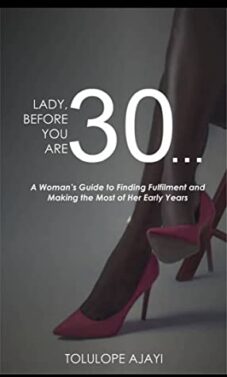
“Lady, Before You Are 30” is a compelling memoir and self-help guide written by Tolulope Ajayi, published in 2019. The book serves as both an autobiographical account of the author’s journey through her first three decades of life and a practical guide for young women approaching the milestone age of thirty. Through candid storytelling, personal revelations, and hard-earned wisdom, Ajayi offers readers a roadmap for navigating the complexities of womanhood, purpose discovery, relationships, financial independence, and spiritual growth.
The book is structured as a comprehensive guide that walks readers through the author’s life experiences while extracting valuable lessons that can inform their own decisions. It is positioned as essential reading for “every purpose-driven lady under 30, in her 30s and just after 30,” making it accessible to women at various stages of life. The author describes her work as “a mix of autobiography woven in essential compass needed to walk through life in preparation for living a fulfilled life.”
Foreword and Framing
The book opens with a foreword by Dr. (Mrs.) T.O. Williams, who establishes the philosophical foundation of the work. Williams emphasizes that while there is no time too late to achieve success, there is definitely a best time to accomplish certain milestones. Using the analogy of child development sitting, crawling, standing, walking, and talking at expected stages she argues that fulfilling purpose at the optimal time is crucial. The foreword positions age thirty as “one of the best years to have perfectly begun working in purpose and achieving fulfillment.”
Williams addresses both married and single women, noting that marriage should accelerate rather than truncate a woman’s fulfillment journey, provided she is married to a supportive partner. For single women, she suggests that this status actually makes it easier to achieve purpose speedily due to fewer considerations. She encourages women who are already thirty and above to recognize that “there is no better time to wake up than now,” urging them to set long, short, and medium-term goals and consciously follow through.
Introduction: The Philosophical Underpinnings
In her introduction, Ajayi establishes her core philosophy: “life is just exactly what we make of it, however, whatever we make of it is usually based on the type and quality of information we have access to at the time of making decisions.” This statement encapsulates the book’s purpose to provide readers with the information and perspective needed to make better decisions.
The author quotes Mike Oladipo: “It is either you do something that can be written or something that can be read. That’s the way to immortalize yourself on earth, build influence and relevance.” This quote sets the tone for the book, which is both a written work and a testament to the author’s actions and experiences.
Ajayi describes her book as “a beautiful life means one in which you can graciously count your true blessings” not just the general gifts accessible to every healthy person, but “personal uncommon benefits received from Him.” She emphasizes that achieving these requires strategic positioning, comparing it to learning to read: one must understand the alphabet and begin with two-letter, three-letter words before progressing to complex texts.
She invites readers to “read as though you are seated by me, hoping to hear my story in a way to relax, know Tolulope really, and glean the lessons in it for an amazing ride to age 30.” This intimate framing establishes a conversational, mentoring tone that persists throughout the book.
Chapter One: In the Beginning
The first chapter traces the author’s earliest years, establishing the foundation of her character and values. Ajayi begins with a powerful observation: “No single person came to this world as an adult; we all began our journey from childhood before growing to become whoever we are now.” She acknowledges the disparity in starting points some born with silver spoons, others with wooden or plastic spoons, and some with no spoon whatsoever but asserts that these realities “are not capable of shaping who we will be; it could only add sweetness or otherwise to your story.”
The Importance of Direction
The author introduces a recurring theme: “A directionless life is the most risky life to live. A life with vision but without specific objectives on how to achieve the vision will only leave you frustrated.” This principle guides her narrative, showing how even from childhood, she displayed a clear sense of direction.
Early Education
Ajayi reveals that she began school at age two, driven by her restlessness to learn and her tears at being left behind when her elder sister went to school. Her parents a father with “an undying and open heart for education” and a mother who was an educationist prioritized quality education, enrolling their children in a newly established school by a woman who had returned from the States, even though it was located in another city.
This early start shaped her intellectual curiosity. She describes herself as “that child who pays attention to details, loves reading so much and enjoys my space other than keeping associations.” At age five, she began reading the dictionary, writing down new words and making it her duty to learn and use them daily. Her class teacher, Mrs. Percy, a Ghanaian, made English Language particularly interesting with her excellent diction.
Childhood Experiences
At age six, Ajayi and her sister would hold hands and walk home from school, navigating the challenges of kidnapping, sexual assault, and vehicular traffic with “security consciousness at the maximum.” Her mother worked five cities away, leaving at 5:30 AM to reach her school by 7:30 AM, while her father handled drop-offs before his own work commitments. Despite people’s concerns about young children walking home alone, the sisters “were undaunted” and “always enjoyed the trip back home.”
The author and her sister resembled each other so closely that people mistook them for twins. This led to them being treated with respect some called them deities, others gifted them things, reflecting the traditional belief that twin children are “some kind of little gods.”
Early Creativity and Challenges
By primary four, Ajayi was writing short novels, which she kept and read to herself. She loved art deeply. However, she also describes herself as “naturally a fearful person,” easily intimidated by threats of physical harm. This vulnerability made her a target for bullies, who opposed her attempts to share her new vocabulary and stories “out of envy.”
When her mother was transferred back to the city and her father’s travel schedule decreased, she was finally able to tell her parents about the bullying. They took action reporting to the school authority, addressing her class teacher, and building her confidence at home. The intervention worked: Ajayi “transcended from being the bullied one to almost becoming the bully because I now had the power and knowledge about self-defense.” The coin flipped when she taught her former bullies new words or read them her stories, no one dared interrupt.
She wrote common entrance exams in primary five rather than primary six and “whopped out scores,” demonstrating her academic prowess.
Chapter Two: I Progressed
This chapter covers Ajayi’s secondary school years, beginning in 1996 when she gained admission to the school where her mother taught. As a “glorified ‘omo teacher'” (teacher’s child), she quickly found her circle among fellow teachers’ children. They would gather at staff quarters during break time, becoming “the cynosure of all eyes.”
The Teacher’s Child Experience
Ajayi provides vivid anecdotes about the unique pressures of being a teacher’s child. Her mother would send her home if her uniform was dirty, querying: “You want to follow me to school this way, NO way! How do you expect people to look at me?” The author had no choice but to be on her best behavior, knowing her mother and other teachers were “ever ready to beat students to pulp should they misbehave.” She recalls one fellow teacher’s child who was beaten by about five different teachers in succession a lesson that made her more careful.
Entrepreneurship Influence
Her mother was an entrepreneur who constantly preached “multiple stream of income.” She went to school with various items to sell to colleagues soap, matches, cutleries, fabrics resulting in the family having extra luggage daily. This early exposure to entrepreneurship planted seeds that would later germinate in the author’s life.
Career Aspirations
Ajayi initially wanted to be a lawyer or journalist, while a close friend aspired to become a doctor. Since many regarded art class students as “unserious and intellectually low people,” she opted for commercial class. Her interest in fashion developed during her first year of secondary school, observing clothes and wondering how they were constructed. Her father, who had been a tailor in his bachelor years and owned a butterfly sewing machine, taught her the craft. Her first lesson was making ‘Iro and Buba’ (traditional Yoruba top and wrapper). However, discouragement from others urging her to “read your book so that you could come out in flying colours” impeded her fashion exploration.
Formative Discipline
A particularly memorable incident occurred in JSS3 when her father was out of town and her mother, who hadn’t mastered driving well, left without her due to her slowness. On the assembly ground, Ajayi was talking and laughing with a classmate when her voice carried over the silent assembly. Her mother, who was addressing the students, summoned her to the podium and called another teacher to beat her. Dissatisfied with the punishment, her mother collected the cane and beat her seriously herself. The embarrassment of being beaten as a teacher’s child “further shaped my composure and carefulness,” and it was the last time she did anything worthy of being beaten.
Musical and Spiritual Development
Ajayi loved singing and writing songs, looking forward to singing commercially one day. Her father was also a great music lover. She began leading praise and worship in her local assembly, where her father was a pastor, at barely nine years old.
Focus on Final Exams
By third term in SS3, her parents arranged for her to live in the school premises (staff quarters) with one of her mother’s colleagues to concentrate on preparing for Senior School Certificate Exams. This led to her moving from one teacher’s house to another, attending lessons on different subjects.
Shifting Career Dreams
Her love for media grew, and she decided to become a TV presenter rather than a lawyer, influenced by fear when people told her lawyers were easily killed in pursuit of justice. She would mimic on-air personalities. Her father, seeing her unwavering interest, took her on excursions to media houses, though they never got beyond the premises due to lack of contacts.
At the time, the popular belief was that polytechnics were better with technical professions than universities, so they found Moshood Abiola Polytechnic, Abeokuta, to be the best school offering quality Mass Communication. She sat for the polytechnic JAMB examination, passed, and gained admission.
Chapter Three: I Moved Up Higher
In 2005, at age sixteen, Ajayi gained admission to study Mass Communication. This was her first experience leaving home to study far away, making her parents skeptical but supportive. They prayed with her and offered numerous tips: “don’t join bad gang, remember the daughter of whom you are.”
Family Support System
A cousin who had lived with her family since childhood was already schooling at MAPOLY and received her, ensuring she was “untouchable.” Within two weeks, registration was complete, and she began living with an aunt whose family lived in the city.
Mass Communication Experience
The program deepened her love for writing, as students were constantly asked to transcribe news stories. Her love for arts and creativity grew in leaps. She would return home every weekend and narrate her week to her family. The highlight of living her dream was doing her SIWES at MITV Lagos during which she lived with an uncle in Agege for proximity to the TV station. She loved every moment going for beats, news casting, vox pop, interviews, transcribing news stories.
Disillusionment with Journalism
However, she noticed that most media personnel “went broke easily,” surviving on borrowing before receiving their next pay check. The manner in which they fought over brown envelopes after each special event left her in awe. This exposure to “extremely harsh reality of the profession” discouraged her from her lofty dreams about journalism. Her interest shifted towards becoming a lecturer and business mogul.
University Admission Struggles
After completing her National Diploma, she sought university admission. She applied to Ahmadu Bello University, Zaria, for post UTME but wasn’t shortlisted. She wrote another JAMB and applied to OAU, Ife, to study English Language again rejected. She proceeded to Ogun State University (now Olabisi Onabanjo University), wrote post JAMB, and was again rejected. The constant rejection got to her, and she told her parents to allow her to learn fashion and forget schooling an idea they “blatantly kicked against,” saying: “So, in future when you see your mates become bankers, lawyers, doctors and what have you, will you be proud to say you are a tailor with National Diploma?”
She tried University of Lagos (UNILAG) and was again not offered admission. Her parents began considering private universities despite the high financial commitment. Her father researched missionary schools with affordable fees and found Crawford University. Her sister had finished from the Polytechnic a year before and was already admitted to this same university, making sponsorship of another child seem impossible. However, by God’s grace, they managed it, and she joined Crawford University as a Direct Entry Student in 2008.
Crawford University Experience
The fully residential missionary school owned by the Apostolic Faith Church profoundly shaped her. She discovered she had “all the time in the world to do nothing other than reading.” Her lecturers discovered her “excellent teaching spirit” and encouraged her to do more. She usually came top in demo teaching assignments. When other course mates went to the hostel, she stayed behind to read: “Oh! How I read like my life depended on it for survival.” The desire to become a professor came alive in her.
Leadership and Entrepreneurship
In 300 level, she wanted to contest for the post of president of her departmental association, surprising many that a female newbie would contest against a male old student. Her lecturers advised otherwise, so she ran for Vice President instead, contesting against a female old student who was more known and social. She won with a clear margin during the voting exercise, and the responsibility didn’t affect her grades.
Business Ventures
The school prohibited jewelry, make-up, artificial hair, short sleeves, trousers, and short skirts. Ajayi recognized the needs of female course mates who were uncomfortable with these restrictions and decided to write to the Dean of Student Affairs through her house mistress for permission to sell in her hostel. Permission was granted, and she started selling hair accessories, brooches, sandals, and other “lawful” enhancements. The business helped her save money and relieved her parents’ financial burden. Upon graduation, she invested the proceeds in acquiring her first landed property.
Academic Excellence
Her best lecturer advised her to pursue a master’s degree immediately, after which she could return as an Assistant Lecturer and begin her dream of becoming a renowned professor. On her convocation day, she was called to the podium and given an award as the best graduating student with the highest CGPA in her department. She had set a goal of graduating top of her class before gaining admission, and she got more than she set.
Chapter Four: The End to Another Beginning
This chapter covers her NYSC year and subsequent experiences, marking a significant turning point in her life.
National Youth Service Corps
Ajayi was posted to Kaduna State for her NYSC in 2012 her second visit to the state after her first attempt to school there. During her service year, she was appointed General Secretary of the Nigerian Red Cross, where she masterminded outreaches donating free first aid equipment to vulnerable schools. She was also appointed Prayer and Publicity Secretary of the National Christian Corpers Fellowship, where they gave back to the host community through “rural rugged outreaches.”
Master’s Degree Pursuit
After NYSC, she tried seeking employment but it was “a search in futility.” Rather than waste time, she enrolled for her Master’s Degree in 2013, still pursuing her goal of becoming a renowned professor. At age twenty-five, she was offered admission to Obafemi Awolowo University, Ife, to study Business Administration her second visit to the school after her first failed undergraduate attempt. It was her farthest schooling away from home. Her intention was to study, upgrade her fashion training, graduate, and return to Crawford University as an Assistant Lecturer.
The Detour
However, “strangely, my goals were not clearly stated at some point and I was soon thrown off balance.” The thought of getting intimate set in, influenced by the “flock of guys around me who made me think it was time to settle or at least begin a relationship that will eventually lead to marriage.” She started reading books on marriage, dating, courtship, attending marriage seminars, yet “didn’t hit the right thing.” She finished coursework and thesis with distinction but not without “unwanted pregnancy!”
Marriage and Its Aftermath
She met him during her Master’s Degree program and dated for two years. She wishes she knew then what she now knows about relationships. They married after the pregnancy “put us on our toes,” and returning to Crawford University became stalled. They married in a law court, and her “journey into living outside purpose and a speedy journey of 25 years got stalled by a relationship and marriage that lasted 4 years and 7 months.”
Depression and Loss
She was depressed and hated life, almost nursing eye issues due to constant tears, not to mention constant illnesses. Her father, her “first love and hero,” couldn’t bear her pain and called her daily, ensuring they saw daily. He would say: “Tolulope, I believe our journey has been predestinated by God, he understands why this is happening to you since day one. I salute your courage and how you have endured the pains and agony in this marriage… Never lose your gaze on God because at the end that is all that matters most.” He would drop tears while encouraging her to be strong. Four months afterward, she lost him to death “that period remains the darkest times of my life. The blow hits me more than the failed marriage, I grieved it more than I did for my marriage that hit the rocks.”
Abuse and Escape
She endured physical, emotional, and psychological abuse but “thankfully I walked out alive with fragments of my purpose.” She consciously worked on refining her purpose seven months after leaving. She got scholarships to study at a prestigious business school in the state, applied to several grants and fellowships, and got shortlisted for all.
Five Things Never to Lose
She advises readers never to lose five things regardless of what they’re going through:
- YOURSELF: “You are your self’s greatest asset, never lose you. The moment you trade yourself, the moment you decide there is nothing good to you other than being used by another in achieving purpose, then you have totally lost it. You have a voice, let it be heard.”
- YOUR PURPOSE: “You should guard your purpose jealously like you guard your life. Purpose is the main reason for existence. Your purpose could be one, but from that one purpose you could birth 50 businesses and empires. A purposeless life is not worth living. What is that thing you can do effortlessly? Seek it and begin journeying in that direction.”
- YOUR HOPE: “Hope is the fuel you need to keep purpose going. When purpose seems blurry, when everywhere appears so dark, hope is that one thing that promises you light at the end of the tunnel.”
- GOOD PEOPLE: “When people throw you down, you still need people to raise you. There are good people everywhere just like there are bad ones. It is important that you keep an open heart but not without wisdom and caution. Never let your ill experiences with people in the past rob you of better people your today offers.”
- GOD: “I can’t talk any less of this Supreme Being; I maintain that at the back, center and front of every of life’s happening exists someone who doesn’t operate in the natural. Never dethrone him in your dealings. Constantly commit your ways in his hands and he will definitely establish you.”
She mentions her next book focuses on relationships for single ladies dating, courtship, early marriage, red flags, spotting an “actor guy,” readiness for commitment, and ills of uncalculated chances.
Chapter Five: Growing vs. Aging
This chapter presents a checklist for determining whether one is truly growing or merely aging. Ajayi asserts: “Age in number, stature nor academic achievements, does not necessarily describe growth. A number of people are busy but very few are productive.” The essence of life is to achieve “maximum income, impact and influence,” which requires “maximum level of intentional growth.”
- How is my mindset?
“The beginning of every great piece is the mind.” Ajayi couldn’t remember having a pleasant birthday in the past four years until she turned thirty. “You can’t have your head turned to the back while you desire to progress. It’s not just wishing to move, everything about you must accept to move. You should see yourself in the new you and consciously work at being you.” She asks: “The things that used to matter to me then, do they still matter to me? Do I still think there is really nothing to life than just living? Am I still limited and myopic in my views?” - How is my network, the quality of my relationships?
“Being an introvert isn’t an excuse for not building profitable relationships. People are resources; have you grown to invest in them? As you grow, so should the type of relationship you keep.” She asks: “Who are my friends? What do we discuss most? Are they progressively thinking people? Have you compartmentalized your relationships to the different groups they belong?” - How is my finance?
“A good way to measure growth is in your finances, investments and assets.” A financially handicapped person “usually is at the mercy of people and circumstance. She knows the best thing to do per time but won’t be able to do so. She is easily tossed around and most times than often she fulfils someone else’s purpose at the expense of hers.” Questions include: “Are you financially independent? Do you still live with borrowing mentality? Have you achieved mastery in financial intelligence? How well do I invest or think investment?” - Have I now discovered myself?
“You can’t afford to be confused anymore.” Ajayi explains how her purpose became clearer as she worked on defining it, read books, and attended purpose-driven conferences. Questions include: “Have I successfully defined what success means to me? Or I still follow the crowd to think success is what they call it? What is success to me? What do I stand for? Which lane do I really want to follow? Am I still guilty of copying what others are doing?” - How is my spiritual relationship and growth?
“Establishing spiritual connectivity is a sure sign of growth.” Questions include: “Do I still doubt the need for a special intimacy with a supernatural being? Do I now fully have the understanding that the root of wisdom needed to have a successful total life is in God? By which means do I hear from God? Have I researched the scriptures to see that there is no part of human life that hasn’t been addressed there?” - How is my health and wellness?
“It requires a healthy mind to think straight. A sick man’s prayer is just to get well and nothing else.” Questions include: “Am I still of the belief that the end of every man is death and so I pay so little attention to health matters? How am I fairing with my mental health and balance? Have I created a health routine for myself? Do I handle difficult and depressing matters better and maturely?”
Additional Growth Markers
Ajayi notes that as one grows, they should better understand how to be open to criticism without being defensive, handle rejections without letting them get in, expect little from people to avoid hurt, despise no training or learning, and find mentors even if by proxy through books and conferences. She emphasizes that “mentoring comes at a cost” and one should not be a “parasitic mentee” but should show up, volunteer, buy books, and show solidarity.
Chapter Six: What Changed?
This chapter focuses on the necessity of deliberate change. Ajayi quotes: “You can’t be doing the same thing the same way and expect a different result. Until you get uncomfortable with average, until your eaglet realizes she doesn’t belong to the hen family, only then can she fly and soar!”
Decide You Need to Change
“Regardless of the number of seminars you attend, books you read or messages you listened to on personal development, nothing will change until you have deliberately decided to change.” She uses the metaphor of constipation people who consume information without digesting or internalizing it. To experience change, one must “consciously practice all you have read,” giving oneself a window period of six months to two years of consistent practice.
Be Unashamedly You
When Ajayi began taking personal development and branding seriously, she felt disadvantaged as “a separated lady with a child.” The shame of bearing a status that didn’t fit into married, single, or widowed “made me feel like a plague.” A friend named Ms. Osimosu helped her see the brighter side. “In no time I had unashamedly carried my new badge and I was marveled at how many audiences really need to hear from someone with such badge.” She was invited to speak at top-notch programs, singles and married events, which fetched her income, influence, and impact. “I chose to see light and I saw light. What do you see?”
Do It Afraid
“The earlier you fail the better.” Ajayi contrasts a civil servant who worked thirty-five years without business experience and retires to start a new venture with someone in their early thirties who can afford to fail and try again. “I am not saying anyone who starts late won’t make it, but I am charging you to start early.”
Chapter Seven: Expectations Before 30
This chapter outlines phenomenal expectations to meet before turning thirty. Ajayi states: “Being 30 is no small feat; it simply means you are crossing a line that is irreversible.” These opportunities “do not always answer to prayers but to intentional living, strategic planning and then crowing it with prayers.”
- Relationships
“We are social beings who need not just people but good ones.” Ajayi regrets losing good things in her early twenties because she “despised good relationships” due to inferiority complex and judgment of others. “Great relationships are like bridges, they connect you to the right people.”
Be Genuinely Interested in People
“Even a dog loves someone who is interested in him/her let alone we humans.” She advises learning to call, message, and check up on friends, being “human, real and passionate.” Even those with 5,000+ followers “are in need of true friends.”
Commenting on Their Social Media Platforms
“Leveraging on the power of social at a time like this cannot be overemphasized.” She advises being strategic about comments not just “Happy birthday ma” but composing something interesting, making a separate post and tagging them. “Support their dreams and lend helping hands when need be. Volunteer to help with their events, share their posts, don’t stop until they begin to notice you.”
- Find True Purpose and Work on It
“A purposeless life is not worth living.” The ease and fulfillment from working in purpose “cannot be compared to when you just work for the purpose of earning a livelihood.”
How to Identify Purpose:
- “There is always a particular thing that comes naturally to you, something you can do without feeling it’s stressful even when it is to someone else.” Note that “business, job and purpose are not same. If you discover purpose perfectly, from it you can birth numerous business ideas.”
- “The place of prayer cannot be overemphasized. Prayer gives you quick direction and guide. It reveals hidden secrets and gives you perfect clarity.”
- “Your purpose is that thing you are passionate about.” Example: counseling teens from it, one can build businesses like writing books, coaching, partnering with global societies.
- Set a 5-Year Goal and Follow It with Intentionality
Goals must be SMART: Specific, Measurable, Achievable, Realistic, and Timely. “Setting goals will make you focused and it would be difficult to have anyone take you off those goals.” A goal is set after purpose has been found. “All of the goals might not be achieved, but you would have achieved a lot while you learn from the ones you did not achieve.” - Be Committed and Rooted in Serving God
“Serving God with all commitment helps to connect every aspect of your life together.” It enables healthy relationships through service units (evangelism, choir, welfare, ushering). “God clearly instructed us in His word to cast all our cares on Him and what that means is you should be actively serving God to merit His help.”
Chapter Eight: 30 Must-Have Nuggets for the Big 30
This chapter presents thirty practical nuggets for the journey to thirty. Ajayi begins: “Thirty is half of a sixty-year journey and quarter of a ninety-year journey. Experiences gathered over time in life build up to become lessons.”
- Strive/Work to Be Financially Independent
“Nothing is as sweet as having your own money.” If at thirty you’re still relying on gifts without a major job or profitable business, “you might end up making very costly mistakes.” - Invest
“It takes only a person who earns to think investment. No amount is too small or big to be invested.” Options include real estate, stocks and bonds, treasury bills, gold, forex. “Investment is like building a future for yourself.” Distinguish between wealth creation (future-centric) and money making (for now). - Have at Least a Friend in Every Sector and ‘Service’ the Relationship
Have a doctor, pharmacist, lawyer, broker, police officer as acquaintances. “Servicing” means a weekly text or call. - Read Vastly
“Start building interest in reading as it is not negotiable to your success.” Read across money matters, investment, personal development, love, health, religion, relationships, and about great women. - Get Yourself a Mentor and a Coach
“A mentor is the best to have over a coach. Even your mentor has a mentor.” A mentor guides with practical examples of failures and successes; a coach teaches but not necessarily from personal experience. - Know God
“Don’t just be religious, know who God is.” Love and fear God. “A prayerless life is a powerless life and if you fail to pray, you may become a prey.” - Develop a Healthy Routine Lifestyle
“Health is wealth. It takes a healthy body and mind to think right, act right and work right.” - Shun Peer Pressure
“Have a mind of your own. Be you and do you.” Be approachable but not gullible. “Not everyone/word is meant for you.” - Have Multiple Streams of Income
Before thirty, “you should have created different funnels through which money comes in just like there are many funnels through which money goes out.” - Start Building Your Profile
Aim for a minimum of seventy years; build an outstanding profile. “Your general appearance and charisma should be well taken care of.” - Be Committed to Learning
“Life itself is a school, whoever stops learning stops living.” Have a teachable spirit; be ready to learn, unlearn, and relearn. - Attitude
“Develop a good attitude towards life, consistent behavioral pattern and commendable character.” Command influence in at least one area. - Learn at Least 3 Sports
Learn swimming, dancing, a musical instrument, or indoor games. - Learn Another Language
“Think global since the world is fast becoming a global village.” Learn an international language. - Keep a Circle of Friends
Have friends headed the same direction. “Have those friends that you can call at 1:00am to tell your fears and worries, at 10pm to tell your successes, at 2pm to hang out with.” - Date with Caution
Romantic relationships come with “so much learning, knowledge and discernment.” - Take Risks
“There are 3 types of risk: high, moderate and low. Don’t be a coward that goes for low risk only; shoot at moderate risks and scale effortlessly.” - Visit at Least 5 Countries
Travel to at least three countries in your continent and two outside. “You can begin a travel/vacation savings with your bank.” - Document Your Life Journey
Keep a memoir. “It is an easy way to be reflective on how far you have come and keeps you immortalized in the hearts of people.” - Forgive
“Learn to wholeheartedly forgive; forgetting will come along the way.” Excess baggage “makes you bitter and if care is not taken you could bleed on people that didn’t hurt you.” - Give Yourself a Treat Often
“Book a night at a 5 star hotel, eat at a luxury restaurant, visit the spa for an overall body massage, work out at the gym.” Take beautiful pictures, print them, stick them on a memory wall. - Live Alone
“You should have tried living on your own outside your parents’ roof.” Attain independence so you’re “only getting support from your folks and not entirely reliant on them.” - Apply to Several Opportunities Within Your Age Range
“There are numerous international and global opportunities available to people who are 30 years and below.” Sliding out of this age range “could mean impossibilities of ever getting such opportunities again.” - Master Self-Love
“Woman, love YOU.” Ajayi confesses to loving others more than herself and preferring to hurt herself than another. “Your first project is YOU. Tirelessly invest in discovering, establishing and loving you.” - If Married by 30
“Appreciate God for it, never mock those who are yet to be married. Continually learn to be a home maker, make deliberate efforts to stay married BUT do not stay in an abusive/violent marriage.”
26 & 29. If Still Single at 30
“Be certain if marriage is for you or not, be sure you really want and ready for it.” Work on potential challenges. “The bible commands us women to be submissive, respectful and honor our husbands, so if you are too big to respect and honor your man, it might be part of the challenges.”
- During Waiting Period
“You are not doomed! Please don’t wallow in rejection, never allow guilt/regrets from the past get you into depression.” Don’t let pressure from family and society consume you. “Compare or compete with NO ONE! Your time will come, delay is not denial.” - Trust God for Marriage
“Do not be eager or anxious to fall prey of any man that does not deserve you.” Prepare yourself, be confident, make every moment count. “Don’t be desperate.” - If Separated or Divorced
“It’s not the end of life but an opportunity for you to reflect, recount and re-strategize.” Get closer to God, enjoy being single, don’t withdraw from loved ones, forgive yourself and your partner, get help if needed, and “MOVE ON!”
Chapter Nine: My Final Submission
In this concluding chapter, Ajayi reiterates: “No time is too late or early to begin to walk and work in purpose. It is highly imperative that you find purpose if you really want true happiness.”
She emphasizes that “true happiness can only be guaranteed through the achievement of purpose not wealth.” She challenges readers: “That someone seems ahead of you does not mean he or she has surpassed you. You could actually give a chase, catch up and even overtake as there is room for overtaking in the race of life.”
She stresses that “your greatest investment should be in good people. A healthy association is valuable than money. Where money may not work, people can. Be intentional about your circle.”
She warns against rushing into marriage as an escape from chasing dreams: “It feels great to be married but do not place it as an accomplishment at the expense of purpose.” For married women, she advises: “Diligently work daily to ensure your marriage works, but I will reiterate again, never do this at the expense of your SELF.”
She addresses regret: “Regret is a killer. It could live with you forever. The more you try to forget, the more you remember especially when you see somebody who mirrors who you wished you could have been. Live your life with the future in mind, which is the best way to minimize regrets.”
She cautions: “As a woman, I encourage you not to forget who you are in pursuance of peace. If sacrificing your purpose is what guarantees your peace, then you haven’t begun living. Many women sit comfortably on this chair. They limit all they could be and wrap their life around being a wife and mother. In as much as it’s great to be a wife and mother, it is even greater and more honourable to achieve purpose while serving in these two offices.”
She concludes: “Life is beautiful, only if you make it so. Learn to pick lessons from your past failures and not wallow in regrets. Be intentional about strategic movement and planning. Life is too short and too long not to accomplish purpose when you should.”
Chapter Ten: Epilogue
The epilogue reflects on the book’s completion: “I have come to realize that life is exactly what we name it to be. Nothing on earth can deter us nor truncate our journey without our express permission.”
Ajayi reaffirms her identity: “I know who I am, what I worth and what I made for, I refuse to let life blows lock me down. I could have decided to trade purpose, completely forget who I am and only choose to live on someone else’s believe of who I am and not on what I am convinced I am, but NO I didn’t.”
She shares how finding purpose reduced distractions: “After I have successfully found purpose and I began to consciously work in it, numerous juicy offers came my way, some that requires me to live outside the shores of this nation for one whole year at no extra cost on me, but I understand that as good as these international offers are, they are not what I need at this moment of building.”
She encourages baby steps: “Every great brands didn’t begin from the top, they all sat before they walked. If you don’t despise your days of little beginning, no one will have the luxury of doing that to you. Be your own number one cheerleader.”
She recalls someone who taunted her: “When I die, I will smile to heaven because I have successfully achieve purpose and I have done what many of my peers couldn’t do at this age. You, when you die, will you be happy, when you are not even sure of what to do with your life.” She reflects: “The beauty of it all is that many of us won’t find purpose on a platter of gold, many would find purpose through pain and I represent one of that population.”
She closes with “Wide Open” by Dawna Markova:
“I will not die an unlived life / I will not live in fear of failing or catching fire. / I choose to inhabit my days, to allow my living open me, / To make me less afraid, more accessible, to loosen my heart until it becomes a wing, a torch, a promise. / I choose to risk my significance; to live so that which came to me as seed goes to the next as blossom, and that which comes to me as blossom, goes on as fruit.”
Character Analysis
Tolulope Ajayi (The Author/Protagonist)
Tolulope Ajayi is the central figure of the narrative a complex, multidimensional character whose journey from a precocious child to a fulfilled woman forms the backbone of the book. She presents herself as:
Intellectually Curious: From age five, she was reading the dictionary, writing short novels by primary four, and consistently excelling academically. Her curiosity about words and stories shaped her identity and career path.
Fearful Yet Courageous: She openly admits to being “naturally a fearful person,” easily intimidated by physical threats. Yet she also demonstrates tremendous courage contesting leadership positions against more experienced opponents, leaving an abusive marriage, and rebuilding her life from the ashes of trauma.
Entrepreneurial from Childhood: Influenced by her mother’s “multiple streams of income” philosophy, she sold goods in secondary school, ran a business in university, and later established multiple ventures. Her first business in university helped her buy her first landed property.
Deeply Spiritual: Her faith in God is central to her identity. She began leading worship at age nine, served in various church roles, and consistently frames her journey in terms of divine purpose and guidance.
Resilient: Despite enduring an abusive marriage, the loss of her father, and professional setbacks, she rebuilt her life, found purpose, and emerged stronger. She describes herself as having “walked out alive with fragments of my purpose.”
Honest and Vulnerable: She shares her failures the unwanted pregnancy, the failed marriage, the depression with remarkable candor, making her wisdom credible and her story relatable.
A Mentor Figure: Throughout the book, she positions herself as a guide, using her experiences to warn and advise younger women. Her tone is that of an older sister or mentor who has “been there” and wants to spare others from her mistakes.
The Father (Late Engr. Pastor Samson Adio Ajayi)
The author’s father emerges as a heroic figure her “first love and hero.” He was a tailor in his bachelor years who taught her fashion design, a music lover, and a pastor. He was deeply involved in her life, dropping her at school, visiting her at university fortnightly with goodies and prayers, and calling daily during her marriage crisis. His death four months after her marriage collapsed is described as “the darkest time of my life.” The book is dedicated to him, and his legacy of love, faith, and support permeates the narrative.
The Mother (Mrs. Felicia Ajayi)
Described as an educationist and teacher with “deep love for academics,” she is the source of the author’s entrepreneurial spirit. She preached “multiple streams of income” and sold goods to colleagues. She was strict sending her daughter home for dirty uniforms and beating her publicly for misbehaving on the assembly ground. Yet she was also supportive, encouraging her daughter to push boundaries. The author acknowledges her as “the real deal.”
The Ex-Husband
Though not named, he is a significant figure in the narrative. The author describes a relationship that began during her Master’s program and lasted two years before an unwanted pregnancy led to marriage. The marriage “lasted 4 years and 7 months” and involved “physical, emotional, psychological abuse/torture.” She does not provide details of the abuse but is clear that she “walked out alive.” She cautions readers not to stay in abusive marriages and emphasizes the importance of wisdom in distinguishing between enduring hardship and enduring abuse.
Ms. Oluwaseun Osimosu
Described as “heaven sent” and “an Angel clothed in human body,” she was instrumental in helping the author overcome the shame of being a separated single mother. She “never failed to charge me and made me see the brighter side of my status.” She provided moral, spiritual, and financial assistance during the writing of the book and encouraged the author not to give up. The author credits her with helping her “find the balance I needed when I almost fell on my face.”
The Sister
The author’s elder sister, close in age and appearance, is described as being so similar that people mistook them for twins. They walked home from school together, and the sister resumed school before the author, prompting her tears and early enrollment. Their bond is evident throughout the narrative.
The Cousin
A cousin who lived with the author’s family since childhood and was already schooling at MAPOLY when the author gained admission. He received her and “was sure to police me around to ensure that I was untouchable,” providing a protective presence during her transition to higher education.
The Best Lecturer
At Crawford University, this mentor recognized the author’s “excellent teaching spirit,” encouraged her to pursue a master’s degree, and advised her to return as an Assistant Lecturer. This figure represents the importance of mentorship in the author’s life.
The Friend Who Wanted to Be a Doctor
A secondary school friend whose love for mathematics and hospitals led her to choose science class and pursue medicine. Her certainty about her career path contrasts with the author’s shifting aspirations and illustrates the importance of knowing one’s purpose early.
The Bullies
Unnamed fellow students who bullied the author for her intellectual pursuits, opposing her attempts to share new words and stories “out of envy.” Their treatment of her, and her eventual triumph over them, illustrates the book’s themes of resilience and the importance of parental support in building a child’s confidence.
Thematic Analysis
The Centrality of Purpose
Purpose is the book’s most important theme. Ajayi defines purpose as “the main reason for existence” and argues that “a purposeless life is not worth living.” She distinguishes between purpose (the natural, effortless thing one is called to do) and business/job (means of earning income). She demonstrates how her own purpose teaching, counseling, and empowering women manifested in various forms: teaching, writing, fashion, and ministry. The book itself is an expression of her purpose.
Growth vs. Aging
Ajayi draws a sharp distinction between growing and merely aging. “You can’t grow above the level of your mindset,” she writes. Growth requires intentionality in six areas: mindset, relationships, finances, self-discovery, spiritual life, and health. Aging without growth leads to stagnation and regret. The checklist she provides serves as a practical tool for self-assessment.
The Importance of Early Action
A recurring theme is the value of starting early before thirty. She argues that youth provides the physical energy, time, and freedom to take risks, fail, and try again. “The earlier you fail the better,” she writes, contrasting the young entrepreneur who can recover from failure with the retiree who stakes everything on an untested venture.
The Role of Relationships
The book emphasizes that “great relationships are like bridges, they connect you to the right people.” Ajayi’s own journey was shaped by good relationships her parents, cousin, mentors, and friends like Ms. Osimosu and damaged by the neglect of relationships in her early twenties. She advises readers to be intentional about building and maintaining relationships across all sectors of life.
Financial Independence as a Foundation
Financial independence is presented not as an end in itself but as a foundation for purpose. “You need money to fuel purpose,” she writes, listing the costs of books, data, library registration, mentors, and coaches. She advocates multiple streams of income and distinguishes between money making (short-term) and wealth creation (long-term).
Faith and Spirituality
Ajayi’s faith is woven throughout the narrative. She credits God with her survival, her success, and her purpose. She advises readers to “know God” and not just be religious, to develop a personal relationship with God, and to serve Him actively. Her spiritual journey from leading worship at nine to surviving an abusive marriage and finding purpose through pain demonstrates the centrality of faith in her life.
Resilience and Redemption
The book is ultimately a story of resilience and redemption. Ajayi describes her journey through depression, abuse, and the loss of her father, and her emergence on the other side with a clearer sense of purpose. She offers hope to women facing similar challenges: “I chose to see light and I saw light. What do you see?”
The Dangers of Desperation
Ajayi warns against desperation for marriage, for success, for validation. She cautions single women not to “be eager or anxious to fall prey of any man that does not deserve you” and not to see marriage as an escape from pursuing dreams. Desperation leads to poor decisions and unnecessary suffering.
Self-Love and Self-Preservation
“Your first project is YOU,” Ajayi writes. She emphasizes the importance of self-love, not in a narcissistic sense, but as the foundation for loving others and fulfilling purpose. She warns against losing oneself in relationships or in service to others, and against sacrificing one’s purpose for the sake of peace.
Literary Devices and Style
Conversational Tone
Ajayi writes in a conversational, intimate style, as if speaking directly to a younger sister or friend. She uses colloquial expressions (“whopped out scores,” “gist,” “omo teacher”) and addresses the reader directly (“You should have a guide that avails you priceless top information,” “Dear lady”).
Anecdotal Evidence
Rather than relying on abstract principles, Ajayi grounds her wisdom in specific stories: the assembly ground beating, the butterfly sewing machine, the business in Crawford University, the uncle in Agege, the pregnancy, the father’s death. These anecdotes make the lessons memorable and the author relatable.
Metaphors and Analogies
She uses vivid imagery: the eaglet that realizes it doesn’t belong to the hen family, the constipation of unprocessed information, the bridge of relationships, the anchor of purpose. These metaphors clarify complex ideas and make them accessible.
Direct Address
The author frequently addresses the reader directly: “You should have a guide that avails you priceless top information,” “Now, let’s ask ourselves these questions,” “PLEASE NOTE, I am not in any way advocating that anyone leaves her marriage.” This technique creates a sense of personal mentorship and engagement.
Rhetorical Questions
She uses questions to prompt reflection: “How is my mindset?” “Who are my friends?” “What do I stand for?” “What do you see?” These questions invite readers to apply the teachings to their own lives.
Repetition and Emphasis
Key phrases are repeated for emphasis: “A purposeless life is not worth living” appears multiple times. “You need money to fuel purpose” is repeated. This technique reinforces the book’s central messages.
Quotations and References
Ajayi references Mike Oladipo, Dawna Markova’s poem “Wide Open,” and scripture, showing her engagement with broader wisdom literature and grounding her ideas in established traditions.
Conclusion
“Lady, Before You Are 30” is a rich, multifaceted work that combines memoir, self-help, and spiritual guide. Tolulope Ajayi writes with vulnerability, honesty, and wisdom, sharing her failures and successes to help other women navigate the complexities of their twenties and approach thirty with purpose and fulfillment. The book’s central message that a purpose-driven life is the only truly fulfilling life is communicated through story, checklist, practical advice, and spiritual exhortation.
The author’s journey from precocious child to accomplished woman, from failed marriage to fulfilled purpose, serves as a testament to the resilience of the human spirit and the transformative power of faith, hard work, and self-knowledge. The characters who populate her narrative the supportive parents, the protective cousin, the angelic friend, the mentors, and even the bullies and the abusive ex-husband all contribute to the lessons she imparts.
The thirty nuggets, the six-point growth checklist, the four key expectations before thirty, and the five things never to lose are practical tools that readers can apply immediately. The book is not merely a memoir to be read and set aside, but a guide to be consulted, studied, and returned to as readers navigate their own journeys.
In the final analysis, “Lady, Before You Are 30” achieves its stated purpose: it is “a mix of autobiography woven in essential compass needed to walk through life in preparation for living a fulfilled life.” It is a compass, a mentor, and a companion for any woman determined to make her early years count and to arrive at thirty fulfilled, purposeful, and whole.