
Introduction
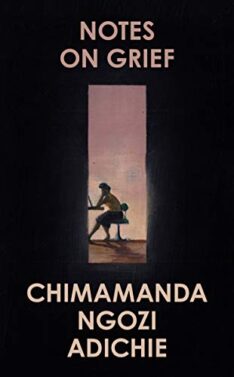
“Notes on Grief” is a profound and intimate memoir by acclaimed Nigerian author Chimamanda Ngozi Adichie, written in the aftermath of her father’s death on June 10, 2020. This slim but powerful volume, published in 2021, transcends the traditional boundaries of memoir to become a meditation on love, loss, cultural identity, and the transformative power of grief. Originally written as an essay for The New Yorker shortly after her father’s death, Adichie expanded it into a book that captures the raw, unvarnished experience of losing a beloved parent during the unprecedented global crisis of the COVID-19 pandemic.
The book is structured as thirty numbered sections, each offering a glimpse into different facets of grief from the initial shock and disbelief to the complex cultural expectations surrounding death in Igbo culture, from the physical manifestations of sorrow to the unexpected moments of laughter and grace. Through her characteristic lyrical prose and unflinching honesty, Adichie invites readers into the most vulnerable period of her life, creating a work that serves both as a personal testament to her father’s life and as a universal exploration of what it means to lose someone we love.
This comprehensive analysis will examine the book’s structure, themes, characters, cultural context, and literary significance, providing a detailed exploration of how Adichie transforms personal tragedy into a work of profound artistic and emotional resonance.
Summary
Section 1: The Last Days
The book opens with Adichie establishing the context of her father’s final days during the COVID-19 lockdown. She describes the family’s Sunday Zoom calls a “boisterous lockdown ritual” that brought together siblings scattered across Lagos, the United States, and their parents in Abba, their ancestral hometown in southeastern Nigeria. These calls, characterized by technical difficulties and the familiar chaos of family life, create a poignant backdrop for the tragedy that follows.
Adichie paints a vivid portrait of her father, James Nwoye Adichie, on the June 7 call: only his forehead visible on screen because he never quite mastered holding a phone during video calls. He teases his son Okey about a nickname, discusses mundane matters like dinner and a land dispute with a neighboring billionaire, and mentions feeling “a bit unwell” but assures his children not to worry. The ordinariness of this conversation becomes heartbreaking in retrospect.
The narrative then moves through the subsequent days with devastating precision. On June 8, Okey visits their father and reports that he looks tired. On June 9, Adichie keeps their chat brief so he can rest, and he laughs at her playful imitation of a relative before saying “Ka chi fo” good night his last words to her. On June 10, her brother Chuks calls to tell her their father is gone, and she “came undone.”
Section 2: The Shock of Loss
Adichie describes her four-year-old daughter’s reaction to witnessing her mother’s grief. The child demonstrates with a “small clenched fist rising and falling” how her mother screamed and pounded the floor, giving Adichie a mirror to see her own unraveling. She describes the news as “a vicious uprooting,” being “yanked away from the world I have known since childhood.”
The surreal nature of the loss is heightened by the circumstances: her father had read the newspaper that afternoon, joked with Okey about shaving before his appointment with a kidney specialist, and discussed his hospital test results with her sister Ijeoma, a doctor. How could this be? Yet there he is on a Zoom call, Okey holding a phone over his face, looking “asleep, his face relaxed, beautiful in repose.” The family weeps across different parts of the world, looking at the father they adore “now lying still on a hospital bed.”
Adichie captures the physical sensation of shock: “the air turns to glue.” She almost screams when her sister Uche says she has told a family friend by text: “No! Don’t tell anyone, because if we tell people, then it becomes true.” Her husband urges her to breathe slowly, and she notes that her housecoat her “lockdown staple” lies crumpled on the floor. Her brother Kene later jokes that she shouldn’t get shocking news in public since she reacts by tearing off her clothes.
Section 3: The Physicality of Grief
This section explores grief as “a cruel kind of education.” Adichie learns “how ungentle mourning can be, how full of anger,” how “glib condolences can feel,” and how much grief is about language “the failure of language and the grasping for language.”
She describes the physical manifestations of grief with clinical precision: sore and achy sides from crying (“I did not know that we cry with our muscles”), a bitter tongue “as though I ate a loathed meal and forgot to clean my teeth,” a heavy weight on her chest, and “a sensation of eternal dissolving.” Her heart “my actual physical heart, nothing figurative here” runs away from her, beating too fast, “its rhythms at odds with mine.”
The affliction is “not merely of the spirit but of the body, of aches and lagging strength.” Flesh, muscles, organs are all compromised. No physical position is comfortable. For weeks, her stomach is “in turmoil, tense and tight with foreboding, the ever-present certainty that somebody else will die.” When Okey calls earlier than usual one morning, she thinks: “Just tell me, tell me immediately, who has died now. Is it Mummy?”
Section 4: Laughter and Memory
Adichie introduces the role of laughter in grief, describing how memories of her father’s quirks become sources of both joy and pain. She recalls how he would turn off NPR in her American home if nobody was listening, and how Okey remembers him wanting to turn off the generator early in Abba. They joke about what they would do if he returned: Adichie would wake up early, eat garri, and go to Mass every Sunday.
She shares the story of her father visiting her graduate student apartment at Yale and declining pomegranate juice with “No, thank you, whatever that is.” This became a standing family joke, one of many “frequently told and retold,” with her father’s expression “one minute utterly deadpan and, the next, wide open with delighted laughter.”
Adichie reveals “how much laughter is a part of grief.” Laughter is “tightly braided into our family argot,” and they laugh remembering her father even as “somewhere in the background there is a haze of disbelief.” The laughter trails off, becomes tears, becomes sadness, becomes rage. She is unprepared for her “wretched, roaring rage.”
The section ends with memories of the lockdown, when her father told her not to worry about her doctor husband and shared that he’d read warm water might prevent coronavirus. His response to “How are you, Daddy?” was always “Enwerom nsogbu chacha” “I have no problems at all. I’m perfectly fine.” And he really was. “Until he wasn’t.”
Section 5: Condolences and Anger
Adichie describes the flood of messages and her inability to process them. She looks at them “as through a mist,” questioning: “Who is this message for?” When a message says “On the loss of your father,” she wonders, “Whose father?” She is angered by people trooping into their house for mgbalu (condolences), wanting to “reach in and wrench them away from our living room.”
The condolence register placed by the front door, covered with white lace, becomes a symbol of the intrusion: “I think, Go home! Why are you coming to our house to write in that alien notebook? How dare you make this thing true?” The well-wishers have become “complicit” in making the death real.
She experiences “needle-pricks of resentment” at people older than her father who are still alive and well. Her anger scares her, her fear scares her, and “somewhere in there is shame.” She is afraid of going to bed and of waking up, afraid of tomorrow and all the tomorrows after. She is filled with “disbelieving astonishment that the mailman comes as usual” and that the world keeps going “while in my soul there is a permanent scattering.”
Section 6: The Impossibility of Processing
Adichie reflects on how grief is “forcing new skins on me, scraping scales from my eyes.” She regrets her past certainties about mourning “Surely you should mourn, talk through it, face it, go through it” the “smug certainties of a person yet unacquainted with grief.” She has mourned before but “only now have I touched grief’s core.”
She learns that “there is no way through.” She becomes “a maker of boxes” with “unbending walls” to cage her thoughts, torquing her mind to “its shallow surface alone.” She cannot think too deeply or she will be defeated by “a drowning nihilism, a cycle of thinking there’s no point, what’s the point, there’s no point to anything.”
Her brother Chuks offers words she repeats: “There is a grace in denial.” This refusal to look is “a refuge,” though “the effort is its own grieving.” She is “un-looking in the oblique shadow of looking,” imagining “the catastrophe of a direct, unswerving stare.”
She feels the urge to run and hide but cannot always do so. When forced to confront her grief reading the death certificate, drafting the death announcement she feels “a shimmering panic.” Her body shakes, fingers tap uncontrollably, one leg bobs. She is “unable to quiet myself until I look away.” She wonders how people “walk around functioning in the world after losing a beloved father” and becomes “enamoured of sleeping pills,” bursting into tears in the middle of showers or meals.
Section 7: The Worst Day
Adichie declares that “10 June 2020 was the worst day of my life.” She describes the week before: while playing with her daughter, she fell and suffered a concussion, feeling “unmoored, sensitive to sound and light.” She did not call her parents daily as usual. When she finally called, her father wanted to talk about her head, telling her concussions can be slow to heal. Her mother corrected his pronunciation: “You just said ‘concoction’. The word is ‘concussion’.”
She wishes she had not missed those days of calling, believing she would have sensed he wasn’t just mildly unwell and would have insisted on hospital sooner. “The guilt gnaws at my soul.” She thinks of all the ways the world could be reshaped “to prevent what happened on 10 June, to make it un-happen.”
She worries about Okey, “a stalwart, sensitive soul” whose burden weighs differently because he was there. He agonizes about what else he could have done when their father started to show discomfort, saying “Help me sit up,” then deciding to lie back down. He says their father prayed calmly, quietly “what sounded like bits of the rosary in Igbo.” This comforts Adichie only to the extent that it must have comforted her father.
The cause was complications from kidney failure. An infection exacerbated his long-term kidney disease. She wonders about coronavirus, recalling that journalists had come to interview him weeks before about the billionaire land dispute. Might he have been exposed then?
Section 8: Fear and Foreboding
Adichie acknowledges that because she loved her father “so much, so fiercely, so tenderly,” she always feared this day. But lulled by his relative good health, she thought they had time. Her brother Kene says, “I was so sure Daddy was nineties material.” They all were. Perhaps they thought his goodness would keep him with them into his nineties.
She questions whether she sensed a truth she also denied. Her anxiety “sat sharp like claws in my stomach” once she heard he was unwell. She had sleeplessness for two days and “a hovering darkening pall I could neither name nor shake off.” She is “the Family Worrier,” but even for her it was extreme. She desperately wished Nigerian airports were open so she could fly to Lagos, then Asaba, then drive to her hometown.
“So, I knew. I was so close to my father that I knew, without wanting to know, without fully knowing that I knew.” When the dreaded thing finally arrives, among the “avalanche of emotions” there is “a bitter and unbearable relief.” It comes “as a form of aggression,” bringing “strangely pugnacious thoughts. Enemies beware: the worst has happened. My father is gone. My madness will now bare itself.”
Section 9: The New Life
Adichie observes how quickly her life has become “another life,” how “pitiless this becoming is,” and yet how slow she is to adapt. Okey sends a video of an elderly woman walking through their front door, crying, and she thinks, “I have to ask Daddy who she is.” In that moment, what has been true for forty-two years is still true that her father is “tangible, inhaling, exhaling; reachable to talk to and to watch the twinkle of his eyes behind his glasses.” Then “with a horrible lurch” she remembers again. This brief forgetting feels like “both a betrayal and a blessing.”
She wonders if she forgets because she is not there. Her brother and sister are “face to face with the desolation of a house without my father” her sister kneeling by his bed, weeping; her brother wearing one of his newsboy hats, weeping. They can see he is not at the dining table for breakfast, “on his chair backing the window’s light,” and that after breakfast he is not settled on the sofa in his “mid-morning ritual of napping, reading and napping again.”
She is stuck in America, her frustration “like a blister,” scouring for news of when Nigerian airports will open. Reports say July, then August, then October, but the aviation minister tweets “may be earlier than October.” It is “like playing yo-yo with a cat, only the stakes are people left in limbo because they cannot lay their beloved to rest.”
Section 10: The Language of Condolence
Adichie examines the language people use to comfort the grieving and finds most of it wanting. “Demise” is a favorite of Nigerians but “conjures for me dark distortions.” She detests it. “He is resting” brings “not comfort but a scoff that trails its way to pain.” She imagines him resting in his room in Abba, “fan whirring warm air, his bed strewn with folded newspapers, a sudoku book, an old brochure from a funeral, a Knights of St Mulumba calendar, a bag filled with his bottles of medicine, and his notebooks with the carefully lined pages on which he recorded every single thing he ate, a diabetic’s account-taking.”
“He is in a better place” is “startling in its presumptuousness” with “a taint of the inapt.” She questions: “How would you know and shouldn’t I, the bereaved, be privy to this information first?” “He was eighty-eight” deeply riles because “age is irrelevant in grief; at issue is not how old he was but how loved.” Yes, he was eighty-eight, “but a cataclysmic hole now suddenly gapes open in your life, a part of you snatched away forever.”
“It has happened, so just celebrate his life,” an old friend wrote, and it incensed her. “How facile to preach about the permanence of death, when it is, in fact, the very permanence of death that is the source of anguish.” She winces at words she said to grieving friends in the past: “Find peace in your memories.” To have love snatched away and then be told to turn to memories “Rather than succour, my memories bring eloquent stabs of pain that say, ‘This is what you will never again have.'” Sometimes they bring laughter, “but laughter like glowing coals that soon burst aflame in pain.”
What does not feel like “deliberate prodding of wounds” is a simple “I’m sorry,” because “in its banality it presumes nothing.” “Ndo” in Igbo comforts more “a word that is ‘sorry’ with a metaphysical heft, a word with borders wider than mere ‘sorry.'” Concrete and sincere memories from those who knew him comfort most, and it warms her that the same words recur: “honest,” “calm,” “kind,” “strong,” “quiet,” “simple,” “peaceful,” “integrity.”
Her mother tells her that Ayogu called to say her father was the only boss who “never gave him any trouble.” Adichie remembers Ayogu, “tall with a genteel manner,” her father’s driver when he was deputy vice chancellor of the University of Nigeria in the 1980s. She also remembers Kevin, “the charming firebrand,” of whom her father once calmly said, when she asserted “with the haughtiness of a seven-year-old” that she wanted her driver to take her to school: “He is my driver, not your driver.”
Section 11: The Weight of Grief
Adichie describes grief as “not gauzy; it is substantial, oppressive, a thing opaque.” The weight is heaviest in the mornings, “post-sleep: a leaden heart, a stubborn reality that refuses to budge.” She will never see her father again. “Never again.” It feels as if she wakes “only to sink and sink.” In those moments, she is sure she does not ever want to face the world again.
She recalls a relative saying with certainty after someone died, “The wife can’t be alone,” and thinking, “But what if she wants to be?” There is value in “that Igbo way, that African way, of grappling with grief: the performative, expressive outward mourning, where you take every call and you tell and retell the story of what happened, where isolation is anathema and ‘stop crying’ a refrain.” But she is not ready. She talks only to her closest family. Her recoiling is “instinctive.”
She imagines the confusion of relatives, “their disapproval even, when faced with my withdrawal, the calls I leave unanswered, the messages unread.” They might think it “a mystifying self-indulgence or an affectation of fame, or both.” At first it is “a protective stance, a shrinking from further pain,” because she is “drained limp from crying.” But later it is because she wants to “sit alone with my grief.” She wants to protect “these foreign sensations, this bewildering series of hills and valleys.” There is “a desperation to shrug off this burden, and then a competing longing to cosset it, to hold it close.” Is it possible to be “possessive of one’s pain”? She wants to become known to it, to have it known to her.
“So precious was my bond with my father that I cannot lay open my suffering until I have discerned its contours.” One day in the bathroom, completely alone, she calls her father by her fond nickname for him “the original dada” and “a brief blanket of peace enfolds me. Too brief.” She is “a person wary of the maudlin,” but she is certain of this moment filled with her father. If it is a hallucination, she wants more of it, but it hasn’t happened again.
Section 12: Physical Reminders
Adichie describes touching her father’s “puffy olive jacket” in the closet of the guest room her daughter calls “Grandpa and Grandma’s room.” In the drawer are his maps of Maryland, just as he has maps of New England in a drawer in her sister’s Connecticut home. During the months he and her mother spent every year in the US, he would study his beloved maps “the boundaries of counties, what was north and south of what” and trace every journey, even trips out to brunch.
She recalls scenes from his last visit: walking up and down the driveway for his daily morning exercise, no longer as briskly as before, keeping count with stones, leaving “a pile of stones near the front door.” He is getting cookies in the pantry, “blithely unaware of his trail of crumbs.” He is standing right in front of the television, “his code for ‘you all need to stop talking,'” watching Rachel Maddow, whom he calls “bright,” while shaking his head at “the imbroglio America has become.”
Section 13: Documents and Photographs
Adichie rereads “Biography of Nigeria’s Foremost Professor of Statistics, Prof. James Nwoye Adichie” by Emeritus Professor Alex Animalu, Professor Peter I. Uche and Jeff Unaegbu, published in 2013. The printing is uneven, the pages slightly askew, but she feels “a euphoric rush of gratitude to the authors.” A line from her mother’s tribute “the children and I adore him” soothes her, feeling “pacifying and prophetic.” It pleases her that it exists, “forever declared in print.”
She rummages in her study for old letters he sent from Nigeria when she first came to the US for college. Finding them, there is “an intense pathos to looking at his handwriting.” It tells his story “the curvy script of a certain kind of colonial African education, prudent and proper, Latin-loving and rule-following.” He called her “Nnem ochie” “My grandmother.” He always ended with “Your dad” and his signature. He wrote his signature even on birthday cards, which made his children laugh: “Daddy, it’s not a university memo; you don’t have to write your signature.”
She looks everywhere for the piece of paper on which he drew their family tree, going back four generations, but cannot find it. That she cannot find it causes her distress for days, “boxes and files flung open, papers thrown aside.”
She looks at old photographs, and “from time to time my whole body swells with a sob.” Her father often looked stiff in photos because he grew up knowing photography as “a rare and formal event at which you dressed up and sat, uncomfortable, before a man with a tripod.” She would tell him, “Daddy, relax. Daddy, smile,” sometimes pinching his neck. There is a photo of him at their messy dining table in Nsukka, at the house on the campus of the University of Nigeria where she grew up, sitting on his chair, next to her mother’s chair. Their head-rubbing ritual began there. She was in secondary school when his bald patch first appeared, and she would come up behind him and rub his head.
Section 14: Sudoku and Mathematics
Adichie finds his old sudoku books in her study, “the squares filled with his numbers, upright and confident.” She remembers driving to a bookshop in Maryland to buy them years ago. He bought her one to try because “it’s very good,” but trying the first puzzle revived her hatred of mathematics. She remembers him coaching her before her GCE exam, saying as she stalled on a long equation: “Yes, you’re getting there. Don’t doubt yourself. Don’t stop.” Is that why she believes now in always trying? “It is, of course, too easy to draw simple causative lines. It was the wholeness of him that formed me, but it was also these incidents, slice by slice.”
In secondary school, she and her friends took a problem to the timid new mathematics teacher, Mr. O, who hastily said he needed to get his four-figure table, even though the problem didn’t require one. They left “roaring with the malicious mirth of teenagers.” She told her father, expecting laughter, but he didn’t laugh. “The man is not a good teacher, not because he didn’t know how to solve it, but because he didn’t say he didn’t know.” Is that how she became “a person confident enough to say I don’t know when I don’t know”? Her father taught her that “learning is never-ending.” He didn’t have “the entitlement that many Igbo parents of his generation have, that claim to their children’s time and money and effort.” His respect for their boundaries and gratitude for the smallest things was “like a priceless trimming.”
She often hailed him by his title “Odelu-Ora Abba,” which means “One Who Writes for Our Community.” He would hail her too, “a love-drenched litany of affirmation.” “Ome Ife Ukwu” was most common “The One Who Does Great Things.” Other titles include “Nwoke Neli” (“The Equivalent of Many Men”) and “Ogbata Ogu Ebie” (“The One Whose Arrival Ends the Battle”). Is he the reason she has “never been afraid of the disapproval of men”? She thinks so.
Section 15: The Courtship Story
Adichie describes how besotted with sudoku her father became after retirement, much to her mother’s irritation. “He won’t eat,” her mother would say, “because he’s busy playing sudoku.” He would reply mildly, “You don’t play sudoku. It’s not Ludo.” Adichie would quip, “James and Grace, bickering since 1963.”
She recounts her mother’s first words when Okey walked into her room on the night of June 10 and told her: “How can?” Nigerian-speak for “It can’t be, that’s impossible.” Then she added words that “seared their way into our hearts” on the Zoom call: “But he didn’t tell me anything.” Because he would have told her. “They were like that. If he was going to leave us forever, he would have told her, and so his not having told her meant it could not be true.” She had been in the hospital until a few hours before and had come home to sleep before returning for the trip to the kidney specialists. “I already brought out his sweater in case he gets cold,” she said.
Their courting story charms Adichie. It began on a farm in 1960, with neither of them present. A relative of his was boasting about “the bright young man who had just started teaching at a university and was looking for an educated wife.” A relative of hers said she was educated and beautiful, “fair as an egret.” “Fair as an egret! O na-enwu ka ugbana!” another standing family joke.
Adichie teased him often: “Daddy, so you just get up and drive to a town you don’t know to ‘see’ a girl you heard about?” But that was how things were done. Her mother liked his quietness. When her family at first resisted because he wasn’t as flashy or wealthy as her other suitors, her mother said she would not marry anyone else. Adichie called him “DOS, Defender of Spouse” for how quick he was to support her mother. When her mother was a deputy registrar she later became the first woman to be registrar at the University of Nigeria he came home gleeful, “chortling while loosening his tie, swollen with pride about her speech at the university senate meeting.” “Mummy was fantastic,” he told his children.
Section 16: The Watch
Okey tells Adichie he slipped their father’s watch into his pocket that night and sends her a photo “the blue-faced silver watch that Kene bought him a few years ago.” They were amused that their father started wearing it right away; they often bought him things he never used because, he said, “his shirt from 1970 or his shoes from 1985 were still perfectly fine.” Adichie keeps looking at the photo “day after day, as if in pilgrimage.” She remembers it resting on her father’s wrist, and her father often looking at it. “This is an archetypal image of my father, his face bent to his watch, checking the time, a hyperpunctual man; for him, being on time was almost a moral imperative.”
Childhood was her father downstairs on Sunday mornings, “ready for Mass an hour before everyone else, walking up and down to hurry us up.” In those years, he seemed remote. Her mother was “the warm, accessible parent,” and he “the man in the study writing statistics and talking to himself.” She was “vaguely proud of him.” She might not have known he was Nigeria’s first professor of statistics, but she knew he had become a full professor long before the fathers of her friends, because a kid at school called her “Nwa Professor” Professor’s Child.
In her later teenage years, she began to see him, “to see how alike we were in our curiosity and our homebody-ness, and to talk to him, and to adore him.” How “exquisitely he paid attention, how present he was, how well he listened.” If you told him something, he remembered. His humour, “already dry, crisped deliciously as he aged.”
Section 17: Pride and Support
Adichie’s best friend, Uju, tells her how her father turned to her at the end of Adichie’s Harvard Class Day speech in 2018 and, “in a voice more powerful for being muted, said, ‘Look, they are all standing for her.'” Adichie weeps at this. “Part of grief’s tyranny is that it robs you of remembering the things that matter.” His pride in her mattered “more than anyone else’s.” He read everything she wrote, and his comments ranged from “this isn’t coherent at all” to “you have outdone yourself.” Each time she travelled for speaking events, she would send him her itinerary and he would send texts to follow her progress. “You must be about to go onstage,” he would write. “Go and shine. Ome ife ukwu!” Once, travelling to Denmark, after wishing her a safe journey, he added in his deadpan way: “And when you get to Denmark, look for Hamlet’s house.”
Section 18: The Man Himself
Adichie’s cousin Oge often said with mock exasperation, “You should just go and marry your father!” perhaps because one of Adichie’s favorite things was “just to hang out with my father.” To sit with him and talk about the past was “like reclaiming gorgeous treasure that was always mine anyway.” He gave her “my ancestry in finely sketched stories.”
She not only adored him “in that classic manner of a daddy’s girl,” but she also liked him “so much. I like him.” His grace, wisdom, simplicity, and “how utterly unimpressionable he was.” She liked his “luminous, moderate faith, strong but worn lightly.” If you expected him to stay a weekend anywhere, you had to find the nearest Roman Catholic church. When she first moved to Maryland, she worried that St John the Evangelist, in an inter-faith centre in Columbia, with a guitar-playing choir, would be off-putting to him, “nothing like his stained-glass Catholicism,” but he pronounced the priest “very good” and happily went every Sunday.
She liked that “his response to power was a shrug. He worshipped integrity. He was indifferent to, if not distrustful of, grand flourishes.” When her sister’s wealthy suitor boasted, “I have eight cars,” her father replied, “Why?” He was not materialistic, “and this would not be so remarkable if he were not a Nigerian living in Nigeria, with its hard-nosed grasping ethos, its untrammelled acquisitiveness from bottom to top.” They are all “blighted to different degrees, but he alone was wholly uninfected.”
She liked his sense of duty. “There was something in his nature that was capacious, a spirit that could stretch; he absorbed bad news; he negotiated, compromised, made decisions, laid down rules, held relatives together.” Much of it was “the result of being born the first son in an Igbo family and having risen to its mesh of expectations and dispensations.” He infused meaning into the simplest descriptions: “a good man, a good father.” She liked to call him “a gentle man and a gentleman.”
She liked, too, “his appreciation for the properness of things. His meticulous record-keeping, the rows of files in his cabinet.” Each child had files for primary, secondary and university records, and every domestic helper who lived with them had a file. Once, watching an American newscast, he turned to her and asked, “What does this word ‘nuke’ mean?” When she told him, he said, “Nuclear weapons are too serious to be given nicknames.”
Her husband tells her, “You have a particular laugh when you’re with Daddy, even when what he says isn’t funny.” She recognizes “the high-pitched cackle he mimics” and knows “it is not so much about what my father says as it is about being with him. A laugh that I will never laugh again.” “Never” has come to stay. “‘Never’ feels so unfairly punitive. For the rest of my life, I will live with my hands outstretched for things that are no longer there.”
Section 19: The Land Dispute
Adichie recalls last Christmas at a house-warming party at her sister Ijeoma’s country home, where her father was “the patriarch and cynosure, seated in the middle of the living room, blessing the kola nut, sipping a little champagne, even though he hardly drank, and telling stories.” Relatives arrived and went straight to pay him homage.
He received a WhatsApp message that afternoon but said nothing until they were back home at night. He handed her his phone and said, “Read this. It appears this man has truly gone mad.” “This man” was the billionaire out to seize the ancestral land belonging to Abba. Land is “the jewel of Igbo cosmology,” and who owns land is often about stories: “whose grandfather’s grandfather farmed it, which clan migrated and which was indigenous.” Land is “also the thorn in so many disputes”; Adichie knows of extended families “torn apart fighting over a piece of land not big enough to park a car on.”
The land in question had been farmed by Abba people for decades, but at the end of the Biafran war, “with the whole of Igboland in disarray, an old order gone and a new one yet to be formed,” the neighboring town claimed it was theirs. Abba went to court, and the case was “tied up for years.” Many in Abba believed the billionaire was responsible for “the arbitrary arrests and detention of villagers, to scare the town into giving up its claim.” A market was bulldozed. Compound walls were broken. (His brother disputed the claims in an interview with The Guardian.)
Nobody in Abba was close to having the billionaire’s wealth and political connections, but there was “a straight-talking businessman, Ikemba Njikoka,” who was funding the town’s legal expenses and speaking publicly about the billionaire’s conduct. He himself had been threatened. The WhatsApp message on her father’s phone had been forwarded by Ikemba Njikoka, saying that “you” would be arrested at a town hall meeting that weekend. Her father, “not WhatsApp savvy,” did not realize it was a forwarded message and thought he was about to be illegally arrested. He had spent the day “silently burdened by this.”
“Daddy, you should have said something earlier,” Adichie said. “I didn’t want to spoil Ijeoma’s day,” he said.
It angers her that her father’s last months were “blighted by the actions of a diminutive self-styled philanthropist drunk on oil wealth and bereft of scruples.” It angers her “how worried I was for my parents’ safety, especially in late 2019, when the billionaire began a brazen campaign against my hometown.” “This is wrong,” her father said often, “with a moral shiver, as though it were unfathomable that a wealthy Nigerian man would act this way.” Just as with exam malpractice “a phenomenon so common in Nigeria as to be ordinary” each occurrence left him “newly appalled.” His was “a kind of naivety, an innocence of the just.”
When his children surprised him on his eightieth birthday, arriving from the US and UK, he kept looking at his mother “in bafflement that she could have ‘lied’ to him.” “But you said some friends were coming. You didn’t say the children were coming.” “No, Daddy: she wasn’t allowed to say. That’s what a surprise is.”
Section 20: The Granddaughter
Adichie’s four-year-old daughter says to her cousin, “Mama is sad because Grandpa died. Died.” She knows the word “died.” She pulls tissues out of a box and hands them to her mother. Her “emotional alertness moves, surprises, impresses” Adichie. A few days later she asks, “When will Grandpa wake up again?” Adichie weeps and wishes “that her understanding of the world were real. That grief was not about the utter impossibility of return.”
One morning Adichie is watching a video of her father when her daughter glances at the screen and swiftly places her hand over her mother’s eyes. “I don’t want you to watch the video of Grandpa, because I don’t want you to cry,” she says. She is “hawk-eyed in her vigilance” of Adichie’s tears.
“You’ll always remember what Grandpa called you?” Adichie asks. “Yes, Mama. Ezigbo nwa,” she says. “Good child, a translation made more inadequate for being literal.”
Adichie will tell her “how much he delighted in her, his eighth grandchild; how pleased he was that she was being raised bilingual; how my husband and I joked that Grandpa would punish us if we upset her.” She recalls a scene from her daughter’s first months: her father hurrying upstairs, the baby howling downstairs in her mother’s care. He has been sent up for the pacifier, whose name he does not remember, and so he urgently gestures to his mouth and tells Adichie, “Mouth plug!” Months later, during potty training, with “a rapt audience of family watching” the child on the potty, her father wanders in and mildly asks, “Would any of you go if you had so many people watching you?”
Section 21: Igbo Burial Customs
Adichie describes “the dictates of Igbo culture, this immediate pivot from pain to planning.” Just the other day her father was on their Zoom call, and now on this Zoom call they are supposed to plan. To plan is “to appease the egos of church and traditional groups and get a burial date approved,” which cannot be during the New Yam Festival or any other community ceremonial, and must be a Friday because the parish priest buries the elderly only on Fridays.
But the most important thing is “clearance” “a word thrown about in English.” Clearance attests to “how deeply, how forcefully communitarian Igbo culture remains.” It means any outstanding dues to the age grade, the town union, the village, the clan, the umunna must be paid; otherwise, the funeral will be boycotted. “A potent threat, the shunning of a funeral.” To most Igbo people, at least those of her father’s generation, “to be deprived of a proper funeral is an almost existential fear.” It is common to hear stories of grieving families outraged by “the manipulation of village groups who ask for money, this their only chance to exercise a trifling power.”
Her father was diligent with dues, so Okey runs around to get all the receipts. There are long lists of what each group expects: the age grades, the umuada, the traditional association of the town’s women, the Catholic groups, the council of chiefs, the vigilante members who guard the town. How many coolers of rice, whether a gift of a chicken or a goat, how many cartons of beer. Adichie looks at the lists askance: “It’s not a bloody party. I don’t care what we wear or what the caterer cooks or what groups come or don’t come, because I am still sinking. But I have to care; these things mattered to my father.” Her brother Chuks says, comforting her, “Think of what Daddy would want.”
Her grandfather died in the Biafran war, in a refugee camp, buried in an unmarked grave, and one of the first things her father did after the war was organize a belated funeral ceremony. So she tries to remind herself that her father would want things done as they are done.
When her sisters Ijeoma and Uche were born while her father was at Berkeley in the 1960s, he and her mother decided to speak only Igbo to them. “We knew they would learn English, and we could not imagine having children who did not speak our language,” he told her. His children were raised with “a strong sense of who we were as Igbo,” and if it was pride, “then it was a pride so organic, so inevitable, that it felt no need to call itself pride. We just were.”
There is much Adichie finds beautiful in Igbo culture, and much she quarrels with, and “it is not the celebratory nature of Igbo funerals that I dislike, but how soon they have to be. I need time. For now, I want soberness.” A friend sends her a line from her novel: “Grief was the celebration of love, those who could feel real grief were lucky to have loved.” How odd “to find it so exquisitely painful to read my own words.”
Section 22: Family Dynamics
On the Zoom calls, the family is “flailing, unprepared, uninformed on practical things.” It is also “an emotional floundering.” They have been “so fortunate, to be happy, to be enclosed in a safe, intact family unit,” and so they “do not know what to do with this rupture.” Until now, grief belonged to other people. “Does love bring, even if unconsciously, the delusional arrogance of expecting never to be touched by grief?”
They stumble; they veer “from an extreme forced cheer to passive aggressiveness, to arguing about where guests are to be served.” Happiness becomes “a weakness because it leaves you defenceless in the face of grief.” It is “a testament to my parents that each of the six of us feels individually, intimately, known and loved. And so we mourn differently.” Yet “‘people mourn differently’ is easy for the intellect to absorb, but for the heart it is much harder.”
Adichie comes to dread the Zoom calls, “shrouded in shadow. The family shape is changed forever, and nothing makes it more poignant than to slide on my phone screen and no longer see the square with the word ‘Dad’.”
Her mother says some widows have come to tell her what the custom is. First, the widow will be shaved bald and before she can continue, Adichie’s brothers promptly say this is ridiculous and not going to happen. Adichie says “nobody ever shaves men bald when their wives die; nobody ever makes men eat plain food for days; nobody expects the bodies of men to wear the imprint of their loss.” But her mother says she wants to do it all: “I’ll do everything that is done. I’ll do it for Daddy.”
Section 23: The Burial Plans
Adichie describes “dreading a burial and yet longing for it to pass.” They settle on September 4, and the bishop agrees to say Mass. It will be a Covid-compliant ceremony: face masks required, guests served in the homes of various neighbors to follow social-distancing rules.
Adichie is to draft the invitation. Writing “funeral” is impossible for her. Her friend Uju types it because, at first, she cannot. But a day before they print, there are rumors that Nigerian airports will no longer open in August. The news is “haphazard even basic information is uncoordinated and it is all the more confounding because in neighboring countries the airports are open.” Nigeria, “as usual, making everything more difficult than it should be.” The incompetence is “iridescent, splaying, touching, tainting with its many-pronged evil shine.”
Disillusionment with Nigeria has been “my life’s constant, but an animosity this astringent is new.” She felt something like it only once before, when her father was kidnapped in 2015 by a group of men in collusion with his driver, who told him to ask his famous daughter to pay the ransom. Of the men who threw him into the boot of a car and left him for three days in a forest, only his driver has been caught.
She has never been as grateful for her father’s dual Nigerian-American citizenship thanks to her older sisters, born in America as she was then. The Nigerian government was “spiritless,” while the American ambassador checked in, called, sent a counselor and a kind investigator who coached her mother on how to talk to the kidnappers. After Okey dropped off a bag full of cash under a tree in a remote area, her father was released, “rattled but calm that capacious thing in him again.”
“They didn’t pronounce your name properly, so I told them the correct pronunciation,” he told her. He seemed visibly upset only when telling them how the kidnappers had said, “Your children don’t love you,” and how he had responded, “Don’t say that, that is incorrect, don’t say that about my children.”
After the kidnapping, her father said he could no longer live in Nsukka; he wanted to move to “the village,” Abba. “I don’t ever want to be on that road again,” he said of “the pothole-riven way where the kidnappers had cut him off, and where his driver, pretending to be shocked, had stopped the car.” The kidnapping brought out “a new vulnerability in him, a vulnerability that was willingly laid bare, a softening of his carapace.” With his vulnerability also came “an old-man stubbornness, the occasional cantankerousness, which sometimes annoyed but mostly amused us.”
So September 4 is impossible. The Nigerian government announces the airports will open in late August, and her mother returns to the church for a new date. It is now October 9. The next day a Nigerian newspaper reports that the airport opening is tentative “maybe, maybe not.” Her mother is desperate for a firm date. “After the burial we can begin to heal,” she says. Adichie is heartsick “to see her look so brave and so drained.”
Section 24: The Mortuary
Adichie describes “the waiting, the not knowing.” All over southeastern Nigeria, mortuaries are full because the coronavirus has delayed funerals. It doesn’t matter that this mortuary is supposed to be the best in Anambra State. “You still have to visit often and tip the morticians; there are horror stories of loved ones being brought out of mortuaries looking unrecognizable.” Every week, Okey goes to check on things and “emerges wounded. It is as if every week he witnesses again this so fiercely unwanted transubstantiation.” Adichie has to brace herself to hear. Or she doesn’t want to hear. “Maybe stop going?” she suggests. “Let’s get somebody not close to us to go.” And Okey says, “I’ll go every week until we are able to lay him to rest. Daddy would do the same for any of us.”
Section 25: The Dream
One night, in a vivid dream, her father comes back. He is sitting on his usual sofa in the living room in Abba, and then at some point it becomes the living room in Nsukka. The hospital made a mistake. What about Okey’s visits to the mortuary? Also a case of mistaken identity. She is ecstatic but worried it might be a dream, and so, in the dream, she slaps her arm to make sure it is not a dream, and still her father is sitting there talking quietly. She wakes up “with a pain so confounding that it fills up my lungs. How can your unconscious turn on you with such cruelty?”
Section 26: Academic Life
Adichie’s mother tells a story of her father in their university house in Nsukka in the 1980s, “jumping out of the bath and dashing, still wet, to his study because he had finally figured out a problem.” He loved academia but not its politics. “When I was made deputy vice chancellor,” he told her, “I couldn’t wait to leave all the squabbling and get back to teaching.”
He studied mathematics at Ibadan, Nigeria’s premier university college, then affiliated to the University of London. When he went to Berkeley to do a PhD in statistics on a USAID scholarship, he felt his British training was “at odds with the American way.” He faltered. He decided he would leave the program and return to Nigeria, but his adviser, Eric Lehmann, encouraged him, telling him that he, too, had come to the US with British training. “He was a very kind man,” her father said often, “one kind person admiring another.” He and her mother were once asked to dinner at Lehmann’s home, and they dressed up in Nigerian abada, and on the way a little boy pointed at her father and said, “He’s wearing funny clothes” a story that still amused him decades later.
He returned to Nigeria with her mother and sisters shortly before the Biafran war started. In that war, all his books were burnt by Nigerian soldiers. “Mounds of charred pages in a pile in my parents’ front yard, where they once grew roses.” His colleagues in America sent him books to replace those lost; they even sent him bookshelves. Adichie remembers him telling her how much he admired the great African-American mathematician David Blackwell. In her novel “Half of a Yellow Sun,” a character whose books have been lost in the Biafran war is sent books from America with a note that reads: “For a war-robbed colleague, from fellow admirers of David Blackwell in the brotherhood of mathematicians.” She now does not remember whether she made up that line or whether her father got a similar note. “Perhaps I made it up, moved by the image of all those academics in America coming together to support my father, a colleague robbed by war.”
In 1984, her father taught for a year at San Diego State University and spoke fondly of his friend Chuck Bell, an African-American academic who helped him get settled. One day, Chuck Bell opened the fridge in her father’s apartment, saw a crate of eggs and shouted, “Jim!” Her father, alarmed, asked what was wrong, and Chuck Bell said, “You can’t eat eggs. They’ll kill you too much cholesterol. You must throw them away now.” Her father told this story wryly, “as if to say, ‘Of all the things to tell me not to eat!’ and ‘Who knows what Americans will come up with next!'” Adichie would say to him at breakfast as he peeled a boiled egg or spooned egg sauce onto a slice of yam: “You can’t eat eggs!”
Section 27: The Last Visit
Adichie last saw her father in person on March 5, just before the coronavirus changed the world. She and Okey went from Lagos to Abba. “Don’t tell anyone I’m coming,” she told her parents, to ward off visitors. “I just want a long weekend of bonding with you two.”
The photos from that visit make her weep. In the selfies taken just before they left, her father is smiling, then laughing, because she and Okey are being goofy. She had no idea. She planned to be back in May for a longer visit, so they could finally record some of the stories he had told her over the years about his grandmother, his father, his childhood. He was going to show her where his grandmother’s sacred tree had stood.
She had not known this part of Igbo cosmology: that some people believed a special tree, called an ogbu chi, was the repository of their chi, their personal spirit. Her father’s father was kidnapped in his youth by relatives and taken to be sold to Aro slave traders, but they rejected him because of a large sore on his leg (he walked, her father said, with a slight limp). When he returned home, his mother looked and saw that it was him and, “crying and screaming, ran to her tree to touch it, to thank her chi for saving her son.”
Her father’s past is familiar to her because of stories told and retold, and yet she always intended to document them better, to record him speaking. She kept planning to, “thinking we had time. ‘We will do it next time, Daddy,’ and he would say, ‘Okay. Next time.'” There is “a sensation that is frightening, of a receding, of an ancestry slipping away, but at least I am left with enough for myth, if not memory.”
Section 28: More Loss
On March 28, Adichie’s favorite aunt, her mother’s younger sister Caroline, died suddenly of a brain aneurysm in a British hospital already locked down because of the coronavirus. “A joyous woman.” They were “stunned by sadness.” The virus brought close “the possibility of dying, the commonness of dying, but there was still a semblance of control, if you stayed home, if you washed your hands.” With her death, “the idea of control was gone. Death could just come hurtling at you on any day and at any time, as it had with her. She was perfectly fine one moment, the next she had a very bad headache and the next she was gone.”
“A dark time inexorably darkened.” Caroline had lived with Adichie’s parents for many years before Adichie was born, and to her sisters, Caroline was “more a big sister than an aunt.” Adichie looks back at her father saying Caroline’s death was “shocking,” “in a voice strained by that shock,” and imagines “the universe further plotting sinisterly.” In June, he would go, and a month later, on July 11, his only sister, Aunt Rebecca, “heartbroken about the brother she had spoken to every day,” would go too, in the same hospital as her father. “An erosion, a vile rushing of floods, leaving our family forever misshapen. The layers of loss make life feel papery thin.”
Section 29: T-Shirts and Tattoos
Adichie asks, “Why does the image of two red butterflies on a T-shirt make me cry? We don’t know how we will grieve until we grieve.” She doesn’t particularly like T-shirts, but she spends hours on a customization website, designing T-shirts to memorialize her father, “trying out fonts and colours and images.” On some, she puts his initials, “JNA,” and on others, the Igbo words “omekannia” and “oyilinnia” “which are similar in meaning, both a version of ‘her father’s daughter,’ but more exultant, more pride-struck.”
“Have T-shirts ever brought such escape?” Often she pauses to cry. Often she thinks about what he would think of them. He viewed her interest in fashion, especially her less conventional choices, “with an accepting amusement.” He once said of a pair of wide balloon-cut trousers she wore to an event: “Nke dika mmuo” “This one looks like a masquerade.” “Masquerade” is perhaps not the word she might have chosen, but she did see his point. He would approve of some of these T-shirts, she thinks. “It is design as therapy, filling the silences I choose, because I must spare my loved ones my endless roiling thoughts. I must conceal just how hard grief’s iron clamp is.”
She finally understands “why people get tattoos of those they have lost. The need to proclaim not merely the loss but the love, the continuity. I am my father’s daughter. It is an act of resistance and refusal: grief telling you it is over and your heart saying it is not; grief trying to shrink your love to the past and your heart saying it is present.”
“It does not matter whether I want to be changed, because I am changed. A new voice is pushing itself out of my writing, full of the closeness I feel to death, the awareness of my own mortality, so finely threaded, so acute. A new urgency. An impermanence in the air. I must write everything now, because who knows how long I have?”
One day Okey sends a text: “I miss his dry humour and how he would do a funny little dance when he was happy and how he would pat your cheek and say ‘never mind.'” It makes her heart leap. Of course she remembers how her father always said “never mind” to make them feel better, but that Okey has remembered it too “makes it feel newly true. Grief has, as one of its many egregious components, the onset of doubt. No, I am not imagining it. Yes, my father truly was lovely.”
Section 30: The Final Words
“I am writing about my father in the past tense, and I cannot believe I am writing about my father in the past tense.”
Character Analysis
James Nwoye Adichie (1932-2020)
James Nwoye Adichie, the central figure of the memoir despite being deceased before its opening, emerges as a fully realized character through Adichie’s loving but clear-eyed recollections. Born in 1932, he was Nigeria’s first professor of statistics, a man of remarkable intellectual achievement who nevertheless maintained a profound humility and simplicity.
Intellectual Brilliance and Academic Career:
James Adichie’s intellectual gifts were evident early. He studied mathematics at Ibadan, Nigeria’s premier university college, then affiliated with the University of London. His academic journey took him to Berkeley, California, where he pursued a PhD in statistics on a USAID scholarship. His British colonial education initially left him feeling at odds with American academic methods, and he nearly abandoned the program. Only the encouragement of his adviser, Eric Lehmann who shared his British training background kept him on course. This detail reveals both James’s modesty (he doubted his ability to adapt) and his openness to mentorship.
He became Nigeria’s first professor of statistics, a fact that Adichie notes she was only “vaguely proud of” as a child, not fully understanding its significance. His academic career included serving as deputy vice chancellor of the University of Nigeria, a position whose political machinations he despised. “When I was made deputy vice chancellor,” he told his daughter, “I couldn’t wait to leave all the squabbling and get back to teaching.” This statement encapsulates his character: he valued intellectual pursuit over administrative power, substance over status.
His passion for mathematics was lifelong. Adichie recalls her mother’s story of him “jumping out of the bath and dashing, still wet, to his study because he had finally figured out a problem.” After retirement, he became besotted with sudoku, much to his wife’s irritation. “He won’t eat,” she would say, “because he’s busy playing sudoku.” His mild reply “You don’t play sudoku. It’s not Ludo” reveals his dry wit and his gentle way of correcting without condescension.
Character and Values:
James Adichie emerges as a man of extraordinary integrity. Adichie notes that “he worshipped integrity” and was “indifferent to, if not distrustful of, grand flourishes.” When a wealthy suitor of his daughter boasted, “I have eight cars,” James simply asked, “Why?” This response brief, genuine, and devastating in its simplicity captures his bewilderment at ostentation. Adichie observes that his lack of materialism “would not be so remarkable if he were not a Nigerian living in Nigeria, with its hard-nosed grasping ethos, its untrammelled acquisitiveness from bottom to top. We are all blighted to different degrees, but he alone was wholly uninfected.”
His integrity extended to his professional life. His former driver Ayogu called to say that James was the only boss who “never gave him any trouble.” This small detail speaks volumes about his treatment of those who worked for him. Adichie also recalls his response when she, as a seven-year-old, haughtily demanded that her driver take her to school: “He is my driver, not your driver.” This correction calm, firm, and instructive exemplifies his parenting style: he did not shame or punish but simply stated the truth and expected his children to absorb it.
His sense of duty was profound. Adichie describes “something in his nature that was capacious, a spirit that could stretch; he absorbed bad news; he negotiated, compromised, made decisions, laid down rules, held relatives together.” This capacity for absorbing difficulty without complaint was, she suggests, partly the result of “being born the first son in an Igbo family and having risen to its mesh of expectations and dispensations.”
The Kidnapping:
The 2015 kidnapping incident reveals much about James’s character. Men in collusion with his driver threw him into the boot of a car and left him for three days in a forest, demanding that he ask his famous daughter for ransom. After his release, he was “rattled but calm that capacious thing in him again.” What seemed to upset him most was not his own ordeal but the kidnappers’ claim that his children didn’t love him. “Don’t say that, that is incorrect, don’t say that about my children,” he told them. Even in mortal danger, his primary concern was defending his children’s love for him.
The kidnapping also revealed a new vulnerability in him, “a vulnerability that was willingly laid bare, a softening of his carapace.” With this vulnerability came “an old-man stubbornness, the occasional cantankerousness, which sometimes annoyed but mostly amused us.” This nuanced portrait shows a man who could grow and change, who could acknowledge his fear without being diminished by it.
Faith and Humor:
James’s Catholic faith was “luminous, moderate, strong but worn lightly.” He attended Mass every Sunday, and if he stayed anywhere for a weekend, “you had to find the nearest Roman Catholic church.” Yet his faith was not rigid or judgmental. When Adichie worried that a modern church with a guitar-playing choir might be off-putting to him, he pronounced the priest “very good” and happily attended every Sunday. His faith was a source of comfort and structure, not a weapon of judgment.
His humor was dry and delicious, “crisped” as he aged. When Adichie imitated a relative playfully, he laughed quietly. When she told him about a timid mathematics teacher who couldn’t solve a problem, he didn’t laugh but instead offered a moral lesson: “The man is not a good teacher, not because he didn’t know how to solve it, but because he didn’t say he didn’t know.” When Adichie wore wide balloon-cut trousers to an event, he said, “Nke dika mmuo” “This one looks like a masquerade” a comment that was both teasing and accepting.
His humor often involved wordplay and precision. When Adichie told him what “nuke” meant, he responded, “Nuclear weapons are too serious to be given nicknames.” When he mispronounced “concussion” as “concoction,” his wife corrected him, and he accepted the correction with good humor. These small moments reveal a man who took language seriously but never took himself too seriously.
As a Father:
James Adichie was, by his daughter’s account, an exceptional father. He was “exquisitely” attentive, present, and a good listener. “If you told him something, he remembered.” He read everything Adichie wrote, offering comments that ranged from “this isn’t coherent at all” to “you have outdone yourself.” His pride in her was evident at her Harvard Class Day speech, he told her friend Uju, “Look, they are all standing for her” but it was never oppressive or demanding.
He respected his children’s boundaries in a way that was unusual for Igbo parents of his generation. Adichie notes that “he didn’t have the entitlement that many Igbo parents of his generation have, that claim to their children’s time and money and effort.” His respect for their boundaries and gratitude for the smallest things was “like a priceless trimming.”
He hailed his daughter with “a love-drenched litany of affirmation”: “Ome Ife Ukwu” (“The One Who Does Great Things”), “Nwoke Neli” (“The Equivalent of Many Men”), “Ogbata Ogu Ebie” (“The One Whose Arrival Ends the Battle”). These titles were not mere flattery but genuine expressions of his pride and love. Adichie wonders if he is the reason she has “never been afraid of the disapproval of men” a testament to the empowering effect of his affirmation.
His love for his granddaughter was equally evident. He delighted in her, was pleased she was being raised bilingual, and engaged with her with gentle humor. When she was a baby and he was sent to fetch her pacifier, he gestured urgently to his mouth and said, “Mouth plug!” When she was being potty-trained with the family watching, he wandered in and mildly asked, “Would any of you go if you had so many people watching you?” These moments reveal a man who could be playful, present, and fully engaged with the youngest member of his family.
Physical Presence:
Adichie renders her father’s physical presence with loving detail: his forehead on the Zoom screen because he never quite knew how to hold his phone; his “stiff” posture in photographs because he grew up knowing photography as “a rare and formal event”; his “bald patch” that appeared when Adichie was in secondary school; his blue-faced silver watch that he wore immediately after receiving it; his “puffy olive jacket” hanging in the closet. These physical details make him vivid and real, a man of flesh and blood whose absence is felt as a physical thing.
Grace Adichie (Mother)
Though less central than her husband, Grace Adichie emerges as a formidable presence in the memoir. She was, Adichie notes, “the warm, accessible parent” during her children’s childhood, while James was “the man in the study writing statistics and talking to himself.”
Her intelligence and capability are evident. She was a deputy registrar at the University of Nigeria and later became the first woman to be registrar there. Her husband was “swollen with pride” about her speech at a university senate meeting, telling his children, “Mummy was fantastic.”
Her love for her husband is palpable. When Okey told her of James’s death, her first words were “How can?” “It can’t be, that’s impossible.” Then she added, “But he didn’t tell me anything.” Adichie explains: “Because he would have told her. They were like that. If he was going to leave us forever, he would have told her, and so his not having told her meant it could not be true.” This detail reveals the depth of their communication and intimacy.
Her grief manifests as a desire to honor her husband through traditional customs. She wants to be shaved bald, to follow all the widow’s rituals: “I’ll do everything that is done. I’ll do it for Daddy.” This desire is not mere compliance but an expression of love, a way of honoring the man she loved for over fifty years.
Her desperation for a firm burial date “After the burial we can begin to heal” reveals her need for closure, for the ritual that will allow the family to begin the long process of healing. Adichie is “heartsick to see her look so brave and so drained.”
The Siblings
Okey: The brother who was present at their father’s death and who bears the weight of that experience. He is “a stalwart, sensitive soul” who “agonizes about what else he could have done.” He visits the mortuary every week despite the pain it causes him, because “Daddy would do the same for any of us.” He sends Adichie photos of their father’s watch and texts about memories that make her heart leap. His grief is active, expressed through service and remembrance.
Chuks: The brother who calls Adichie with the news. He offers words of wisdom: “There is a grace in denial.” He comforts Adichie by saying, “Think of what Daddy would want.” He is a source of stability and perspective.
Kene: The brother who jokes that Adichie shouldn’t get shocking news in public since she reacts by tearing off her clothes. He bought their father the blue-faced silver watch. His humor is a coping mechanism, a way of managing the unbearable.
Ijeoma: A doctor who discussed their father’s hospital test results with him. She forwards messages from friends and is present at the house, “face to face with the desolation.” Her medical knowledge makes the loss perhaps more painful, as she understands what might have been done differently.
Uche: The sister who tells a family friend by text, prompting Adichie’s scream of “No! Don’t tell anyone, because if we tell people, then it becomes true.” She is present at the house, grieving.
Adichie’s Daughter
Adichie’s four-year-old daughter serves as a poignant counterpoint to the adult grief. Her attempts to comfort her mother pulling tissues from a box and handing them over, placing her hand over her mother’s eyes to prevent her from crying reveal an emotional intelligence that moves and impresses Adichie. Her question “When will Grandpa wake up again?” captures the incomprehensibility of death, the inability of the child’s understanding to encompass “the utter impossibility of return.” Her knowledge that Grandpa called her “Ezigbo nwa” “Good child” is a thread connecting past and future, a legacy passed down.
The Billionaire
Though he never appears directly, the billionaire who wants to claim Abba’s ancestral land is a malevolent presence in the narrative. He represents “a diminutive self-styled philanthropist drunk on oil wealth and bereft of scruples.” His actions the arbitrary arrests and detention of villagers, the bulldozing of a market, the breaking of compound walls are an assault not just on land but on a community’s identity and history. He blights James’s last months, causing worry and distress. Adichie’s anger at him is raw and unapologetic, a reminder that grief does not erase political consciousness.
Caroline (Aunt)
Caroline, Adichie’s mother’s younger sister, died suddenly of a brain aneurysm in a British hospital during the pandemic lockdown. She was “a joyous woman” who had lived with Adichie’s parents for many years. Her death was a precursor to James’s, a loss that made the family “stunned by sadness” and shattered “the idea of control.” She was, to Adichie’s sisters, “more a big sister than an aunt.”
Rebecca (Aunt)
James’s only sister, who spoke to him every day, died a month after him, on July 11, “heartbroken about the brother she had spoken to every day.” She died in the same hospital as James. Her death is part of the “erosion, a vile rushing of floods, leaving our family forever misshapen.”
Thematic Analysis
1. The Nature of Grief
Adichie’s memoir is, above all, an exploration of grief’s many faces. She refuses to simplify or sentimentalize the experience, presenting it in all its complexity: its physicality, its anger, its moments of laughter, its moments of numbness, its cruelty and its strange gifts.
The Physicality of Grief:
One of the memoir’s most striking features is Adichie’s insistence on the physical manifestations of grief. She learns that “we cry with our muscles” when her sides ache. Her tongue is “unbearably bitter, as though I ate a loathed meal and forgot to clean my teeth.” On her chest is “a heavy, awful weight.” Inside her body is “a sensation of eternal dissolving.” Her heart “my actual physical heart, nothing figurative here” runs away from her, beating too fast, “its rhythms at odds with mine.”
This insistence on the physical is significant. Grief is often discussed in abstract or spiritual terms, but Adichie reminds us that it is an embodied experience. “This is an affliction not merely of the spirit but of the body, of aches and lagging strength. Flesh, muscles, organs are all compromised.” The body registers what the mind cannot process.
The Anger of Grief:
Adichie is unprepared for her “wretched, roaring rage.” She feels “needle-pricks of resentment” at people older than her father who are still alive and well. She is angered by well-wishers who come to the house, by the condolence register, by the “glib condolences” people offer. She wants to “reach in and wrench” people away from their living room. “How dare you make this thing true?” she thinks.
This anger is not rational, and Adichie knows it. She feels shame alongside the anger: “why am I so enraged and so scared?” But she does not apologize for it or try to hide it. Instead, she presents it as an authentic response to unbearable loss, a manifestation of the love that has been severed.
The Laughter of Grief:
Against all expectations, laughter is “tightly braided” into the family’s experience of grief. They laugh remembering James’s quirks turning off NPR, wanting to turn off the generator early, mispronouncing “concussion” as “concoction.” They laugh at the standing jokes, at the “pomegranate juice” story, at the image of James in his “masquerade” trousers. This laughter is not a denial of grief but a form of it, a way of keeping the beloved alive through memory.
“The laughter trails off. The laughter becomes tears and becomes sadness and becomes rage.” Laughter and grief are not opposites; they are intertwined, each giving way to the other in the churning of mourning.
The Numbness of Grief:
Adichie describes the “grace in denial,” the “refuge” of “refusal to look.” She becomes “a maker of boxes” to cage her thoughts, torquing her mind “to its shallow surface alone.” She cannot think too deeply or she will be defeated by “a drowning nihilism.” This numbness is not a failure of feeling but a survival mechanism, a way of managing what would otherwise be overwhelming.
She notices a “curious physical reaction” when forced to confront her grief directly: “my body begins to shake, fingers tap uncontrollably, one leg bobbing. I am unable to quiet myself until I look away.” The body knows what the mind cannot bear.
2. The Failure and Grasping of Language
Adichie notes that grief is “about language, the failure of language and the grasping for language.” Words fail in the face of death, yet we grasp for them anyway, trying to find some utterance that might make sense of the senseless.
The Inadequacy of Condolences:
She examines the language people use to comfort the grieving and finds it wanting. “Demise” “conjures dark distortions.” “He is resting” brings “not comfort but a scoff.” “He is in a better place” is “startling in its presumptuousness.” “He was eighty-eight” riles because “age is irrelevant in grief.” “It has happened, so just celebrate his life” incenses her with its facility.
What does not feel like “the deliberate prodding of wounds” is a simple “I’m sorry,” because “in its banality it presumes nothing.” “Ndo” in Igbo comforts more, “a word with borders wider than mere ‘sorry.'” Concrete and sincere memories from those who knew him comfort most: “honest,” “calm,” “kind,” “strong,” “quiet,” “simple,” “peaceful,” “integrity.”
The Impossibility of Writing “Funeral”:
When drafting the invitation, Adichie cannot write the word “funeral.” Her friend Uju types it because “at first, I cannot.” This inability to write the word is a striking example of language’s failure. The word is too heavy, too final, too true.
The Search for Words:
Yet Adichie keeps writing, keeps grasping for language. The memoir itself is an act of “grasping for language,” an attempt to render grief in words even as those words fail. The thirty numbered sections are like thirty attempts to say the unsayable, each one circling closer to the truth without ever fully capturing it.
3. Cultural Identity and Igbo Traditions
Adichie’s grief is inflected by her Igbo identity, by the customs and expectations of her culture.
Communitarian Mourning:
Adichie describes “that Igbo way, that African way, of grappling with grief: the performative, expressive outward mourning, where you take every call and you tell and retell the story of what happened, where isolation is anathema and ‘stop crying’ a refrain.” This is the expected mode of mourning, but Adichie finds she cannot follow it. She recoils, talks only to her closest family, leaves calls unanswered and messages unread. She imagines relatives might think it “a mystifying self-indulgence or an affectation of fame, or both.”
Yet she understands the value of the communitarian approach. There is “value in that Igbo way,” even if she cannot practice it. Her withdrawal is not a rejection of her culture but a recognition of her own needs. She wants to “sit alone with my grief,” to “protect” it, to “become known to it.” This is a different kind of mourning, one that is perhaps more individualistic, more Western, but no less authentic.
The Clearance System:
The “clearance” system the requirement that all outstanding dues to age grades, town unions, villages, clans, and umunna be paid before a funeral can proceed attests to “how deeply, how forcefully communitarian Igbo culture remains.” The threat of boycott is “a potent threat,” because “to be deprived of a proper funeral is an almost existential fear.”
Adichie finds this system both necessary and exasperating. She doesn’t care “what we wear or what the caterer cooks or what groups come or don’t come, because I am still sinking.” But she has to care, “these things mattered to my father.” The lists of what each group expects “how many coolers of rice, whether a gift of a chicken or a goat will be presented, how many cartons of beer” are both absurd and meaningful, a reminder that grief is not just personal but communal.
Widowhood Rituals:
Adichie’s mother wants to follow all the widow’s customs: “I’ll do everything that is done. I’ll do it for Daddy.” The first custom is that the widow will be shaved bald. Adichie’s brothers say this is “ridiculous and not going to happen.” Adichie notes the double standard: “nobody ever shaves men bald when their wives die; nobody ever makes men eat plain food for days; nobody expects the bodies of men to wear the imprint of their loss.”
Yet her mother’s desire to follow these customs is not mere compliance. It is an expression of love, a way of honoring her husband. “I’ll do it for Daddy.” The rituals are a language of grief, a way of making the invisible visible, of giving form to the formless.
Land and Ancestry:
The land dispute with the billionaire is not just a legal matter but a spiritual one. “Land is the jewel of Igbo cosmology,” Adichie writes. “Who owns land is often about stories: whose grandfather’s grandfather farmed it, which clan migrated and which was indigenous.” The land is a connection to ancestors, a physical manifestation of history and identity. The billionaire’s attempts to seize it are an assault on that identity.
The ogbu chi the sacred tree that is “the repository of their chi, their personal spirit” is another manifestation of this connection. James’s father was kidnapped and taken to be sold to Aro slave traders, but they rejected him because of a sore on his leg. When he returned home, his mother “ran to her tree to touch it, to thank her chi for saving her son.” James was going to show Adichie where his grandmother’s tree had stood, but he died before he could. The loss of this knowledge is a kind of second death, the death of the story.
4. The Meaning of Love and Loss
Adichie’s grief is proportional to her love. Because she loved her father “so much, so fiercely, so tenderly,” she always feared this day. The depth of her loss is a measure of the depth of her love.
The Bond Between Father and Daughter:
Adichie’s relationship with her father was one of mutual adoration and deep understanding. She “not only adored him in that classic manner of a daddy’s girl, but I also liked him so much. I like him.” This distinction between loving and liking is important. She loved him as a daughter loves a father, but she also liked him as a person, enjoyed his company, admired his character.
He was her “original dada,” her “DOS, Defender of Spouse,” her “Odelu-Ora Abba.” He called her “Nnem ochie” (My grandmother), “Ome Ife Ukwu” (The One Who Does Great Things), “Nwoke Neli” (The Equivalent of Many Men), “Ogbata Ogu Ebie” (The One Whose Arrival Ends the Battle). These names are a language of love, a way of seeing and being seen.
Their bond was not just emotional but intellectual. She inherited his curiosity, his homebody-ness, his love of language. He taught her to say “I don’t know” when she didn’t know, to believe in always trying, to value integrity over status. “It was the wholeness of him that formed me,” she writes, “but it was also these incidents, slice by slice.”
The Permanence of Loss:
“Never” has come to stay. “Never” feels “so unfairly punitive.” For the rest of her life, she will “live with my hands outstretched for things that are no longer there.” This image hands outstretched for what is absent captures the essence of grief. It is a reaching toward what cannot be reached, a longing for what can never be again.
“Grief was the celebration of love, those who could feel real grief were lucky to have loved.” This line from her novel, sent by a friend, is both consolation and pain. To grieve is to have loved, but to have loved is to have something to lose. The pain is the price of the gift.
5. The Writer’s Identity
“Notes on Grief” is not just a memoir of loss but a meditation on writing, on how the writer’s identity is shaped by grief and how grief shapes the writing.
A New Voice:
“A new voice is pushing itself out of my writing, full of the closeness I feel to death, the awareness of my own mortality, so finely threaded, so acute. A new urgency. An impermanence in the air. I must write everything now, because who knows how long I have?” Grief has changed her writing, given it a new urgency, a new awareness of mortality.
Writing as Resistance:
The act of writing about her father is itself “an act of resistance and refusal: grief telling you it is over and your heart saying it is not; grief trying to shrink your love to the past and your heart saying it is present.” To write about him is to keep him present, to refuse the finality of death.
The T-Shirts as Text:
Adichie’s design of memorial T-shirts is a form of writing, a way of “proclaiming not merely the loss but the love, the continuity.” The shirts, like the memoir, are “design as therapy,” a way of “filling the silences I choose.” They are a public declaration of identity: “I am my father’s daughter.”
Literary Style and Structure
Structure
“Notes on Grief” is composed of thirty numbered sections, each a vignette or meditation on a different aspect of loss. The numbering creates a sense of progression, a movement through time, but the sections are not strictly chronological. They circle back, revisit, deepen. This structure mirrors the experience of grief itself, which does not move in a straight line but loops and spirals, returning to the same wounds, finding new angles on the same pain.
The brevity of the sections some just a paragraph or two reflects the fragmented nature of grief, the way it comes in waves, in moments, in flashes. The reader experiences the book as Adichie experienced her grief: not as a continuous narrative but as a series of discrete moments, each complete in itself, each contributing to a larger picture.
The progression from the first section (the last Zoom call) to the final section (“I am writing about my father in the past tense, and I cannot believe I am writing about my father in the past tense”) is a movement from shock to a kind of acceptance that is not resolution but recognition. The final sentence, with its repetition and its breaking off, captures the ongoing impossibility of the loss, the way it continues to resist understanding.
Prose Style
Adichie’s prose is characterized by its clarity, precision, and emotional honesty. She does not use flowery language or overwrought metaphors. Instead, she writes with a kind of clinical exactness that is all the more powerful for its restraint. When she describes the physical sensations of grief the bitter tongue, the heavy chest, the racing heart she uses simple, concrete language that makes the experience vivid and immediate.
Yet her prose is also lyrical, capable of moments of great beauty. The image of “laughter like glowing coals that soon burst aflame in pain” is both precise and poetic. The description of her father’s handwriting “the curvy script of a certain kind of colonial African education, prudent and proper, Latin-loving and rule-following” is both a physical description and a cultural analysis.
Her use of Igbo words and phrases adds texture and authenticity. “Ka chi fo” (good night), “Ndo” (sorry), “Ezigbo nwa” (good child), “Ome Ife Ukwu” (The One Who Does Great Things) these phrases are not translated immediately but are allowed to stand on their own, their meaning becoming clear through context. This is a political choice as well as an aesthetic one, a refusal to translate her culture for the convenience of non-Igbo readers.
Tone
The tone of the memoir is elegiac but not sentimental. Adichie is clear-eyed about her father’s faults his “old-man stubbornness,” his occasional cantankerousness even as she celebrates his virtues. She is honest about her own feelings her anger, her fear, her shame, her “wretched, roaring rage” without apologizing for them or trying to make them more palatable.
There is humor in the book, but it is the humor of grief, inseparable from pain. The standing jokes, the funny stories, the teasing memories all are suffused with the knowledge of loss. “The laughter trails off. The laughter becomes tears and becomes sadness and becomes rage.”
There is also wisdom in the book, but it is hard-won, not glib. Adichie does not offer easy lessons or consolations. She does not tell us that everything happens for a reason or that time heals all wounds. Instead, she tells us the truth: “There is no way through.” Grief is not a problem to be solved but a reality to be lived.
The Use of Detail
Adichie’s memoir is rich in detail, and these details are what make it memorable. The “puffy olive jacket” in the closet. The “blue-faced silver watch” that her father wore immediately after receiving it. The “pile of stones near the front door” that he used to count his morning exercises. The “trail of crumbs” he left in the pantry. The “sudoku books” filled with “upright and confident” numbers.
These details are not just decorative. They are the substance of memory, the way we hold onto those we love. “It was the wholeness of him that formed me,” Adichie writes, “but it was also these incidents, slice by slice.” The memoir is made of these slices, these details, each one a piece of the whole.
The Use of Repetition
Adichie uses repetition to powerful effect. The word “never” recurs throughout the memoir: “I will never see my father again. Never again.” “A laugh that I will never laugh again.” “For the rest of my life, I will live with my hands outstretched for things that are no longer there.” The repetition of “never” creates a sense of finality, of irreversibility, that is the essence of grief.
The phrase “I cannot believe” also recurs: “I cannot believe I am writing about my father in the past tense.” “I cannot believe that in the morning he is joking and talking, and at night he is gone forever.” This phrase captures the ongoing disbelief that is part of grief, the way the mind refuses to accept what the heart knows.
Historical and Cultural Context
The COVID-19 Pandemic
“Notes on Grief” is set during the early months of the COVID-19 pandemic, and the pandemic is not just a backdrop but a shaping force. The Zoom calls that structure the family’s communication, the lockdown that prevents Adichie from traveling to Nigeria, the airport closures that delay the burial, the mortuaries full of bodies because funerals have been delayed all of these are consequences of the pandemic.
The pandemic also adds a layer of fear and uncertainty. Adichie wonders if her father might have been exposed to the coronavirus when journalists came to interview him. She worries about her doctor husband. She notes that “the virus brought close the possibility of dying, the commonness of dying.” The pandemic makes death omnipresent, not just as a personal loss but as a global phenomenon.
The inability to travel to Nigeria is particularly painful. Adichie is “stuck in America, my frustration like a blister, scouring for news of when the Nigerian airports will open.” She cannot be with her family, cannot see her father’s body, cannot participate in the rituals of mourning. This physical separation adds another layer to her grief, a sense of helplessness and exclusion.
Nigerian Politics and Society
Adichie’s memoir is also a portrait of Nigerian society, with its “hard-nosed grasping ethos” and “untrammelled acquisitiveness from bottom to top.” The billionaire who wants to seize Abba’s land represents the worst of this society: “a diminutive self-styled philanthropist drunk on oil wealth and bereft of scruples.” His actions the arbitrary arrests, the bulldozing of a market, the breaking of compound walls are a reminder that Nigeria’s problems are not just personal but political.
The incompetence of the Nigerian government is another theme. The airport closures are “haphazard even basic information is uncoordinated.” The aviation minister tweets that the opening “may be earlier than October.” Adichie’s “disillusionment with the land of my birth has been my life’s constant, but an animosity this astringent is new.” The death of her father is compounded by the failure of her country to provide the basic infrastructure that would allow her to mourn properly.
The kidnapping of her father in 2015 is another reminder of Nigeria’s dysfunction. The men who kidnapped him were “in collusion with his driver,” and only the driver has been caught. The Nigerian government was “spiritless,” while the American ambassador “checked in and called and sent a counsellor and a kind investigator.” This contrast between Nigerian and American responses is a damning indictment of the former.
Igbo Culture and Tradition
Adichie’s memoir is steeped in Igbo culture, from the language she uses to the customs she describes to the values she embodies. The “clearance” system, the widow’s rituals, the importance of land, the ogbu chi all of these are aspects of Igbo tradition that shape the family’s experience of grief.
The communitarian nature of Igbo culture is both a support and a burden. On the one hand, the extended family and community provide comfort and practical help. On the other hand, the expectations and demands the lists of what each group expects, the threat of boycott if dues are not paid can be exhausting and intrusive.
Adichie’s relationship to her culture is complex. She finds “much beautiful in Igbo culture” and “much I quarrel with.” She does not reject her culture but she does not accept it uncritically. She is, in her own way, a modern Igbo woman, negotiating between tradition and individualism, between community and self.
The Biafran War
The Biafran War (1967-1970) is a shadow that hangs over the memoir. Adichie’s father lost all his books in the war “mounds of charred pages in a pile in my parents’ front yard, where they once grew roses.” His colleagues in America sent him books to replace those lost. The war also claimed the life of Adichie’s grandfather, who died in a refugee camp and was buried in an unmarked grave. One of the first things James did after the war was to organize a belated funeral ceremony for his father.
The war is also present in Adichie’s novel “Half of a Yellow Sun,” which deals with the Biafran conflict. The memoir references this novel, noting that a character whose books have been lost in the war is sent books from America with a note that reads: “For a war-robbed colleague, from fellow admirers of David Blackwell in the brotherhood of mathematicians.” Adichie is not sure if she made up this line or if her father received a similar note. This blurring of fiction and memory is characteristic of the memoir, which is as much about the construction of memory as it is about memory itself.
Conclusion
“Notes on Grief” is a small book with a large heart. It is a memoir of loss, but it is also a celebration of love. It is a record of pain, but it is also a testament to resilience. It is a book about death, but it is also a book about life about how to live with the knowledge that everything we love will one day be taken from us.
Adichie’s father was a man of integrity, humility, and quiet strength. He was Nigeria’s first professor of statistics, a devoted husband, a loving father, a doting grandfather. He was, in his daughter’s words, “a gentle man and a gentleman.” His death is a loss not just for his family but for all who knew him, and for all who come to know him through this memoir.
The memoir is a gift to him, a way of keeping his memory alive. But it is also a gift to us, the readers. It shows us how to grieve with honesty, with courage, with humor, with love. It shows us that grief is not a problem to be solved but a reality to be lived. It shows us that love is worth the pain of loss, that “those who could feel real grief were lucky to have loved.”
In the end, the memoir returns to the simple, unbearable fact: “I am writing about my father in the past tense, and I cannot believe I am writing about my father in the past tense.” This sentence, with its repetition, its breaking off, its refusal of closure, is the memoir in miniature. It is the cry of a daughter who cannot accept that her father is gone, even as she knows he is gone. It is the cry of all of us who have lost someone we love. It is the cry of grief itself, which never ends, which never resolves, which is the price we pay for love.