
Introduction
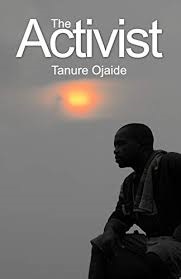
The Activist is a novel by Nigerian author Tanure Ojaide, first published in Nigeria in 2006 by Farafina and later in a North American edition in 2010 by AMV Publishing. The novel is dedicated to the memory of Ken Saro-Wiwa, the renowned Nigerian writer, environmental activist, and Ogoni leader who was executed by the Nigerian military government in 1995 for his activism against the devastating environmental impact of oil exploration in the Niger Delta. This dedication immediately signals the novel’s central concerns: environmental degradation, social justice, resistance to exploitation, and the complex relationship between the Niger Delta and the forces both internal and external that seek to control its resources.
Ojaide himself was born in the oil-rich Niger Delta region and was raised by his grandmother in a riverine rural environment, giving him firsthand knowledge of the landscape, cultures, and peoples he depicts in the novel. He attended the University of Ibadan where he received his bachelor’s degree in English, and he has since become one of Nigeria’s most acclaimed poets, scholars, and novelists. His extensive body of work includes poetry collections such as Children of Iroko, Labyrinths of the Delta, and The Fate of Vultures, as well as criticism including Poetic Imagination in Black Africa and The Poetry of Wole Soyinka. The Activist represents his engagement with the novel form, bringing his poetic sensibilities and sharp social critique to prose storytelling.
The novel is set primarily in the Niger Delta region of Nigeria, particularly in Warri and the fictional Niger Delta State University, with brief scenes in Lagos, the United States, and Europe. The narrative spans approximately a decade, beginning with the protagonist’s return from America and culminating in his election as state governor. Through this arc, Ojaide explores themes of homecoming, identity, environmental justice, corruption, cultural preservation, love, and the possibilities and limitations of individual agency in the face of systemic oppression.
Plot Summary
Part One: The Return
The novel opens with the protagonist known throughout simply as “the Activist” arriving quietly at Murtala Mohammed International Airport in Lagos on a Friday evening in mid-July. He has spent twenty-five years in the United States and is now returning permanently to his native Niger Delta. His arrival is deliberately unannounced and uncelebrated, in stark contrast to the typical Nigerian homecoming ritual where relatives travel great distances to welcome back their “illustrious son or daughter” with video cameras, musicians, and extended celebrations. The Activist has chosen this quiet return because he does not want to inconvenience people or add to the chaos of Lagos, which he has heard described by the BBC as having one of the rowdiest airports in the world. He also does not want to encourage the kind of ostentatious display that he finds wasteful and contrary to his values.
At the airport, the Activist encounters customs officials who are suspicious of his two pieces of luggage and his lack of goods to sell. The officer asks him in pidgin English whether he has brought dollars, banned textiles, or stereo equipment. When the Activist answers “Nothing” to all questions, the officer is incredulous: “Which kind man be this? Everything nothing! You no want make we chop?” The Activist’s refusal to engage in the expected bribery and his use of the word “shenanigan” marks him as someone who has been away too long and does not understand the current “language of survival.” The officers eventually wave him through when they see “Doctor” on his passport, assuming he must have friends in high places. As he leaves, the officers laugh at him, thinking him foolish for returning from “God’s own country” with so little.
The Activist takes an expensive registered taxi to Concord Hotel in Ikeja, paying three thousand naira for what would cost only one thousand outside. He has heard stories of travelers being robbed and even killed by unregistered cab drivers. As the taxi drives through Lagos at night, the Activist is struck by the sights, sounds, and smells of home: makeshift outdoor restaurants with blazing fires and big pots on tripods; the smell of pepper soup, isi ewu, jollof rice, akara, and moinmoin; loud music including Fela’s “Shakara Woman”; people moving up and down the streets like columns of ants. The driver, who is from Ibadan, complains about the hard times: “Business hard! Money no dey.” He tells the Activist that soldiers have stolen all the money from oil, and that one cannot become a big man in Nigeria without stealing. The Activist tries to encourage him to work hard and believe that things will get better, but the driver is skeptical.
At the hotel, the Activist checks in and is shown to his room by a young man who tells him his shift has ended. The room is comfortable with cable television, a bathtub, and a king-size bed. The Activist takes a warm bath and falls asleep quickly, dreaming of a protest in the United States where police unleash dogs on protesters. He is awakened at two o’clock in the morning by a knock on his door. A voice identifies itself as the “office manager,” but the Activist can hear several other hushed voices and suspects something sinister. He calls the reception desk from the room phone, and the man who answers shouts “He-e; they have come again-oo!” when told there are people at the door. The knockers, hearing him on the phone, kick the door once and flee. Later, the desk manager tells the Activist that he saw four men run out of the building and jump over the fence. The intruders must have tracked him from the airport, meaning the taxi he hired was not as safe as he thought, or someone in the hotel gave out information about him. The Activist feels lucky they were not hardened criminals and decides to leave Lagos the next morning, using his deposit to pay for the night.
He takes a hotel minibus to the Niger Delta Line station in Jibowu, where he boards a Peugeot station wagon for Warri. The five-hour journey takes him through the crowded, vibrant, and impoverished landscape of southern Nigeria. At major intersections, hawkers shove their wares at drivers and passengers toothbrushes, combs, mirrors, canned drinks, snacks, artworks, calendars, and belts. The Activist shakes his head in pity, wondering how they survive on the pittance they make. The journey ends at the Niger Delta State University campus, where the Registrar has arranged temporary housing for him.
The novel then provides extensive background on the Activist’s life and motivations for returning. He was a young man in secondary school on vacation when soldiers and mobile police, working at the behest of the military government and a major oil company (Bell Oil), massacred his village because the people had dared to bring in foreign journalists to document their exploitation and the pollution of their environment. The Activist narrowly escaped being killed, surviving with two bullets lodged in his right knee. When the American ambassador visited the site of the incident a few days later, he selected two young men to be sent to the United States to continue their education. The Activist was one of them.
In the United States, the bullets were removed from his knee, and he went on to complete his secondary school education, earn a bachelor’s degree in less than four years, a Master’s degree within another eighteen months, and a Ph.D. two and a half years later. Despite these impressive credentials, he found himself teaching at Barber College, a black institution constantly threatened with bankruptcy, lacking accreditation, and paying “slave labor wages.” The college did not tenure any teacher, did not enroll its teachers in a retirement program, and had no health insurance. The Activist enrolled himself in the state health insurance scheme. He drove twenty miles to the college from the city and sometimes drove a cab at night to make extra money. He sent money home occasionally and lived a modest life.
The novel explores the Activist’s reflections on the plight of immigrants. Many delude themselves that they are better off economically than those they left behind, even as they pick discarded mattresses and clothes from garbage dumps, shop at thrift stores and flea markets, and drive around on Saturday mornings looking for yard sales. Meanwhile, some of their colleagues back home have become bank managers, vice-chancellors, ministers, and high officials. For the brave ones who realize they have made a mistake, there is the constant shame of imagining returning home without anything to show for their years abroad. They bear the taunts of Americans who tell them to “go back home” if they love their country so much, who mock their accents and their “tribal villages,” and who make them feel like second-class citizens.
The Activist also reflects on his participation in protests in the United States and Europe. He was on the mailing list of many organizations and responded to calls for major protests, seeing it as a human duty rather than just a civic one. He flew to Europe on chartered flights to carry placards against Bell Oil International and the Group of Seven over debt relief for Third World countries. He identified with ATTACK, the French activist group that believed in disrupting meetings of exploiters, and with Greenpeace’s concerns for the environment. He believed the FBI had files on him but was not afraid because he felt he was doing the right thing.
He had a white girlfriend named Amy who was unstable she tried every drug available, drank, smoked, and suffered from depression. She wanted him to make love to her “as if he were a Kentucky Derby race horse,” and once threw a knife at him during a struggle. After they broke up, he had not had a serious interest in another woman because he saw Amy in every potential girlfriend.
The Activist’s decision to return home came after a visit to bury his father ten years earlier. He was struck by how the people at home seemed more relaxed and happier than him, despite his supposedly richer and more developed circumstances. He began to ask himself what constitutes a good life, and he realized that home for him was where his parents had given birth to him and handed down tales from their parents. He realized he would make a greater impact in his own country than by swelling the numbers of protesters in developed countries. He saw the problems at home as a tug of war between the dictatorial military and the civilians who wanted democracy, and he wanted to throw his weight on the civilian side.
His home state university had been contacting him to return and teach, and he had received a letter of appointment months earlier. On a moody autumn morning, he made the decision to return. He gave three months’ notice at his job, wrote to accept the teaching position in Nigeria, and booked his flight. His fellow Nigerian immigrants tried to dissuade him with questions: “Can you live in Nigeria again?” “It’s jungle life out there; can you cope?” “Are you crazy; with all the armed robbers and those ruthless soldiers you still want to live there?” “And the witchcraft stuff you hear about, how do you go into that voodoo land to live permanently?” But the more questions they asked, the more determined he became. He did not consider himself a heavyweight, but he would do his little best for the side he believed in.
Back in Nigeria, the Activist settles into his temporary quarters at the university and begins teaching. He meets Ebi Emasheyi, an art lecturer, when she gives him directions to the transit quarters. They meet again two days later and exchange greetings, then gradually become friendlier. Ebi is thirty-seven years old but looks much younger, with a youthful physique and good looks. She has a Master’s degree in art education and has been teaching at the university for four years while pursuing a part-time doctoral program. She is from a mixed Itsekiri, Izon, and Urhobo background, which makes her uniquely positioned to bridge the ethnic divisions in the Niger Delta.
Ebi’s past includes a difficult experience with a man named Udoma, who proposed to her as a second wife because his first wife, Jessica, had not conceived in seven years. Ebi refused but offered to help him find a solution. She took him to a traditional healer named Ezeani, who prepared a medicine for Udoma and his wife. When Jessica eventually conceived and gave birth to a son, Udoma, who had become “born again” and joined the Redeemed Church of Christ, refused to pay Ezeani the agreed fee of a ram and fifty thousand naira, claiming that God’s power had caused the conception. Ebi warned him that he should honor his promise, but Udoma ignored her. Later, the child died and Jessica divorced him, which Ebi sees as a consequence of his refusal to fulfill his obligation.
Ebi’s mother had pressured her constantly about marriage, asking when she would bring home a prospective husband. Ebi resisted the pressure, insisting she wanted a man who would be her friend and companion, not just a provider or father of her children. When her mother died, Ebi felt relieved from the taunting, though she wished she had married before her mother’s death to fulfill that dream.
The Activist and Ebi’s relationship deepens when he asks for her help in preparing traditional food for a visit from his relatives. She agrees and coaches him on how to receive visiting elders according to custom. The visit from five men from his village Poko (the eldest), Dafe (a cloth merchant), Tebu (a fisherman), Macaulay (a hunter), and Sodje (a yam farmer) is a pivotal scene. The Activist presents them with kola nuts, a bottle of Schnapps, beer, soft drinks, and five thousand naira as a token of appreciation. Ebi adds three hundred naira and is praised by Poko as “the moon in the night.” The visitors are impressed by the traditional food Ebi prepares palm oil soup with starch and yam, made with smoked mudfish, tilapia, crayfish, and special spices.
The delegation’s purpose, however, is not just to welcome the Activist home. They want to give him a welcome party in their village, but more importantly, they want to advise him to return to America. “We want you to go back to America. We are proud of you over there more so than your being here,” Dafe tells him. They see America as a place one cannot walk to, ride a bicycle to, or take a bus to you can only take a ship for weeks or fly for days. No witch or wizard among them had ever confessed to successfully flying to and returning from America. They want him to go back and send them dollars, to take their children one by one to work there. The Activist refuses, and the delegation leaves “scratching their heads in disappointment at their illustrious son’s stubborn resolve to stay permanently among them.”
The novel also introduces the history and context of the area boys, the militant youth gangs of the Niger Delta. In the Activist’s childhood, there were “boma boys” who built their identity on two foreign traditions: cowboys and sailors. They wore Texas cowboy paraphernalia and walked with the swagger of sailors, modeling themselves after John Wayne and other American Western movie heroes. After the civil war ended in 1970, the boma boys lost their glamorous status, and in their place rose the area boys, who saw themselves as a reject caste thrown out of their paradise. The area boys worship Egba, the god of war, revenge, and restitution. They are initiated at Egba’s shrine by a huge iroko tree, swearing to obey the god’s commands and to avenge or take back whatever has been robbed from them. The kidnapping of expatriates working in the oil companies is a major preoccupation, with ransoms paid secretly by the companies.
The area boys are led by Pere Ighogboja, a young man in his early thirties who fought his way to the headship of his group. Pere’s background is tragic: his mother was once married to an ex-soldier who went insane, and the man he thought was his father, Omishola, revealed after his mother’s death that Pere was not his son. Pere took his mother’s father’s name, Ighogboja, and found his way into adulthood through various jobs, eventually becoming an agbero (motor park assistant) and then joining the area boys. He was imprisoned for seven years after beating a boy who had beaten his son; the boy had a seizure and died. In prison, Pere reflected on his hot temper and promised to be a different man. He emerged from prison stronger and more determined, eventually becoming a prosperous businessman with a hotel and a family.
The Activist and Pere meet at a barbershop and gradually develop a relationship based on mutual respect and shared goals. They both want to push out the outsiders or be treated respectfully as the owners of the resources being carted away. They also want to diminish the ranks of treacherous insiders who collude with the outsiders. They discuss Chief Tobi Ishaka, an exceptional chief who refuses to share in the payoffs from oil companies and who speaks truth to power at the council of chiefs’ meetings.
The Activist and Ebi’s relationship continues to develop. They go on a picnic down the Great River to the ocean, a journey that takes them through creeks, streams, and mangrove forests. Ebi, who grew up fishing and swimming in these waters, teaches the Activist how to row a boat and navigate the currents. They witness the desolation of the water the flying fish are gone, the water is light green and greasy, the large fish population has been decimated or migrated. They pass the riverine town of Enekerogha, which used to be famous for fishing but now receives imported frozen fish from Warri. They arrive at a small island where they swim in a cove that Ebi says is a secret among girls to bathe in for fertility and good health. The Activist sees Ebi’s beauty and compares her to Mami Wata, the water goddess. They share their first kiss and begin a romantic relationship.
The Activist and Ebi eventually move in together, with the Activist moving into Ebi’s flat an arrangement that scandalizes the campus community. The gossips are scandalized that a man would abandon his flat to move into a woman’s home. “Is that what happens abroad?” one lecturer asks. “That happens only with useless and uneducated black men who do not take jobs but live on women,” another replies. The female students see Ebi as a robber who took over a man that should be their prize. The female lecturers gossip that Ebi schemed to have the Activist to herself, that she spent so much money on clothes and cooking to attract him, that she must have added something to the fish in the food she prepared for him. The Activist’s male colleagues are furiously jealous too, many having tried and failed to date Ebi. But the couple is happy and content, and they eventually have a traditional marriage ceremony witnessed by a small group of friends and relatives.
The novel also introduces Chief Tobi Ishaka in more detail. He is an exceptional chief who has native intelligence and attended the Native Authority Elementary School in colonial times, achieving what was comparable to a very good secondary school education. He started in the palm oil and kernel business before switching to rubber when that became a major raw material. He built a large oven house to dry rubber sheets to industry standards, promoted the use of acid instead of fermented cassava liquid, and handled his business professionally. He bought a used Mercedes Benz and took a chieftaincy title, but soon realized that the council of chiefs lived on corruption. He refused to share in the payoffs from oil companies and railed at his fellow chiefs who saw truth and deliberately bypassed it.
Chief Ishaka sent his son Dennis to the university to study petroleum engineering, believing that Nigerian engineers were needed to know how petroleum was drilled and to protect the environment. When Dennis graduated with a first-class degree and completed his national youth service, Chief Ishaka went to see the General Manager of Bell Oil Company, a Dutchman named Mr. Van Hoort, to ask for a job for his son. Van Hoort, seeing the diplomatic benefits of employing the chief’s son, offered Dennis a senior staff position immediately.
The novel also follows the story of Omagbemi Mukoro, the son of Dr. Mukoro (the Activist’s old classmate and colleague), who is a student at the university and a member of a secret cult. Omagbemi argues with his father about the failures of the older generation and the need for revolution. He is passionate about his cult and defends its actions, including the acid attack on a female student who refused to be a girlfriend to one of the members. The Activist listens to these debates without taking sides, though he sees Omagbemi as indirectly assisting the oppressors by dividing the people.
The novel describes the murder of Professor Tobore Ede, a community development officer for Bell Oil Company. After a blowout at Roko Village that burnt the village to the ground, the oil company did nothing to help the displaced villagers. When the Activist, Pere, and the student union planned a protest, Bell Oil sent Professor Ede to pacify the students. Ede insulted the community, calling them lazy and arsonists, and the students responded by forcing a tire over his neck and setting him ablaze the first known case of neck-lacing in the area. The university was shut down, the Activist and other lecturers were detained, and all students were fined twelve thousand naira each to compensate Ede’s family and repair the university. The practice of picking a community development officer ended with Ede’s death, and the oil companies replaced it with a community liaison office, hiring retired army officers instead of academics.
Part Two: Changing Tides
The second part of the novel begins with Pere Ighogboja living a good life. From his origins as a motherless child and a motor park assistant, he has risen to become a wealthy man and a respected leader. He has a big house, a loving wife Tosan, and two children Tonye and Eloho. He has restored dignity to his group of area boys, presiding over them like a democratically elected leader who is responsive to his constituents. He has built a coalition with academics and student organizations, including the Activist and Omagbemi, to strengthen their position against the oil companies and the military government.
Omagbemi Mukoro uses his cult membership to become Student Union President, campaigning on promises of peace, scholarships, subsidized food, and more hostel space. He wins with a landslide after a concert by Daddy Showkey. After his election, he becomes more ambitious, calling for the universities to be relevant to their immediate communities and for students to play a vital role in that endeavor. When another blowout occurs, Omagbemi plans a massive demonstration, but a heavy downpour puts out the fires and the protest does not take place.
The Activist, meanwhile, has become a full professor and is living a comfortable life with Ebi, who has earned her Ph.D. and given birth to a daughter named Ufuoma. He has not forgotten his radical ideals, and when Bell Oil invites him to give lectures, he refuses, seeing it as a bribe. The oil companies are puzzled by a radical who was educated in the United States and not the Soviet Union, and they try various ways to silence him.
Ebi becomes involved in women’s organizing after a series of ethnic clashes in Warri that were fueled by competition over oil resources and government handouts. The clashes, which left hundreds dead, were sparked by rumors about the distribution of fishing nets donated by the federal government. The Itsekiri, Izon, and Urhobo the three major ethnic groups in the area fought each other, with horrific atrocities committed on all sides. The military government was slow to intervene, and when soldiers finally arrived, they harassed, extorted, raped, and killed people. The police who replaced them were equally corrupt, selling ammunition to armed robbers and extorting money at checkpoints.
Mrs. Timi Taylor, a woman of mixed Itsekiri and Urhobo heritage, initiates a reconciliation effort by inviting women of all groups to a meeting in Warri. The women share their experiences of the environmental and health impacts of oil exploration: infertility, malformed babies, early menstruation, early menopause, weakened men, and a burning sensation in their bodies. They form the Women of the Delta Forum (WODEFOR), with Mrs. Taylor as president and Ebi as secretary. They plan to confront the oil companies and the military government, first through persuasion and then through unconventional means if necessary.
The Activist and Pere go into the bunkering business together, forming the Delta Cartel. They buy a broken-down tanker, repair it, and build a petrol station on the Warri-Agbor Road. They recruit five area boys to help with the operation, cutting oil pipes and filling drums with fuel. The business thrives during a nationwide strike by oil workers, when fuel becomes scarce and prices skyrocket. They hoard fuel and sell it at night to the rich, who cannot bear any discomfort in their opulent lives. The Delta Cartel becomes a multi-million naira business, and Pere uses the profits to build a hotel in Warri and another in Port Harcourt. The Activist uses his share to buy art and to start a newspaper called The Patriot.
The Patriot starts as a weekly with good reportage of events in the Niger Delta and becomes a daily. Ebi retires early from the university to manage the newspaper, and Omagbemi becomes editor-in-chief. The paper reports on environmental degradation, political corruption, and social issues, and it wins the Green Peace Reporting Award. It also reports on sex scandals at the university, including one involving a professor who tries to rape a female student who is the wife of a junior lecturer, and another involving a rich chief’s wife who takes a young lover to Pere’s hotel.
The women of WODEFOR plan a nude protest at an oil flow station and tanker-loading terminal. In traditional Niger Delta culture, a nude protest by elderly women is the worst curse possible, invoked when all other measures to seek redress have failed. The oil companies and the military government learn of the plan and try to stop it. The foreign executives of Bell Oil are at first dismissive, but when they understand the cultural significance, they decide to take action. They send masked Navy personnel and retired marines to overwhelm the women with tear gas and a mysterious gas that makes them dizzy and sleepy. The women and journalists are loaded onto speed boats, their cameras and records seized, and some women are raped in their drowsy state. The nude protest is aborted, but two weeks later, Mr. Van Hoort, the Bell Oil boss, dies of a heart attack, and General Mustapha Ali Dongo, the head of the military government, dies in weird circumstances. The women believe their curse has worked.
The novel then follows Dennis Ishaka’s career at Bell Oil Company. He is given a luxurious house in the Ugunu site, a transplanted European township with electric fences, manicured lawns, constant electricity, and a club with a big screen. He is assigned to the corporate hospitality section, where he receives important visitors and reads old bulletins about the company’s global operations. After three years, he is transferred to Amsterdam, the company’s international headquarters, where he is given a magnificent office on the thirty-ninth floor of a forty-story building. He has little work to do, and his Dutch colleagues encourage him to have a social life. His assistant, Erika, a blonde Dutch woman, pursues him relentlessly, and he eventually becomes involved with her. His father writes to him, warning him about the dangers of women and the importance of learning the technical aspects of oil drilling. But Dennis is seduced by the luxuries of Amsterdam and by Erika, and he becomes a socialite rather than a practical petroleum engineer.
Chief Ishaka dies in a ghastly accident when his Mercedes Benz collides with a passenger bus and a petrol tanker, sparking an inferno that leaves no identifiable remains. His children debate which casket to use Dennis has bought an expensive American casket and a custom-made Ghanaian fan-shaped coffin. They choose the Ghanaian coffin, and Erika flies from Amsterdam to attend the funeral. During the funeral, Erika tells Dennis that she is pregnant. Dennis is apprehensive but feels he has to be a good host.
The novel concludes with the Activist running for governor of Niger Delta State. The military government, under pressure from international observers and the international community, has agreed to hold elections. The Activist takes leave from the university and campaigns vigorously, using the resources of the Delta Cartel, The Patriot, the Egba boys, the students, and the university. Ebi campaigns for him, presenting him to women as the one who would best serve their interests. His symbol is the fish, which the rural people recognize and support. He wins the election and becomes the first elected governor of the state.
As governor, the Activist gives up his partnership in the Delta Cartel, restructures the government ministries, and creates a Ministry of Environmental and Mineral Matters. He brings Dennis Ishaka back from Amsterdam to be the commissioner of the new ministry, overseeing the creation of the Niger Delta State Oil Corporation. Erika is appointed the Public Relations Officer of the corporation. The Activist is invited to speak at the annual convention of the Niger Delta People’s Association in Washington, DC, and he and Ebi travel first class on British Airways. In Washington, he challenges his people to reject imported goods and to apply their learning to the needs of their home. He and Ebi join a protest against the World Bank and the International Monetary Fund, and their pictures are splashed all over the Nigerian papers with the caption, “Niger Delta State Governor and First Lady had fun in Washington, DC.”
Character Analysis
The Activist
The protagonist of the novel is known only as “the Activist,” a name given to him by the campus community because of his bearded and mustached look when he first arrived, and his radical ideas. His given name and family name are all but forgotten, except in his payroll slip, which nobody else sees. This anonymity is significant: he represents not just an individual but a type the committed intellectual who returns home to fight for justice.
The Activist is a complex figure, driven by a deep love for his people and his homeland, but also marked by the trauma of his past. He survived the massacre of his village, carrying bullets in his knee for years, and this experience shaped his commitment to fighting against the forces that exploit and destroy the Niger Delta. His twenty-five years in the United States gave him education and experience, but he never felt at home there. He sees America as both beautiful and ugly, a place where he learned much but also where he suffered from loneliness and depression.
His decision to return home is presented as a victory over fear. “He had overcome a fierce army of fear that had threatened to paralyze or kill him,” the narrator tells us. “He was a victor who relished his victory without being noisy about it.” This quiet determination characterizes the Activist throughout the novel. He does not seek fame or recognition; he simply wants to do what he can to make things better.
The Activist is a man of contradictions. He is an intellectual who can quote Fela and discuss the politics of oil, but he can also cook and appreciate the simple pleasures of home. He is a radical who goes into the bunkering business with Pere, but he is also a romantic who falls deeply in love with Ebi and becomes a devoted husband and father. He is a critic of American capitalism who once protested against the World Bank and the IMF, but he also uses the wealth he accumulates from bunkering to start a newspaper and fund his political campaign.
His political ambition is presented as a natural extension of his activism. He does not seek power for its own sake but to make a difference at the state level, believing that the federal capital is a “city of thieves” where he would be a “lone voice in the wilderness.” His governorship represents the possibility of positive change, but the novel is careful not to present it as a simple solution. The Activist is aware of the challenges ahead and the compromises he will have to make.
Ebi Emasheyi
Ebi is the Activist’s wife and a central character in her own right. She is an art lecturer at the Niger Delta State University, with a Master’s degree in art education and a Ph.D. in art. She is thirty-seven when the Activist returns, but she looks much younger, with a youthful physique and athletic agility. She is from a mixed Itsekiri, Izon, and Urhobo background, which makes her a bridge between the ethnic groups of the Niger Delta.
Ebi is a strong, independent woman who has resisted societal pressure to marry. Her mother constantly taunts her about being an “old maid,” but Ebi insists on waiting for the right man someone who will be her friend and companion, not just a provider or father of her children. She refuses Udoma’s proposal to be his second wife, even though her mother and friends encourage her to accept. Instead, she helps Udoma and his wife find a solution to their infertility through a traditional healer, demonstrating her generosity and her commitment to helping others.
Her relationship with the Activist develops gradually, from casual greetings to a deep love. She is initially cautious, not wanting to jump at any invitation, but she soon realizes that she enjoys his company and that he is different from the other men around. She moves into a relationship with him without formal marriage at first, scandalizing the campus community, but she does not care about gossip. She is confident in her choices and in her love for the Activist.
Ebi is also a leader in her own right. She becomes the secretary of the Women of the Delta Forum, organizing women across ethnic lines to fight against the environmental degradation caused by oil companies. She campaigns for her husband during the gubernatorial election, presenting him to women as the one who would best serve their interests. After the election, she becomes the manager/publisher of The Patriot, using the newspaper to promote the interests of Niger Delta women.
Pere Ighogboja
Pere is the leader of the area boys, a man who has risen from a difficult childhood to become a powerful and wealthy figure. His father, Omishola, disowned him after his mother’s death, revealing that Pere was not his biological son. Pere took his mother’s father’s name and found his way into adulthood through various jobs, eventually becoming an agbero and then joining the area boys.
Pere is a complex character. He is capable of violence he was imprisoned for seven years after beating a boy who had beaten his son, and the boy died of a seizure triggered by the beating. But he is also a loving husband and father, a man who adores his children and wants to give them the education he never had. He is a democratic leader who allows his followers to express their views and makes decisions unanimously. He is a visionary who understands the importance of alliances with academics and students, and he is the one who first conceives of the bunkering business that becomes the Delta Cartel.
His partnership with the Activist is based on shared goals to push out the outsiders or be treated respectfully as the owners of the resources being carted away, and to diminish the ranks of treacherous insiders who collude with the outsiders. Their business, the Delta Cartel, is a form of resistance, a way of robbing the robbers to get back what has been stolen from the Niger Delta people. Pere’s philosophy is simple: “The bold survive; the weak die.” He believes that the oil companies and the military government have no more right to the oil than he does, and he is willing to use whatever means necessary to claim his birthright.
Chief Tobi Ishaka
Chief Ishaka is the moral center of the novel, a man of integrity and dignity who refuses to be corrupted by the oil companies. He has native intelligence, having attended the Native Authority Elementary School in colonial times and achieved what was comparable to a very good secondary school education. He built a successful business in rubber, buying from individual producers and selling to big buyers, and he handled his business in a professional manner, not manipulating the scale to his advantage or keeping secrets about prices.
As a chief, he refuses to share in the payoffs from oil companies and speaks truth to power at the council of chiefs’ meetings. He argues that the oil companies are not friends or partners but robbers who take away the people’s wealth and leave them tidbits. He sees development differently from his fellow chiefs to him, development means using modern tools to farm and fish more efficiently, storing and preserving excess food, and building infrastructure like roads and drainage. He is isolated by his fellow chiefs, who see him as a troublemaker, but he remains steadfast in his principles.
His relationship with his son Dennis is central to his character. He sent Dennis to study petroleum engineering, believing that Nigerian engineers were needed to know how petroleum was drilled and to protect the environment. He wanted Dennis to learn the “witchcraft of the white man” so that he could drill oil from their own land. His disappointment when Dennis becomes a socialite in Amsterdam rather than a practical engineer is palpable, and his letter to Dennis warning him about the dangers of women and the importance of learning the technical aspects of oil drilling is one of the most poignant moments in the novel.
Dennis Ishaka
Dennis is Chief Ishaka’s son, a petroleum engineering graduate who is hired by Bell Oil Company at his father’s request. He is given a luxurious house in the Ugunu site, assigned to the corporate hospitality section, and eventually transferred to Amsterdam. He is a smart young man he earned a first-class degree from the University of Lagos but he is seduced by the luxuries of his position and by Erika, his Dutch assistant.
Dennis’s story is a cautionary tale about the dangers of losing sight of one’s goals. His father wanted him to learn the technical aspects of oil drilling so that he could drill oil from their own land, but Dennis is kept away from the rigs and the flow stations, given a suit and a big office instead. He becomes a socialite rather than an engineer, and he ends up with a Dutch girlfriend and a child, far from his father’s dream. His father’s death and the discovery of Erika’s pregnancy leave him at a crossroads, but the novel suggests that he may eventually find his way back through his appointment as commissioner of the Ministry of Environmental and Mineral Matters.
Omagbemi Mukoro
Omagbemi is Dr. Mukoro’s son and a student at the Niger Delta State University. He is a member of a secret cult and later becomes Student Union President. He is passionate about revolution and change, arguing with his father about the failures of the older generation. He is intelligent and energetic, but his energy is initially directed toward destructive ends cult activities, violence, and confrontation.
His relationship with the Activist changes him. The Activist asks him penetrating questions that give him much to think about, and he begins to redirect his energy toward more productive ends. He becomes editor-in-chief of The Patriot and uses his position to advocate for justice and change. His story represents the potential of youth to be redirected from nihilism to constructive action.
Mrs. Timi Taylor
Mrs. Taylor is a woman of mixed Itsekiri and Urhobo heritage who initiates the reconciliation effort after the ethnic clashes in Warri. She is a charismatic leader who travels all over the Niger Delta talking to women’s groups about the plan for a nude protest. She is the president of the Women of the Delta Forum and invokes Umalokun, the patron goddess of women, to avenge the rape and humiliation of women during the protest.
Erika
Erika is Dennis’s Dutch assistant at Bell Oil International Headquarters in Amsterdam. She is a blonde Dutch woman who studied Public Communications at the University of Leiden and took a minor in Business Administration. She pursues Dennis relentlessly, flaunting her body and inviting him on a pleasure drive to The Hague and Rotterdam. She becomes pregnant with Dennis’s child and follows him to Nigeria for his father’s funeral. She represents the seduction of the West its comforts, its liberties, and its distractions.
Themes
Environmental Degradation and Environmental Justice
The novel is, at its core, a powerful indictment of the environmental devastation caused by oil exploration in the Niger Delta. Ojaide vividly depicts the transformation of a once-pristine paradise into a wasteland of oil slicks, blowouts, gas flares, and poisoned waters. The Activist remembers how, when he was young, his mother could put a pot of water on the fire, take her scooping net to the nearby lake, and return within half an hour with enough fish to prepare a delicious palm oil soup. Now, those lakes and wetlands have been filled with rubber trees, roads, and developments that have left the people hungry, diseased, and alienated from their roots. The oil companies are pouring poisons into them, giving these natural sustainers of the people a final deathblow.
Ebi recalls a list of luxuries of the past oil-beans, breadfruit, mushroom, urhuru grapes, owe apple, otie cherry fruit, water-leaf, greens, water yam, ikpaho groundnuts, lemon leaves, plantation peas, okpeyin yam, taro roots, and sweet cassava that are either gone or barely available. The novel connects environmental degradation to human health: the women of the Niger Delta report infertility, malformed babies, early menstruation, early menopause, weakened men, and a burning sensation in their bodies. The water that used to be an elixir has become a poisonous brew, and the air that used to be cool and fresh is now hot and toxic from gas flares.
The novel also highlights the injustice of the situation. The oil companies and the military government reap billions of dollars in profits while the local people suffer from the consequences of pollution. The companies build boreholes and tarred roads that they trumpet in the media, but the villagers vandalize the boreholes and steal the cables of transformers, and the roads are single-lane and substandard. The companies employ a senior academic as a community development officer, paying him five times his university salary, and he becomes their sidekick, gathering information about his people and passing it to his employers. The novel exposes the hypocrisy of corporate social responsibility, showing how the oil companies use charity to mask their exploitation.
Homecoming and Identity
The Activist’s return home is the central narrative of the novel, and it raises questions about what it means to belong, to be home, and to be true to oneself. The Activist has spent twenty-five years in the United States, but he never considered it his home. Home for him is where his parents gave birth to him and handed down tales from their parents. He returns because he wants to live among his own people, to contribute to their struggle, and to find a sense of purpose and fulfillment that he could not find abroad.
But homecoming is not simple. The Activist finds that things have changed the environment is degraded, the people are poorer, the corruption is worse, and the younger generation is lost in cults and violence. He also finds that his own people do not always understand or appreciate his decision. His relatives want him to return to America, to send them dollars, to take their children abroad. The campus community gossips about him, speculating that he must have been deported or that he is crazy. The taxi driver tells him that one cannot become a big man in Nigeria without stealing.
The novel explores the tension between the Activist’s love for his home and his frustration with its problems. He is not blind to the difficulties the corruption, the violence, the poverty, the environmental devastation. But he believes that home is worth fighting for, that the people are worth serving, and that change is possible. His love for Ebi, his partnership with Pere, and his election as governor are all expressions of his commitment to his home.
Tradition and Modernity
The novel explores the tension between tradition and modernity, showing how the people of the Niger Delta navigate between their cultural heritage and the forces of globalization and modernization. The Activist is a man of both worlds he has a Ph.D. from an American university and speaks fluent English, but he also appreciates the traditional customs of his people. He participates in the ritual of welcoming visitors with kola nuts and schnapps, he respects the elders, and he learns from Ebi about the traditional songs and dances of the area.
But tradition is not always positive. The novel critiques certain traditional practices, such as the way women are pressured to marry and the way chiefs accept bribes from oil companies. It also shows how tradition is being eroded by modernity the cinema houses have closed, the old songs are being forgotten, the young people are more interested in American hip-hop than in udje dance songs. The novel suggests that tradition must be preserved and adapted, not rejected or frozen in time. Ebi’s ability to sing the old songs, her knowledge of traditional pottery, and her appreciation of the area’s cultural heritage are presented as valuable resources for the struggle.
Corruption and Resistance
The novel is a searing indictment of the corruption that pervades Nigerian society, from the customs officers at the airport who expect bribes to the military government that steals billions of dollars from oil revenues. The Activist encounters corruption at every turn the taxi driver who tells him that all big men are thieves, the lecturers who gossip and scheme for promotions, the oil companies that bribe journalists and academics, the politicians who use money to buy votes.
But the novel also shows the possibilities of resistance. The Activist, Pere, Ebi, Chief Ishaka, and the women of WODEFOR all find ways to resist the corruption and exploitation around them. They form alliances, build institutions (the Delta Cartel, The Patriot, WODEFOR), and engage in acts of protest and civil disobedience. The nude protest, though aborted, is a powerful symbol of resistance the women use their bodies, their culture, and their spiritual power to curse the oppressors. The deaths of Van Hoort and General Dongo are presented as the fulfillment of the curse, suggesting that resistance, even when it seems to fail, can have cosmic consequences.
Love and Companionship
The relationship between the Activist and Ebi is one of the most tender and affirming aspects of the novel. Their love develops gradually, from casual greetings to deep companionship. They support each other’s work, share household tasks, and enjoy each other’s company. The Activist appreciates Ebi’s cooking, her knowledge of traditional customs, and her strength and independence. Ebi appreciates the Activist’s respect for her, his willingness to move into her flat, and his commitment to their shared goals.
Their relationship challenges traditional gender roles. The Activist cooks, cleans, and cares for their daughter. He moves into Ebi’s flat rather than requiring her to move into his. He supports her career and her activism. Ebi, in turn, supports his political ambitions, campaigns for him, and manages The Patriot while he governs. Their relationship is presented as a model of partnership and mutual respect, a counterpoint to the patriarchal norms of the society around them.
Education and Elite Formation
The novel examines the role of education in creating an elite that is both privileged and responsible. The Activist, Ebi, Chief Ishaka, and Dennis all have access to education, and their education shapes their opportunities and their outlooks. The Activist’s American education gives him skills and perspectives that he uses to serve his people, but it also creates distance between him and his community. Dennis’s petroleum engineering degree could have made him a practical engineer who could drill oil from his own land, but instead he is co-opted by the oil company and turned into a socialite.
The novel is critical of the way education is used to create a class of people who are more interested in their own advancement than in the welfare of their communities. The lecturers at the university gossip, scheme for promotions, and engage in sexual harassment. The community development officers who are hired by oil companies betray their own people for high salaries. But the novel also shows the potential of education to create leaders who are committed to justice. The Activist, Ebi, and Omagbemi all use their education to serve their communities, and their example suggests that education can be a force for good if it is combined with integrity and commitment.
Gender and Power
The novel pays close attention to gender dynamics and the ways in which women exercise power. Ebi is a strong, independent woman who refuses to conform to societal expectations about marriage and motherhood. She pursues her education, builds her career, and chooses her partner on her own terms. She is also a leader in the women’s movement, organizing across ethnic lines and using traditional practices (the nude protest) to challenge the oil companies and the military government.
The novel shows how women are often the most affected by environmental degradation they suffer from infertility, malformed babies, and other health problems, and they are responsible for feeding their families when the fish and crops are poisoned. But it also shows how women are the carriers of culture and the agents of change. Ebi’s knowledge of traditional songs, her pottery, and her cooking are all expressions of cultural heritage that she passes on to the next generation. The women of WODEFOR use their traditional power the curse of the nude protest to challenge the oppressors, and their action, though aborted, has cosmic consequences.
Symbolism and Motifs
The Fish
The fish is a central symbol in the novel, representing the natural abundance of the Niger Delta and the livelihood of its people. The Activist chooses the fish as his campaign symbol, recognizing that the rural people have voted for the fish before and that it resonates with their lived experience. The fish also represents the environmental degradation caused by oil exploration the fish population has been decimated by chemicals and oil spills, and the people now have to buy imported frozen fish instead of catching their own. The fish is a reminder of what has been lost and what must be restored.
The River and the Ocean
The river and the ocean are recurring motifs, representing the lifeblood of the Niger Delta and the connection between the people and their environment. The Activist and Ebi’s picnic down the Great River to the ocean is a journey into the heart of the Niger Delta, a celebration of its beauty and a lament for its degradation. The river is a source of life it provides fish, water, and transportation but it is also a site of pollution and death. The ocean represents the wider world, the global forces that exploit the Niger Delta, but also the possibility of connection and resistance.
The Pot
The pot is a symbol of life, creation, and care. Ebi makes earthen pots and plates, and the Activist admires them when he visits her flat. “The pot is life,” he declares, lifting one with care. “We all carry pots without knowing.” The pot represents the fragility and preciousness of life, the need to handle with care what one loves. It also represents the creative power of women, who make pots and nurture life.
The Coffin
The coffin is a symbol of death and the afterlife, but also of cultural identity and status. Chief Ishaka’s funeral is a lavish affair, with two caskets an American one and a Ghanaian fan-shaped one and a week-long celebration. The coffin represents the way the people of the Niger Delta honor their dead, but also the way burial ceremonies have become competitive and expensive. Chief Ishaka’s wish to be buried in a fan-shaped casket reflects his identity as the Adjuju of Agbon, the fan of the kingdom, who blows the heat out of the kingdom under assault from the elements.
The Nude Protest
The nude protest is the most powerful symbol of resistance in the novel. In traditional Niger Delta culture, a nude protest by elderly women is the worst curse possible, invoked when all other measures to seek redress have failed. The women’s willingness to strip naked in front of television cameras is an act of ultimate defiance, a refusal to be silenced or intimidated. Even though the protest is aborted by the oil companies and the military, the deaths of Van Hoort and General Dongo suggest that the curse has worked. The nude protest represents the power of women, the power of tradition, and the possibility of resistance even in the face of overwhelming force.
Bunkering
Bunkering the illegal theft of oil from pipelines is a complex symbol in the novel. On one hand, it represents the corruption and criminality that pervade Nigerian society. On the other hand, it represents a form of resistance, a way of robbing the robbers to get back what has been stolen from the Niger Delta people. The Activist and Pere’s decision to go into bunkering is presented as a strategic choice, a way of hurting the oil companies and the military government while also enriching themselves. The bunkering business becomes the foundation of their wealth and their ability to fund The Patriot and the Activist’s political campaign.
The Newspaper
The Patriot is a symbol of the power of the media to shape public opinion and hold power accountable. The Activist starts the newspaper because he has seen how the concerns of the Niger Delta people have gone unreported, and he wants to provide a voice for the voiceless. The newspaper becomes a powerful tool in the struggle, reporting on environmental degradation, political corruption, and social issues, and winning the Green Peace Reporting Award. It also becomes a platform for Ebi’s feminist column and for Omagbemi’s editorials.
Narrative Technique and Style
Ojaide’s narrative technique in The Activist is characterized by a mix of realism, satire, and lyrical prose. The novel is realistic in its depiction of the Niger Delta environment, the corruption of Nigerian society, and the violence of the oil companies and the military. Ojaide draws on his own experiences and observations to create a vivid and convincing portrait of the region. The novel is also satirical, using humor and irony to expose the absurdities and hypocrisies of the powerful. The scene where the customs officer asks the Activist whether he has brought dollars, and the Activist’s refusal to engage in bribery, is both funny and pointed. The scene where Professor Ede is neck-laced by the students is horrifying but also darkly comic in its portrayal of the don’s arrogance and the students’ rage.
Ojaide’s prose is often lyrical, especially in his descriptions of the natural environment. His account of the Activist and Ebi’s journey down the Great River is rich with sensory detail and poetic imagery. The water, the mangrove forests, the birds, the starry sky all are rendered with a poet’s eye for beauty and detail. This lyrical quality is not decorative but serves to heighten the tragedy of environmental degradation. The beauty of the Niger Delta is contrasted with the ugliness of its destruction, and the reader is made to feel the loss.
The novel is also characterized by its use of pidgin English, which adds authenticity and humor to the dialogue. The exchanges between the Activist and the taxi driver, the customs officers, and Pere are rendered in pidgin, capturing the rhythm and flavor of Nigerian speech. Ojaide also uses proverbs and folktales, which are an important part of the Niger Delta’s oral tradition. The proverb “The deer will not be lost in the forest; it is its familiar haunt” is used to express the Activist’s confidence in his ability to find his way home. The tale of the woodpecker who had a boil when its parents died is used to explain why it works so late. These proverbs and tales are not just decorative but are integral to the novel’s exploration of cultural identity and memory.
The novel’s structure is episodic, moving between different characters and storylines. This structure allows Ojaide to paint a broad canvas of Niger Delta society, showing how the lives of the Activist, Ebi, Pere, Chief Ishaka, Dennis, and Omagbemi are interconnected. It also allows him to explore different aspects of the oil industry the environmental impact, the corruption, the resistance, the co-optation from multiple perspectives. The novel is divided into two parts, “The Return” and “Changing Tides,” which correspond to the Activist’s arrival and his eventual election as governor.
Historical and Political Context
The Activist is set against the backdrop of Nigeria’s military dictatorships, which ruled the country for most of its post-independence history. The novel references the civil war (1967-1970) and its aftermath, the oil boom of the 1970s, and the successive military governments that plundered the national treasury. The “Federal Military Government” (FMG) that appears in the novel is a fictionalized version of the Nigerian military governments, and the “Interim Federal Military Government” (IFMG) that comes to power after General Dongo’s death is a fictionalized version of the transition governments that preceded the return to democracy in 1999.
The novel also references the real history of the Niger Delta’s struggle for resource control and environmental justice. The Ogoni struggle, led by Ken Saro-Wiwa and the Movement for the Survival of the Ogoni People (MOSOP), is the most famous example of this struggle, and the novel is dedicated to Saro-Wiwa’s memory. The novel draws on the real experiences of Niger Delta communities the oil spills, the gas flares, the pollution, the military repression and gives them fictional expression. The area boys, the bunkering, the ethnic clashes, the women’s protests all are based on real phenomena in the Niger Delta.
The novel also engages with the broader context of globalization and the role of multinational corporations in the developing world. Bell Oil Company is a fictionalized version of Shell, Chevron, and other oil companies that operate in the Niger Delta. The novel shows how these companies collude with local elites and the military government to exploit the region’s resources while leaving the local people impoverished and polluted. The novel also shows how these companies use public relations, charity, and bribery to maintain their image and silence their critics.
Critical Reception and Significance
The Activist has been praised for its vivid portrayal of the Niger Delta, its compelling characters, and its powerful critique of environmental degradation and corruption. Critics have noted that the novel is a monumental literary achievement, a befitting tribute to Ken Saro-Wiwa, and a welcome addition to the fast-growing corpus of radical literature in Africa. The novel has been praised for its sophisticated and passionate writing, its riveting and startling tale, and its ability to combine local and universal issues.
The novel is significant for several reasons. First, it is one of the few novels that deal directly with the environmental and social crisis in the Niger Delta, a region that has been largely neglected in Nigerian literature. Second, it is a work of committed literature, a novel that is not afraid to take sides and to advocate for justice. Third, it is a novel that explores the complexities of homecoming and identity, showing that the return home is not a simple solution but a difficult and ongoing process. Fourth, it is a novel that celebrates the resilience and creativity of the Niger Delta people, especially its women, and their capacity for resistance and renewal.
The novel is also significant for its portrayal of the activist as a complex, flawed, and ultimately heroic figure. The Activist is not a saint he goes into the bunkering business, he uses his wealth to fund his political campaign, and he makes compromises. But he is committed to his people, his culture, and his land, and he is willing to risk his comfort and his safety to make a difference. His story is a testament to the power of individual agency in the face of systemic oppression, and it offers a vision of hope for a better future for the Niger Delta and Nigeria.
Conclusion
The Activist is a rich, complex, and powerful novel that deserves a wide readership. It is a story about one man’s return to his homeland, but it is also a story about a region, a people, and a struggle. Through the intertwined lives of the Activist, Ebi, Pere, Chief Ishaka, Dennis, and Omagbemi, Ojaide creates a portrait of a society in crisis a society that is being destroyed by oil exploration, betrayed by its leaders, and divided by ethnic conflict. But Ojaide also shows the possibilities of resistance and renewal. The Activist’s decision to return home, his partnership with Pere, his love for Ebi, his election as governor, and his continued activism all demonstrate that individuals can make a difference, that love and solidarity can overcome fear and division, and that the fight for justice is ongoing.
The novel’s dedication to Ken Saro-Wiwa is a reminder that the struggle for the Niger Delta is not just fiction but a real struggle that has cost people their lives. Saro-Wiwa’s execution by the Nigerian military government in 1995 was a turning point in the international campaign for environmental justice in the Niger Delta, and the novel continues that campaign in the realm of literature. By telling the stories of the Niger Delta people, Ojaide gives them a voice, preserves their memory, and calls the world to witness their suffering and their resistance. The Activist is a novel that matters a novel that informs, challenges, and inspires.