
Introduction
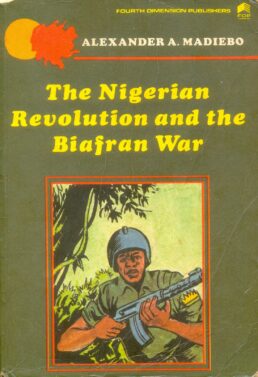
The Nigerian Revolution and the Biafran War is a memoir written by Major-General Alexander A. Madiebo, the Commander of the Biafran Army during the Nigerian Civil War (1967–1970). Published after the war, the book provides an insider’s account of the events leading to the January 15, 1966 coup, the counter-coup of July 1966, the pogroms against Eastern Nigerians, the declaration of Biafra’s independence, and the subsequent civil war. Madiebo writes not merely as a historian but as a participant who witnessed and shaped critical events from his position as a senior officer in both the Nigerian Army and later the Biafran Army. The book is divided into three parts: “The Revolution,” “The War,” and “Epilogue,” with fifteen chapters covering the political background, the coups, the war’s major battles, and reflections on why Biafra lost.
Madiebo’s stated purpose is to provide a dispassionate, eye-witness account that corrects the “inaccuracies and misinformation” propagated by books published in New York, London, and Paris during and after the war. He aims to initiate a “post-mortem” on events in which he was deeply involved, first as Head of the Nigeria Army Artillery and later as General Officer Commanding the Biafran Army. He acknowledges that the book is not political propaganda but a genuine attempt to explain why it was necessary for army officers to topple the civil government, why joy over the coup was short-lived, why a section of Nigeria reacted violently, and why Lt. Colonel Gowon, who initially planned secession, instead plunged Nigeria into a civil war to re-unite the country.
The book begins with Madiebo’s military background. He joined the Nigeria Army in May 1954 as an Officer Cadet, trained at the Regular Officers’ Special Training School in Teshie, Ghana; Eaton Hall Officer Cadet School in Chester, England; and the Royal Military Academy Sandhurst in Camberley, England. He was commissioned into the Nigeria Army Artillery as a Second Lieutenant in December 1956. He served as Troop Commander of the Reconnaissance Squadron in the Cameroun uprising and in Kinshasa, and as Adjutant of the Third Nigeria Battalion in Ibadan during the 1962 political crisis. He became the first Regimental Commander of the Nigeria Army Artillery Regiment in July 1964. During the war, he commanded Biafra’s 51 Brigade before assuming full command of the Biafran Army from September 1967 to the end of the war.
Part I: The Revolution
Political Background: Madiebo argues Nigeria was never a homogeneous nation. British colonial “Divide and Rule” policies exacerbated tribal divisions. Political parties formed along ethnic lines NPC (Hausa-Fulani North), AG (Yoruba West), and NCNC (Ibo East). The 1962 Western Region crisis, the 1964 federal election manipulations, and the 1965 Western election fraud created a political powder keg. The military, concentrated in the North under the ethnic quota system, became politicized. Brigadier Ademulegun’s political ambitions split the officer corps.
The January 1966 Coup: Led by Major Nzeogwu, young officers overthrew the civilian government, killing Sir Abubakar, the Sardauna, and senior military officers. Madiebo, in Kaduna during the coup, advised Nzeogwu against attacking the South, preventing wider bloodshed. Ironsi assumed power but proved politically naive.
The Counter-Coup (July 1966): Northern officers, led by Murtala Muhammed and others, overthrew Ironsi, killing him and Fajuyi in Ibadan. A wave of pogroms against Easterners followed over 30,000 killed in May and 50,000 in September. Madiebo escaped Kaduna disguised as a Hausa trader, crossing the Benue River hidden in a train’s water tank.
The Gathering Storm: Despite Aburi Accords, Gowon reneged on agreements and imposed economic sanctions. Ojukwu declared Biafra independent on May 30, 1967, amid widespread jubilation but inadequate military preparation.
The Biafran Armed Forces: Biafra started with old bolt-action rifles, a few machine guns, and no answer to Nigerian armor or air power. The Militia and BOFF were formed but became drains on manpower. Administrative support was chaotic, with civilian directorates (Food, Transport, Fuel, Clothing) proving inefficient and corrupt.
Part II: The War
Initial Battles: Biafran forces won early victories at Garkem, Obudu, Obollo Afor, and Obollo Eke, demonstrating infantry superiority. However, they lacked anti-tank weapons and ammunition.
“Sabotage” Politics: Introduced by Banjo and Alele, the “sabotage” accusation became a destructive witch-hunt. Any officer who lost a battle was branded a saboteur, paralyzing command initiative. Senior officers Eze, Kalu, Amadi, Nwawo, Ude were repeatedly discredited. Soldiers murdered Captain Nweke and Major Olehi on suspicion of sabotage.
Fall of Enugu (September 1967): After heavy fighting, Enugu fell. Madiebo was appointed Army Commander amid chaos. He reformed the army from remnants at Awkunanaw. A counterattack to retake Enugu nearly succeeded but failed when the “S” Brigade withdrew over ammunition shortages.
The Midwest Invasion: Colonel Banjo’s operation captured Benin but stalled due to Banjo’s delays and mysterious behavior. The operation ultimately failed, snapping British patience and bringing open support for Nigeria.
Loss of Calabar, Onitsha, and Port Harcourt: Calabar fell after determined resistance, undermined by mercenaries who refused to fight. Onitsha was invaded three times; Biafran forces won spectacular victories in the first two, but the third succeeded after the fall of Awka. Port Harcourt fell after mercenaries blackmailed for pay.
Loss of Abakaliki and Afikpo: The 15th Battalion’s indiscipline and the First Battalion’s mutiny over automatic weapons led to the loss of Abakaliki. The Nigerian currency change cost Biafra £50 million a crippling blow.
Biafra’s Counter-Offensives (1968): Amadi’s attack on Onitsha and Eze’s on Ikot-Ekpene achieved limited success but failed to clear these towns. The capture of Italian oil workers at Kwale brought international attention.
The Final Collapse: The 12 Division was systematically destroyed by the State House itself its headquarters disbanded, its commander Eze removed, and its troops disarmed by the Commandos. This self-inflicted destruction opened the way for the enemy’s final offensive.
The End: On January 10, 1970, Ojukwu announced a “peace mission” and fled Biafra. General Efiong formally surrendered.
Part III: Epilogue Why We Lost
Madiebo identifies key reasons:
- Failure to resist the July 1966 counter-coup promptly
- Absence of collective leadership Ojukwu concentrated all power, sharing nothing with military or civilian leaders
- The “sabotage” witch-hunt destroyed confidence and initiative
- Administrative chaos civilian directorates were inefficient and corrupt
- The £50 million currency loss
- Wasted military purchases civilians bought unserviceable weapons
- Mercenary unreliability
- The “revolution” (Ahiara Declaration) persecuted experienced officers
- Premature declaration of independence before military preparation
Character Analysis
Major-General Alexander A. Madiebo The author and central figure. A professional soldier trained at Sandhurst, he is loyal, principled, and deeply conflicted. He serves as the moral center of the narrative, constantly trying to balance military necessity with humanity. He is critical of both the Nigerian and Biafran leadership, particularly Ojukwu’s authoritarian tendencies and the destructive “sabotage” politics. His narrative voice is that of a disappointed idealist who witnessed the destruction of his country and army. He is courageous (personally leading troops, escaping through enemy lines) and tactically competent, but often frustrated by political interference and lack of resources.
Colonel Chukwuemeka Odumegwu Ojukwu The Biafran Head of State. A charismatic, intelligent, and autocratic leader. Madiebo portrays him as a man of considerable ability but also paranoid, secretive, and prone to making decisions based on political rather than military considerations. He centralizes power, distrusts his senior officers, and creates parallel military structures (the “S” Brigade, the Commandos) that undermine the regular Army. His refusal to share information, his toleration of the “sabotage” witch-hunts, and his disastrous decision to change currency are seen as key causes of Biafra’s defeat.
General Yakubu Gowon The Nigerian Head of State. Initially presented as a reluctant leader and old friend of Madiebo, he is shown to be ambitious, politically shrewd, and willing to use overwhelming force to preserve Nigeria. He is supported by Britain and the Soviet Union, and his strategy is to exploit Biafra’s weaknesses. Madiebo portrays him as personally friendly but politically ruthless.
Major Chukwuma Nzeogwu Leader of the January 1966 coup. An idealistic, courageous, but politically naive officer who seeks to overthrow a corrupt civilian regime. He is portrayed as sincere but misguided in his choice of collaborators (officers with personal grievances) and his willingness to use violence. His decision not to attack the South, on Madiebo’s advice, is a pivotal moment.
General J.T.U. Aguiyi-Ironsi The first military Head of State. Portrayed as politically naive, indecisive, and overly conciliatory toward the North. His promulgation of Decree No. 34 (Unification Decree) and his failure to act on warnings of a counter-coup are seen as fatal errors. He is ultimately killed in the July 1966 counter-coup.
Colonel Joe Achuzia A militiaman commissioned into the Biafran Army. Brave, charismatic, and a master of publicity, but militarily incompetent and politically ambitious. Madiebo sees him as a symbol of how political considerations corrupted military effectiveness. His appointment to command a division after only three months in the Army is cited as a major error.
Colonel Victor Banjo A Yoruba officer released from detention to lead the Midwestern invasion. Mysterious, secretive, and ultimately disastrous. Madiebo suspects him of sabotage or at least gross incompetence. His refusal to share information and his unexplained delays contributed to the failure of the Midwest operation.
Major Benjamin Adekunle Commander of Nigeria’s Third Marine Commando Division. A ruthless and effective battlefield commander. He is responsible for the capture of Calabar, Port Harcourt, and other key areas. Madiebo acknowledges his effectiveness while condemning his ruthlessness.
Colonel Murtala Muhammed Commander of Nigeria’s Second Division. Aggressive, determined, and willing to absorb heavy casualties. He eventually captures Onitsha after several disastrous attempts. Madiebo respects his tenacity.
Colonel Ogbugo Kalu A senior Biafran officer who commanded the 52 Brigade and later the 14 Division. A competent but controversial figure who is repeatedly accused of sabotage. He is one of the many scapegoats of the “sabotage” mania.
Colonel Emmanuel Eze Another senior Biafran officer repeatedly branded a saboteur. He is removed from command at Nsukka, Onitsha, and Calabar, despite Madiebo’s belief in his competence. His story illustrates the destructive power of the sabotage accusations.
Major Michael Olehi A courageous and competent battalion commander, famous for his exploits at Obudu and Obollo Afor. He is nearly executed by his own troops on suspicion of sabotage and is forced to flee.
Captain Nweke A brave battalion commander who is murdered by his own troops on suspicion of sabotage. His death symbolizes the breakdown of trust within the Biafran Army.
Colonel Onwuatuegwu Commander of the “S” Division. Brave and popular with the troops, but undisciplined and politically ambitious. His “Jet 77” propaganda machine and his lax command style undermine military effectiveness.
Major Taffy Williams and Colonel Steiner Mercenaries who serve with the Biafran forces. Steiner is brave and effective but uncontrollable, reporting directly to Ojukwu and refusing to integrate with the regular Army. Williams is more openly mercenary, refusing to fight until paid. Their presence highlights the dysfunction of the Biafran command structure.
Analysis
The Failure of Leadership
Madiebo’s book is, at its core, a study in failed leadership. From Ironsi’s fatal naivety to Ojukwu’s paranoid authoritarianism, the Biafran cause is repeatedly undermined by leaders who cannot or will not make effective decisions. Ojukwu’s refusal to share information, his creation of parallel military structures, and his toleration of the “sabotage” witch-hunts are identified as key causes of defeat. Madiebo argues that collective leadership, rather than the concentration of power in one man, was what Biafra needed most but never had.
The Corrosive Politics of “Sabotage”
The “sabotage” phenomenon is one of the most striking themes of the book. Introduced by Banjo and Alele, it spread like a disease through the Army and civilian population. Any officer who lost a battle, any unit that retreated, any commander who made a tactical decision that proved wrong all were accused of being saboteurs. The effect was paralyzing: officers became afraid to take initiative, troops distrusted their commanders, and the Army’s effectiveness was severely compromised. Madiebo himself was repeatedly accused, and he describes the impossible position of senior officers who had to “bend over backwards and play to the gallery at the expense of military efficiency” to avoid being branded.
The Problem of Administrative Support
A major portion of the book is devoted to the failure of Biafra’s administrative directorates Food, Transport, Fuel, and Clothing. Madiebo argues that these civilian-run organizations were inefficient, corrupt, and unaccountable, and that the Army should have controlled its own logistics. The result was that Biafran soldiers fought hungry, naked, and often without ammunition. The administrative failure directly contributed to military defeats, as troops were often more concerned with finding food than with fighting.
The Mercenary Problem
The mercenaries who served with Biafra Steiner, Taffy Williams, and others are portrayed as a mixed blessing. They provided training, technical skills, and a psychological boost to troops who believed white men were invincible. But they were also undisciplined, refused to integrate with the regular Army, and often acted on their own agendas. Steiner’s Commandos became a law unto themselves, and Taffy Williams’ refusal to fight until paid directly contributed to the loss of Aba. Madiebo concludes that the mercenaries ultimately did more harm than good.
The International Dimension
Madiebo is scathing about international involvement in the war. Britain’s support for Nigeria, motivated by economic interests (oil), is seen as a betrayal of Biafra. He argues that the world’s failure to recognize Biafra’s legitimate grievances particularly the pogroms that killed tens of thousands of Easterners was a moral failure. He also criticizes the Biafran leadership for naively believing that “world conscience” would come to their aid.
The Human Cost
Throughout the book, Madiebo never loses sight of the human cost of the war. He describes the refugees, the wounded, the hungry, and the dead with compassion. The images of headless corpses, raped women, and starving children are searing. He also describes the psychological toll on soldiers the fear, the exhaustion, the despair. His account of the fall of Enugu, with its chaotic retreat and the shelling of civilians, is particularly powerful.
The Lessons for Africa
In the final chapter, Madiebo draws broader lessons about coups d’etat and military rule in Africa. He argues that coups are a symptom of political dysfunction of politicians who regard politics as a business and refuse to allow democratic change. He calls on African politicians to place the interests of their people above their own and to allow for peaceful transitions of power. He also warns against the dangers of military rule, arguing that soldiers are unqualified to govern and that once in power, they are difficult to remove.
The Verdict on Biafra
Madiebo’s verdict on Biafra is complex. He believes the cause was just the prevention of genocide and the protection of a people’s right to self-determination. He is proud of what Biafrans achieved with so little holding off the Nigerian Army for nearly three years against overwhelming odds. But he is also critical of the mistakes that were made: the premature declaration of independence, the failure to prepare for war, the waste of resources, the “sabotage” witch-hunts, and the concentration of power in one man. In the end, he sees Biafra’s defeat as the result of both external factors (overwhelming Nigerian and British power) and internal failures (poor leadership, corruption, and disunity).
The Author’s Voice
Madiebo writes with the authority of a participant and the critical eye of a historian. He is candid about his own mistakes and frustrations, and he is unsparing in his criticism of others, including Ojukwu. Yet he never descends into bitterness. His tone is that of a soldier who has seen too much and wants to ensure that the lessons of Biafra are not forgotten. The book is a testament to the courage of the Biafran people and a warning about the dangers of poor leadership, political interference in military affairs, and the corrosive effects of suspicion and fear.
Conclusion
Madiebo concludes that Biafrans fought with extraordinary courage but were defeated by overwhelming Nigerian and British power combined with their own leadership failures. He pays tribute to the common Biafran soldier, “who fought for almost three years naked, hungry and without ammunition.” He calls for learning from these mistakes to prevent future catastrophes in Africa, warning against military coups and the concentration of power. The book is both a testament to Biafran resilience and a cautionary tale about the cost of poor leadership and political interference in military affairs.