
Introduction
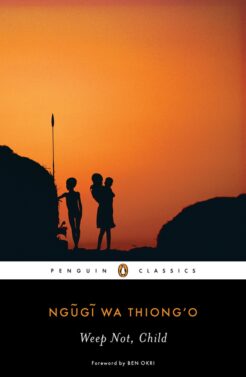
Weep Not, Child (1964) is a seminal work in African literature and stands as the first English-language novel published by a black East African writer. Written by Ngũgĩ wa Thiong’o when he was only twenty-eight years old (published under his then-name James Ngugi), this novel offers a poignant and unflinching examination of life in Kenya during the Mau Mau Emergency (1952-1960). The novel is dedicated to Jasbir Kalsi and carries an epigraph from Walt Whitman: “Weep not, child, Weep not, my darling, With these kisses let me remove your tears, The ravening clouds shall not be long victorious, They shall not long possess the sky…”
The title itself is deeply ironic, as the novel chronicles the destruction of a young boy’s dreams, his family, and his future. It is a coming-of-age story that doubles as a political tragedy, tracing the collision between individual aspirations and the brutal machinery of colonialism.
Part One: The Waning Light
Chapter 1: The Promise of Education
The novel opens with a tender domestic scene between Nyokabi and her son Njoroge. Nyokabi, a small, black woman with a bold but grave face and a smile that lights up her dark face, asks her youngest son if he would like to go to school. Njoroge’s reaction is one of almost unbearable joy: “O, Mother!” he gasps, half-fearing she might withdraw the offer.
This moment establishes the central theme of the novel: education as the pathway to liberation. Nyokabi explains the conditions carefully they are poor, Njoroge will not get a midday meal like other children, and he must not bring shame to her by refusing to attend. Njoroge readily agrees: “I like school.”
The narrator provides crucial context: Njoroge’s mother understands him, and he wonders if she had been to a magic worker to divine his secret wish. He is currently wearing only a piece of calico, and soon he will have a shirt and shorts for the first time.
When Kamau, Njoroge’s half-brother, comes home in the evening, Njoroge takes him aside to share the news. Kamau explains that he is being trained as a carpenter and cannot attend school. Kamau reassures Njoroge: “Get education, I’ll get carpentry. Then we shall, in the future, be able to have a new and better home for the whole family.”
The chapter then digresses to describe the land itself the long, broad tarmac road that runs across the land with no beginning and no end. This road was built by Italian prisoners during the war, and rumors suggest it came with the white men. The narrative also touches on the baffling nature of the Second World War, where white men killed each other with poison, fire, and bombs, and even recruited black people to help them kill other white people. Hitler is described as “that brave man, whom all the British feared, and he was never killed you know, just vanished like that.”
The town of Kipanga is described in detail. It contains a shoe factory, many Indian shops, and African shops. The Indian traders are said to be very rich and employ black boys whom they treat as nothing. Racial hierarchy is evident in the observation that “The Indians feared Europeans and if you went to buy in a shop and a white man found you, the Indian would stop selling to you and, trembling all over, would begin to serve him.”
Ngotho, Njoroge’s father, is introduced as he makes his way through the marketplace, listening to the barber’s stories about the war. The barber claims to have carried guns, shot white men, and slept with their women in Jerusalem. Ngotho reflects on his own wartime experiences he was conscripted as a boy to carry things for the fighting white men, clear bush, and make roads. His two sons went to the second war; one returned, one did not.
Ngotho buys four pounds of meat, dividing it carefully between his two wives, Njeri and Nyokabi, because “A husband had to be wise in these affairs, otherwise a small flaw or apparent bias could easily generate a civil war in the family.” We learn that Ngotho’s home is well known for being a place of peace, and he does not beat his wives much.
Chapter 2: First School Days
On Monday, Njoroge goes to school for the first time. Mwihaki, the daughter of Jacobo, takes him and shows him the way. Mwihaki is described as someone Njoroge has always admired. She is the daughter of Jacobo, who owns the land on which Ngotho lives Ngotho is a Muhoi, a tenant.
The school is a strange and fascinating place. The church is huge, hollow, and haunted. The teacher wears a white blouse and a green skirt, which Njoroge thinks is like “a blooming white flower on a green plant.” However, he witnesses the teacher beating a boy, which frightens him.
The other boys are rough and make coarse jokes. One boy tells Njoroge he is a “Njuka” (newcomer), and another commands him to carry a bag. Mwihaki comes to his rescue, declaring, “He is my Njuka. You cannot touch him.”
When Njoroge asks his mother to tell him stories from their tribe, she teases him but agrees. The chapter reveals the importance of storytelling in the Gikuyu tradition Nyokabi and Ngotho both know many stories, and Njoroge loves to listen to them.
Njoroge is invited to Jacobo’s home for Christmas and experiences humiliation when he giggles during grace. Juliana, Jacobo’s wife, gives them all a lecture about Ustaarabu (civilized behavior) and says her children would never have done such a thing. She never liked her children to associate with primitive homes.
Chapter 3: The Land and Its History
Ngotho leaves early for work, passing through the fields. He loves rainy seasons when everything is green. He reflects on how he came to work for Mr Howlands. Years ago, he had worked for an Indian who deliberately owed him a month’s pay to keep him in his employment. When he finally left, he lost that pay.
Mr Howlands is described as a typical Kenya settler. He was a product of the First World War. After four years of blood and destruction, he was disillusioned by the “peace” and had to escape. East Africa was a good place “a big trace of wild country to conquer.” He returned to England to find a wife, Suzannah, who was bored with life in England and willing to follow him.
Suzannah had children Peter and a daughter. Peter went to war and died. The daughter turned missionary. Suzannah had another boy, Stephen, who is now her only son.
Ngotho reflects on how he worked for Mr Howlands for years, from even before the second war took his two sons. He is the only man Mr Howlands greets personally. Ngotho feels responsible for the land “He owed it to the dead, the living, and the unborn of his line, to keep guard over this shamba.” Mr Howlands wonders who will manage the farm after him, as Stephen does not seem suited for it.
Chapter 4: The Strike
At school, Njoroge proves good at reading. The teacher, Isaka, teaches them the alphabet through a memorable lesson involving the sounds of vowels. The children love this approach, and Njoroge is excited by learning.
One day, the teacher discovers that Jacobo has been made a chief. Ngotho asks why white people are different, and Njoroge thinks about the strike that will soon paralyze the country. The village men gather to discuss the strike, led by Kiarie, a compelling speaker. Njoroge listens keenly, convinced that this is the path to better wages and a brighter future.
When Mr Howlands calls all his men, he warns them that anyone who strikes will lose their job. Ngotho is uncertain if the strike fails, he will lose his job and be separated from the land of his ancestors.
The conflict between Ngotho and his wife Nyokabi escalates. She is desperate, fearing that they will starve if he loses his job. They argue, and Ngotho slaps her. Njoroge is deeply disturbed by this rare display of marital discord.
Chapter 5: The Hill
The children (Njoroge, Kamau, and others) gather on the hill that overlooks the whole landscape. They discuss the land question, Njoroge’s education, and the strike. Kamau’s brother Boro has gone to the city, and Kamau dreams of joining him.
When the strike finally comes, Ngotho goes to the meeting in Nairobi. Jacobo, the chief, is brought to the platform by the police to urge people to go back to work. Ngotho rises and leads a rush toward Jacobo. The police open fire, and Ngotho is struck by a baton. He is found unconscious and taken home.
Chapter 6: A New Home
The narrative moves forward in time. Nyokabi and Njeri are at home. A group of men and women and children are standing in the courtyard. Ngotho has been asked to leave Jacobo’s land. He has been offered a place to build by Nganga, Kamau’s master. This is a turning point the family loses their connection to the ancestral land they had been tied to.
However, Jacobo remains a threat. The chapter ends on a somber note, with the family having lost their status and security.
Chapter 7: The Letter
Njoroge learns that a letter has been found a letter signed by Kimathi, threatening that the heads of the headmaster and forty children would be cut off if the school did not close. The teacher’s hands tremble as he handles the letter. The students are terrified.
Nyokabi tells Njoroge that he will not go to school anymore. But Kamau persuades Njoroge to continue: “The letter may not be genuine. Besides do you really think you’ll be safer at home? I tell you there’s no safety anywhere. There’s no hiding in this naked land.”
Interlude: The Emergency
The interlude shifts perspective dramatically. It depicts a disillusioned government official (clearly Mr Howlands) standing on a hill overlooking Nairobi, contemplating the coming emergency. He says: “I did not know that this would come to be.”
The interlude also describes the gathering of young men and women who listen to the news of the murder of a chief on a wireless set. It is noted that a state of emergency is declared and Jomo (Kenyatta) and other leaders are arrested. The barber says: “They want to leave the people without a leader.”
The mood darkens as the reality of the emergency sets in. The novel now enters its second section, “Darkness Falls.”
Part Two: Darkness Falls
Chapter 8: The Coming of Mau Mau
The stories of Nyeri and Murang’a are told by Karanja. One story is of how Dedan Kimathi, the leader of the African Freedom Army, outwitted the police by disguising himself as a white police inspector and riding away on a new motorbike. The boys are fascinated by these stories, despite their fear.
Njoroge reflects on the changes in his life. He has left school, and the family is struggling. The chapter ends with a note of foreboding, as the reader is told that the family is going to be visited by Boro and Kiarie, who have become involved in the strike and politics.
Chapter 9: The Oath
The local men gather to discuss the emergency. Many support the strike, but others are worried about the consequences. Boro and Kiarie are among the leaders. Ngotho is asked to take the Mau Mau oath, but he refuses not because he objects to the oath in principle, but because he will not be ordered by his son. This refusal is a turning point in his relationship with Boro.
The chapter also describes Mr Howlands’ response to the emergency. He calls all his men and warns them that anyone who strikes will lose their job. Ngotho listens in silence.
Chapter 10: The Homeguard Post
Mr Howlands is now the District Officer. He sits in his office and reflects on his life. He contemplates the loss of his son in the war and the irony that he, who had wanted to escape politics and government, is now the agent of oppression. He thinks of his only god the farm and the Mau Mau who are trying to take it.
Jacobo comes to the office with news of a letter he has received. The letter warns: “Stop your murderous activities. Or else we shall come for your head. This is our last warning.” Howlands is furious that Jacobo kept it a secret.
Meanwhile, the family gathers in Nyokabi’s hut. They discuss the threat posed by the chief, Jacobo. Jacobo comes to the village with homeguards and says he is looking for Ngotho. That night, Njeri and Kori are taken by the police for breaking the curfew. Ngotho is helpless.
Chapter 11: Mwihaki’s Return
Mwihaki has returned from boarding school. She is now tall, slim, and self-possessed. She and Njoroge meet, and she tells him: “I’m so lonely here. Everyone avoids me.” They agree to meet on Sunday. Mwihaki is surprised when Njoroge accepts, and she tells him that she wants to be with him.
Njoroge attends a church service where an old teacher, now a revivalist, preaches from Matthew 24 about wars, rumors of wars, and the end times. The service affects Njoroge deeply, and he begins to think about the possibility of the world being destroyed.
Chapter 12: The Homeguard Post and the Attack
Mr Howlands reflects on his success in setting the blacks against one another. Jacobo informs him that Boro is suspected of leading a gang of Mau Mau. Howlands says he will wait before arresting Ngotho, but he wants to keep an eye on him.
Boro and his lieutenant discuss the killing of Jacobo. Boro wants to do it alone: “This is my personal affair.” They go back to their hideout.
Chapter 13: The Death of Nganga
Nganga, the carpenter, has been killed. The barber has been killed. Six men in all have been taken from their houses and found dead in the forest. Njoroge is deeply troubled he had just seen the barber, and now he is dead.
The village is in a state of shock. The deaths have created a “charged stillness.” Njoroge meets Mwihaki again, and they go to church together.
At church, the preacher takes the congregation through Matthew 24, describing the end of the world and the coming of the Son of Man. The service is intense, and people weep and pray for the land.
Chapter 14: The Vision
Njoroge goes to Siriana Secondary School. He meets Stephen Howlands, the son of Mr Howlands, at an interschool football match. They talk about their shared experience of fear and insecurity. Stephen is going to England soon and does not want to go. He says: “You sometimes get a feeling that you’re going away from someone forever…That’s how I feel, and that’s what makes it all so awful.”
The two boys part in silence.
Chapter 15: The House of Pain
Njoroge is called out of class and sees a police car outside. The headmaster tells him that his family needs him. He is taken to the homeguard post known as “the House of Pain.” There, he is interrogated by European officers about taking the Mau Mau oath and about the whereabouts of Boro. He is brutally beaten.
The interrogation is horrific. He is slapped, kicked, and threatened with castration. Mr Howlands himself is present and participates in the torture. Njoroge finally breaks down and is released with his two mothers.
Ngotho has also been tortured. He is lying in a hut, unable to move. He has been beaten for days. The white men have been trying to extract information from him about Boro and about the murder of Jacobo.
Chapter 16: Ngotho’s Death
Ngotho is near death. He asks Njoroge to look after the women. He tells Njoroge to get learning and to “Turn your eyes to Murungu and Ruriri.” He says: “Fight well.” He then dies.
Boro appears at the door. He kneels by his father’s bed and asks for forgiveness. Ngotho puts his hand on Boro’s head and says: “All right. Fight well. Turn your eyes to Murungu and Ruriri. Peace to you all Ha! What? Njoroge look…look to your moth “
Ngotho dies. Boro runs out into the night.
The narrative reveals that the police have found a notebook behind the lavatory near where Jacobo was shot. The notebook has Boro’s name in it. Ngotho had been lying to protect his son. He had suspected Kamau had done the murder, and he took on the guilt to save a son.
Chapter 17: Njoroge’s Despair
Njoroge has been working for an Indian. He is fired when he loses the will to bargain. He wanders through the town, feeling completely lost. He thinks: “Life too seemed like a big lie where people bargained with forces that one could not see.”
He learns that Mr Howlands has been killed on the same night that Ngotho died. Boro and Kamau are facing murder charges. Njoroge feels completely alone.
Chapter 18: The Last Hope
Njoroge writes to Mwihaki, and she agrees to meet him. They meet, and he tells her: “I love you.” He proposes that they run away together to Uganda. Mwihaki says no: “We are no longer children. Our duty to other people is our biggest responsibility as grown men and women.”
Njoroge is devastated. He feels that his last hope has vanished. He decides to commit suicide, and goes to a tree with a rope. But as he is about to do it, he hears his mother’s voice calling him. She is carrying a glowing piece of firewood to light the way. He goes to her, and they return home together.
He hears a voice inside him saying: “You are a coward. You have always been a coward. Why didn’t you do it?” He whispers: “Yes, I am a coward.” He runs home and opens the door for his two mothers.
Character Analysis
Njoroge
Njoroge is the novel’s protagonist, a young boy whose dreams of education are shattered by the violence of the Mau Mau Emergency. At the beginning of the novel, he is a hopeful child who sees education as the pathway to a better life for his family and his people. He is deeply religious, believing in the righteousness of God, and he identifies with biblical figures like David and Samuel.
As the novel progresses, Njoroge is forced to confront the harsh realities of colonialism and violence. He witnesses the deaths of several people he knows, including the barber, Nganga, and ultimately his own father. He is tortured by the colonial authorities, who accuse him of being a Mau Mau. His faith in education, religion, and love is systematically destroyed.
By the end of the novel, Njoroge has lost everything his family, his education, his faith, and his hope. He attempts suicide but is stopped by his mother. The novel ends on a note of deep ambiguity: Njoroge is saved, but he is also broken.
Ngotho
Ngotho is Njoroge’s father, an old man who has worked for Mr Howlands for many years. He is the center of his household, a man who values peace and tradition. He has two wives, Njeri and Nyokabi, and several sons, including Boro, Kori, Kamau, and Njoroge.
Ngotho’s relationship with the land is spiritual. He believes that the land belongs to his ancestors and that he is the guardian of the land that was taken from them. He works for Mr Howlands not because he wants to but because he has no other choice.
Ngotho’s refusal to take the Mau Mau oath at his son’s hands is a crucial moment in the novel. He does not object to the oath in principle, but he will not be ordered by a son. This refusal creates a rift between him and Boro.
Ngotho is eventually arrested and tortured by the colonial authorities, who suspect him of involvement in the murder of Jacobo. He dies from his injuries, but not before he has a vision of his sons and gives his blessing to Boro.
Boro
Boro is Ngotho’s eldest son by his first wife, Njeri. He fought in the Second World War and returned a changed man bitter, angry, and disillusioned. He cannot forget the death of his stepbrother, Mwangi, who died in the war.
Boro is the most politically conscious character in the novel. He sees the Mau Mau as the only way to fight for freedom and the return of the land. He is willing to kill for the cause, and he does kill Jacobo and Mr Howlands.
However, Boro’s revolutionary zeal is complicated by his personal demons. He is haunted by the past the war, the death of Mwangi, and the poverty of his family. He feels guilty for having gone away and for having been unable to save his father from torture and death.
Mr Howlands
Mr Howlands is the novel’s primary representative of colonial power. He is a white settler who came to Kenya after the First World War to escape the “civilization” that had destroyed his generation. He has made the land his god “There was only one god for him and that was the farm he had created, the land he had tamed.”
Howlands is a complex character. He is not a simple villain; he is a man who has suffered great personal loss (his son Peter died in the war) and who is driven by a need to control and possess the land. He is also a product of his time a man whose racism is so deeply ingrained that he does not even think of the natives as fully human: “Mere savages! A nice word savages.”
Howlands’ obsession with controlling the land and the people leads him to become a DO in the emergency. He is responsible for the torture and death of Ngotho, and he is eventually killed by Boro.
Nyokabi
Nyokabi is Njoroge’s mother, Ngotho’s younger wife. She is the one who first suggests that Njoroge go to school, and she is his most important supporter throughout the novel. She is a woman of great strength and resilience, who endures poverty, the loss of her stepson, the estrangement of her husband, and the torture of her son without losing her faith.
Njeri
Njeri is Ngotho’s first wife, the mother of Boro, Kori, and Kamau. She is a proud and strong woman who is deeply committed to her family. She is also the one who is taken by the police for breaking the curfew, and her detention is a turning point in the family’s fortunes.
Mwihaki
Mwihaki is Jacobo’s daughter and Njoroge’s love interest. She is a symbol of hope and connection for Njoroge, but she is also caught between two worlds her father’s world of privilege and Njoroge’s world of poverty and struggle.
When Njoroge proposes that they run away together, Mwihaki refuses. She says: “We are no longer children. Our duty to other people is our biggest responsibility as grown men and women.” Her refusal breaks Njoroge’s heart, but it also represents the mature choice the choice to stay and face the consequences of the past rather than escape from them.
Jacobo
Jacobo is a wealthy African farmer who becomes a chief and a collaborator with the colonial authorities. He is the one who owns the land on which Ngotho’s family lives, and he is the one who evicts them. He is eventually killed by Boro.
Jacobo represents the complicity of some Africans in the colonial system. He is a man who has benefited from the colonial order and who is willing to sell out his own people in order to maintain his position.
Karanja
Karanja is one of Njoroge’s schoolmates. He is a good storyteller and is known for his stories about Dedan Kimathi and the Mau Mau. He represents the power of narrative to inspire and sustain resistance.
Isaka
Isaka is a teacher who is beloved by his students. He is a jovial man who teaches the alphabet in a memorable and engaging way. He is eventually arrested and killed by the colonial authorities, becoming one of the novel’s many martyrs.
Thematic Analysis
Education
Education is one of the novel’s central themes. At the beginning, Njoroge sees education as the key to a better life the way out of poverty and the way to help his family and his people. His mother, Nyokabi, shares this belief: “It was to her the greatest reward she would get from her motherhood if she one day found her son writing letters, doing arithmetic, and speaking English.”
However, as the novel progresses, education is shown to be insufficient. The colonial system that provides education is the same system that tortures and kills. Njoroge’s education cannot save him from the violence of the emergency, and by the end of the novel, he has lost faith in it: “For Njoroge had now lost faith in all the things he had earlier believed in, like wealth, power, education, religion.”
Land
Land is the novel’s most important symbol. For Ngotho and his family, land is not just a source of livelihood it is a spiritual inheritance, a connection to the ancestors. When Ngotho loses his land, he loses his identity: “When a man was severed from the land of his ancestors, where would he sacrifice to the Creator? How could he come into contact with the founders of the tribe, Gikuyu and Mumbai?”
For Mr Howlands, land is also a kind of god “There was only one god for him and that was the farm he had created, the land he had tamed.” The conflict between these two views of land is at the heart of the novel.
Religion and Faith
Religion is another important theme. Njoroge is a devout Christian who believes in the righteousness of God. He identifies the Gikuyu people with the children of Israel and sees Jomo Kenyatta as a black Moses. However, his faith is tested by the violence and suffering he witnesses.
The novel does not reject religion entirely Mwihaki retains her faith, and the church is a place of comfort for many. But Njoroge’s loss of faith is presented as a natural response to the horror of the emergency: “But why did he call on God? God meant little to him now.”
Colonialism and Violence
The novel is a powerful indictment of colonialism and the violence it produces. The Mau Mau Emergency is depicted as a war in which both sides commit atrocities. The British use torture, detention camps, and summary executions to suppress the resistance, while the Mau Mau use assassination and terror to fight back.
However, the novel is not simply a condemnation of the British. It also critiques the complicity of Africans like Jacobo, who collaborate with the colonial authorities for personal gain. The novel shows that the violence of colonialism is not just physical it is also psychological and spiritual.
Family and Community
Family is one of the novel’s most important values. The Ngotho family is presented as a source of strength and resilience, even as it is torn apart by the emergency. Ngotho’s death is a devastating blow to the family, and Njoroge’s inability to hold the family together is one of the novel’s many tragedies.
The novel also shows how the emergency destroys community. The village that once gathered to hear stories and discuss politics becomes a place of fear and suspicion. The barber, who was once the center of community life, is killed. The carpenter, who helped Ngotho when he was evicted, is killed. The school, which was once a place of hope, is threatened with violence.
The Individual and History
Njoroge’s story is a story about the relationship between the individual and history. Njoroge has his own dreams and ambitions, but these are crushed by the larger forces of history colonialism, the Mau Mau Emergency, and the violence that accompanies them. The novel shows how the individual is shaped by history, even when the individual does not fully understand the historical forces at work.
At the same time, the novel suggests that the individual has a responsibility to history. Njoroge’s final decision not to commit suicide is a decision to accept his responsibility to his family and his people, even though he feels he has failed them.
Symbolism and Imagery
The Road
The long, broad tarmac road that runs across the land is one of the novel’s most powerful symbols. It represents the intrusion of colonialism into the African landscape it was built by Italian prisoners during the war and is said to have come with the white men. The road has no beginning and no end, suggesting the endlessness of the colonial presence and the difficulty of escape.
The Hill
The hill outside Ngotho’s household is a place of vision and gathering. It is where the children gather to look at the distant lights of Nairobi, and it is where Njoroge has his visions of the future. The hill symbolizes the possibility of perspective the ability to see beyond one’s immediate circumstances.
The Fire
The fire that Nyokabi carries when she goes to look for Njoroge is a powerful symbol of hope and salvation. It is described as “a glowing piece of wood.” Ben Okri, in his introduction, writes: “That’s what a work of art is a glowing firewood in the darkness of our days, lighting the way, seeking us out.”
The Tree and the Rope
The tree where Njoroge goes to hang himself is a symbol of death and despair. The rope that he prepares is a symbol of his loss of hope. However, the fact that he does not use it is a symbol of the possibility of redemption the possibility of choosing life over death.
Names
The novel is rich in biblical allusions. Njoroge is compared to David, Samuel, and other prophets. Jomo Kenyatta is compared to Moses. The Gikuyu people are compared to the children of Israel. These allusions give the novel a mythic dimension, suggesting that the struggle for freedom is part of a larger, universal story.
Style and Structure
Narrative Voice
The novel is narrated in the third person, but the perspective shifts between characters. The narrator often enters the minds of the characters, showing their thoughts and feelings. The style is simple and direct, with short sentences and clear language. This simplicity is deceptive, however the novel is complex and layered, with many symbols and allusions.
Structure
The novel is divided into two parts: “The Waning Light” and “Darkness Falls.” This structure mirrors the novel’s trajectory from hope to despair. The interlude between the two parts provides a kind of bridge, showing the transition from the relative peace of the pre-emergency period to the violence of the emergency.
Time
The novel covers a period of several years, from Njoroge’s childhood to his young adulthood. The narrative moves back and forth in time, with flashbacks to Ngotho’s youth and the First World War. This structure emphasizes the way in which the past continues to shape the present.
Language
The novel is written in English, but it incorporates many Kikuyu words and phrases. This use of language reflects the novel’s concern with the relationship between African and European cultures. The language is simple and clear, but it is also poetic, with many images and metaphors.
Historical Context
The Mau Mau Emergency
The Mau Mau Emergency was a period of intense conflict in Kenya between 1952 and 1960. The Mau Mau were a guerrilla movement that fought against British colonial rule. The British responded with a massive military campaign, including the use of detention camps, torture, and summary executions. Thousands of people were killed, and many more were detained without trial.
The novel is set during this period, and it depicts the violence and suffering of the emergency with unflinching honesty. Ngũgĩ wa Thiong’o was himself a witness to the emergency he was a student at Makerere University at the time, and his brother was a Mau Mau fighter.
The Land Question
The land question is central to Kenyan history. The British colonial government expropriated large tracts of land from African communities and gave them to white settlers. This created a class of landless Africans who were forced to work for the settlers or to move to the cities.
The novel depicts the land question through the story of Ngotho and his family. Ngotho works for Mr Howlands, but the land he works was taken from his ancestors. His family is evicted from Jacobo’s land, and they are forced to build a new home elsewhere.
Jomo Kenyatta
Jomo Kenyatta was the leader of the Kenya African Union (KAU) and later became the first president of independent Kenya. He was arrested during the emergency and tried for his involvement in the Mau Mau. He was convicted and sentenced to seven years in prison, but he was released in 1961 and became the leader of the independence movement.
In the novel, Kenyatta is referred to as “Jomo” and is seen as a black Moses the leader who will lead his people to freedom. His arrest is a turning point in the novel, marking the beginning of the emergency.
Critical Reception and Legacy
Weep Not, Child was published in 1964, shortly after Kenya gained independence. It was the first English-language novel by a black East African writer, and it was widely acclaimed for its depiction of the Mau Mau Emergency and its exploration of themes like education, land, and religion.
The novel has been criticized for its portrayal of women and its use of Christian imagery. Some critics have argued that the novel is too focused on Njoroge’s individual story and does not adequately address the collective struggle of the Kenyan people. Others have praised the novel for its honesty, its compassion, and its poetic language.
Ben Okri, in his introduction to the Penguin Classics edition, writes: “If Ngugi had published nothing other than Weep Not, Child, he still would have earned a distinctive place in the African literary canon. He belongs to the tradition of the protest novelist.”
The novel is now considered a classic of African literature and is widely taught in schools and universities around the world. It has been translated into many languages and has influenced generations of writers.
Conclusion
Weep Not, Child is a powerful and moving novel about the destruction of a young boy’s dreams by the violence of colonialism. It is a story about education, land, religion, family, and love and about the ways in which these things are torn apart by history.
The novel’s ending is deeply ambiguous. Njoroge is saved from suicide by his mother, but he is also broken. He has lost his faith in education, religion, and love. He feels like a coward. Yet the fact that he chooses to live to open the door for his two mothers suggests that there is still something worth living for.
Ben Okri writes: “At the end of Weep Not, Child, Njoroge has set off into the night. He is in some danger to himself. His mother comes seeking him in the dark with a glowing brand of firewood. That’s what a work of art is a glowing firewood in the darkness of our days, lighting the way, seeking us out.”
The novel is ultimately a testament to the resilience of the human spirit. It shows that even in the darkest of times, there is hope a glowing piece of firewood that lights the way and calls us home.