
Listen to this Book Summary Below
Playback speed:
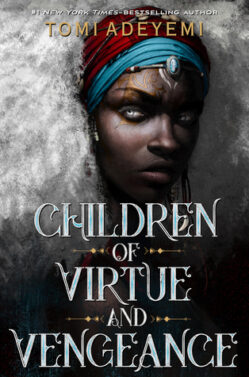
In Tomi Adeyemi’s Children of Virtue and Vengeance, the kingdom of Orïsha is thrust into a bloody civil war following the restoration of magic. The narrative picks up shortly after the centennial solstice ritual, exploring the devastating consequences of the returned power and the deep-seated trauma of its protagonists. The story is told through the alternating perspectives of Zélie Adebola, Princess Amari, and King Inan, each struggling to navigate a world where magic is no longer a memory but a volatile weapon.
Part I: The Price of Magic and the Burden of Grief
The story begins with a profound sense of loss. Zélie Adebola, a Reaper of the Ikú Clan, is consumed by the memory of her father, Baba, who sacrificed his life during the ritual to bring magic back to Orïsha. She recalls the lullaby of the tides and the warmth of his presence, contrasting it with the cold, gray reality of Jimeta’s rocky bluffs, where she prepares to lay him to rest. Zélie feels the purple light of her ashê the divine power that fuels magic bubbling under her skin, but it only reminds her of the pain of her father’s spirit tearing through her veins.
Accompanied by her brother Tzain and Princess Amari, Zélie struggles with the guilt of Baba’s death. She questions the utility of her powers if they could not protect the people she loved. Amari, now marked by a white streak in her hair signifying her new magical abilities, provides the oil necessary for Baba’s burial at sea. As they speak the sacrament Títí di òdí kejì (Until the other side) Zélie reflects on the long list of the fallen: Lekan the sêntaro, her friends Zulaikha and Salim, and Mama Agba, whom she believes perished.
Amari, meanwhile, is haunted by the ghost of her father, King Saran, whom she killed to free Orïsha from his tyranny. She believes that as the rightful heir, she must take the throne to usher in an era of peace and fix everything her father broke. However, the political reality is far more complex. Roën, the mercenary leader who aided them, brings news from the capital city of Lagos. He reveals that the maji have formed a revolutionary army called the Iyika (the revolution) and stormed the palace when magic returned. Furthermore, the military, led by a new admiral, has all but declared war, hunting maji “like dogs” and clearing out entire villages.
Amari decides she must address the public to bring stability. Despite Zélie’s exhaustion and reluctance to continue carrying the “plight of my people,” she agrees to help Amari secure support for her claim to the throne. To fund this mission, Zélie visits Roën’s hideout in the sandstone cliffs of Jimeta. There, she encounters Roën’s enforcer, Harun, who taunts her with the slur “maggot” and reveals that there is now a high bounty on her head as the one who brought magic back. Zélie convinces Roën to aid them by promising him double the gold once Amari is queen.
Part II: The Rally at Zaria and the Return of the Queen
The group travels to Zaria to hold a rally that Amari hopes will solidify her claim. The coastline is vibrant with coral reefs, and hundreds, perhaps thousands, of villagers gather on the white sands. To project strength, Tzain convinces Amari to wear her blood-stained armor from the ritual grounds, including the royal seal. Zélie helps Amari make a regal entrance by having her ride the giant lionaire, Nailah.
Amari’s speech focuses on ending the “unjust persecution” that has plagued divîners and maji for decades. She recounts the murder of her best friend, Binta, at the hands of her father to illustrate the cruelty of the old regime. The crowd is initially moved, chanting “Long live the Queen” (Kí èmí olá ó gùn Ayaba!). However, the peace is shattered when a voice bellows “Lies!” from the back of the dome.
Queen Nehanda, Amari’s mother, appears, very much alive and clad in golden armor. She denounces Amari as a traitor who has endangered the kingdom with magic simply to seize power. Nehanda reveals a shocking development: she and many other nobles and soldiers are now tîtáns. Tîtáns are magic-wielders from the nobility who manifested magic after the ritual; unlike the maji, their powers require no incantations to use.
Nehanda, a Grounder of the Ògún Clan, demonstrates a terrifying level of power. She sucks the ashê directly from the veins of her own tîtán soldiers, turning them into “skeletons” to fuel a massive attack. She punches her fists into the ground, causing the earth to split and the dome in Zaria to crumble. In the chaos, Nehanda’s forces deploy glass orbs filled with majacite gas an airborne version of the magic-dampening alloy that causes maji to scream in agony while leaving the magicless kosidán unharmed. Zélie, Amari, and Tzain narrowly escape the collapsing dome on Nailah’s back as Zaria burns.
Part III: The Iyika and the Maji Sanctuary
Fleeing the disaster at Zaria, the group retreats into the Adichie Forest. Amari is determined to find a weakness in her mother’s overwhelming magic, while Zélie is spiraling into despair, feeling that magic has only brought more pain. Zélie runs away on Nailah and, after a fall, is pulled into a dreamscape. There, she finds Inan, who is alive but thin and scarred from the sword wound his father inflicted upon him. Inan claims he tried to stop the guards from shooting Baba, but Zélie, blinded by her grief, uses her magic to bind him with black roots before waking up.
In Lagos, Inan wakes up to a city ravaged by Iyika firebombs. His cousin, Ojore, informs him that they are at war with the maji. Inan is crowned king by Nehanda, though he is horrified by her ruthless tactics. He attempts to be a “better king” than his father by offering amnesty and food rations to any maji who defect from the revolution. However, his efforts are undermined by the deep-seated hatred between the two sides. At a meeting near the ruin walls of Lagos, a young Iyika Burner named Raifa rejects his offer and uses her magic to incinerate the city’s food reserves. Ojore executes Raifa on the spot, and Inan, realizing the maji want “victory no matter the cost,” resolves to end the war by force.
Back in the mountains, Roën leads Zélie and the others to the Iyika’s secret sanctuary, Ile Ijosin, a massive complex of temples and towers built into three mountain plateaus. To Zélie’s overwhelming joy, she discovers that Mama Agba is alive and leading the rebellion alongside a council of maji elders. Mama Agba reveals that she and Baba were leading maji survivors to the sanctuary when they were attacked; Baba offered himself up to the guards to spare the others.
The Iyika Council consists of powerful elders: Ramaya of the Connector Clan, Na’imah the Tamer, and Kâmarū the Grounder. They have no interest in Amari’s claim to the throne, seeing the monarchy as an inherently corrupt institution. Instead, they want to place Zélie on the throne as the “Soldier of Death” who brought magic back. Zélie is formally ascended as the Reaper Elder in a ceremony where she receives an ìsípayá a divine vision from Sky Mother. In her vision, she sees a “rainbow of power” where different colors of magic intertwine.
Amari, feeling increasingly isolated and desperate to be heard, challenges Ramaya for leadership of the Connector Clan in a ritual duel called ìjà mímó. During the fight, Ramaya brutally tortures Amari with magic, prompting Amari to abandon her “needle” (precision) and use her magic as a “hammer” a raw release of power that leaves Ramaya in a critical coma. Zélie is horrified by Amari’s lack of restraint, telling her she “chose to win at any cost” just like her father and brother.
Part IV: The Siege of Chândomblé and the Moonstone
As the war escalates, Zélie discovers that the golden tattoos on her skin are the mark of the moonstone, a power bestowed by the gods during the solstice. Mama Agba explains that the moonstone has the ability to bind lifeforces, which explains how tîtáns like Amari and Nehanda can access magic through the noble bloodline. However, the cost of creating a permanent connection (or a cênter) usually requires a significant sacrifice. Zélie is also intrigued by the possibility of combining different types of magic, a feat that reportedly created the world’s majacite deposits a century ago but killed the maji involved.
The Iyika elders decide they must retrieve ancient scrolls from the temple of Chândomblé to strengthen their forces. Amari, sensing a chance to end the war without further bloodshed, uses her magic to enter Inan’s dreamscape again. The two siblings share a moment of genuine connection and grief, ultimately agreeing to a peace treaty that would dismantle the monarchy and grant the maji full autonomy.
Inan travels to the outskirts of the sanctuary to present the treaty to Zélie and Amari. However, his mother, Queen Nehanda, and Admiral Jokôye have tracked him, and they launch a massive assault on the maji base. The battle is catastrophic. Admiral Jokôye is revealed to be a powerful cênter of the Winder Clan, capable of creating massive blades of air that “rip through the sky” and level the forest.
In a desperate bid to save the maji, Zélie uses the power of the moonstone to tether her lifeforce to her young student, Mâzeli. Together, they summon an unprecedented army of hundreds of animations to drive back Nehanda’s forces. The strain of the combined magic is too much for Mâzeli; he dies in Zélie’s arms shortly after the victory. Zélie is shattered by his death, screaming that she “should’ve died” instead.
Part V: Vengeance and the Raising of the Dead
The death of Mâzeli and the destruction of the sanctuary’s secrecy push the protagonists to their breaking points. Amari, realizing that her family will never allow peace, decides she must be as ruthless as her mother to win. She assumes command of the Iyika forces and plans an attack on Ibadan, where Inan and Nehanda have relocated their base.
Zélie, meanwhile, discovers the full potential of her moonstone ability. She realizes that by connecting her lifeforce with others, she can amplify her magic to an impossible degree. In a momentous event, Zélie tethers herself to Tzain, Kâmarū, and Khani (the Healer Elder) to perform a ritual that raises the dead. They successfully resurrect the villagers of Ibadan who were killed by a toxic majacite gas attack launched by the monarchy. Witnessing this miracle, the maji and the elders rally behind Zélie as she declares that there will be “no mercy, no peace, no terms of surrender” and that they will march to Lagos to tear down its walls.
In Lagos, Inan’s world is falling apart. He discovers that his mother, Nehanda, was the one who originally assassinated his grandfather decades ago to stop a maji referendum, effectively starting the generational war herself. He realizes that the monarchy itself is the “poison” of Orïsha. Inan decides to dissolve the institution of the monarchy entirely and makes a public announcement to the nobles in the throne room. However, just as he declares the end of the crown, the Iyika attack the palace.
The final confrontation in Lagos is a scene of utter chaos. Amari faces her mother, Nehanda, in the palace halls. Though Father’s voice in her head urges her to “strike,” Amari chooses to be “better” and refuses to kill her mother, despite the queen’s taunts that she “will never be great”. Zélie finds Inan in the palace cellars. Inan, true to the letters he had sent her, refuses to raise his sword. He provides her with the location of the royal treasuries and states he is ready to die at her hand so Orïsha can start over. Zélie begins to pull his lifeforce away, feeling like she is “killing a piece of myself,” but they are both interrupted by Roën. Before any final action can be taken, a mysterious cloud of white gas majacite engulfs them all, knocking them unconscious.
Epilogue: Stolen from the Land
Zélie wakes up in a dark, rocking cell, surrounded by the stench of vomit and the sound of chains. She and Amari are bound together with dozens of other maji, including Roën and Tzain. Looking out a small window, Zélie sees only the open sea. She realizes that they are no longer in Orïsha; they have been kidnapped and stolen from their land by an unknown enemy. The book ends on this chilling note of uncertainty, as the survivors of the civil war are carried away toward an unknown fate across the never-ending waves.